La Pause Chocolat Thé
A chocolate and tea salon on Rue Porte Basse in Marche-en-Famenne, La Pause Chocolat Thé occupies a quiet corner of the Ardennes market town where Belgian chocolate culture meets the slower rhythms of rural Wallonia. For travellers passing through the region between the Meuse and the Ardennes forests, it offers a focused alternative to the full-service restaurants that define the local dining scene.
Pearl is the En Primeur Club membership app — saves, bookings, and concierge access live there. Same editors, same standards.
- Address
- Rue Prte Basse 27, 6900 Marche-en-Famenne, Belgium
- Phone
- +3284212846
- Website
- pausechocolat-the.com
- Directions
- Get directions
 Saves & bookings on Pearl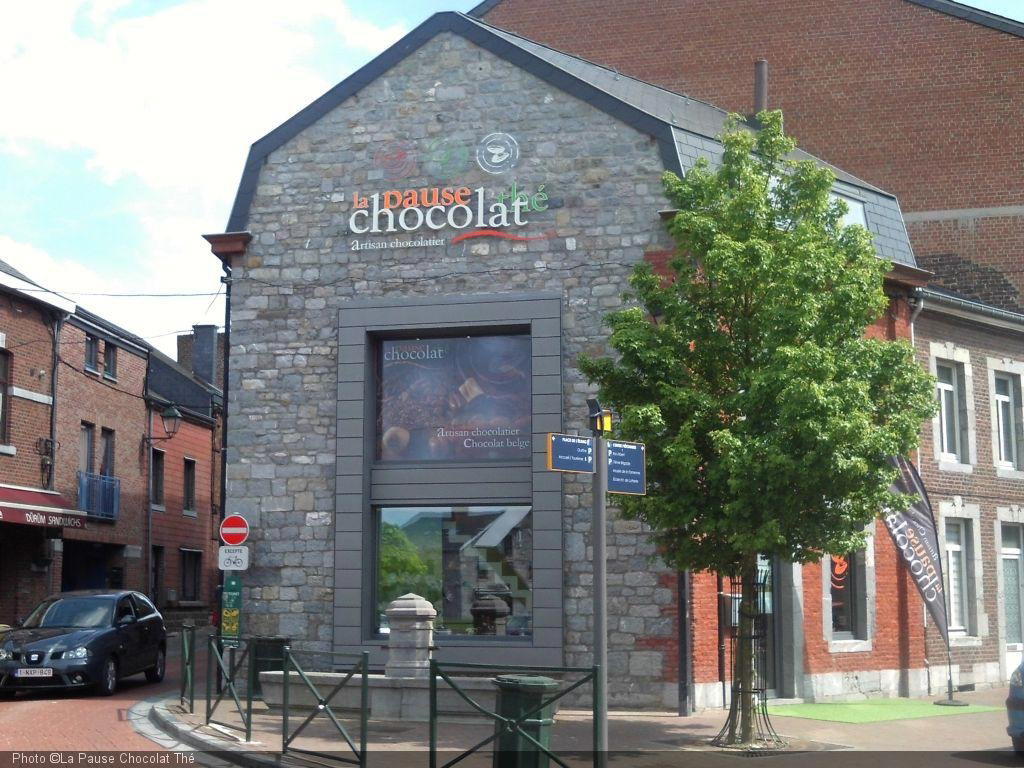
Chocolate Culture in the Ardennes: What Marche-en-Famenne Tells You About Belgian Sourcing
Belgium's reputation for chocolate is built on a specific logic: fine couverture sourced from dedicated bean suppliers, processed by trained chocolatiers who treat tempering as craft rather than production. That tradition plays out differently depending on whether you're in Brussels, Bruges, or a market town like Marche-en-Famenne. In the capital, salons compete for tourist footfall and trade on name recognition. In a provincial town of roughly 18,000 in the heart of the Ardennes, a chocolate and tea address like La Pause Chocolat Thé on Rue Porte Basse operates on a different logic entirely: local regulars, unhurried pace, and the kind of provenance conversation that doesn't need a marketing department behind it.
Marche-en-Famenne sits at a crossroads between the Meuse valley and the deeper Ardennes plateau, a position that makes it both a practical stop for travellers and a self-contained community with its own commercial life. The town's Saturday market draws producers from surrounding villages, and the general appetite for quality sourced food, whether cheese from the nearby Famenne farms or chocolate from Belgian artisans, runs through the local food culture at a register below what you'd find reviewed in national press. That relative obscurity is not a deficiency. For Belgian chocolate culture specifically, it means you encounter the product without the framing apparatus that surrounds it in Antwerp or Brussels.
The Ingredient Question: Where Belgian Chocolate Starts
Belgian chocolate's supply chain begins far from Belgium. The country's fine chocolate industry depends on cacao from West Africa, Latin America, and Southeast Asia, with the quality differentiation happening at the couverture stage: which beans, which roast profile, which fat content. The better Belgian chocolatiers work with named couverture houses — Callebaut, Belcolade, or smaller specialty suppliers — and the choice of couverture is the first signal of a producer's intent. At salon level, that intent expresses itself in ganache texture, shell temper, and the degree to which flavour additions (tea, spice, fruit) serve the chocolate rather than mask it.
For an address that pairs chocolate with tea, the sourcing question extends in two directions. Tea selection in Belgian specialty contexts has followed a similar arc to coffee over the past decade: away from commodity blends toward single-origin leaves, defined growing regions, and preparation methods calibrated to the leaf. Whether that full framework applies at La Pause Chocolat Thé is not something the available record confirms in detail, but the pairing format itself, chocolate and tea as co-equals rather than one as accompaniment to the other, places the address within a specific strand of Belgian café culture that treats both products as worth understanding on their own terms.
Contrast that with the broader Belgian restaurant scene. At the leading end, addresses like Bozar Restaurant in Brussels or Hof van Cleve in Kruishoutem operate at the fine dining register where sourcing is documented, credited on the menu, and central to the editorial narrative around the kitchen. Further down the register, in the Ardennes specifically, sourcing claims tend to be quieter and more local: the farms are nearby, the producers are known by name rather than by press release. That's the context in which a salon like La Pause Chocolat Thé operates, not competing with Boury in Roeselare or Zilte in Antwerp for critical attention, but serving a genuinely different function within Belgian food culture.
What the Rue Porte Basse Address Signals
Rue Porte Basse runs through the older commercial fabric of Marche-en-Famenne, away from the main retail axis that serves the weekly market. An address at number 27 on that street puts the salon in a neighbourhood context that favours repeat custom over passing trade: residents who know where it is rather than tourists who are searching for it. That positioning is consistent with how the better Belgian provincial salons tend to operate, not reliant on signage or digital discoverability, but sustained by a local clientele that treats the address as a fixture.
For visitors arriving from outside the region, Marche-en-Famenne is accessible by road from both Namur and Liège, roughly equidistant between the two. The town functions as a practical base for the Ardennes, used by walkers, cyclists, and travellers moving between Luxembourg and the Walloon interior. A stop at a chocolate and tea salon fits that travel pattern in a way that a full restaurant lunch does not: lower commitment, shorter duration, and calibrated to the rhythm of a day that already has other destinations in it. Two nearby full-service options, Le Baragoû and Quartier Latin, cover the sit-down restaurant need; La Pause Chocolat Thé occupies a different slot in the day's structure.
Belgian Salon Culture and the Slower Format
The salon de thé format has survived longer in Belgium than in most comparable European countries, partly because Belgian café culture has a higher tolerance for the mid-morning or mid-afternoon pause that doesn't anchor itself to alcohol. Where French café culture defaults to wine or coffee, and where British tea rooms have largely become heritage attractions, the Belgian chocolate salon holds a more genuinely functional place in daily life. You go because the product is good, the pace is right, and the format suits the time of day.
That functionality is different from the high-specification dining experiences documented elsewhere on this platform, addresses like Willem Hiele in Oudenburg, L'air du temps in Liernu, or Le Chalet de la Forêt in Uccle, where the meal is the event. At salon level, the format serves a different reader decision: not where to spend an evening, but how to spend ninety minutes in a town you're passing through. For that decision, the Rue Porte Basse address is a reasonable answer, provided you're looking for chocolate and tea rather than a full kitchen. Our full coverage of the area is available in the Marche-en-Famenne restaurants guide.
Planning a Visit
The address, Rue Porte Basse 27, 6900 Marche-en-Famenne, is specific enough to locate without difficulty on standard mapping tools. For visitors combining a salon visit with a fuller meal in Marche-en-Famenne, the town's restaurant options are covered in our city guide, including the two full-service restaurants mentioned above.
How La Pause Chocolat Thé Marche-en-Famenne compares with similar nearby venues.
| Venue | Cuisine | Price |
|---|---|---|
| Bistrot Blaise | French Contemporary | €€€ |
| La Gloriette | Modern French | €€ |
| Les 4 Saisons | Modern Cuisine | €€ |
Continue exploring
More in Marche-en-Famenne
Restaurants in Marche-en-Famenne
Browse all →
Bars in Marche-en-Famenne
Browse all →
Hotels in Marche-en-Famenne
Browse all →
Wineries in Marche-en-Famenne
Browse all →

At a Glance
- Cozy
- Casual Hangout
- Standalone
Current opening hours
- Monday
- Closed
- Tuesday
- 10 AM–1 PM, 1:30–6 PM
- Wednesday
- 10 AM–1 PM, 1:30–6 PM
- Thursday
- 10 AM–1 PM, 1:30–6 PM
- Friday
- 10 AM–1 PM, 1:30–6 PM
- Saturday
- 10 AM–1 PM, 1:30–6 PM
- Sunday
- Closed
Hours can change for holidays and private events. Last verified .
Cozy boutique atmosphere with focus on chocolate and tea tasting.
Know Before You Go
- Getting there
- Rue Prte Basse 27, 6900 Marche-en-Famenne, Belgium