La Burlona occupies a corner of Madrid's Centro district on Calle de Santa Isabel, placing it inside one of the capital's most active dining corridors.
Pearl is the En Primeur Club membership app — saves, bookings, and concierge access live there. Same editors, same standards.
- Address
- C. de Sta. Isabel, 40, Centro, 28012 Madrid, Spain
- Phone
- +34910180018
- Website
- laburlona.com
- Directions
- Get directions
 Saves & bookings on Pearl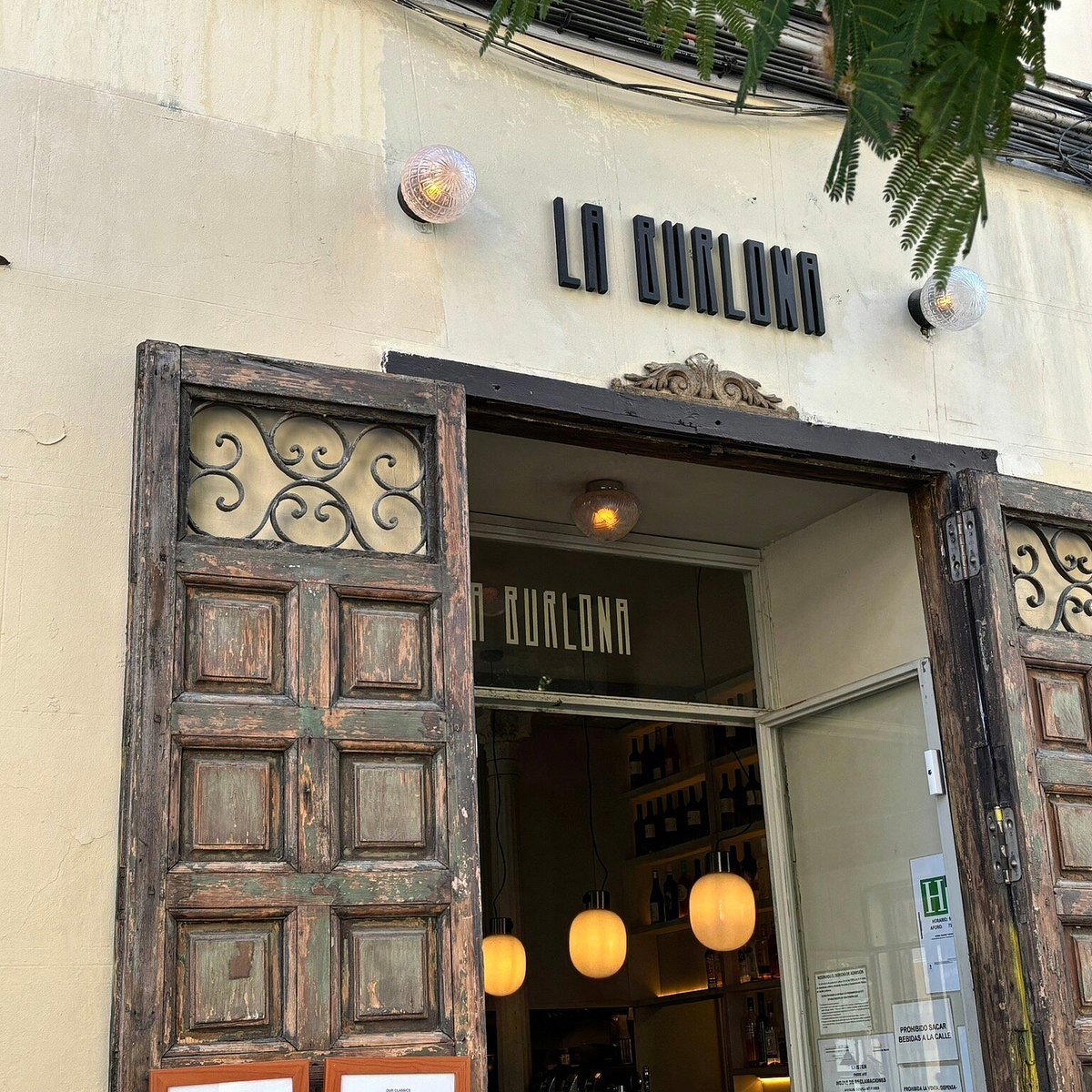
Centro's Quieter Register
Madrid's Centro district contains multitudes. The stretch around Calle de Santa Isabel sits at the lower edge of the Barrio de las Letras, a neighbourhood whose dining character has shifted considerably over the past decade. La Burlona, at number 40 on Calle de Santa Isabel, occupies that transitional geography, sitting between the high-traffic pull of the Reina Sofía museum a few streets west and the neighbourhood-scaled rhythms of the side streets running south.
That address matters because in Madrid, as in most capital cities, a restaurant's postcode conditions its comparable set before a single dish arrives. The dining rooms in that tier, places like Paco Roncero and Deessa, operate with price points and booking infrastructures calibrated to that visibility. La Burlona's position on Calle de Santa Isabel suggests a different register entirely, closer to the neighbourhood-anchored model that Madrid's most interesting mid-tier has quietly developed over recent years.
What the Space Implies
La Burlona serves modern Spanish tapas at a casual price point in Madrid's Centro district. Calle de Santa Isabel is a relatively narrow, low-traffic street by Centro standards, which constrains the scale of any premises on its ground floor. Rooms in this stretch of the city tend to run compact: exposed brick or whitewashed plaster, wooden beams if the building dates to the nineteenth century, modest glazed frontage that doesn't announce itself from distance. These are not the double-height, architect-designed dining rooms that Madrid's upper-tier tables favour; DiverXO and Coque operate in spaces engineered for spectacle. A Calle de Santa Isabel address implies something more contained, a room where the distances between tables are short, ambient noise is a function of the crowd rather than a sound designer's brief, and the physical experience of dining is shaped more by the quality of the food and service than by the architecture surrounding it.
That scale has its own set of advantages. Smaller rooms in this part of Madrid tend to run with tighter kitchen-to-table ratios, which means the gap between what the kitchen intends and what reaches the guest is narrower. The dining experience in compact Centro rooms is often less mediated, less filtered through the operational complexity that large-format restaurants necessarily introduce. Whether the restaurant uses that spatial advantage well is something the address alone cannot confirm, but the format implied by its location places it in a category where intimacy is the default condition, not a selling point bolted onto a grander structure.
Madrid's Broader Dining Context
Spain's restaurant culture has spent the past two decades establishing a peer group that draws serious international attention. At the upper end of the national circuit, addresses like El Celler de Can Roca in Girona, Arzak in San Sebastián, Azurmendi in Larrabetzu, and Mugaritz in Errenteria have defined what international critics mean when they discuss Spanish fine dining. Barcelona contributes its own weight through Cocina Hermanos Torres, while the coasts offer Aponiente in El Puerto de Santa María, Quique Dacosta in Dénia, and Ricard Camarena in València. Further afield, Martin Berasategui in Lasarte-Oria and Atrio in Cáceres demonstrate how deeply the country's serious dining culture extends beyond its capital.
Madrid itself has consolidated around a handful of high-profile addresses. DSTAgE has built its reputation on a format that sits between tasting menu rigour and the kind of playful informality the city's dining culture tends to favour. These are the addresses that set expectations for what a serious Madrid dinner looks like at the leading end. The restaurant, with its Centro address and its absence from the documented award and recognition circuits, occupies a different position in that map, neither a destination address in the international-press sense nor a casual neighbourhood spot in the unremarkable sense. It sits in the productive middle ground that Madrid's dining scene, like most mature capitals, depends on for its day-to-day texture.
For visitors calibrating where the restaurant fits relative to the city's more documented options, comparison points outside Spain are also useful. The compact, neighbourhood-anchored model it appears to follow is not dissimilar to what makes certain mid-tier New York addresses compelling, places like Atomix demonstrate what happens when a tight format is executed with precision, while Le Bernardin anchors the other end of the scale, showing how formal architecture and institutional reputation shape the dining experience before food arrives. The restaurant's available data suggests it operates much closer to the former model than the latter.
Planning a Visit
The practical information for the restaurant is direct: address on Calle de Santa Isabel, 40, in Madrid's Centro district, postcode 28012; recommended reservations; casual dress; and opening hours from Wednesday to Sunday. For an address in this part of the city, one reliable approach is to plan around the listed service times and reserve ahead if possible.
Cost Snapshot
Comparable venues nearby, for context on price, style, and recognition.
| Venue | Cuisine | Price | Notes |
|---|---|---|---|
| La BurlonaThis venue — the venue you are viewing | Lavapies, Modern Spanish Tapas | $$ | Not listed |
| Solo de Croquetas Echegaray | Cortes, Spanish Croquetas Specialists | $$ | Not listed |
| Lola 09 | Chueca, Modern Spanish Tapas | $$ | Not listed |
| Café Tatiana | Malasana, Casual Spanish Café | $$ | Not listed |
| De la Riva | Not listed | $$ | Hispanoamerica, Traditional Spanish Market Cuisine |
| Casa Alberto | Not listed | $$ | Barrio de las Letras, Traditional Madrilenian |
Continue exploring
More in Madrid
Restaurants in Madrid
Browse all →
Bars in Madrid
Browse all →
Hotels in Madrid
Browse all →

At a Glance
- Lively
- Trendy
- Cozy
- Date Night
- Casual Hangout
- Open Kitchen
- Craft Cocktails
Current opening hours
- Monday
- Closed
- Tuesday
- Closed
- Wednesday
- 1:30 PM–1:30 AM
- Thursday
- 1:30 PM–1:30 AM
- Friday
- 1:30 PM–2:30 AM
- Saturday
- 1:30 PM–2:30 AM
- Sunday
- 1:30 PM–1 AM
Hours can change for holidays and private events. Last verified .
Cosy and cool with vintage decoration, but often cramped and noisy due to popularity.