

Casa Alberto on Calle de las Huertas is one of Madrid's oldest operating tabernas, a Centro neighbourhood institution where the ritual of vermouth, tapas, and drawn-out conversation at the bar remains largely unchanged. Positioned at the traditional end of a city increasingly defined by avant-garde tasting menus, it offers a counterpoint to Madrid's Michelin-chasing scene, unhurried, rooted, and built around the customs of the Spanish midday meal.
Pearl is the En Primeur Club membership app — saves, bookings, and concierge access live there. Same editors, same standards.
- Address
- C. de las Huertas, 18, Centro, 28012 Madrid, Spain
- Phone
- +34914299356
- Website
- casaalberto.es
- Directions
- Get directions
 Saves & bookings on Pearl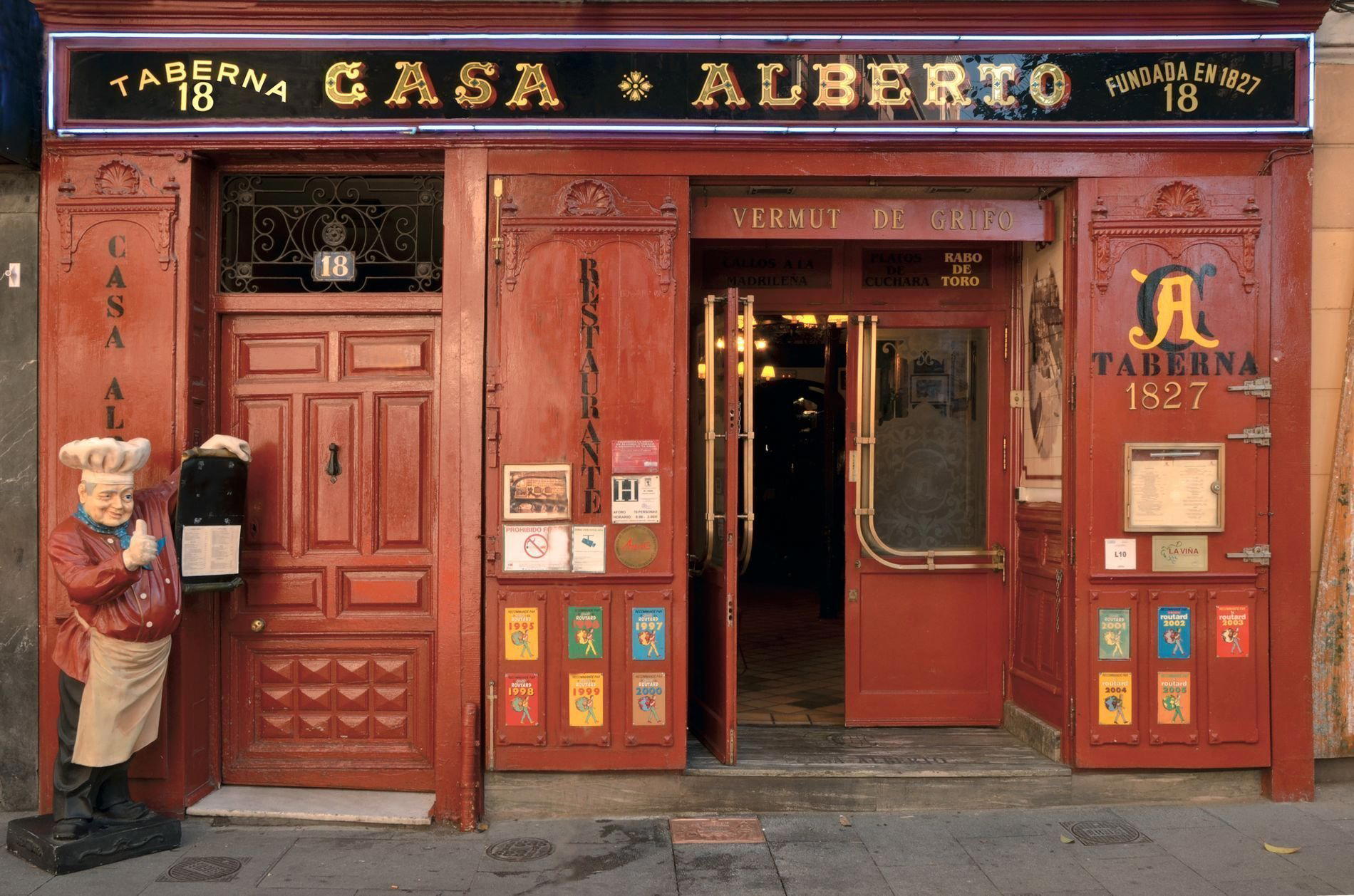
The Taberna Ritual in the Heart of Madrid
Madrid's dining identity has always been split between two registers: the forward-looking tasting menu culture represented by venues like DiverXO and Coque, and the older, quieter tradition of the taberna, where the format has resisted reinvention for generations. Casa Alberto, on Calle de las Huertas 18 in the Centro neighbourhood, belongs firmly to the second category. The street itself runs through Barrio de las Letras, Madrid's historic literary quarter, and the building dates to the early nineteenth century, context that shapes what you encounter before you even step inside.
The approach to Casa Alberto is direct: a tiled facade, a bar visible through the door, the faint smell of vermouth and cured pork. These are signals that the meal here follows a specific sequence, one that predates the modernist Spanish dining movement by well over a century. Understanding that sequence is the better part of knowing how to use this place.
How the Meal Moves Here
Traditional taberna dining in Madrid does not proceed like a tasting menu or a formal restaurant service. The rhythm is slower and more self-directed. The bar is the entry point, vermouth on tap, usually served with a small bite, consumed standing or perched on a stool. This is not a prelude to be rushed; in the taberna tradition, it is a meal in itself, and plenty of locals stop here and go no further.
For those continuing to a seated lunch, the pacing remains unhurried. Spanish midday eating culture, particularly in traditional houses like this, assumes a two-hour window at minimum. Courses arrive without the military timing of formal fine dining. The conversation is part of the structure. This is the format that places like DSTAgE and Paco Roncero consciously departed from; Casa Alberto is the original model they were departing from.
The menu here centres on the kind of cooking that requires time and repetition to do well: braised tripe, callos a la madrileña, slow-cooked offal, house-made croquetas. These dishes do not photograph particularly well and do not travel through trend cycles. They are the reason the category exists.
Positioned Against Madrid's Current Scene
The city now holds multiple three-Michelin-star addresses, and the middle tier of creative Spanish cooking, represented by places like Deessa, has expanded to meet international demand. Against this backdrop, a functioning nineteenth-century taberna occupies a specific and increasingly narrow position: not a museum piece, not a tourist trap, but a working restaurant operating within a format that has largely been absorbed into nostalgia elsewhere in Europe.
The comparison that matters is with the category of traditional regional restaurants across Spain. Venues like Arzak in San Sebastián and Martin Berasategui in Lasarte-Oria built their reputations on regional cooking that evolved into something codified. The restaurant represents the pre-evolution state: the cooking before technique became the subject.
Le Bernardin in New York City and Lazy Bear in San Francisco represent the engineered-experience end of the spectrum; the restaurant is the inverse, a place where the format predates the concept of a curated experience entirely.
Barrio de las Letras as Context
The neighbourhood matters. Barrio de las Letras, centred on Calle de las Huertas and the surrounding streets, was Madrid's literary and bohemian district in the sixteenth and seventeenth centuries, Cervantes and Lope de Vega both lived within a short radius. That history has left an infrastructure of older buildings, narrower streets, and a density of traditional bars that has proved more resistant to gentrification than parts of Malasaña or Chueca. The taberna format survived here partly because the built environment was never dramatically redeveloped.
The bar draws a cross-section of neighbourhood regulars, office workers on a long lunch, and culturally-oriented visitors who know to eat where the city actually eats rather than where hotel concierges point. Spain's broader regional dining ecosystem, from El Celler de Can Roca in Girona to Aponiente in El Puerto de Santa María, attracts a different traveller profile entirely, the pilgrimage diner planning months ahead. The restaurant operates on a different calendar.
What to Know Before You Go
Know Before You Go
- Address: C. de las Huertas, 18, Centro, 28012 Madrid, Spain
- Neighbourhood: Barrio de las Letras, within walking distance of the Prado and Reina Sofía
- Leading approach: Arrive at the bar first. Vermouth service is central to the ritual, not optional preamble.
- Timing: Lunch is the primary meal in the taberna tradition. The Spanish midday service runs roughly 14:00 to 16:00; arriving at the tail end compresses the experience considerably.
- Booking: Reservations are recommended.
- Closest reference points:
At a Glance
Comparable venues nearby, for context on price, style, and recognition.
| Venue | Cuisine | Price | Notes |
|---|---|---|---|
| Casa AlbertoThis venue — the venue you are viewing | Not listed | $$ | Not listed |
| Pastelería Celicioso | Chueca, Gluten-Free Spanish Bakery Cafe | $$ | Not listed |
| La Goyesca | Goya, Traditional Spanish | $$ | Not listed |
| De la Riva | Not listed | $$ | Hispanoamerica, Traditional Spanish Market Cuisine |
| Bovia Del Viso | Aguilas, Modern Spanish Steakhouse | $$ | Not listed |
| La Gruta Valdebernardo | Not listed | $$ | Casco Historico de Vicalvaro, Cocina Española de Autor |
Recognition history
Dated appearances from independent guides and award organizations, with the underlying list record or original source where available.
Macarfi 7.2 Food Rating
Macarfi
Opinionated About Dining Newly Added European Restaurants
Opinionated About Dining
Opinionated About Dining Casual in Europe Recommended
Opinionated About Dining
Continue exploring
More in Madrid
Restaurants in Madrid
Browse all →
Bars in Madrid
Browse all →
Hotels in Madrid
Browse all →

At a Glance
- Classic
- Historic
- Well Known
- Cozy
- Casual Hangout
- Special Occasion
- Historic Building
Current opening hours
- Monday
- Closed
- Tuesday
- 12–11 PM
- Wednesday
- 12–11 PM
- Thursday
- 12–11 PM
- Friday
- 12–11 PM
- Saturday
- 12–11 PM
- Sunday
- 12–4 PM
Hours can change for holidays and private events. Last verified .
Classic and charming historic decor with oil paintings, zinc bar, and a lively atmosphere preserving generations-old spirit.