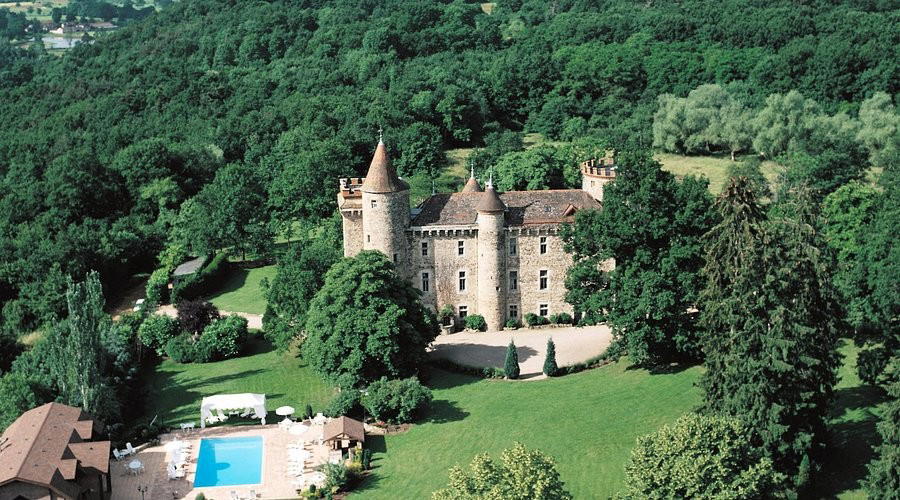
La Belle Meunière pairs modern French bourgeois cooking with Asian influences in a historic waterfront hotel restaurant, with formal service and an extensive wine list.
Pearl is the En Primeur Club membership app — saves, bookings, and concierge access live there. Same editors, same standards.
- Address
- 25 Av. de la Vallée, 63130 Royat, France
- Phone
- +33473358017
- Website
- la-belle-meuniere.com
- Directions
- Get directions
 Saves & bookings on Pearl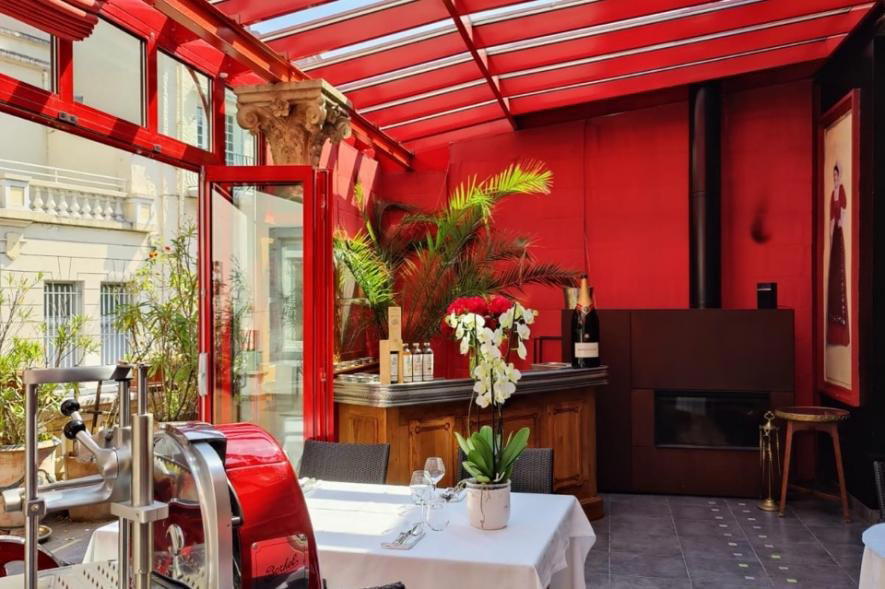
Where the Auvergne Valley Sets the Table
The approach to Royat from Clermont-Ferrand takes you through a narrow volcanic corridor, the kind of landscape that concentrates its resources and makes them visible. The town sits in the valley of the Tiretaine river, a spa settlement that predates the railway and retains the unhurried tempo of a place that has always drawn people for reasons other than transit. Along Avenue de la Vallée, where La Belle Meunière occupies number 25, the air carries the mineral note associated with the nearby thermal springs. This is not incidental atmosphere. It is the context in which the restaurant's relationship to its immediate terrain makes sense.
The French provinces have long sustained a category of restaurant that the major city guides rarely cover with precision: the serious regional table that sources from its own geography rather than performing a national or international repertoire. Royat, positioned within the Puy-de-Dôme department, sits at the heart of one of France's more productive agricultural zones, with the Limagne plain to the east supplying grain and market vegetables, and the volcanic uplands to the west supporting cattle and small-scale producers of cheese and cured meats. A restaurant anchored to this specific supply geography operates in a different mode from a destination table in a metropolitan centre. The comparison set is not Alléno Paris au Pavillon Ledoyen or Mirazur in Menton. It is the tradition of the auberge de terroir, the inn that treats its surrounding farmland as the primary creative brief.
Ingredient Sourcing as Editorial Position
Auvergne cuisine carries a reputation for substance over spectacle: lentilles vertes du Puy, truffade, potée auvergnate, Salers and Cantal cheese, allotments of river fish from the Allier and its tributaries. These are not decorative regional accents applied to a modern French base. In the tradition that La Belle Meunière represents, the ingredient supply chain is the menu logic. The miller's wife, the meunière of the name, is a culinary figure rooted in French provincial life, associated with the preparation of river fish in butter and flour, a technique that prizes freshness and restraint over elaboration. That framing positions the restaurant clearly within a style of cooking that does not require imported luxury to justify itself.
Across France, the restaurants that have built durable identities in smaller towns have generally done so by treating proximity to producers as a non-negotiable constraint rather than a marketing footnote. Bras in Laguiole made the Aubrac plateau its subject. Auberge du Vieux Puits in Fontjoncouse built its identity around a village kitchen garden in the Aude. Auberge de l'Ill in Illhaeusern has operated beside the river Ill for generations, with local fish and Alsatian producers structuring a menu that has outlasted countless seasonal trend cycles. The common thread is geographic specificity over generic fine-dining vocabulary. La Belle Meunière, on Avenue de la Vallée in this small spa town, follows that pattern of identity by terrain.
The Royat Dining Scene in Context
Royat is not a restaurant city in the way that Lyon, Strasbourg, or even Clermont-Ferrand function as dining destinations. It is a compact thermal town where visitors arrive primarily for the waters and the relief they offer, and where restaurants tend to serve that resident and visitor base rather than drawing destination diners from further afield. That context shapes how a restaurant like La Belle Meunière positions itself. The competition it faces locally is modest. The comparison it invites regionally is with the broader tradition of Auvergne terroir cooking, which has produced serious tables without the Michelin density of Burgundy or the Loire.
The neighbouring operation La Flèche d'Argent (Modern Cuisine) represents a different register within the same small market: a more contemporary idiom against which the traditional positioning of the restaurant becomes more legible. These two restaurants together define the upper end of what Royat currently offers, which is a narrow but coherent bracket. Elsewhere in the region, Troisgros - Le Bois sans Feuilles in Ouches represents the apex of serious Auvergne-adjacent cooking at national recognition level, setting a ceiling that local restaurants can orient against without pretending to occupy.
What the French Provincial Table Does That the City Cannot
There is an argument, made periodically by critics of metropolitan fine dining, that the French regional table retains something that urban restaurants have lost: a genuinely limited supply geography that forces seasonal discipline. When the Allier river yields perch and pike, those fish appear. When the Puy lentil harvest comes in, lentils structure the menu. This is not the curated seasonality of a city restaurant sourcing from multiple regions simultaneously, but something more constrained and, by extension, more specific. The meunière preparation, simple and technique-dependent, is a useful illustration: it cannot be improved by global sourcing because it is defined by the quality of what was caught nearby that morning.
This model of cooking has its equivalents across France at varying scales of ambition. Georges Blanc in Vonnas built a three-generation identity in the Ain around Bresse poultry and local market produce. Paul Bocuse - L'Auberge du Pont de Collonges in Collonges-au-Mont-d'Or institutionalised the Rhône corridor as a supply landscape over half a century. L'Oustau de Baumanière in Les Baux anchored itself to Provençal olive culture and herb-driven cooking. Each demonstrates that a geographic anchor, taken seriously and sustained, produces a more identifiable restaurant than one that optimises for critical currency instead. At a different scale and without comparable award recognition, the restaurant operates within this tradition rather than outside it.
For readers interested in how similar ingredient-forward thinking operates at higher levels of formal recognition, Flocons de Sel in Megève and Christopher Coutanceau in La Rochelle offer instructive regional parallels, the former in the Alpine supply chain, the latter in Atlantic seafood. Further afield, AM par Alexandre Mazzia in Marseille demonstrates how Mediterranean supply geography can drive a creative program with international recognition. Assiette Champenoise in Reims and Au Crocodile in Strasbourg represent the northeastern end of the French regional table tradition. Beyond France, Le Bernardin in New York City and Atomix in New York City illustrate how ingredient provenance has become a structuring principle in ambitious restaurants across different national traditions.
Planning a Visit
The restaurant is at 25 Avenue de la Vallée, 63130 Royat, accessible from Clermont-Ferrand by tram and a short walk, making it practicable as a lunch or dinner stop without requiring a car. Royat's thermal season draws visitors primarily between spring and autumn, and the restaurant's local orientation means it is likely to reflect that rhythm, though confirmation of current hours and booking arrangements should be sought directly given For travellers structuring a wider Auvergne dining itinerary, Royat functions as a natural extension of a Clermont-Ferrand stay rather than a standalone destination.
Fast Comparison
Comparable venues nearby, for context on price, style, and recognition.
| Venue | Cuisine | Price | Awards | Notes |
|---|---|---|---|---|
| La Belle MeunièreThis venue — the venue you are viewing | Modern French Bourgeois with Asian Influences | $$$ | Not listed | Not listed |
| La Flèche d'Argent | Modern French Gastronomique | $$$$ | Michelin Plate | Royat |
| Bienheureux | Modern French seasonal tasting menu | $$$ | Not listed | Wasquehal |
| La Table d'Antoine | Modern French with Japanese influences | $$$ | Not listed | Vichy historique |
| Relais des lacs | Traditional French Aubrac Regional | $$$ | Not listed | Les Salces |
| Comptoir De Vie | Modern French Tasting Counter-Bar | $$$ | Not listed | 2nd Arrondissement |
Continue exploring
More in Royat
Restaurants in Royat
Browse all →
At a Glance
- Romantic
- Elegant
- Classic
- Sophisticated
- Date Night
- Special Occasion
- Business Dinner
- Historic Building
- Waterfront
- Private Dining
- Hotel Restaurant
- Extensive Wine List
- Farm To Table
- Local Sourcing
- Waterfront
Current opening hours
- Monday
- Closed
- Tuesday
- 7:30–9 PM
- Wednesday
- 12–1:30 PM, 7:30–9 PM
- Thursday
- 12–1:30 PM, 7:30–9 PM
- Friday
- 12–1:30 PM, 7:30–9 PM
- Saturday
- 12–1:30 PM, 7:30–9 PM
- Sunday
- 12–1:30 PM
Hours can change for holidays and private events. Last verified .
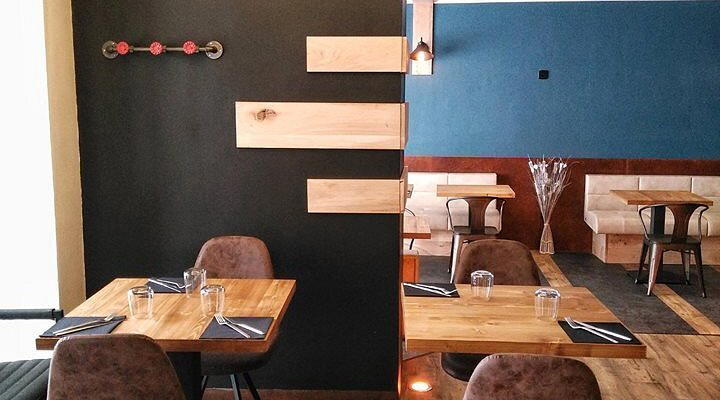
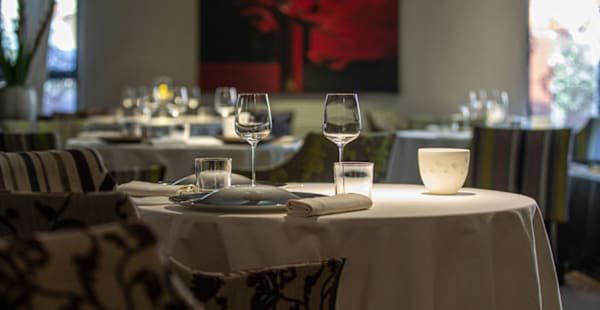
Magnificent turn-of-the-century conservatory with Art Nouveau listed architecture, wonderful mouldings and stained glass windows creating a warm, character-filled setting that combines past charm with contemporary design.