Jean-Claude Leclerc

One of Clermont-Ferrand's most established fine dining addresses, Jean-Claude Leclerc has held a Michelin star since 2025 and spent over two decades anchoring the city's upper tier of modern French cooking. The kitchen works within the classical Gallic canon, reinterpreting trotters, foie gras, and coastal fish through a seasonal lens that keeps the cooking grounded rather than showy.
Pearl is the En Primeur Club membership app — saves, bookings, and concierge access live there. Same editors, same standards.
- Address
- 12 Rue Saint-Adjutor, 63000 Clermont-Ferrand, France
- Phone
- +33 4 73 36 46 30
- Website
- restaurant-jcl.com
- Directions
- Get directions
 Saves & bookings on Pearl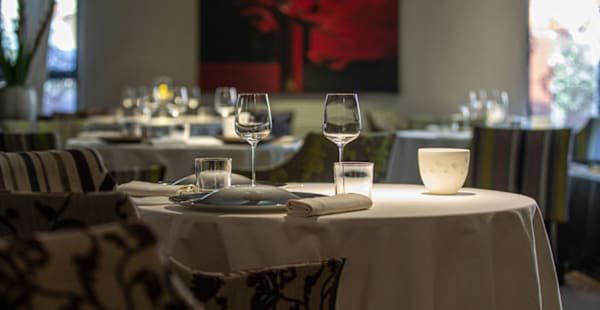
Where Classical French Cooking Meets Volcanic Country
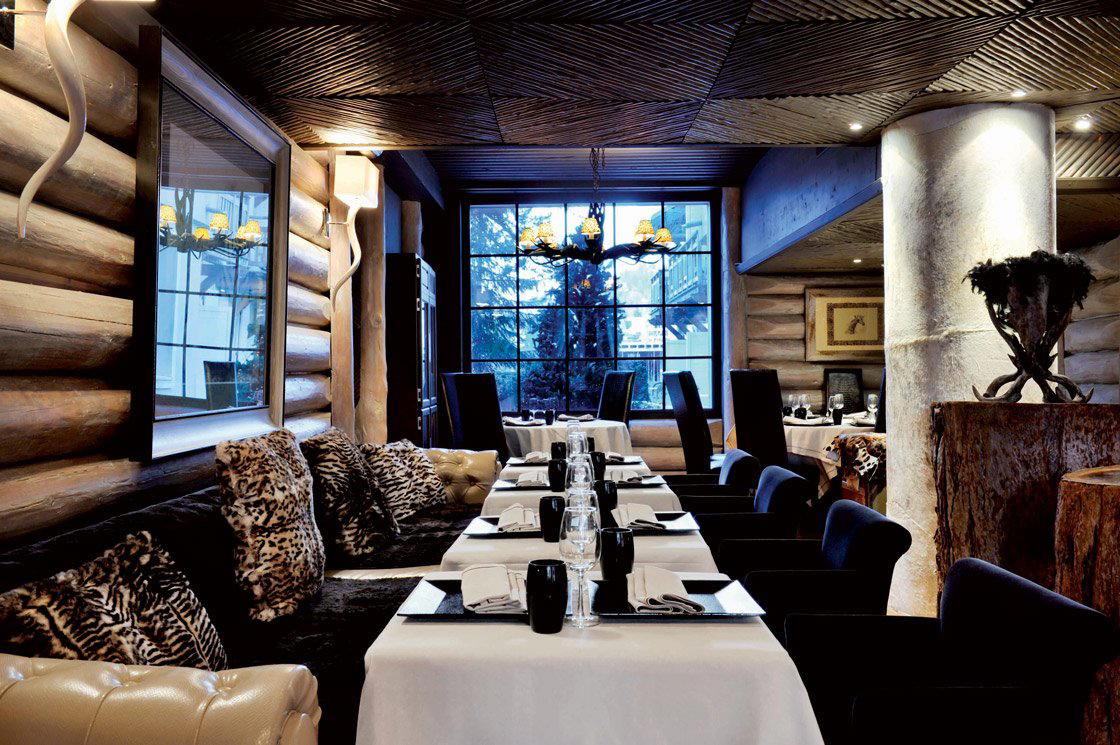
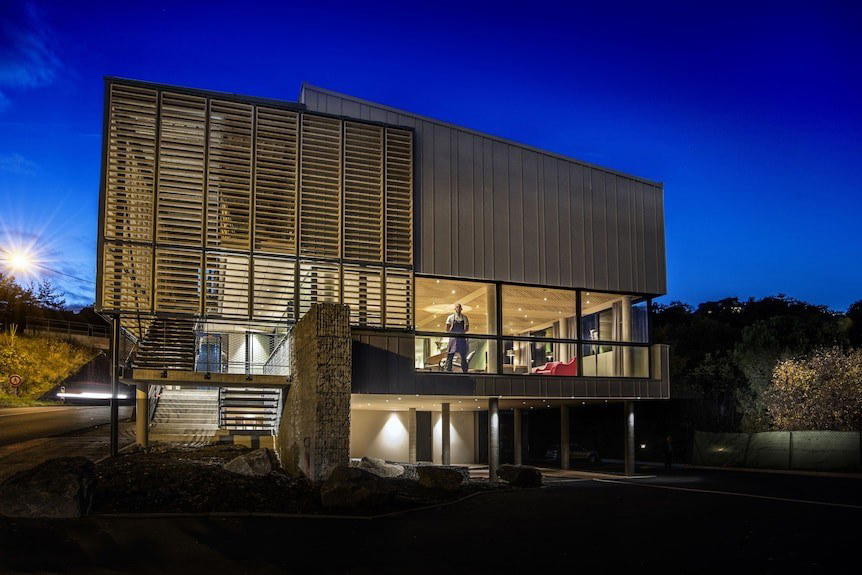
Rue Saint-Adjutor sits in a quieter fold of central Clermont-Ferrand, close enough to the Palais de Justice that the restaurant's own Michelin citation makes a dry joke about proximity to the courts. The building's contemporary interior keeps the register formal without tipping into stiffness: clean lines, measured lighting, and a room that signals its price point before a menu arrives. This is the physical grammar of serious French provincial dining, a category that Clermont-Ferrand does not always receive credit for sustaining at this level.
France's regional fine dining circuit has long operated in the shadow of Paris and the grandes maisons of Lyon or the Côte d'Azur. Addresses like Mirazur in Menton, Troisgros in Ouches, or Auberge de l'Ill in Illhaeusern define how international audiences imagine French gastronomy outside the capital. But the Auvergne has its own culinary logic, built around volcanic terroir, hardy livestock, and a tradition of cooking that favours substance over spectacle. Jean-Claude Leclerc sits precisely inside that tension: a kitchen applying classical Gallic technique to a region more often associated with tripe and lentils than with tasting menus.
Two Decades and a Michelin Star
The longevity here matters more than a single award cycle. Over twenty years of operation in a mid-sized French city is its own credential. The Michelin star awarded in 2025 formalises what regulars have understood for some time: this kitchen operates at a tier above most of what Clermont-Ferrand offers at the €€€€ price point.
Within Clermont-Ferrand's fine dining tier, the comparison set is small. Le Pré by Xavier Beaudiment holds two Michelin stars and takes a more overtly creative line. Apicius shares the single-star bracket and the modern cuisine classification. Jean-Claude Leclerc's position in that bracket is shaped by a different emphasis: a deeper fidelity to classical French recipes, updated by season and sensibility rather than deconstructed for effect. For the broader Clermont-Ferrand restaurant picture, our full Clermont-Ferrand restaurants guide maps the city's range from neighbourhood bistros to starred tables.
The Cooking: Gallic Canon, Seasonal Frame
The cultural roots of the menu at Jean-Claude Leclerc are worth reading carefully. French classical cuisine rests on a set of techniques and preparations that have been codified for generations: braised offal, enriched sauces built from long reductions, the pairing of land and sea proteins, the measured use of luxury ingredients like foie gras and truffle. These are not nostalgic gestures in this kitchen; they are the working vocabulary.
Pig's trotters with foie gras wrapped in bacon, underscored by truffle dressing, is the kind of dish that places cooking in a direct line with the grande cuisine tradition while demanding considerable technical precision. Trotters require extended cooking to achieve the gelatinous tenderness that makes the preparation work; the layering of foie gras and bacon introduces richness and salinity in proportion; truffle dressing, added as an accent rather than a feature, ties the components together without overwhelming the base. This is balance arrived at through execution, not through restraint for its own sake.
The fish preparation, sole with crab meat, cockles, lemon confit, and bouillabaisse jus, operates by different logic. Bouillabaisse is a Provençal preparation, not an Auvergnat one, and its appearance here as a jus signals classical French cooking's tendency to borrow across regional lines and concentrate technique into a single element. The cockles and lemon confit introduce acidity and brine to cut against the richness of crab and sole. This is cooking that understands the geometry of a plate: each component has a structural role, not just a flavour contribution.
For those curious how this register of modern French cuisine translates across different national settings, Alléno Paris au Pavillon Ledoyen represents the capital's apex expression of the same tradition. Flocons de Sel in Megève applies a similar seasonal rigour to Alpine ingredients. And for readers interested in how modern cuisine translates into entirely different culinary cultures, Frantzén in Stockholm and FZN by Björn Frantzén in Dubai show the international reach of the same precise, ingredient-led approach. Closer to Clermont-Ferrand, Bras in Laguiole demonstrates how a deeply regional kitchen can achieve international recognition by leaning further into terroir rather than away from it.
The Auvergne Context
Clermont-Ferrand is a city that dining travellers frequently pass through rather than seek out. The Michelin Guide's broader French coverage has historically concentrated its starred recognition on the Rhône-Alpes corridor to the east and the Atlantic coast to the west; the Massif Central occupies a quieter patch of the culinary map. That makes a twenty-year presence at the summit of the local market a different kind of achievement than accumulating stars in a city already thick with competition. The audience here is primarily local and regional, which means the kitchen earns its repeat business on value delivered rather than on destination novelty.
At the €€€€ price bracket, Jean-Claude Leclerc competes in a tier where Clermont-Ferrand diners have limited local alternatives. L'Instantané and L'Ostal operate at different price points and with different culinary propositions. L'En-but and L'Écureuil serve the city's more casual register. The gap between the €€€ and €€€€ brackets in a city of this size is meaningful: diners stepping up to the top tier are making a considered choice, and the twenty-year track record suggests that choice is being rewarded with sufficient consistency to sustain it.
Planning a Visit
The restaurant sits at 12 Rue Saint-Adjutor, in central Clermont-Ferrand, within walking distance of the main cathedral district. The restaurant operates at the summit of the city's price tier, and the Michelin recognition in 2025 is likely to draw a wider radius of visitors than the primarily local clientele it has traditionally served. Advance booking is advisable, particularly for weekend services. For those building a wider itinerary around the visit, our full Clermont-Ferrand hotels guide covers accommodation options across price points, while our full Clermont-Ferrand bars guide and our full Clermont-Ferrand wineries guide map out the surrounding drinks culture. For those interested in the region's broader calendar of cultural and culinary programming, our full Clermont-Ferrand experiences guide provides additional context.
Cuisine and Awards Snapshot
| Venue | Cuisine | Price | Awards |
|---|---|---|---|
| Jean-Claude LeclercThis venue — the venue you are viewing | Modern Cuisine | €€€€ | Michelin 1 Star |
| Le Pré - Xavier Beaudiment | Creative | €€€€ | Michelin 2 Star |
| Apicius | Modern Cuisine | €€€€ | Michelin 1 Star |
| Le 62 | Modern Cuisine | Not listed | Modern Cuisine, €€ |
| Il Visconti | Italian | Not listed | Italian, €€ |
| Le Duguesclin | Modern Cuisine | Not listed | Modern Cuisine, €€€ |
Recognition history
Dated appearances from independent guides and award organizations, with the underlying list record or original source where available.
Michelin 1 Star
Michelin
Michelin 1 Star
Michelin
Michelin 1 Star
Michelin
Continue exploring
More in Clermont-Ferrand
Restaurants in Clermont-Ferrand
Browse all →
Bars in Clermont-Ferrand
Browse all →
At a Glance
- Elegant
- Intimate
- Sophisticated
- Special Occasion
- Date Night
- Business Dinner
- Standalone
- Extensive Wine List
- Local Sourcing
Current opening hours
- Monday
- Closed
- Tuesday
- 12–3:30 PM, 7:30–11:30 PM
- Wednesday
- 12–3:30 PM
- Thursday
- 12–3:30 PM, 7:30–11:30 PM
- Friday
- 12–3:30 PM, 7:30–11:30 PM
- Saturday
- 12–3 PM, 7:30–11:30 PM
- Sunday
- Closed
Hours can change for holidays and private events. Last verified .
Élégante et intimiste with polished service and cossu interior.