
A Michelin-starred restaurant and twelve-room hotel in the volcanic heart of Auvergne, Origines sits against the walls of a 14th-century castle in Le Broc and frames the region's ancient caldera landscape through floor-to-ceiling glass. Chef Adrien Descouls, an Auvergne native, anchors the kitchen to local culinary tradition while the architecture holds a deliberate tension between contemporary restraint and medieval stone. Priced from $250 per night.
Pearl is the En Primeur Club membership app — saves, bookings, and concierge access live there. Same editors, same standards.
- Address
- Rue du Clos de la Chaux, 63500 Le Broc
- Phone
- +33 4 73 71 71 71
- Website
- restaurant-origines.fr
- Directions
- Get directions
 Saves & bookings on Pearl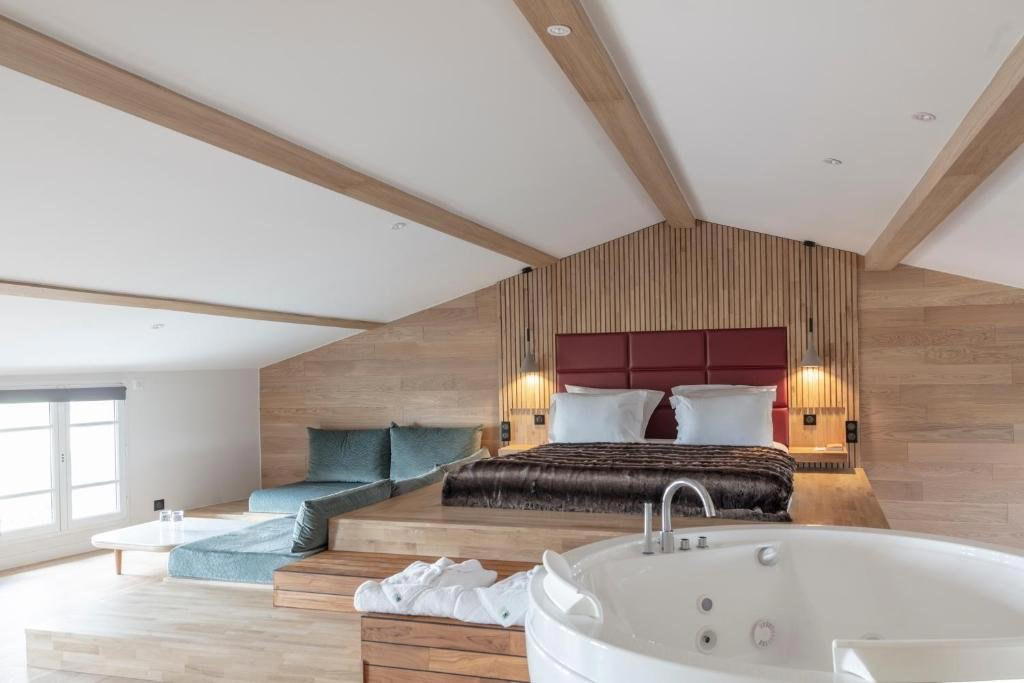
Stone Walls, Volcanic Views, and a Building That Knows Where It Is
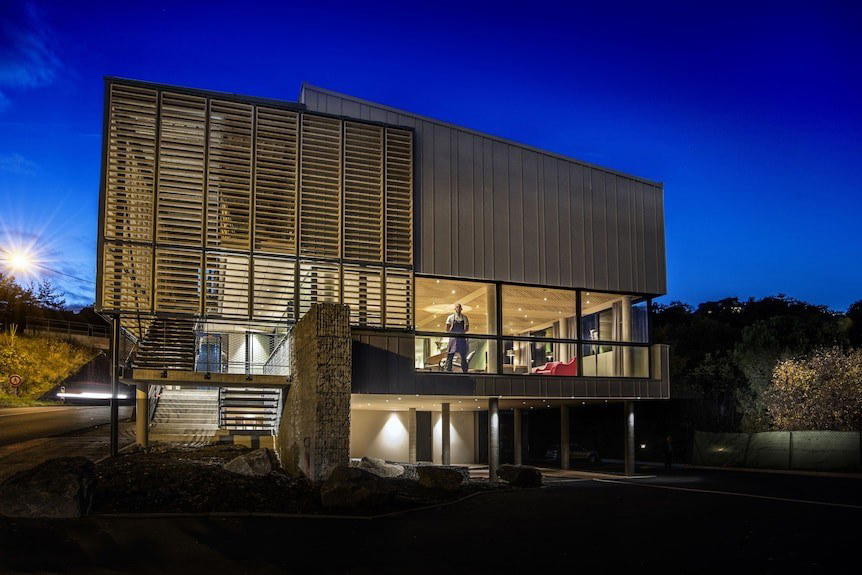
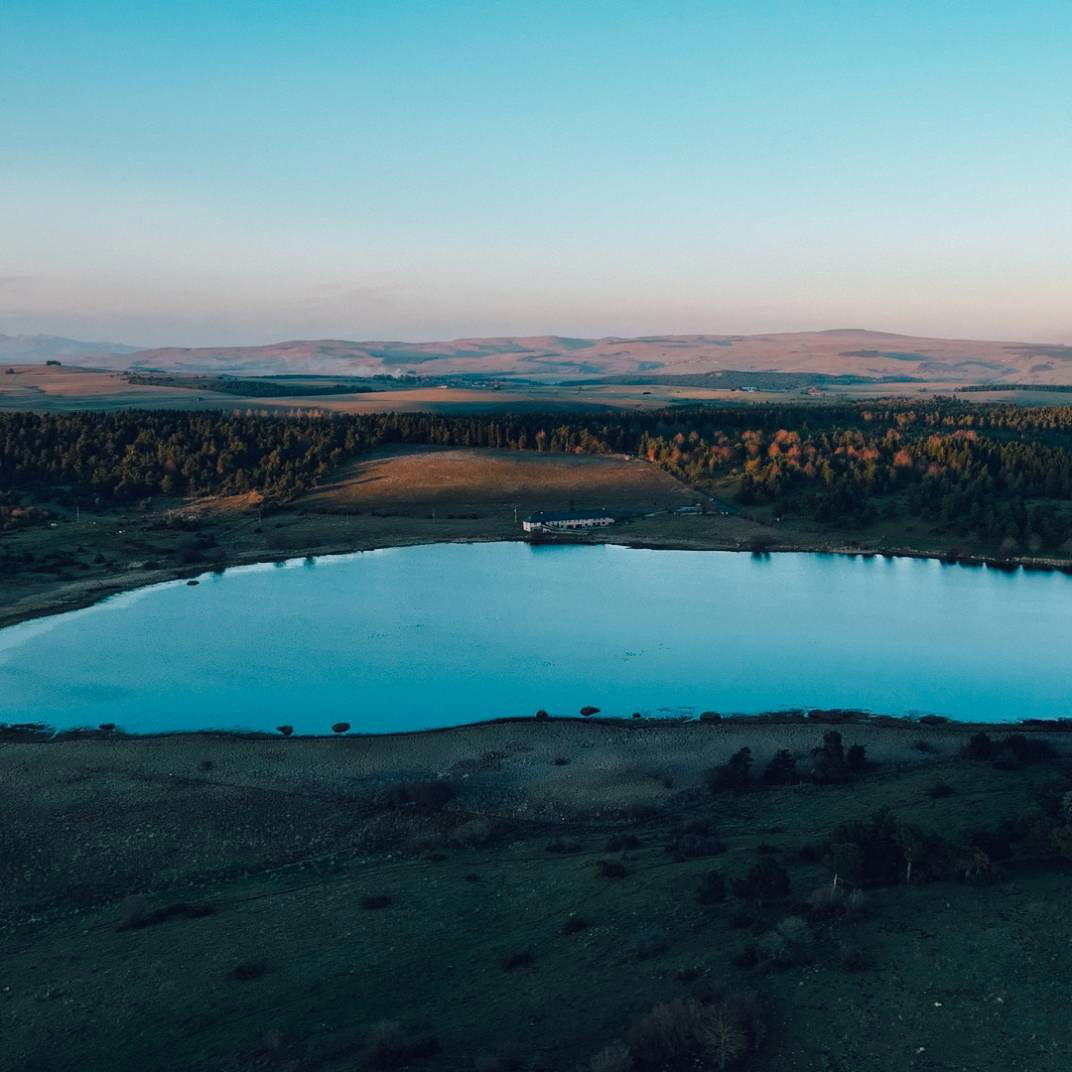
In central France's Auvergne region, the relationship between landscape and architecture has rarely been direct. The dormant volcanoes that define the area — the chain of puys stretching across the Massif Central — have shaped local building materials, agricultural rhythms, and culinary traditions for centuries. Against that backdrop, the approach taken at Hôtel Restaurant Origines par Adrien Descouls in Le Broc reads less like a design statement and more like a considered argument: that contemporary architecture, placed correctly and built honestly, can amplify a historic setting rather than compete with it.
The building is modern in form and unambiguous about that fact. What makes it architecturally legible is what it sits beside: the thick stone walls of a 14th-century castle, with which it shares a boundary. The contrast is deliberate. Rather than mimicking the medieval fabric or retreating behind a heritage-safe aesthetic, the structure asserts its own moment while letting the castle wall do its own talking. The result is a spatial tension that becomes the property's defining characteristic before a guest sets foot inside.
The View as Architectural Feature
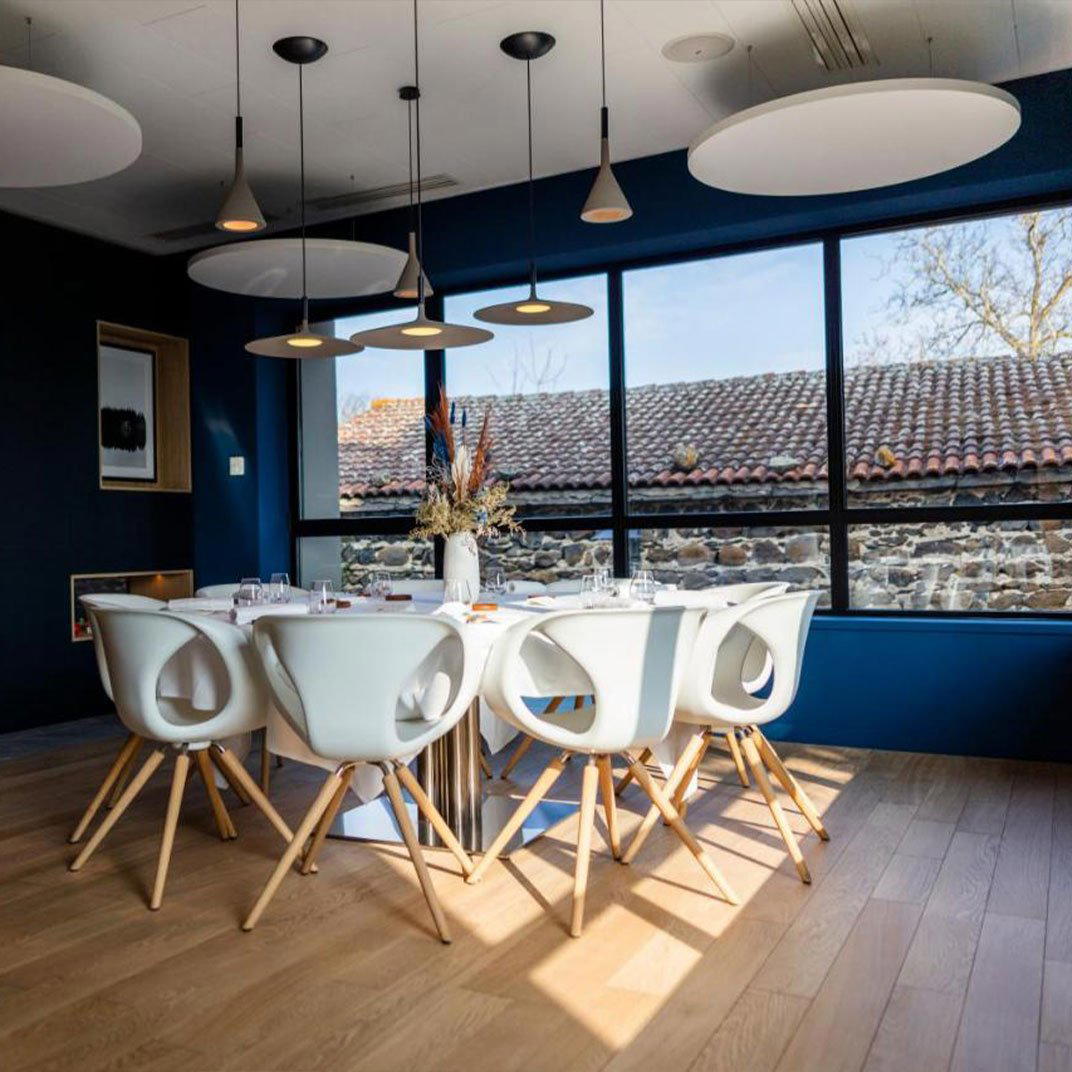
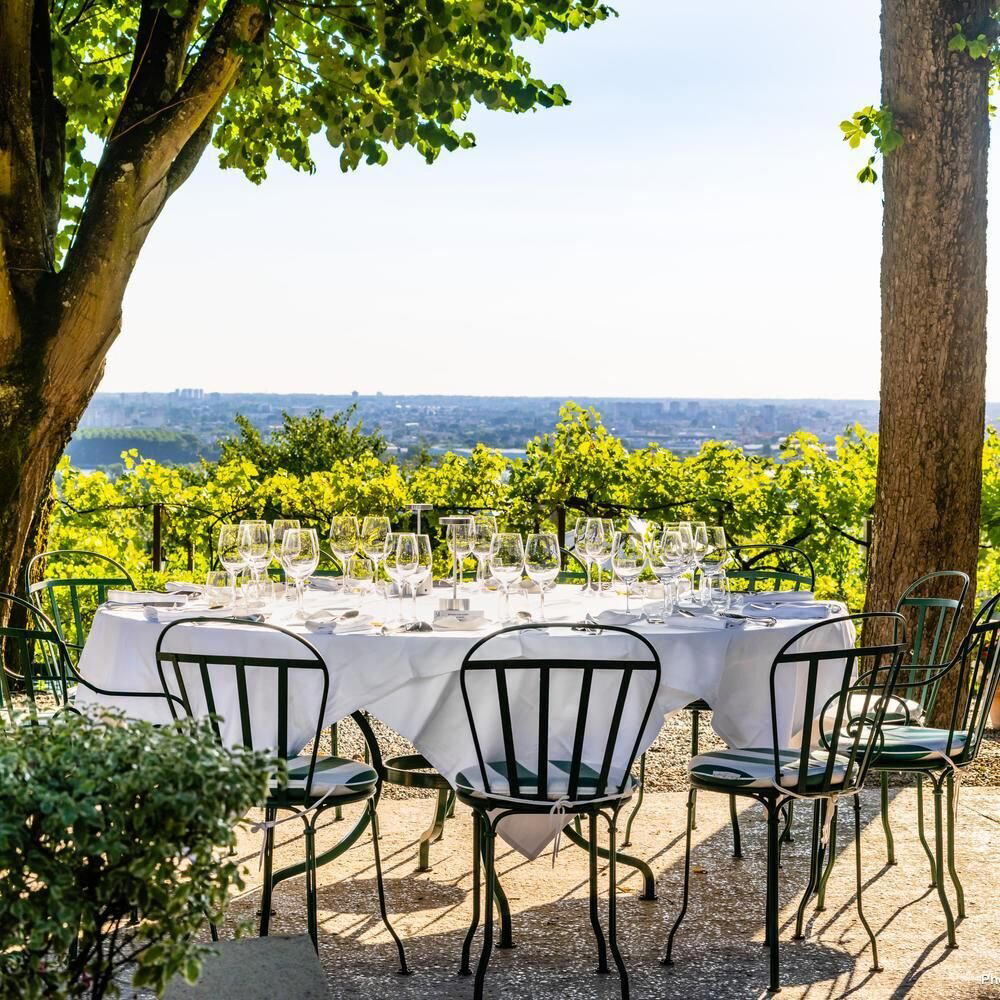
The panorama from the dining room and the public spaces is what most guests will remember first, and it is not incidental to the design. The volcanoes of Auvergne, among the youngest in France, geologically speaking, though dormant for thousands of years, form a horizon that is both dramatic and strangely serene. In French regional hospitality, few properties position their architecture to address a landscape this specific. The view here functions as a structural element: it gives the dining room its depth, sets the mood for meals, and provides the kind of borrowed scenery that no amount of interior investment can manufacture.
This is a pattern seen at a small number of French chef-driven hotel-restaurants that have built around a particular sense of place rather than a universal luxury language. Properties like Baumanière Les Baux-de-Provence in Les Baux or La Bastide de Gordes in Gordes draw their identity from limestone plateaus and Provençal rock; Origines draws its from basalt flows and the oldest volcanic terrain in France. The geographic specificity is load-bearing, not decorative.
Twelve Rooms Built Around Restraint
With twelve rooms and suites, Origines sits in the tier of French luxury hotel-restaurants where intimacy is a structural condition rather than a marketing position. At this scale, the architecture of the guest rooms becomes as consequential as the public spaces. Here, the design language is deliberately understated: warm neutrals, minimalist arrangements, and natural materials with genuine provenance. Raw oak appears throughout, and local volcanic stone features in several rooms, making the geology of the surrounding landscape a material presence inside the building rather than just a view through the window.
The upper-end suite introduces a freestanding whirlpool bath at the foot of the bed, a detail that signals the property's tier without requiring elaboration. Across the category, twelve-room chef-driven properties in France tend to price on the strength of the restaurant's reputation and the scarcity of the experience rather than room square footage, and Origines, at around $250 per night, prices accordingly. For context, comparable chef-anchored small hotels in better-known French regions, the Rhône Valley, Burgundy, the Côte d'Azur, frequently ask considerably more for similar room counts. Auvergne's relative obscurity on the international luxury circuit keeps the proposition accessible by peer standards.
Guests considering other intimate French chef-hotel formats in more prominent locations might look at Domaine Les Crayères in Reims, Château Lafaurie-Peyraguey in the Sauternes, or Royal Champagne Hotel and Spa in Champillon for reference points across different French wine regions. Larger French luxury hotel brands such as Cheval Blanc Paris or Cheval Blanc Courchevel operate at a different scale and price tier entirely. For guests drawn to design-led Mediterranean alternatives, properties such as Casadelmar in Porto-Vecchio, Château de la Chèvre d'Or in Èze, or La Réserve Ramatuelle offer a contrasting coastal reference. The interior design at Villa La Coste in Le Puy-Sainte-Réparade or the clifftop architecture of The Maybourne Riviera represent the south of France's own approach to contemporary architecture in historic or dramatic natural settings.
The Restaurant: Auvergne as Subject Matter
Michelin awarded Origines one star and, in 2024, one Key, the latter a recognition specifically for the hotel experience rather than the restaurant alone, reflecting the guide's expanded evaluation of chef-driven hospitality properties. One Key is a meaningful distinction in a country where Michelin's hotel ratings carry weight, and it places Origines in a small cohort of French properties recognized for the coherence of their overall offering rather than the restaurant in isolation.
The kitchen's orientation is toward the culinary traditions of Auvergne, a region whose gastronomy is built around hardy, high-altitude ingredients: lentilles vertes du Puy (the only lentil to hold an AOP designation), Salers and Cantal cheeses, gentian-based spirits, and pork preparations from centuries of pastoral farming. Chef Adrien Descouls is from Auvergne, and that local formation matters in the same way that a Burgundian winemaker's regional rootedness matters: it shapes what gets cooked and why, not just what appears on a menu. At a starred level, this kind of sourcing discipline and regional commitment carries editorial weight with the kind of guest who has already eaten through more prominent French starred kitchens and is looking for geographic depth rather than another technically accomplished tasting menu in a city centre.
Breakfast at Origines is framed as a spread in a regional peasant style, constructed from the leading available local produce and served either in the dining room or in-suite. In the context of French chef-hotel culture, breakfast is often where kitchens with serious sourcing commitments are most transparent about their relationships with local producers. The morning offering here is consistent with the restaurant's wider positioning.
Getting There and Planning a Stay
Le Broc sits in the Puy-de-Dôme department of the Auvergne-Rhône-Alpes region, in an area more commonly reached by travellers passing through Clermont-Ferrand than by those routing directly from Paris or Lyon. Clermont-Ferrand has an airport with domestic connections and is one practical regional gateway. Road access from Clermont-Ferrand is direct, and the drive through the Auvergne countryside toward Le Broc gives the trip a transitional quality that works in the property's favour: you arrive having already moved through the volcanic landscape the restaurant will serve you. The address is Rue du Clos de la Chaux, 63500 Le Broc. For availability and reservations, the property's website or a specialist hotel concierge is the appropriate starting point; the twelve-room format means the property can fill quickly around weekends and the French summer season, so advance planning is sensible.
For guests building a wider French itinerary, Auvergne pairs naturally with the Rhône Valley to the east, the Loire to the north, or the wine regions of the southwest. Those extending into the Riviera or Provence might consider Hotel Du Cap-Eden-Roc in Cap d'Antibes, Airelles Saint-Tropez, Hôtel and Spa du Castellet, or Château de la Gaude in Aix-en-Provence as southern bookends. For the Loire, Château du Grand-Lucé or Castelbrac in Dinard represent the region's more design-conscious options. The Bordeaux end of a circuit might include Les Sources de Caudalie or Château de Montcaud in Sabran. See our full Le Broc restaurants guide for additional context on dining in the area.
How Hôtel Restaurant Origines par Adrien Descouls, Le Broc compares with similar nearby venues.
| Venue | Awards |
|---|---|
| Hôtel Restaurant Origines par Adrien Descouls | Michelin 1 Key |
Recognition history
Dated appearances from independent guides and award organizations, with the underlying list record or original source where available.
Michelin 1 Key
Michelin
Michelin 1 Key
Michelin
Continue exploring
More in Le Broc
Hotels in Le Broc
Browse all →
At a Glance
- Romantic
- Elegant
- Sophisticated
- Scenic
- Quiet
- Modern
- Romantic Getaway
- Honeymoon
- Anniversary
- Celebration
- Destination Wedding
- Panoramic View
- Terrace
- Historic Building
- Design Destination
- Garden
- Wi Fi
- Restaurant
- Bar
- Room Service
- Concierge
- Parking
- Elevator
- Mountain
- Garden
- Wi Fi
- Restaurant
- Bar
- Room Service
- Concierge
- Parking
- Elevator
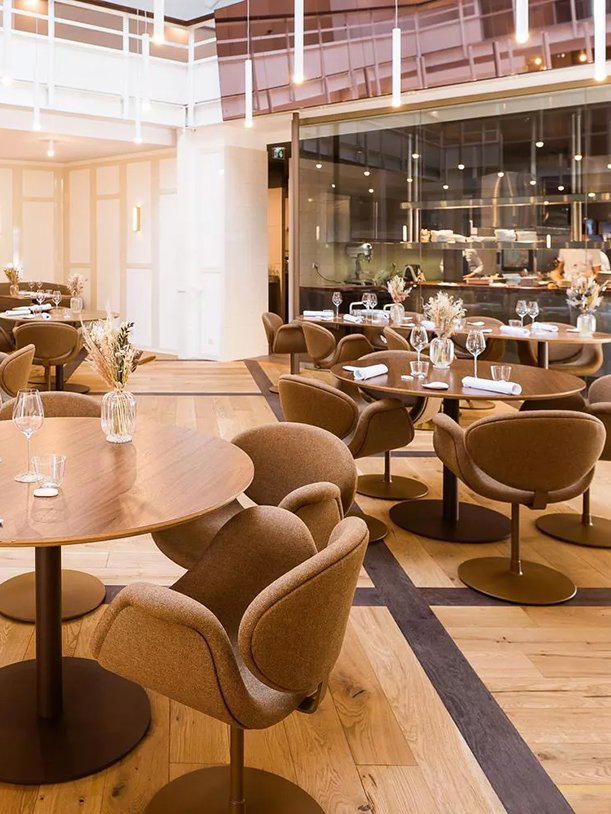
Refined and minimalist with warm neutrals, natural oak, and volcanic stone; bright dining room with expansive views; intimate and peaceful throughout.