Tabelog 100 #53
Our verdict
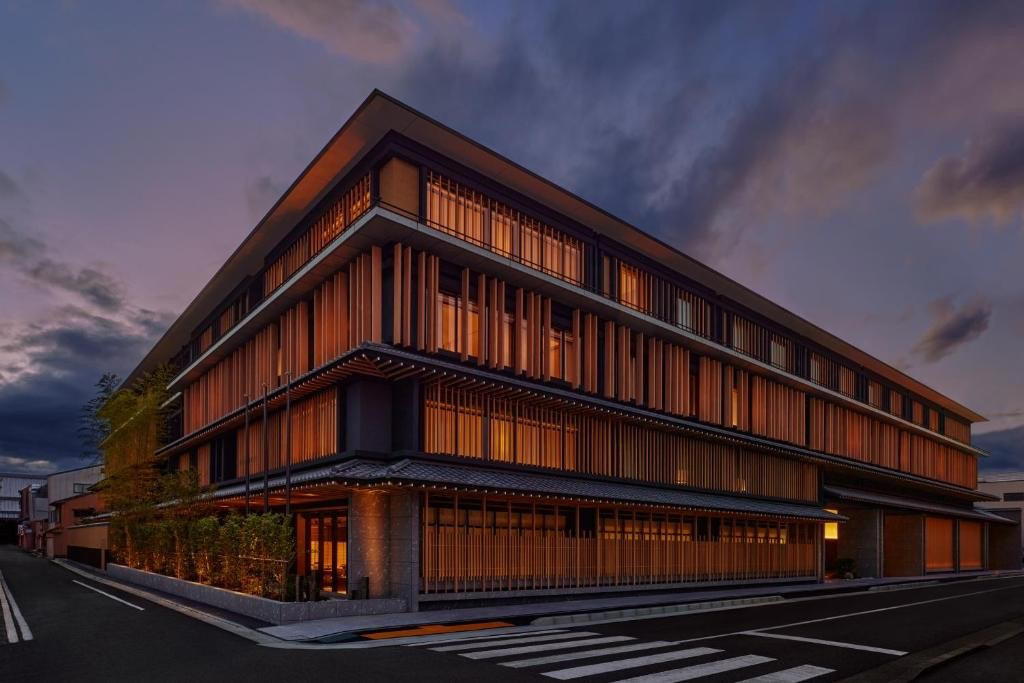
Kyoshoran Honten sits in Osaka’s Kyobashi area within the city’s serious yakiniku tier, selected for Tabelog’s Yakiniku WEST 100 in 2025 and listed across multiple recent years. The format is built for grilled beef and tripe rather than ceremony, with private rooms and larger-table flexibility giving it a different rhythm from counter-led Osaka dining.

Pearl is the En Primeur Club membership app, where members save venues, book tables and use the concierge.
The menu
What to order
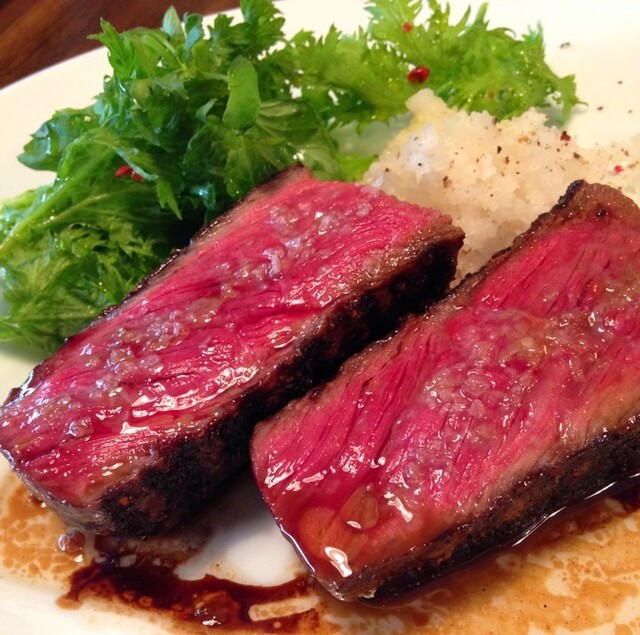
- Seared Loin (Aburi Roast)
- Yaki Shabu-shabu
- Princess Prince Course
- King’s Course
The first cue in serious yakiniku is the room: smoke, tongs against metal, conversation rising and falling around the grill. Osaka understands this dinner instinctively. It is social, technical, materially direct, and closer to shared cooking than chef-led tasting. Away from polished hotel corridors, that matters: the city leans into late-evening eating, commuter energy, and restaurants where regulars care more about timing, cut, heat, and appetite than theatre.
Kyoshoran Honten belongs to the Osaka category where yakiniku is a serious dinner, not a casual add-on after drinks. Its Tabelog Hyakumeiten recognition in 2025 places it inside a noted field of grill specialists. In a cuisine where reputation can swing on sourcing, ventilation, service pacing, and tripe handling, that notice says more than decoration.
Osaka yakiniku, with smoke and precision doing the work
Osaka’s dining identity is often flattened into street-food shorthand, but its better meals often sit in formats both communal and disciplined. Yakiniku is a clear example. The diner controls the final seconds over heat, yet the restaurant has already made the key decisions: what to buy, how to cut it, which parts to foreground, and how to pace a table so the grill never becomes overcooked beef.
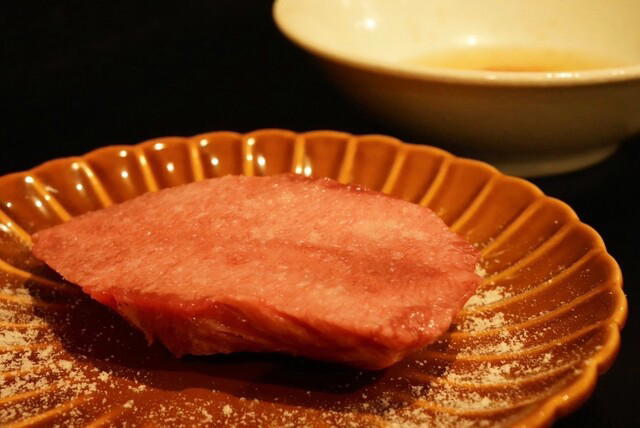
That is why tripe matters here. Offal separates casual grill shops from kitchens willing to court texture, chew, fat, and temperature directly. In Osaka, where grill culture has a strong place in local dining, a yakiniku room that treats tripe as part of the vocabulary is not chasing Western fine-dining delicacy. It argues for pleasure through contrast: lean and fat, crisped edges and spring, smoke and sauce, rice and drink.
The meal’s rhythm points the same way. Yakiniku works best when char, fat, and repetition are balanced by pacing and refreshment. It does not require ceremony. It does require attention, because grilled beef at this level is not just protein over flame, but a sequence that needs the table to keep pace.
Within Osaka, the comparison is less with sushi counters or kaiseki rooms than with restaurants that understand tempo. Yakiniku Horumon Odoru makes a useful peer for grill-led beef. Oku belongs to the unagi lane, where the craft is concentration and lacquered repetition. Izakaya Toyo sits in a more casual drinking-food register, while Hana and Washington Shokudo occupy everyday territory. Kyoshoran Honten is not selling rarity through silence or formality. It competes where the measure is how well a table can eat, drink, cook, and keep momentum.
A room built for groups, not hushed counter worship
The physical format changes the experience. Yakiniku places the restaurant closer to Osaka’s social dining tradition than to reservation-only austerity. That does not make dinner less serious; it makes the seriousness collective. Yakiniku depends on shared attention: someone watches the grill, someone pours, someone moves a piece before it tips from charred to tired.
Atmosphere is part of the evaluation. A strong yakiniku restaurant must absorb noise without losing service rhythm, let smoke and heat feel appetizing rather than chaotic, and support friends, families, and groups while keeping the sequence coherent. The best version feels lively without becoming careless, practical without becoming bland.
For visitors, Osaka corrects the idea that the city’s dining should orbit only its most obvious tourist routes. The city rewards diners comfortable with restaurants in practical urban settings, a familiar Japanese pattern where the approach may be understated and the meal more serious than the exterior suggests. That restaurant culture is part of the city’s grammar: loud, practical, anonymous street; specific meal inside.
The award history sharpens the point. Tabelog’s Hyakumeiten lists are not Michelin stars and should not be read as the same judgment. They are useful differently, especially for ramen, unagi, curry, and yakiniku, where local enthusiasm and category depth often matter more than international fine-dining polish. A 2025 Hyakumeiten selection places the restaurant among a defined category group rather than making a vague prestige claim.
How to place it in an Osaka dining itinerary
Kyoshoran Honten makes sense when the meal should be tactile, social, and meat-focused rather than chef-narrated. It fits diners who want the grill at the center of the table more than those chasing a quiet tasting menu. Its appeal lies in a category Osaka handles with confidence: food that is direct, interactive, and better when the table pays attention.
Build the wider itinerary around contrast. Morning bakery stops, coffee counters, snack culture, and other Osaka dining rooms show another side of the city’s everyday precision. Lighter or non-grill meals can offer relief from beef and smoke without leaving the city’s appetite for specialization.
For broader planning, use Our full Osaka restaurants guide alongside Our full Osaka hotels guide, Our full Osaka bars guide, Our full Osaka wineries guide, and Our full Osaka experiences guide. Readers extending the Japan route can compare category-specific cooking in other cities, while international Japanese drinking and casual formats show how the country’s dining vocabulary translates abroad.
The editorial read is clear: choose this dinner for yakiniku’s sensory mechanics, not ceremony. The evidence is in the category, 2025 Tabelog recognition, and the way Osaka suits a meal built around heat, smoke, and shared control.
Frequently asked questions
What's the pricing like at Kyoshoran Honten?
Pricing at Kyoshoran Honten is listed as JPY 8,000 - JPY 9,999.
When is Kyoshoran Honten open?
Opening hours for Kyoshoran Honten are not specified here; confirm directly with the restaurant before visiting.
Where is Kyoshoran Honten in Osaka?
Osaka.
What do critics highlight about Kyoshoran Honten?
The clearest marker is its Tabelog recognition in 2025. Critics also point to its yakiniku and tripe focus, its Osaka setting, and the JPY 8,000–JPY 9,999 price band.
Pricing, Compared
Comparable venues in the metro at similar price points.
| Venue | Cuisine | Price | Awards | Notes |
|---|---|---|---|---|
| Kyoshoran HontenThis venue (the venue you are viewing) | Modern Wagyu Yakiniku (Japanese BBQ) | $50–100 | Tabelog 100 #53 | Not listed |
| Ishii Jr. | Yakitori & Chicken Dishes Omakase | $50–100 | Tabelog 100 #98 | Kita, Yakitori & Chicken Dishes Omakase |
| Ichioka 45 | Farm-to-table chicken and sake counter | $50–100 | Tabelog 100 #25 | Kita, Farm-to-table chicken and sake counter |
| Yakitori Tokei | Premium Yakitori Omakase | $50–100 | Tabelog 100 #85 | Higashiosaka (Yoshita), Premium Yakitori Omakase |
| Tonkatsu Koshirou | Omakase Tonkatsu Counter | $50–100 | Tabelog 100 #35 | Chūō, Omakase Tonkatsu Counter |
| Sumibi Yakitori Kichizo | Charcoal-Grilled Yakitori & Izakaya | $50–100 | Tabelog 100 #47 | Nishi, Charcoal-Grilled Yakitori & Izakaya |
Recognition history
Dated appearances from independent guides and award organizations, with the underlying list record or original source where available.
Tabelog 100 #53 · No. 53
Tabelog · Tabelog 100 - Yakiniku - WEST - 2025