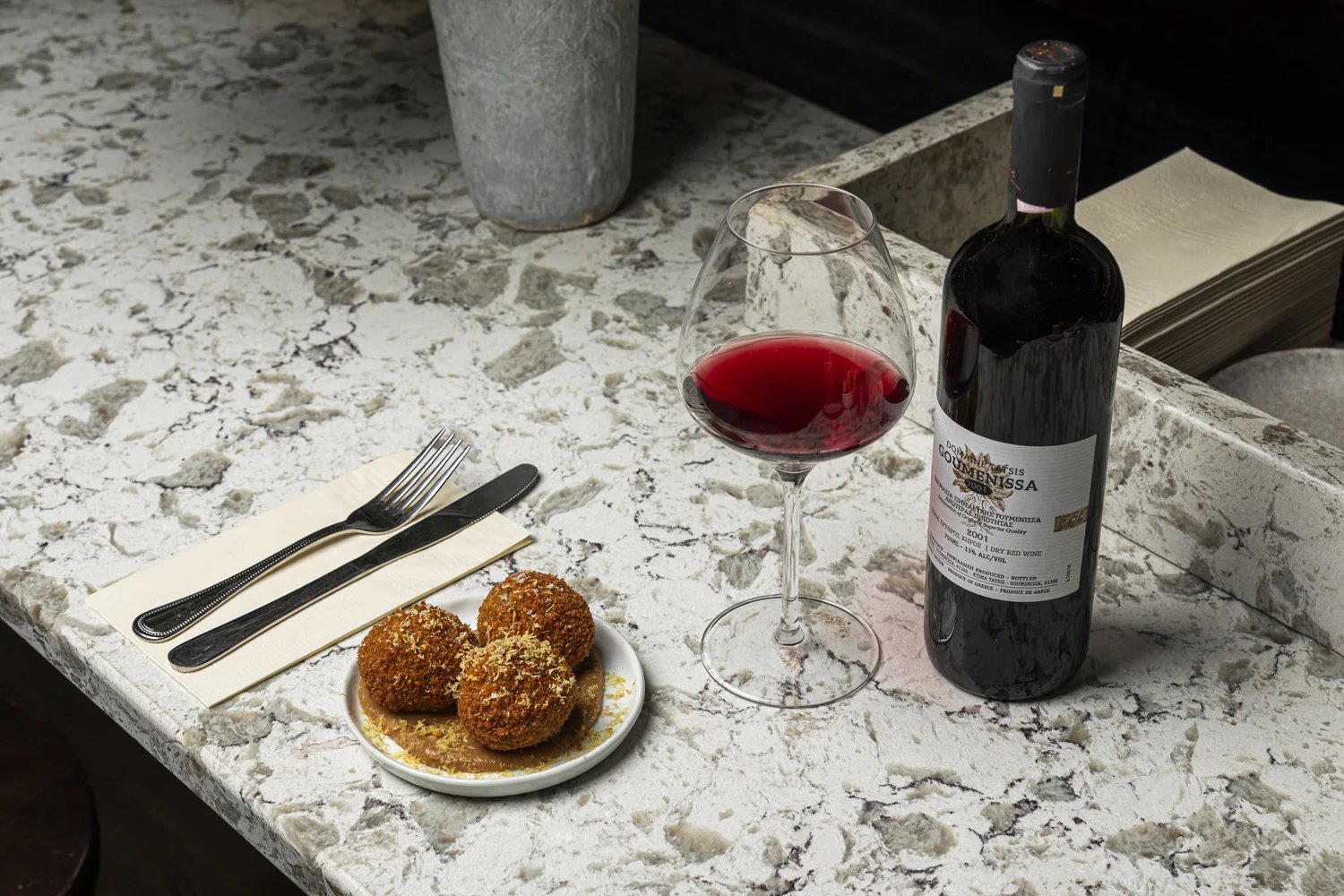
Michelin Plate
Our verdict
Kyma brings the Ionian coastline to Flatiron with whole-catch fish, cheese-stuffed calamari, and a spread-led mezze approach rooted in Hellenic tradition. The room channels Aegean warmth, and the menu moves from pikilia trio to ekmek kataifi with the kind of structural confidence that separates serious Greek kitchens from their derivative counterparts.

Pearl is the En Primeur Club membership app, where members save venues, book tables and use the concierge.
Flatiron's Aegean Address
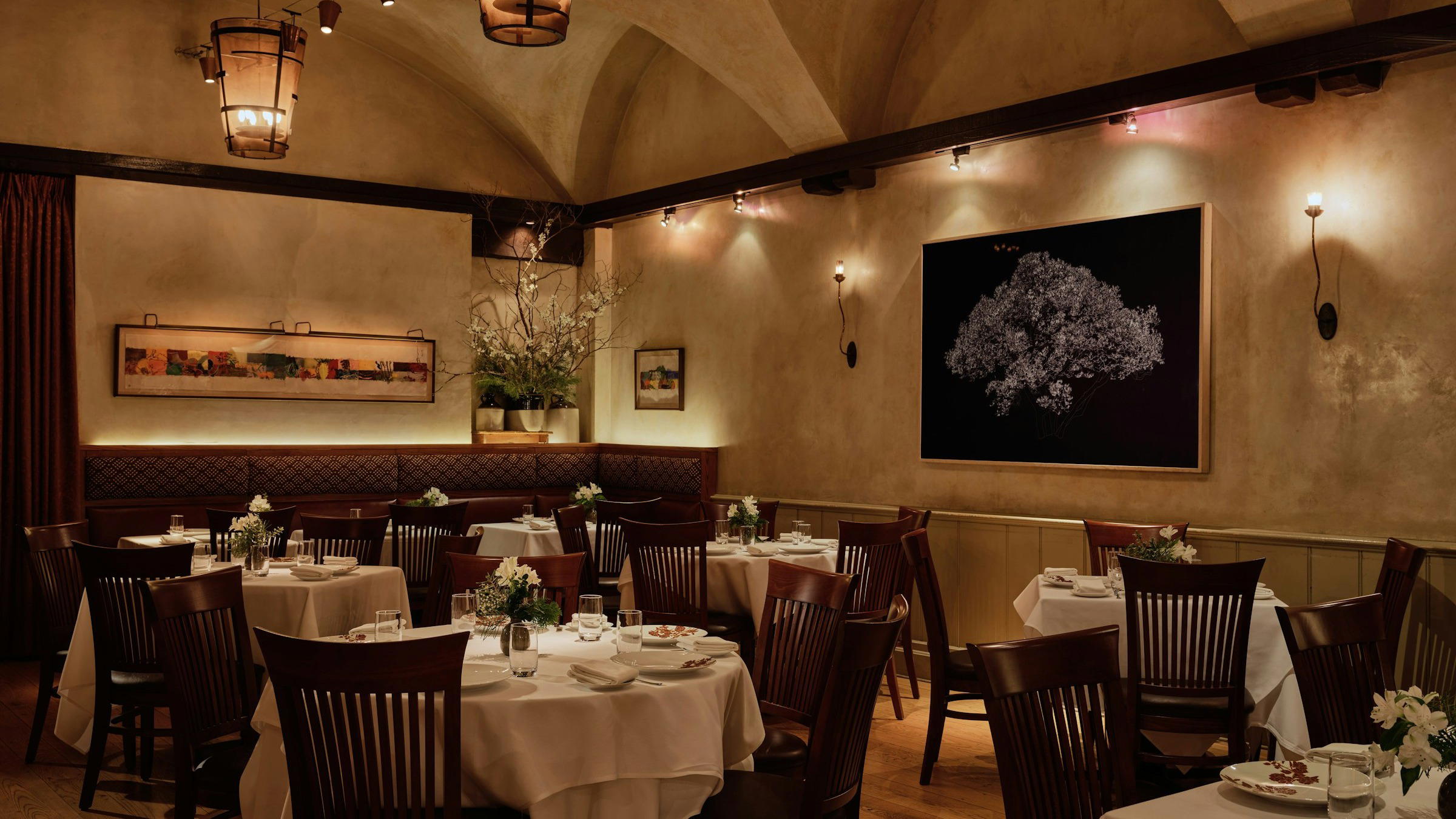
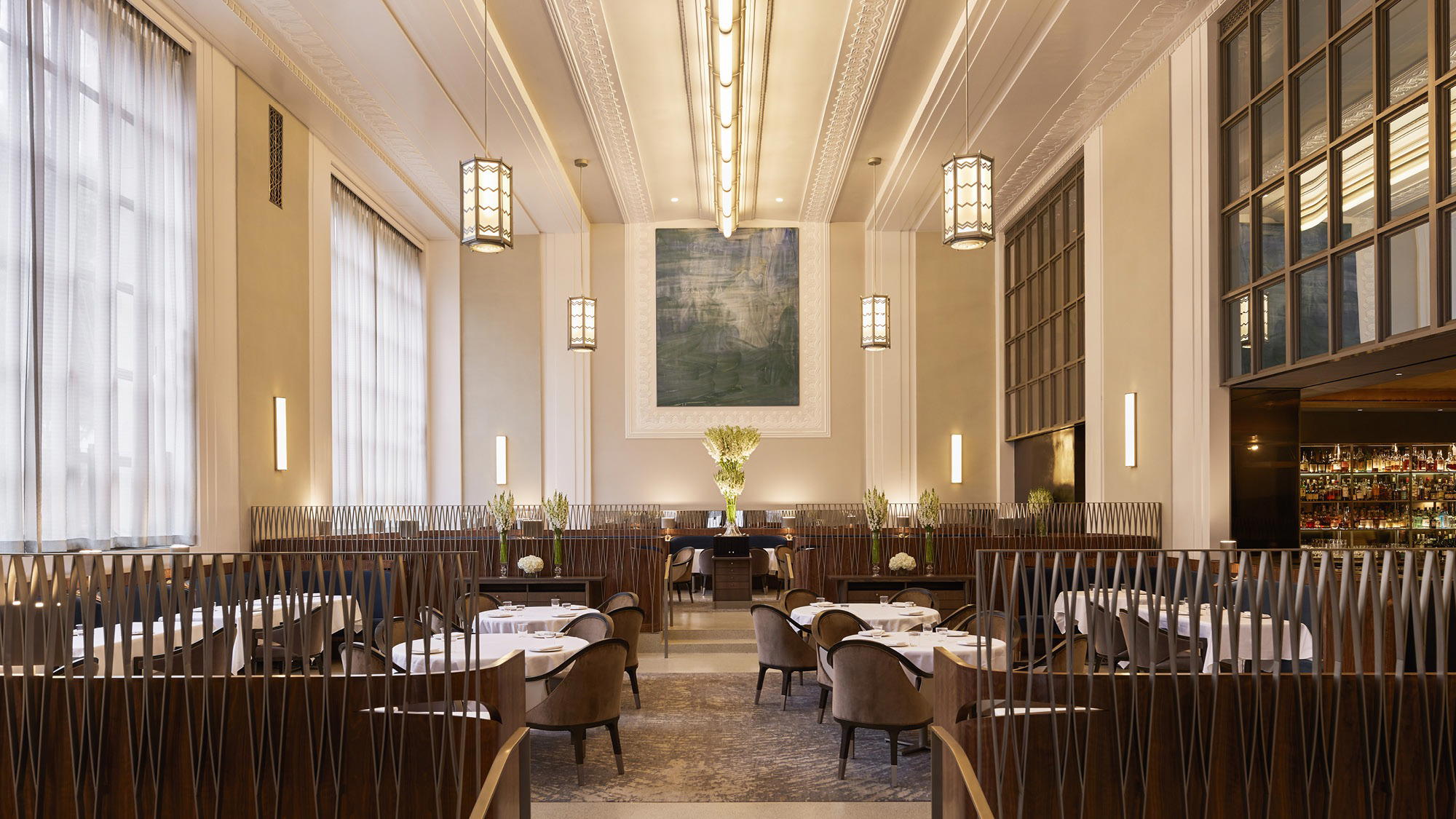
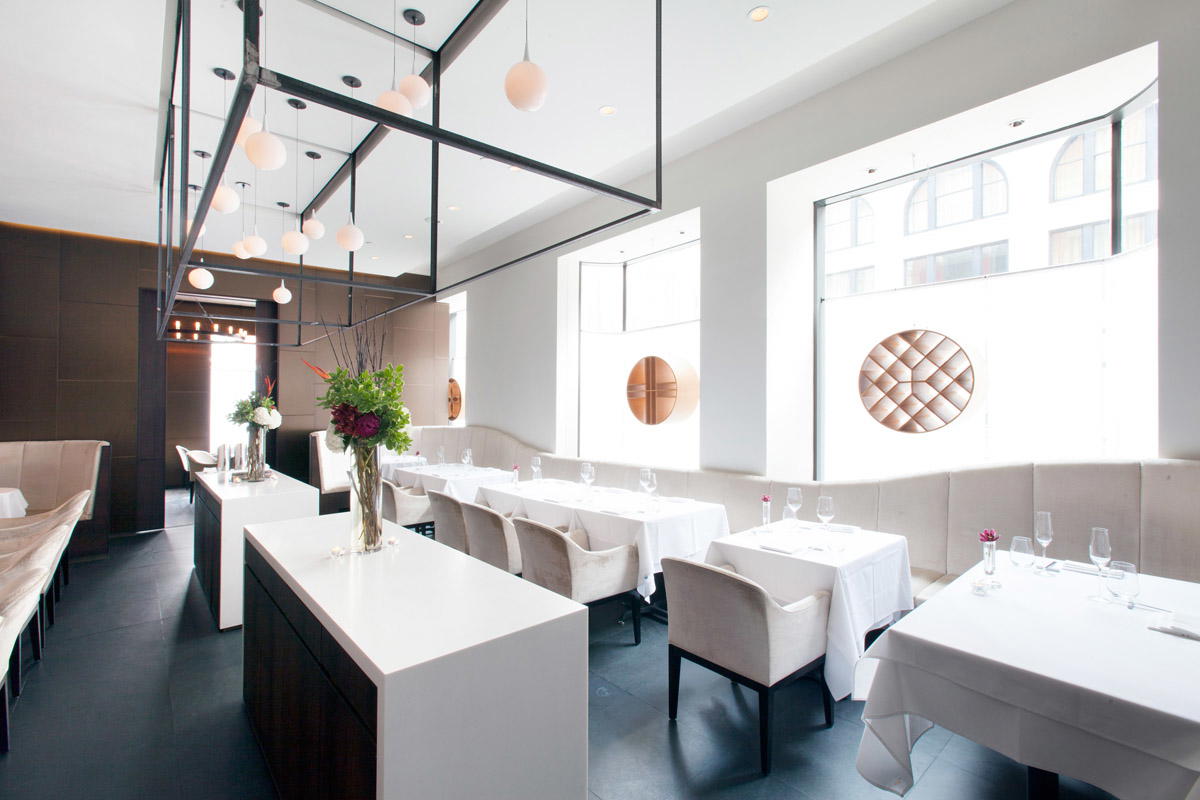
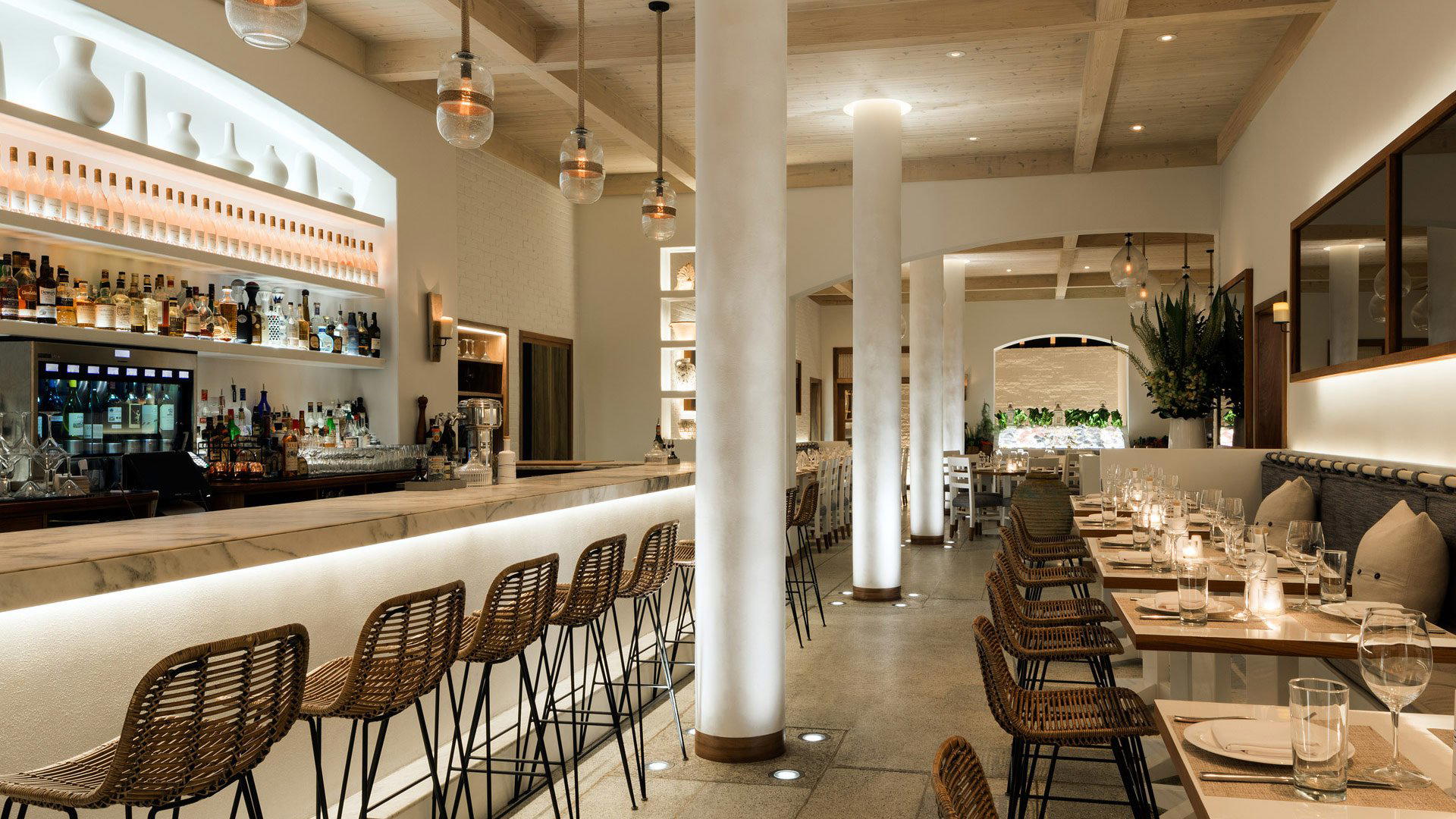
West 18th Street in the Flatiron district is not the first corridor that comes to mind for serious Greek cooking. The neighbourhood runs toward fast-casual and pan-Asian, with the occasional French bistro holding the middle ground. That makes Kyma's presence at number 15 all the more legible as a statement: this is a room designed to recall the Ionian coast, positioned in a part of Manhattan that has no obvious Greek competitor at the same price tier. The interior does the atmospheric work early, the visual register is Aegean blue and pale stone, a studied evocation of the waterfront towns along the Greek western seaboard rather than the whitewashed Cycladic shorthand that lesser rooms reach for by default.
New York's Greek dining scene has historically clustered in Astoria, where Taverna Kyclades and the broader Queens corridor set the affordable, neighbourhood benchmark. Manhattan entrants like Pylos in the East Village and Eléa on the Upper West Side have expanded the map, while BZ Grill occupies a more casual register. Kyma, originating from Roslyn on Long Island, slots into the mid-to-upper tier of that Manhattan group, priced at the $$$ bracket and emphasising whole-fish cookery and mezze-forward sequencing over the simplified gyro-and-souvlaki format that still dominates the category in mainstream perception.
How the Menu Is Built
In Hellenic tradition, meals begin with spreads. The kitchen at Kyma honours that structure with a pikilia trio: feta, hummus, and taramasalata, served with warm pita. The trio reads as an entry point but it is also a calibration exercise, the quality of a Greek restaurant's spreads, particularly the taramasalata, tells you immediately how seriously the kitchen treats the foundational layer of its cooking. The roe-based spread is among the more technically demanding of the three, requiring balance between salt, acid, and fat that cheap versions routinely miss.
From that base, the menu moves through a sequence that reflects the broader logic of Greek hospitality: smaller plates building toward a central protein. Calamari stuffed with four cheeses and served over a Nafpaktos tomato sauce is one of the more distinctive preparations on the card. Nafpaktos, a port city on the Gulf of Corinth, produces tomatoes with a particular acidity that suits long-cooked sauces; the regional specificity here is a signal that the kitchen is drawing on actual Greek culinary geography rather than a generalised Mediterranean pantry. Halloumi fries, golden-brown, served with two dipping sauces, represent the more familiar end of the contemporary Greek repertoire, but execution at this weight and temperature makes the difference between a satisfying plate and a forgettable one.
The fish section is the menu's centre of gravity. Lavraki, European sea bass, arrives whole, a presentation format that has largely disappeared from mid-market American seafood restaurants but remains standard in Greece, where the whole fish is both a quality indicator and a social act. Receiving a whole fish at the table means the flesh was not portioned and held, which matters for a species this delicate. The short rib youvetsi, a braised meat format cooked with orzo in a tomato-based sauce, anchors the meat side of the menu in one of the most traditional of Greek baking-dish preparations, a dish that exists in some form in virtually every Greek home kitchen, giving restaurants that serve it a high threshold to clear.
The meal closes with ekmek kataifi, shredded phyllo over semolina custard, a dessert with roots in both Greek and Ottoman pastry traditions, and one that requires the kitchen to maintain textural contrast between the crisp phyllo exterior and the set custard beneath. When the ratio holds, it is a more interesting finish than the ubiquitous baklava.
The Wine Angle: Greek Bottles in a French-Dominated City
Editorial angle worth pressing at a restaurant like Kyma is what happens in the glass. New York's premium seafood wine culture is shaped by French and West Coast frameworks: the Le Bernardin model, with its deep Burgundy and Loire depth, has set the standard for white-wine pairing at the high end. Greek wine has historically occupied the margins of that conversation, despite the fact that indigenous Greek varieties, Assyrtiko from Santorini, Moschofilero from the Peloponnese, Malagousia, Xinomavro, offer some of the most food-precise pairing options available for the kind of seafood and spread-driven cooking that Kyma serves.
Santorini Assyrtiko in particular has attracted serious international attention over the past decade. The volcanic soils of the island produce wines with saline minerality and citric tension that cut through the fat of fried halloumi and echo the brine of taramasalata in a way that a Chablis Premier Cru mimics structurally but rarely surpasses contextually. For comparable international Greek restaurant wine programs, Mavrommatis in Paris and OMA in London offer useful reference points for how the category operates at the premium tier in other major cities.
Comparing Kyma's $$$ positioning to the city's tasting-menu tier, Alinea, The French Laundry, Lazy Bear, Single Thread Farm, or Providence, would be a category error. Kyma operates in the mid-to-upper tier of a specific ethnic cuisine category, which has its own logic: the competition is other serious Greek tables, not multi-course omakase formats. For comparison, the equivalent score at Emeril's in New Orleans reads differently in context because the category norms and price expectations differ. For Kyma, a 4.4 across four figures of reviews at $$$ in Flatiron represents consistent delivery on a format that requires sourcing discipline, technical spread-making, and whole-fish confidence in the same kitchen.
Internationally, the Greek diaspora restaurant model has reached considerable ambition in cities like London and Paris. Closer to home, the question for Kyma is less about competing with the broader New York dining field and more about sustaining the argument that serious Hellenic cooking deserves the same attentive mid-scale treatment in Manhattan that French bistro or Japanese izakaya formats have long received.
Planning Your Visit
Kyma sits at 15 W 18th Street in the Flatiron district, within walking distance of Union Square and the 14th Street subway hub. The $$$ price range positions it as a considered dinner destination rather than a casual drop-in. For broader city planning, consult our New York City hotels guide, our New York City bars guide, our New York City wineries guide, and our New York City experiences guide. The full New York City restaurants guide covers the wider field.
Quick reference: Kyma, 15 W 18th St, Flatiron, New York, NY 10011. Greek. $$$.
What Dish Is Kyma Famous For?
Kyma is most closely associated with its whole lavraki, European sea bass served whole, which anchors the fish-forward section of the menu and reflects the kitchen's commitment to Greek coastal cooking as a serious culinary tradition rather than a simplified American-Greek hybrid. The cheese-stuffed calamari over Nafpaktos tomato sauce is a second signature, noted for its regional specificity. The pikilia trio of spreads is the structural start of most meals and is frequently cited in reviews as a marker of kitchen quality. For a city that has largely reduced Greek food to a handful of standard formats, these preparations collectively make the case that the category has considerably more range.
Frequently asked questions
What distinctions does Kyma have?
Kyma has received recognition including: As its name in Greek suggests, this stunner is making “waves” in town by way of Roslyn, New York. The space transports diners to the Ionian Sea but it’s not just beauty that bewitches here. All Hellenic meals begin with a panoply of spreads….
Is Kyma expensive?
Pricing at Kyma is listed as $$$.
What dish is Kyma famous for?
Kyma's menu builds its reputation across several plates, but the whole lavraki, a sea bass served whole, draws consistent attention as the anchor of the fresh-catch section. The halloumi fries, golden-brown and served with two dipping sauces, and the four-cheese stuffed calamari over Nafpaktos tomato sauce are equally cited by diners navigating the $$$ price tier. The meal traditionally closes with ekmek kataifi, a shredded phyllo and semolina custard dessert rooted in Greek pastry tradition.
What style of cooking does Kyma do?
What's the address for Kyma?
Kyma is located at 15 W 18th St, New York, NY 10011, New York City.
Peers Worth Knowing
Comparable venues nearby, for context on price, style, and recognition.
| Venue | Cuisine | Price | Awards | Notes |
|---|---|---|---|---|
| KymaThis venue (the venue you are viewing) | Modern Greek Seafood | $100–150 | Michelin Plate | Not listed |
| Nerai | Modern Upscale Greek | $50–100 | Star Wine List · Wine Spectator Best of Award of Excellence | Midtown-Times Square |
| The Bazaar | Modern Japanese-Spanish Fusion | $200–300 | Star Wine List · Wine Spectator Best of Award of Excellence | Midtown South-Flatiron-Union Square |
| Pappas New York | Modern Greek Seafood | $50–100 | Not listed | Greenwich Village |
| Babbo | Modern Italian Fine Dining | $100–150 | Star Wine List · James Beard Award Outstanding Pastry Chef | Greenwich Village |
| Bowery Meat Company | Modern Steakhouse | $100–150 | Wine Spectator Best of Award of Excellence | East Village |
Recognition history
Dated appearances from independent guides and award organizations, with the underlying list record or original source where available.
Michelin Plate
Michelin