
Kuukai gives Osaka’s Korean dining culture a serious Dojima address, with repeat Tabelog 100 recognition in the Asian and ethnic cuisine WEST category for 2022, 2023, and 2024. The appeal sits less in spectacle than in regulars’ confidence: a Kitashinchi-adjacent room where the meal is shaped by familiarity, appetite, and the city’s late-evening dining habits.
Pearl is the En Primeur Club membership app — saves, bookings, and concierge access live there. Same editors, same standards.
- Address
- 1 Chome-3-29 Dojima, Kita Ward, Osaka, 530-0003, Japan
- Phone
- +81 6-6348-9156
- Website
- tabelog.com
 Saves & bookings on Pearl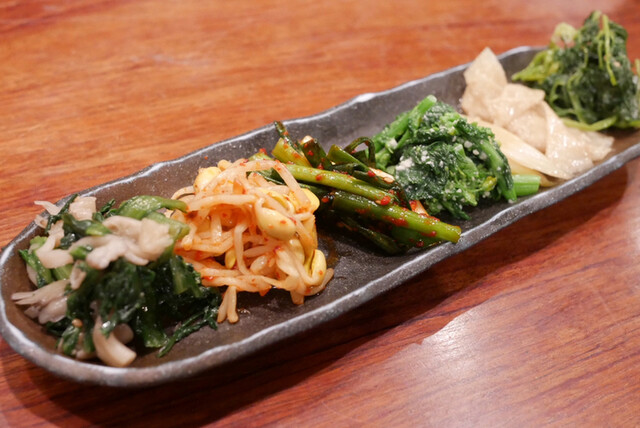
Dojima changes after office hours: daytime polish gives way to smaller rooms, elevator lobbies, and counters where regulars know the rhythm before ordering. Korean dining in Osaka is part of the city’s after-dark vocabulary: groups, heat, smoke, shared plates, and rooms where the second round can matter as much as the first.
Kuukai fits that register. Its Tabelog 100 recognition in the Asian cuisine and ethnic cuisine WEST category in 2022, 2023, and 2024 places it beyond casual Korean restaurants or late-night grill houses. The point is consistency, not ceremony: a repeat-use specialist in a city quick to distinguish dependable neighborhood restaurants from trend-led ones.
Dojima Korean dining through the regulars' lens
Osaka’s Korean food culture has several tracks. Tsuruhashi carries historic Korean-Japanese foodways and market energy; Umeda and Kitashinchi fold Korean cooking into business dinners, post-work meals, and second stops. Dojima sits between them, near the commercial core for office regulars yet small-textured enough to reward restaurants with defined followings.
Regulars change how a Korean restaurant feels. The meal becomes less about decoding a menu than sequencing: grilled items, stews, shared dishes, rice, drinks, and pacing that fits the table rather than a fixed fine-dining arc. Repeat selection for a regional Tabelog 100 list signals more than technical cooking; it points to a durable audience returning often enough for the room to develop habits.
The Osaka comparison set is instructive. Sushi Noguchi sits in a much higher spend tier, with a sushi format that asks diners to submit to the counter’s timing. Kamayaki Steak Fukuda occupies another premium lane around beef and occasion dining. Kitashinchi Mikazuki, also priced above many everyday restaurants, reflects the district’s appetite for controlled, higher-budget evenings. Kuukai works differently: Korean dining here is social before theatrical, with value tied to how confidently kitchen and floor handle repeat tables, mixed appetites, and late-evening momentum.
That regulars’ perspective explains why the listed occasion skews toward friends. In Osaka, this matters. A friends-suited restaurant is judged by practical comfort: how well the table shares, how naturally drinks fit the food, and whether the room carries conversation without turning formal. Korean cooking suits that setting because it encourages table negotiation. Better rooms do not over-explain; they let the group settle in.
Recognition without the tasting-menu posture
Tabelog’s Hyakumeiten lists are useful for categories Michelin-style systems can underrepresent. Asian and ethnic cuisine in western Japan includes restaurants outside white-tablecloth award grammar yet with serious local credibility. Kuukai’s repeat selection in 2022, 2023, and 2024 is a clear trust signal, especially for travelers who know Osaka mainly through sushi, kaiseki, okonomiyaki, and kushikatsu.
The cuisine category is Korean, but the broader story is Osaka’s appetite for specialists that do one lane with conviction. High-end sushi counters, Italian rooms such as La casa TOM Curiosa, bakeries, pizza specialists, and casual institutions coexist without imitating one another. The scene is dense, not linear. 551 Horai (551蓬莱) can define one local food memory, while a canto (Italian), 99 Pizza Napoletana Gourmet, 52CHO-ME BAKERY, and .cafe serve different appetites. Kuukai does not compete with all of them; it adds another specialist register to the city’s serious dining map.
For travelers, the distinction helps. Osaka is often sold through abundance, but abundance is a weak filter. The better question is which venues have enough local traction to justify a detour from obvious categories. Repeat Tabelog 100 selection answers that better than broad praise, placing Kuukai among western Japan’s recognized Asian and ethnic dining rooms, with a Korean identity that widens the usual Osaka itinerary.
The absence of a public chef narrative keeps focus in the right place. Some restaurants are built around named authorship; others are best read through room, clientele, and the category they strengthen. Here, the relevant credential is Kuukai’s place in Osaka’s Korean dining culture and sustained recognition, not personality. That suits diners who care less about chef biography than whether a room has earned local repetition.
How to place it in an Osaka itinerary
Kuukai is stronger for dinner built around conversation than for a tightly scripted tasting-menu evening. Dojima and Kitashinchi support that pattern: restaurants, bars, and late-night rooms cluster together, so the night can move in stages. Treat it as part of Osaka’s grown-up evening circuit rather than a daytime food crawl.
The practical reading is simple. Reservations are available, and recognition makes advance planning sensible, especially for small-group dinners. The listed budget sits in a mid-to-premium dinner band for Korean dining in Osaka, below higher-end sushi and steak rooms but above casual everyday meals. Payment details, smoking policy, and private-use availability matter for mixed groups; confirm current terms before committing a business dinner or a table with strict comfort requirements.
That group calculus is where the regulars’ angle matters. Korean restaurants can be generous or awkward depending on shared preferences. Allergies, smoke sensitivity, and dietary restrictions should be raised before the meal, not negotiated in the room. Shared-dish formats work best when the group has already agreed on boundaries.
For a fuller Osaka plan, pair this dinner with neighborhood-specific research rather than one citywide checklist. EP Club’s full Osaka restaurants guide is the natural starting point, alongside the Osaka hotels guide, Osaka bars guide, Osaka wineries guide, and Osaka experiences guide. Travelers extending the food itinerary across Japan can compare specialist categories in other cities, from [ki:] in Kyoto and [Curry Senmon Ten] Maruyama Kyoju. in Sapporo to.know in Kumamoto, (Shoku) Vietnam in Kawasaki, -Grilled beef Sukiyaki- KAMAKURA TANUKIAN 鎌倉 たぬき庵 in Kamakura, and. 鮪と炭火焼き うお炭 秋葉原店 in Tokyo. For Japanese dining references abroad, Jōdo Saké Bar in Los Angeles and Onigiri Time in Pasadena show how different formats travel outside Japan.
The editorial verdict is measured but clear: Kuukai is for diners who want Osaka beyond obvious signatures and understand that serious local restaurants are not always those with the loudest international profile. Its case rests on repeat recognition, a Korean category with real city depth, and a Dojima setting that suits regulars more than spectators.
Where the Accolades Land
Nearby venues at a similar price tier for orientation.
| Venue | Cuisine | Price | Notes |
|---|---|---|---|
| KuukaiThis venue — the venue you are viewing | Casual Korean in Kitashinchi | $$$ | Not listed |
| Seoul K | Casual Korean Restaurant | $$ | Nishi |
| Goichi Nishitenma ten | Yakitori Omakase | $$$ | Kita |
| Ishii Jr. | Yakitori & Chicken Dishes Omakase | $$$ | Kita |
| BAR AUGUSTA Tarlogie | Whisky & Cocktail Bar | $$$ | Kita |
| Yakiniku Kappa Kajioka | Traditional Yakiniku (Japanese BBQ) | $$$ | Toyonaka |
Recognition history
Dated appearances from independent guides and award organizations, with the underlying list record or original source where available.
Tabelog 100 #82 · No. 82
Tabelog · Tabelog 100 - Asian cuisine / Ethnic cuisine - WEST - 2024
Continue exploring
More in Osaka
Restaurants in Osaka
Browse all →




Bars in Osaka
Browse all →




Hotels in Osaka
Browse all →




Wineries in Osaka
Browse all →
At a Glance
- Lively
- Cozy
- After Work
- Casual Hangout
- Group Dining
- Late Night
- Standalone
Casual, lively late‑night Korean spot in Kitashinchi with a small, cozy interior suited to friends gathering over drinks and shared dishes rather than formal dining.