
Tsukuba’s sweet-potato culture gets a focused, ingredient-led reading at Kuradashi Yakiimo Kaitsu Ka Tsukuba ten, a roasted sweet potato, daigakuimo, cafe and sweets address in Matsunoki. The draw is not ceremony but sourcing discipline and a narrow format, backed by selection for Tabelog 100 Japanese traditional sweets / Japanese sweets cafe EAST 2023.
Pearl is the En Primeur Club membership app — saves, bookings, and concierge access live there. Same editors, same standards.
- Address
- 93-18 Matsunoki, Tsukuba, Ibaraki 305-0056, Japan
- Phone
- +81 29-893-2175
- Website
- kuradashi-yakiimo.com
 Saves & bookings on Pearl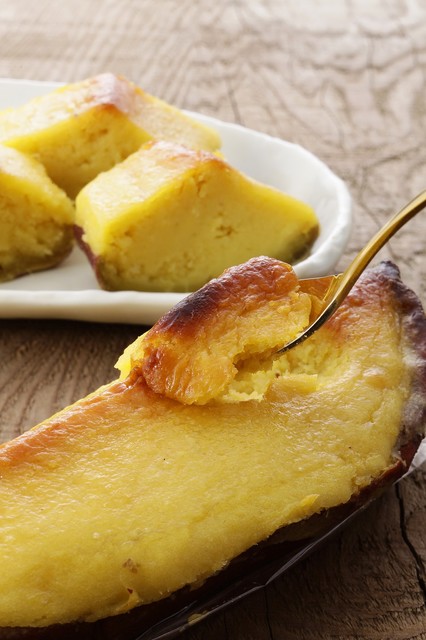
Approaching a yakiimo shop in Tsukuba is a different proposition from arriving at a pastry counter in central Tokyo. The mood is quieter, more agricultural, and more direct: sweet potato is not a garnish or seasonal flourish here, but the central ingredient around which the visit is organized. In Ibaraki, a prefecture with deep links to produce and field crops, that matters. Kuradashi Yakiimo Kaitsu Ka Tsukuba ten belongs to a Japanese sweets tradition where the craft often sits in heat control, storage, and variety selection rather than elaborate plating.
The category is deceptively modest. Yakiimo, roasted sweet potato, has long occupied the space between snack, comfort food, and regional produce showcase. Daigakuimo adds another register, turning sweet potato into a glazed confection associated with everyday Japanese sweets rather than formal wagashi ceremony. In Tsukuba, a science city with suburban roads, university traffic, and family dining patterns, this kind of shop reads less like a dessert detour and more like a produce-driven stop built into daily movement.
Sweet potato as the main argument, not an afterthought
Japan’s dessert culture often rewards restraint: a single ingredient is pushed through small changes in temperature, texture, and sweetness until its range becomes clear. That is the useful lens here. The format covers roasted sweet potato, daigakuimo, cafe items, and sweets, keeping the focus on one root vegetable rather than a broad pastry case. The house also identifies Kou Tenshi as an original brand sweet potato, a detail that shifts the conversation from generic comfort snack to varietal identity.
That ingredient-first approach explains the recognition. Selection for Tabelog 100 Japanese traditional sweets / Japanese sweets cafe EAST 2023 places the shop inside a regional sweets conversation rather than a local novelty category. The Tabelog score is 3.65, and the price band sits at JPY 1,000 to JPY 1,999, which positions the experience closer to a casual specialist sweets stop than a destination tasting format. Compared with Tsukuba dining rooms such as Bon Gout, where the spend can move higher at dinner, this is a narrower, lower-friction proposition.
The value lies in concentration. Many Japanese cafe menus use sweet potato as a seasonal accent; this format makes it the spine. That gives travelers a cleaner read on Ibaraki’s produce culture than a generic cafe would. It also makes the shop a useful counterpoint to Tsukuba’s European-leaning and bread-focused addresses, including Backerei Brotzeit, Bon Gout, and david pain, where flour, butter, and dining-room structure shape the meal differently.
A small cafe format with a takeout backbone
The setting is compact rather than formal, with 17 seats and a takeout service model that suits the product. That scale is important. Roasted sweet potato does not need a long dining arc; it benefits from immediacy, turnover, and a format that lets visitors treat the stop as a snack, light cafe break, or purchase to carry on. Children are welcome, private rooms are not part of the setup, and the room is non-smoking, all of which point to a practical everyday sweets address rather than a hushed counter.
Reservations are unavailable, which fits the category. This is not a table to plan months around; it is a stop to fold into a Tsukuba day with some timing awareness. The shop operates daily, with occasional temporary closures, and accepts major credit cards and transportation IC cards such as Suica. Parking is a significant part of the equation: the first lot has 21 spaces and the second has 20, a detail that tells travelers almost as much about the setting as the address does. This is car-friendly suburban Tsukuba, not a station-front dessert bar.
From Tsukuba Station, the route is oriented along Gakuen Nishi Avenue toward Ushiku, and the shop sits in Matsunoki rather than the station core. That distance changes the decision. Visitors already moving by car around the city will find it simpler to slot in than travelers trying to build a rail-only crawl. For a broader view of the local dining field, start with Our full Tsukuba restaurants guide; the adjacent city planning pages for Our full Tsukuba hotels guide, Our full Tsukuba bars guide, Our full Tsukuba wineries guide, and Our full Tsukuba experiences guide help place it within a wider itinerary.
Where it fits in a Tsukuba day
The smarter use of Kuradashi Yakiimo Kaitsu Ka Tsukuba ten is as a focused ingredient stop, not as a substitute for lunch or dinner. Pairing it with a separate meal gives the sweet-potato format room to make sense. In Tsukuba, that might mean contrasting it with the diner-cafe lane at DROOL DINER or a different regional register at heladiwa. The point is contrast: one visit shows how a single domestic crop can anchor a sweets experience, while the rest of the city’s restaurants fill in the larger dining map.
For travelers building a Japan sweets itinerary beyond Ibaraki, the comparison should remain category-led rather than rank-led. A sweet-potato specialist in Tsukuba has little in common with beef sukiyaki in Kamakura, charcoal seafood in Akihabara, or cafe formats in Osaka, yet each reveals how narrow Japanese concepts can carry a meal or snack. Useful contrasts include -Grilled beef Sukiyaki- KAMAKURA TANUKIAN 鎌倉 たぬき庵 in Kamakura. 鮪と炭火焼き うお炭 秋葉原店 in Tokyo.cafe in Osaka.know in Kumamoto, (Shoku) Vietnam in Kawasaki, [Curry Senmon Ten] Maruyama Kyoju. in Sapporo, Jōdo Saké Bar in Los Angeles, and Onigiri Time in Pasadena.
The editorial case is simple: come for a precise reading of sweet potato as Japanese sweets culture, not for spectacle. The shop’s appeal rests on a tight product identity, a modest spend, Tabelog 100 recognition in the East sweets category, and a format that respects the ingredient by refusing to bury it under a sprawling menu.
Quick Comparison
Comparable venues by cuisine and price in the same metro.
| Venue | Cuisine | Price | Notes |
|---|---|---|---|
| Kuradashi Yakiimo Kaitsu Ka Tsukuba tenThis venue — the venue you are viewing | Japanese roasted sweet potato & sweets cafe | $ | Not listed |
| Tsukuba Ramen Onimonogatari | Japanese Ramen | $$ | Bampaku Kinenkoen |
| david pain | Bakery Cafe | $ | Makizono, Tsukuba |
| Numata Ya Honten | Traditional Japanese confectionery (wagashi) shop | $ | Numata |
| Ramen Kinoko | Japanese Ramen | $ | Inaoka |
| Trattoria Pizzeria Amici | Authentic Neapolitan Pizzeria & Southern Italian Trattoria | $$ | Teshirogi |
Recognition history
Dated appearances from independent guides and award organizations, with the underlying list record or original source where available.
Tabelog 100 #81 · No. 81
Tabelog · Tabelog 100 - Japanese traditional sweets / Japanese sweets cafe - EAST - 2023










At a Glance
- Cozy
- Casual Hangout
- Solo
- Family
- After Work
- Standalone
Current opening hours
- Monday
- 10 AM–7 PM
- Tuesday
- 10 AM–7 PM
- Wednesday
- 10 AM–7 PM
- Thursday
- 10 AM–7 PM
- Friday
- 10 AM–7 PM
- Saturday
- 10 AM–7 PM
- Sunday
- 10 AM–7 PM
Hours can change for holidays and private events. Last verified .
Bright, casual sweets shop and small cafe with a simple, cozy atmosphere focused on takeaway baked sweet potatoes and sweet potato desserts rather than long sit‑down meals.