On Steindamm in Hamburg's St. Georg district, Köz Ocakbasi represents the kind of Turkish grill house that has shaped northern Germany's after-hours eating culture for decades. The ocakbaşı format, centred on live charcoal cookery and communal ordering, sits at a different register from the city's fine-dining circuit. For grilled meats cooked over real fire in a neighbourhood that rewards walking, this is a serious address.
Pearl is the En Primeur Club membership app — saves, bookings, and concierge access live there. Same editors, same standards.
- Address
- Steindamm 6, 20099 Hamburg, Germany
- Phone
- +494024874515
- Website
- koez-ocakbasi.de
- Directions
- Get directions
 Saves & bookings on Pearl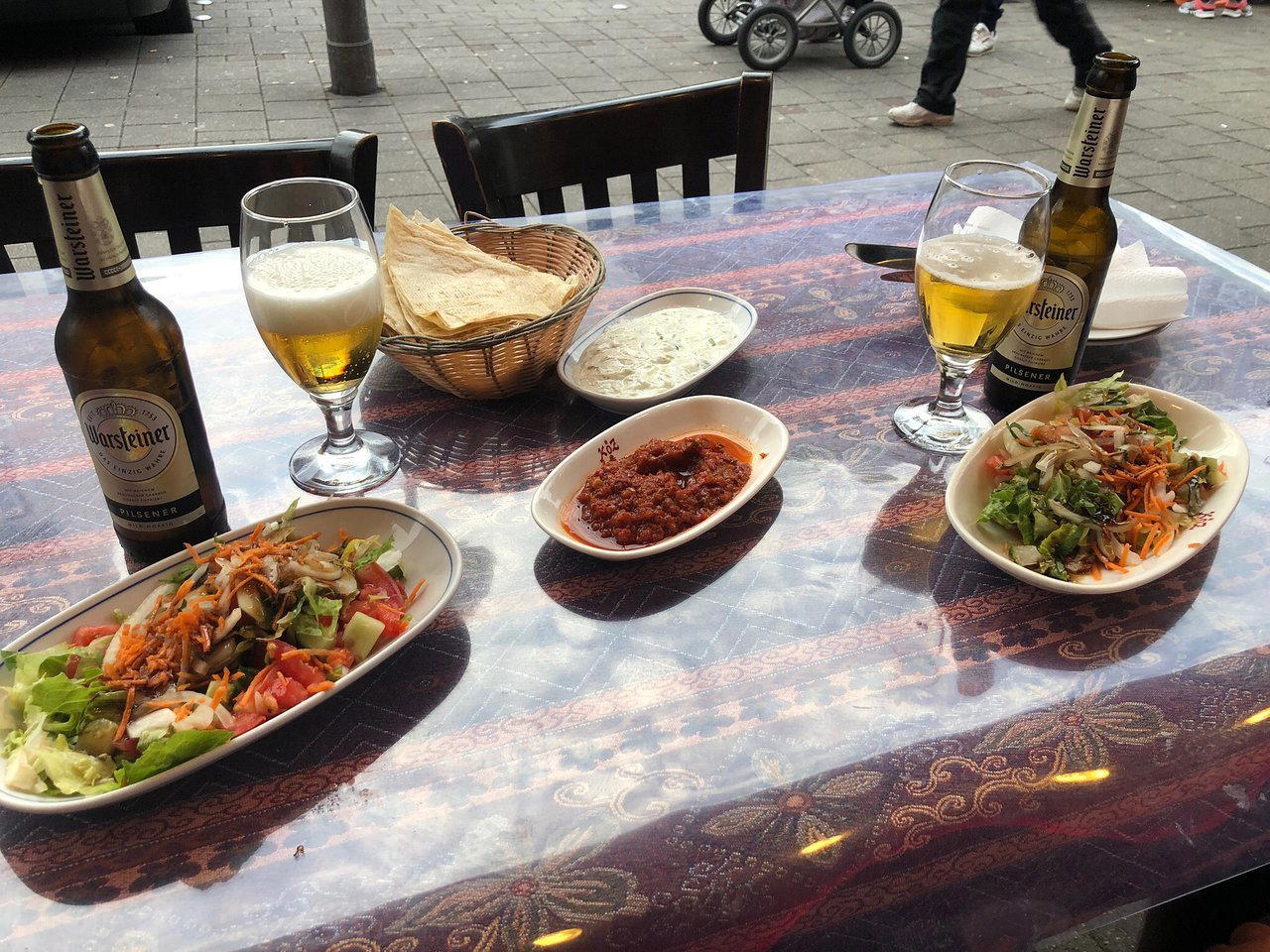
Fire, Charcoal, and the Steindamm Tradition
Steindamm is one of Hamburg's most compressed and least curated streets. Running through St. Georg toward the main station, it carries a density of grocers, kebab counters, shisha lounges, and travel agencies that reflects decades of Turkish and Middle Eastern settlement in the city. The address at number 6 places Köz Ocakbaşı squarely inside that grain, not at its polished edge. This is not a venue that asks you to meet it halfway with a reservation app and a dress code. It asks you to show up, sit down, and order from a fire that has been burning since the kitchen opened.
The ocakbaşı format, in which a live charcoal grill occupies the centre of the dining room or an open kitchen station visible to guests, is one of the older restaurant archetypes in Turkish culinary culture. It predates the gastropub era, the open-kitchen trend, and every tasting-menu fashion that has cycled through European dining since the 1980s. Guests at an ocakbaşı watch their food cook directly. There is no interposing kitchen, no pass, no plated flourish. The quality of the meat, the temperature of the coals, and the skill of the grill cook are the whole story. Hamburg's ocakbaşı scene, centred along Steindamm and the surrounding blocks of St. Georg and Altona, operates in that tradition rather than adapting it for a premium audience. It is a format that feeds taxi drivers and art dealers at the same counter, often at the same time.
What the Charcoal-First Approach Means in Practice
The sustainability case for live-fire charcoal cooking is less obvious than farm-to-table sourcing or zero-waste tasting menus, but it is real. Ocakbaşı kitchens are structurally minimal. There is no brigade of seven stations, no sous-vide circulator running overnight, no elaborate sauce reduction requiring hours of gas. The grill is the kitchen. That compression reduces energy draw compared to a full European brigade kitchen, and it concentrates quality control on a single point: the sourcing and handling of the meat itself. In Turkish grill culture, the integrity of the ingredient matters before anything else. A well-sourced lamb chop over good charcoal needs nothing added to it. That simplicity is, in its own way, a form of restraint that aligns with how the more conscientious end of modern restaurant culture talks about waste and process, even if Steindamm has never needed to frame it in those terms.
Hamburg's broader restaurant scene has moved aggressively toward sustainability credentials in recent years, with the city's fine-dining addresses such as Restaurant Haerlin and The Table Kevin Fehling building sourcing narratives and seasonal tightness into their identity. Newer creative formats like 100/200 Kitchen and Mediterranean-leaning addresses such as bianc operate on similar principles at the premium end. The ocakbaşı sits at a different price register from all of these, but its structural logic, buy good meat, cook it over fire, serve it immediately, produces almost no kitchen waste and requires almost no packaging. A grilled adana kebab generates one dirty skewer and a plate. The supply chain is short. That is not an accident of culture; it is a consequence of a cooking method that was never designed around abundance.
St. Georg and Where Köz Ocakbaşı Fits
St. Georg occupies a particular place in Hamburg's social geography. The neighbourhood runs east from the Alster lake toward the main station and has historically absorbed waves of migration while also housing some of the city's most established gay bars and independent bookshops. It is not a neighbourhood that resolves into a single identity. Steindamm's strip of Turkish and Middle Eastern businesses sits alongside quieter residential streets and the occasional new-wave coffee shop. Eating on Steindamm at Köz Ocakbaşı is eating inside that texture, not at a remove from it.
For visitors working through Hamburg's more structured dining circuit, which might include the lakeside setting of Lakeside or the tasting menus at the city's Michelin-tier addresses, an ocakbaşı session on Steindamm functions as a different register of the same city. The contrast is the point. Germany's live-fire grill tradition at restaurants like ES:SENZ in Grassau or the long-established formality of Waldhotel Sonnora in Dreis represents one axis; the Turkish grill house culture of Hamburg's north-facing immigrant neighbourhoods represents another, and neither cancels the other out.
Across Germany, the cities that have the most to say about food right now tend to have exactly this kind of layering: a formal fine-dining tier exemplified by addresses like Vendôme in Bergisch Gladbach, Victor's Fine Dining by Christian Bau in Perl, or Schwarzwaldstube in Baiersbronn, sitting alongside neighbourhood institutions that have never sought recognition beyond the regulars who fill them every night. The ocakbaşı is in that second category. So, for different reasons, are addresses like Schanz in Piesport and Bagatelle in Trier, each operating in its own niche well outside the Hamburg circuit. The comparison holds at the level of function: places that do one thing at a consistent standard, without apology, for the audience that already knows them.
Internationally, the confidence of a stripped-back format focused entirely on product quality is a posture shared by restaurants far removed in price and prestige, from Le Bernardin in New York City to Atomix in the same city. The logic is the same even if the context is radically different: concentrate on what you do, eliminate the rest.
Planning Your Visit
Köz Ocakbaşı sits at Steindamm 6 in Hamburg's St. Georg district, a short walk from Hamburg Hauptbahnhof. The surrounding area is dense with food options but the ocakbaşı format is a specific reason to be here rather than anywhere else on the street. For a broader orientation to eating in the city, the full Hamburg restaurants guide maps the range from neighbourhood institutions to the tasting-menu tier.
Readers exploring Germany's wider dining circuit might also consider Aqua in Wolfsburg, JAN in Munich, or CODA Dessert Dining in Berlin for very different expressions of what German restaurants are doing at the moment.
Continue exploring
More in Hamburg
Restaurants in Hamburg
Browse all →
Bars in Hamburg
Browse all →

Hotels in Hamburg
Browse all →
Wineries in Hamburg
Browse all →
At a Glance
- Rustic
- Lively
- Casual Hangout
- Group Dining
- Open Kitchen
Current opening hours
- Monday
- 9 AM–4 AM
- Tuesday
- 9 AM–4 AM
- Wednesday
- 9 AM–4 AM
- Thursday
- 9 AM–4 AM
- Friday
- 9 AM–5 AM
- Saturday
- 9 AM–5 AM
- Sunday
- 9 AM–5 AM
Hours can change for holidays and private events. Last verified .
Casual atmosphere with open grill cooking and lively dining.
Know Before You Go
- Getting there
- Steindamm 6, 20099 Hamburg, Germany