


A two-Michelin-star kaiseki counter in Osaka's Chuo Ward, Koryu anchors its menu firmly in Naniwa culinary tradition, using the city's waterway heritage as both context and aesthetic. Chef Shintaro Matsuo leads an evening-focused service that has earned recognition from La Liste and Opinionated About Dining alongside consecutive Michelin stars. The riverside setting and Osaka-rooted ingredients make it a reference point for the city's kaiseki scene.
 Discover on Pearl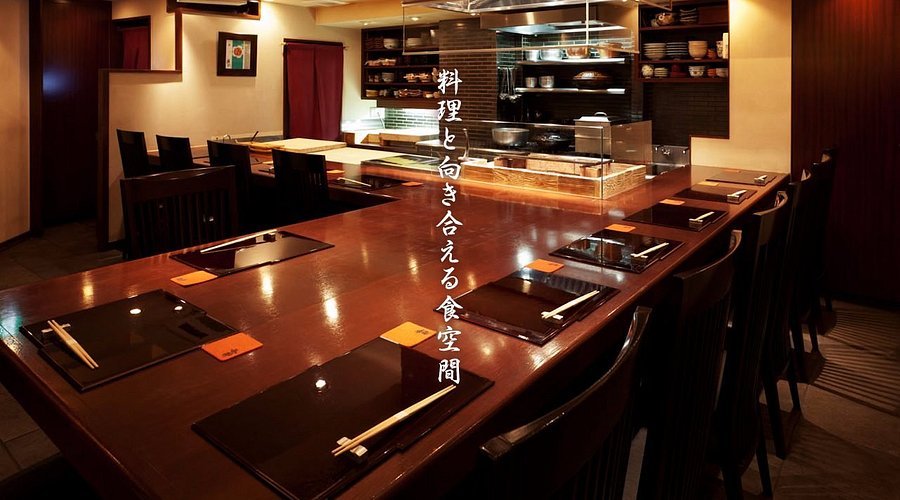
Where the Yodo River Shapes the Menu
Osaka's relationship with water is not merely topographical. The city was built on a delta, its commercial identity forged by the canals that carried goods between merchants and ports. That history has a culinary expression, and at the kaiseki level, a handful of houses treat it as a serious working proposition. Koryu, positioned on the river's edge in Chuo Ward, is one of them. The willow tree — the meaning encoded in the restaurant's name — bends toward water, and the interior follows that logic: a modern sukiya-style room with a wickerwork ceiling that arcs overhead like a canopy, drawing the eye upward before it returns to the counter below.
Arriving in the Uchiawajimachi neighbourhood after dark, the shift from Osaka's commercial grid to something quieter is immediate. The sukiya construction tradition, developed for tea houses and refined over centuries, prioritises proportion and material over decoration. At Koryu, that restraint is the atmosphere. The room reads as composed rather than sparse, the kind of space where the food and the service hold the attention because nothing in the architecture competes with them.
The shortlist, unlocked.
Hard-to-book tables, cellar releases, and concierge-planned trips.
Get Exclusive Access →The Naniwa Commitment
Within Osaka's kaiseki tier, there is a meaningful distinction between houses that treat the city as a backdrop and those that treat it as a source. Koryu belongs to the latter category. Its stated orientation is toward Naniwa, the historical name for Osaka, and that commitment runs through ingredient selection as much as presentation. Traditional Osaka vegetables , a category with documented provenance in the region's agricultural history , appear on the menu as deliberate choices rather than seasonal gestures.
The Naniwa sashimi platter, noted in Koryu's La Liste entry, is described as a remarkable arrangement that signals this local specificity directly. Sashimi at the kaiseki level is often where the provenance argument is made most clearly: the choice of fish, the cut, the temperature of service, and the plating all speak to a house's sourcing relationships and technical priorities. That Koryu's sashimi course centres on Osaka identity rather than a generic luxury selection is an editorial decision that defines the menu's character from its earliest stages.
At the two-Michelin-star level in Japan, this kind of regional rootedness is not universal. Comparison with Osaka peers illustrates the range: HAJIME (French, Innovative) holds three Michelin stars with a French-influenced framework, while La Cime (French) operates at the same two-star tier with an explicitly European structural approach. Koryu's positioning is therefore distinct: kaiseki rooted in Osaka's own culinary history, not filtered through European fine dining conventions. Among kaiseki houses specifically, Taian holds three Michelin stars at a lower price point, while Kashiwaya Osaka Senriyama (Japanese) also operates at three stars. Koryu's two-star, ¥¥¥¥ position places it in a specific bracket: the higher price tier without the leading Michelin designation, a placement that signals a particular kind of ambitious, identity-led cooking.
The Team and the Service Dynamic
Kaiseki at this level is a collaborative discipline. The progression of a multi-course meal depends on the coordination between kitchen timing, floor service, and the management of the room's pace. Chef Shintaro Matsuo leads the kitchen, but in a sukiya-style room built around the rituals of hospitality, the front-of-house contribution is inseparable from the food's reception. The physical environment itself is part of the service proposition: the wickerwork ceiling, the controlled proportions of the space, the riverside position all create conditions that the service team is then responsible for sustaining throughout an evening that runs until 11:30pm.
That extended closing hour is logistically notable. Most kaiseki houses in Osaka and Kyoto conclude evening service considerably earlier. An 11:30pm close suggests a deliberate structure: unhurried pacing, a course sequence that the kitchen and floor manage together over several hours, and a philosophy of service that treats the evening as complete rather than compressed. The Saturday lunch service, which begins at noon and runs to the same 11:30pm close, extends that logic across an entire day.
The collaborative model at this tier is not incidental. It is what distinguishes a kaiseki house from a restaurant that serves Japanese food. The seasonal ingredient sourcing requires relationships with producers. The course sequence requires constant communication between kitchen and floor. The particular requirements of the sukiya aesthetic, where material and proportion carry meaning, require a front-of-house team that understands the room as well as the service. Koryu's recognition by Opinionated About Dining , ranked #157 in Japan in 2024 and #166 in 2025 , reflects performance across all of these dimensions, not kitchen output alone.
Award Trajectory and Peer Context
Koryu has held two Michelin stars in both the 2024 and 2025 guides, with Opinionated About Dining recognition running from Highly Recommended in 2023 through to consecutive top-200 national rankings. La Liste awarded 86 points in 2025 and 84 in 2026. The slight La Liste movement between years is worth noting without overstating: these scoring systems reflect assessments taken at specific moments, and a two-point shift does not indicate directional change so much as the inherent variation in how any individual assessment captures a restaurant's form.
The more informative context is the national peer set. Opinionated About Dining's Japan ranking places Koryu among the country's leading two hundred restaurants across all categories, competing for position against kaiseki houses in Kyoto, Tokyo, and Kanazawa alongside a range of specialist counters in sushi, tempura, and Japanese fine dining. For a kaiseki house in Osaka , a city that has historically sat in Kyoto's cultural shadow where this cooking form is concerned , that sustained national recognition carries weight.
For reference across the wider Japanese fine dining circuit, RyuGin (Kaiseki, Japanese) in Tokyo and Hyotei (Kaiseki, Japanese) in Kyoto represent the tradition's most decorated expressions. Gion Sasaki in Kyoto is another point of comparison for Kansai-region kaiseki at the top tier. Koryu's decision to anchor in Osaka's own Naniwa identity rather than reaching toward Kyoto's established kaiseki vocabulary is a deliberate positioning choice within this competitive national context.
Those planning a broader Japan itinerary can cross-reference against Harutaka in Tokyo, akordu in Nara, Goh in Fukuoka, 1000 in Yokohama, and 6 in Okinawa for a sense of how Japan's fine dining tier varies by city and format.
Know Before You Go
Address: 3 Chome-3-3 Uchiawajimachi, Chuo Ward, Osaka, 540-0038, Japan
Hours: Monday to Friday: 6:00pm–11:30pm | Saturday: 12:00pm–11:30pm | Sunday: Closed
Price: ¥¥¥¥
Cuisine: Kaiseki, Japanese (Naniwa-rooted)
Awards: Michelin 2 Stars (2024, 2025); La Liste 86pts (2025), 84pts (2026); Opinionated About Dining Top 200 Japan (2024, 2025)
Booking: Advance reservation required; specific booking channel not confirmed , contact via local hotel concierge or specialist reservation services for Osaka fine dining.
Dress code: Not specified; smart attire appropriate for the setting.
For more on Osaka's dining scene, see our full Osaka restaurants guide. For accommodation and bar recommendations, visit our full Osaka hotels guide and our full Osaka bars guide. Additional city guides cover wineries and experiences in Osaka.
3 Chome-3-3 Uchiawajimachi, Chuo Ward, Osaka, 540-0038, Japan
+81 6-7509-3956
Cuisine and Awards Snapshot
A fast peer set for context, pulled from similar venues in our database.
| Venue | Cuisine | Awards | Notes |
|---|---|---|---|
| Koryu | Kaiseki, Japanese | Michelin 2 Stars | This venue |
| HAJIME | French, Innovative | Michelin 3 Star | French, Innovative, ¥¥¥¥ |
| La Cime | French | Michelin 2 Star | French, ¥¥¥¥ |
| Kashiwaya Osaka Senriyama | Japanese | Michelin 3 Star | Japanese, ¥¥¥ |
| Taian | Kaiseki, Japanese | Michelin 3 Star | Kaiseki, Japanese, ¥¥¥ |
| Fujiya 1935 | Innovative | Michelin 2 Star | Innovative, ¥¥¥¥ |
Need a table?
Our members enjoy priority alerts and concierge-led booking support for the world's most difficult tables.
Get Exclusive AccessThe shortlist, unlocked.
Hard-to-book tables, cellar releases, and concierge-planned trips.
Get Exclusive Access →