Kopitiam


New York Times Best Restaurants in New York City
Our verdict
A Chinatown fixture for a decade, Kopitiam brings Peranakan cooking to East Broadway with an all-day menu of Nyonya noodles, banana-leaf snacks, and kopi tarik pulled coffee. Chef Kyo Pang's shop has earned consecutive Opinionated About Dining recognition from 2023 through 2025, climbing to #463 in 2024 and #550 in 2025 among casual North American restaurants.

Pearl is the En Primeur Club membership app, where members save venues, book tables and use the concierge.
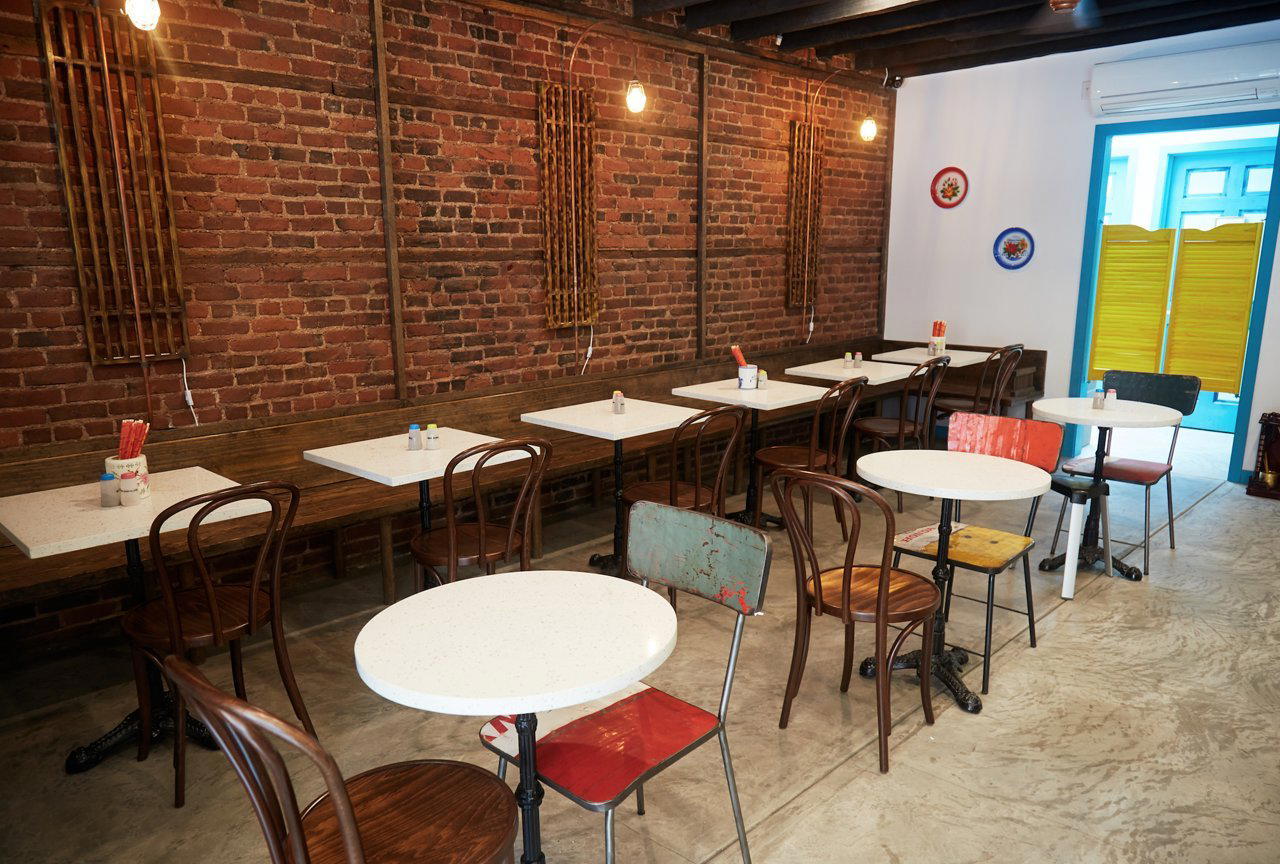
Ten Years in Chinatown, and the Laminated Menu Still Wins
The all-day kopitiam format is one of Southeast Asia's most democratic dining institutions: coffee shops that open before the city wakes and close after the dinner rush, serving noodle soups, toast with kaya jam, and glass tumblers of kopi tarik to students, retirees, and office workers with equal indifference to occasion. That format transplanted to Manhattan's Chinatown a decade ago, and in the years since, it has become one of the more reliable arguments that New York's most interesting cooking is not always found at tasting-menu counters. For context, Le Bernardin, Eleven Madison Park, and Masa occupy the best of the city's formal dining tier; Kopitiam operates in an entirely different register, and earns its recognition on different terms.
Kopitiam at 151 East Broadway is built around Nyonya cooking, the culinary tradition of the Peranakan community, ethnic Chinese settlers in the Malay Peninsula and Singapore whose cuisine fuses Chinese technique with Malay aromatics, spicing, and ingredients. The result is a kitchen that sits outside the standard Chinese-American or pan-Asian categories that still dominate this part of Chinatown. Opinionated About Dining, which runs one of the more data-rigorous casual-restaurant ranking systems in North America, has tracked Kopitiam's position across three consecutive years: Recommended in 2023, ranked #463 among casual North American restaurants in 2024, and #550 in 2025. That consistency is a more useful signal than a single-year spike.
Daytime: The Kopitiam at Its Most Itself
The lunch and mid-afternoon window is where the room operates closest to its Southeast Asian reference points. The kopitiam tradition is fundamentally a daytime institution, built around the rituals of the mid-morning coffee stop and the midday noodle bowl rather than the evening occasion. At East Broadway, that translates into a shop that opens at 10 am daily and sustains a particular quality of low-urgency occupancy through the afternoon: New Yorkers of multiple generations gathered around mugs of kopi tarik, the condensed-milk-sweetened coffee that gives the format its name, working through the laminated menu at whatever pace the afternoon allows.
The all-day menu spans noodles, soups, and banana-leaf-wrapped snacks alongside sweets flavored with coconut or kaya jam, the pandan-and-egg spread that functions as the Peranakan answer to butter and honey on toast. The OAD write-up frames it directly: dishes that taste like they were prepared by a doting auntie, which is not a throwaway comparison. Nyonya home cooking is intensely matrilineal, passed through domestic kitchens rather than professional lineages, and the register of the food here reflects that inheritance. This is not the compressed, restaurant-scaled version of Southeast Asian cooking found at higher price points; it is the wider, more generous form.
Chinatown at midday draws a different crowd than the evening: the neighborhood's working population, students from the nearby schools and community colleges, and the regulars who have been coming since the early years. That midday texture, the airy shop with its mugs and laminated pages, is the version of Kopitiam that most directly reflects its source tradition.
Evening: The Neighborhood Shifts, The Menu Holds
By evening, the composition of the room changes. Chinatown draws visitors from outside the neighborhood in larger numbers after dark, and the counter at East Broadway sees a broader mix of diners who have specifically sought out Peranakan cooking rather than stumbling across it mid-afternoon. The menu stays consistent across both windows, which is itself a statement about the format's coherence. There is no abbreviated dinner menu or refined evening mode; the same noodles, soups, and banana-leaf preparations that anchor the daytime service remain available through the 10 pm close, seven days a week.
That uniformity distinguishes the kopitiam model from most New York all-day concepts, which typically separate a casual daytime identity from a more formalized dinner service. Here, the value proposition in the evening is the same as it is at noon: an all-day menu, an accessible price point, and a cooking tradition that has no other serious representation at this scale in Manhattan. For travelers calibrating their New York itinerary, this is a different kind of dinner than Per Se or Atomix, and deliberately so.
Peranakan Cooking in New York's Wider Context
Nyonya cuisine remains one of the less-represented Southeast Asian traditions in the United States. The cooking requires a specific ingredient knowledge and a patience with spice pastes, tamarind-forward sauces, and pandan aromatics that doesn't lend itself to fast scaling. New York's Southeast Asian restaurant count has grown considerably in the past decade, with Malaysian, Filipino, and Indonesian cooking gaining more dedicated practitioners, but the Peranakan category stays narrow. Kopitiam is not competing in a crowded field; it occupies a niche that has no direct peer in Manhattan.
That positioning explains some of the consistency in OAD recognition across three years. Restaurants earning recognition in that context sit alongside operations like Emeril's in New Orleans, Lazy Bear in San Francisco, and Providence in Los Angeles on the wider editorial map, even if they operate at entirely different price points and formats. The comparison illustrates how broad the recognition framework is, and how specifically Kopitiam earns its place within it.
Chef Kyo Pang has led the kitchen since opening, and the Peranakan identity of the menu has remained consistent across the decade. In a city where restaurant concepts pivot frequently and second-year menus often look nothing like opening ones, that stability reads as conviction. The laminated menu, specifically, is worth noting as a format signal: it is the visual language of the kopitiam tradition, designed for a daily-use operation rather than a special-occasion one.
For visitors already planning time at Alinea in Chicago, Single Thread Farm in Healdsburg, The French Laundry in Napa, 8 1/2 Otto e Mezzo Bombana in Hong Kong, or Alain Ducasse at Louis XV in Monte Carlo, Kopitiam sits at the opposite end of the formality axis. That contrast is part of its usefulness on a well-planned itinerary.
Know Before You Go
- Address: 151 East Broadway, New York, NY 10002
- Hours: Monday through Sunday, 10 am to 10 pm
- Cuisine: Peranakan (Nyonya)
- Recognition: Opinionated About Dining Casual North America, Recommended (2023), #463 (2024), #550 (2025)
- Neighbourhood: Chinatown, Manhattan
- Format: All-day, walk-in; laminated menu spanning noodles, soups, banana-leaf snacks, and kopi tarik
For further planning across the city, see our full New York City restaurants guide, our full New York City hotels guide, our full New York City bars guide, our full New York City wineries guide, and our full New York City experiences guide.
Frequently asked questions
What should I eat at Kopitiam?
The menu is built around Nyonya cooking, the Peranakan tradition that blends Chinese and Malay technique and flavoring. OAD's write-up specifically references the noodles, soups, banana-leaf-wrapped snacks, and sweets flavored with coconut or kaya jam as the anchors of the all-day offering. Kopi tarik, coffee sweetened with condensed milk, is the drink the format is named for and the natural starting point at any hour. The laminated menu presents the full range; given the all-day format, there is no wrong time to order from it, and the kitchen makes no distinction between a lunch visit and an evening one.
In Context: Similar Options
| Venue | Cuisine | Price | Awards | Notes |
|---|---|---|---|---|
| KopitiamThis venue (the venue you are viewing) | Malaysian Kopitiam | $20–30 | New York Times Best Restaurants in New York City | Not listed |
| Le Bernardin | French Seafood Fine Dining | $300–500 | 3 Michelin Stars · World's 50 Best #13 | French, Seafood |
| Atomix | Modern Korean Tasting Menu | $300–500 | 2 Michelin Stars · World's 50 Best #7 | Modern Korean, Korean |
| Masa | Seasonal Hokkaido Tempura Omakase | $150–200 | Tabelog 100 #34 | Sushi, Japanese |
| Per Se | French Fine Dining Tasting Menu | $300–500 | 3 Michelin Stars · World's 50 Best #40 | French, Contemporary |
| Eleven Madison Park | Contemporary Plant-Based Fine Dining | $300–500 | 3 Michelin Stars · World's 50 Best #4 | French, Vegan |
Recognition history
Dated appearances from independent guides and award organizations, with the underlying list record or original source where available.
Opinionated About Dining Casual in North America Recommended
Opinionated About Dining
New York Times Best Restaurants in New York City
New York Times
Full recognition history (5 entries)
Opinionated About Dining Casual in North America Ranked #550
Opinionated About Dining
Opinionated About Dining Casual in North America Ranked #463
Opinionated About Dining
Opinionated About Dining Casual in North America Recommended
Opinionated About Dining
Continue exploring
More in New York City
Restaurants in New York City
All restaurants in New York City →
Bars in New York City
All bars in New York City →






Details
- Cozy
- Trendy
- Casual Hangout
- Solo
- Family
- Open Kitchen
- A La Carte
Current opening hours
- Monday
- 10 a.m.–10 p.m.
- Tuesday
- 10 a.m.–10 p.m.
- Wednesday
- 10 a.m.–10 p.m.
- Thursday
- 10 a.m.–10 p.m.
- Friday
- 10 a.m.–10 p.m.
- Saturday
- 10 a.m.–10 p.m.
- Sunday
- 10 a.m.–10 p.m.
Hours can change for holidays and private events. Hours as of .
Simple, unpretentious decor with a cool, comfortable vibe and tight seating that creates a bustling, eclectic atmosphere.