Konoba Mare sits in Osor, the ancient walled settlement that bridges the islands of Cres and Lošinj, where Adriatic konoba cooking means fish landed the same morning and vegetables grown a short walk inland. The address alone signals intention: this is island cooking shaped by geography rather than trend, making it a reference point for anyone crossing the Kvarner Gulf in search of honest, sourced-led food.
Pearl is the En Primeur Club membership app — saves, bookings, and concierge access live there. Same editors, same standards.
- Address
- Osor 30, 51554, Nerezine, Croatia
- Phone
- +385 51 677 364
- Website
- konobamare.com
- Directions
- Get directions
 Saves & bookings on Pearl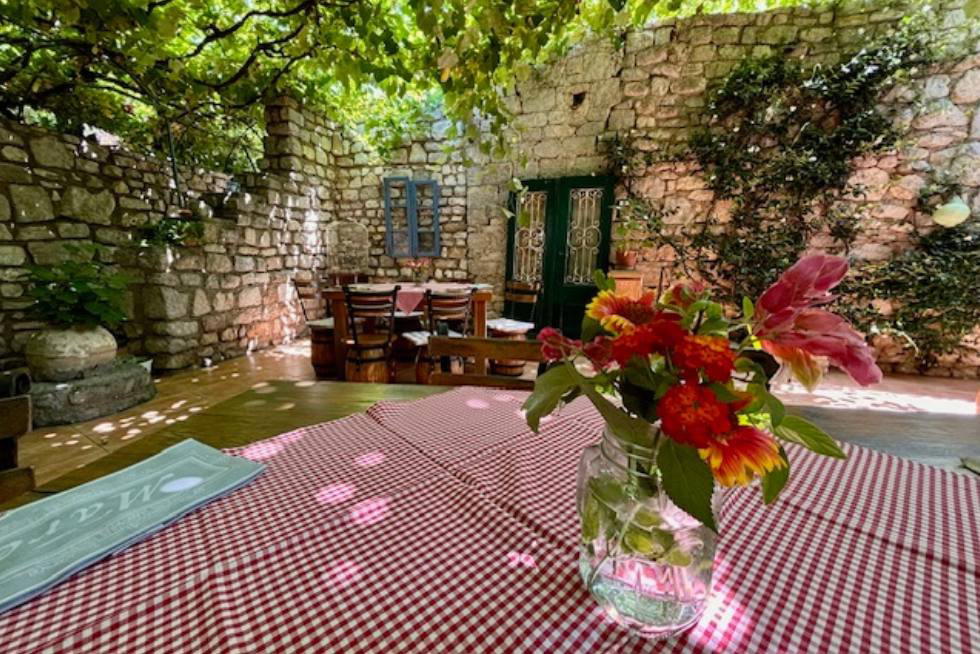
Where the Channel Meets the Table
Osor occupies one of the more arresting positions in the northern Adriatic: a medieval walled town of fewer than a hundred permanent residents straddling the narrow channel that separates Cres from Lošinj. The stone streets, Roman-era remnants, and the daily ritual of the swing bridge opening for boats all precede any meal. Arriving at Konoba Mare, you come through that physical context first, the salt air and the sound of water close enough to register before you sit down. In a country where the word konoba signals a specific promise of unpretentious, ingredient-led hospitality, the setting matters as much as the menu.
Konoba cooking in Dalmatia and the Kvarner islands developed out of necessity and geography: fishing communities built their tables around what the sea offered each morning and what the thin island soil could support. That tradition runs directly counter to the speculative sourcing models of urban restaurants, where produce travels distances and menus are written weeks in advance. Here, the constraint is the point. For context on how Croatia's more formal dining rooms handle similar source material with greater ceremony, Pelegrini in Sibenik or Restaurant 360 in Dubrovnik represent the other end of the spectrum at the €€€€ tier, where tasting menus reconstruct these same coastal ingredients through a contemporary lens.
The Logic of Sourcing on a Small Island
The Kvarner Gulf is one of the more productive fishing grounds in the Adriatic, and Lošinj's waters specifically yield the bream, mullet, squid, and bass that form the backbone of any serious konoba menu in the area. The island's interior supports herbs, some lamb, and small-scale vegetable cultivation. What that means in practice is a menu structure that resists standardisation: what appears on the table on a Tuesday in June will not be identical to what arrives on a Saturday in September. Seasonality here is not a marketing claim, it is a logistical reality imposed by island supply chains and small-boat fishing.
This sourcing logic places Konoba Mare in a broader pattern visible across Croatia's island restaurant scene. At the informal end, the leading konoba addresses function as something close to a direct line between sea and plate, with preparation kept deliberately restrained so the ingredient speaks plainly. Grilling over wood embers, olive oil from Lošinj's own groves, and salt from the nearby coast have historically defined the method. The island's famously mild climate, shaped by the Kvarner's geography, extends the season for outdoor eating in both directions relative to the mainland.
For comparison across the Adriatic island tier, Bodulo in Pag operates within similar island constraints further south, where the defining local product shifts toward Paška janjetina lamb rather than fish. Boskinac in Novalja takes the island-sourcing model into a wine-estate context at a higher price tier. Each reflects how geography dictates the table differently across Croatia's island chain.
Osor's Position in the Lošinj Dining Scene
Most visitors to the Cres-Lošinj archipelago base themselves in Mali Lošinj or Veli Lošinj and make day trips or passing stops in Osor. That movement pattern means Osor's restaurants serve a mix of transient visitors crossing the bridge by car or bicycle and the small number of guests staying in the village itself. The dining scene in Mali Lošinj skews more formal: Alfred Keller in Mali Lošinj represents the archipelago's more structured, chef-led end of the spectrum. Osor's konoba tradition sits at the other register, where the atmosphere is governed by stone walls, outdoor tables, and the pace of an island afternoon rather than a choreographed service sequence.
The geographic specificity of Osor is worth noting for planning purposes. The town sits at the narrowest point of the channel, roughly in the centre of the island pair, which makes it a natural stopping point on any north-south drive through the archipelago. The bridge connecting Cres and Lošinj opens at set intervals for maritime traffic, creating a small and reliable pause in travel that generations of visitors have filled with coffee or a meal.
How Konoba Mare Fits the Regional Pattern
Croatia's broader dining evolution over the past decade has seen significant institutional recognition accumulate at the formal end: Michelin coverage has expanded into Zagreb, Split, Istria, and Dalmatia, rewarding tasting-menu formats and wine programs of measurable depth. Nebo by Deni Srdoč in Rijeka, Agli Amici Rovinj, and LD Restaurant in Korčula each operate in that recognised, destination-dining tier. The konoba format has benefited from this rising attention to Croatian cuisine without being directly transformed by it: the leading examples have maintained their sourcing discipline and informality precisely because those qualities are now understood as a strength rather than a limitation.
Konoba Mare at Osor 30 holds its position within that informal tier. It functions on the local knowledge economy that characterises konoba culture across the islands: word passed between sailors, cyclists, and seasonal visitors who found their way to the right table. That opacity is itself a signal of where the venue sits in the regional hierarchy. Particularly credentialled Croatian addresses publish their Michelin status prominently; places like this let the address and the food do the work.
For those mapping a wider Croatian itinerary beyond the islands, the mainland offers strong contrasts in both register and ingredient logic: Dubravkin Put in Zagreb, Krug in Split, Korak in Jastrebarsko, and Cubo in Opatija each anchor distinct regional traditions. At the coastal leisure end, Burin in Crikvenica is worth noting for the northern Kvarner coast. For sourcing-conscious dining in a completely different geographic context, BioMania Bistro Bol in Bol makes an interesting comparison on Brač, where the organics-forward framing gives the local-sourcing argument a different kind of institutional shape. And for anyone curious how the world's leading seafood kitchens interpret similar commitments to proximity-sourcing at a different scale, Le Bernardin in New York City and the ingredient discipline at Atomix offer reference points on what happens when the sourcing ethos meets a much larger platform. See Cantilly Garden Restaurant in Samobor for the garden-to-table model in a continental Croatian setting.
Planning a Visit
Osor is reachable by car via the bridge from Cres or from Mali Lošinj, approximately 12 kilometres to the south. The island has no train service, and ferry connections run into Mali Lošinj rather than Osor directly. The restaurant is recommended for reservations, and regular hours run Tuesday through Sunday from 12:30 PM to 9:30 PM, with Monday closed.
A Quick Peer Check
Comparable venues nearby, for context on price, style, and recognition.
| Venue | Cuisine | Price | Notes |
|---|---|---|---|
| Konoba MareThis venue — the venue you are viewing | Traditional Croatian Mediterranean | $$ | Not listed |
| Diana | Mediterranean Steakhouse | $$ | Cikat Bay |
| EatIstria | Traditional Istrian Cooking Classes | $$ | Pluj |
| Primorska koliba | Traditional Mediterranean Seafood | $$ | Malinska |
| Didova kuća | Traditional Croatian Seafood & Grill | $$ | Simuni |
| Restaurant Riviera | Mediterranean & Croatian | $$ | Lovran |
Continue exploring
More in Osor
Restaurants in Osor
Browse all →
Bars in Osor
Browse all →

Hotels in Osor
Browse all →
At a Glance
- Rustic
- Cozy
- Family
- Special Occasion
- Terrace
- Extensive Wine List
- Local Sourcing
Current opening hours
- Monday
- Closed
- Tuesday
- 12:30–9:30 PM
- Wednesday
- 12:30–9:30 PM
- Thursday
- 12:30–9:30 PM
- Friday
- 12:30–9:30 PM
- Saturday
- 12:30–9:30 PM
- Sunday
- 12:30–9:30 PM
Hours can change for holidays and private events. Last verified .
Cozy and homey atmosphere with a rustic konoba feel, featuring a wonderful terrace.