Our verdict
Kômiwa Restaurante japonés brings Japanese cooking to Calle Miguel Ángel Blanco in Oviedo, a city more commonly associated with Asturian sidra and fabada than washoku tradition. Located in a region where seafood quality runs exceptionally high, the restaurant positions itself within a small but growing tier of Japanese dining in northern Spain. Confirm current details directly before visiting, as booking and hours information is not publicly listed.

Pearl is the En Primeur Club membership app, where members save venues, book tables and use the concierge.
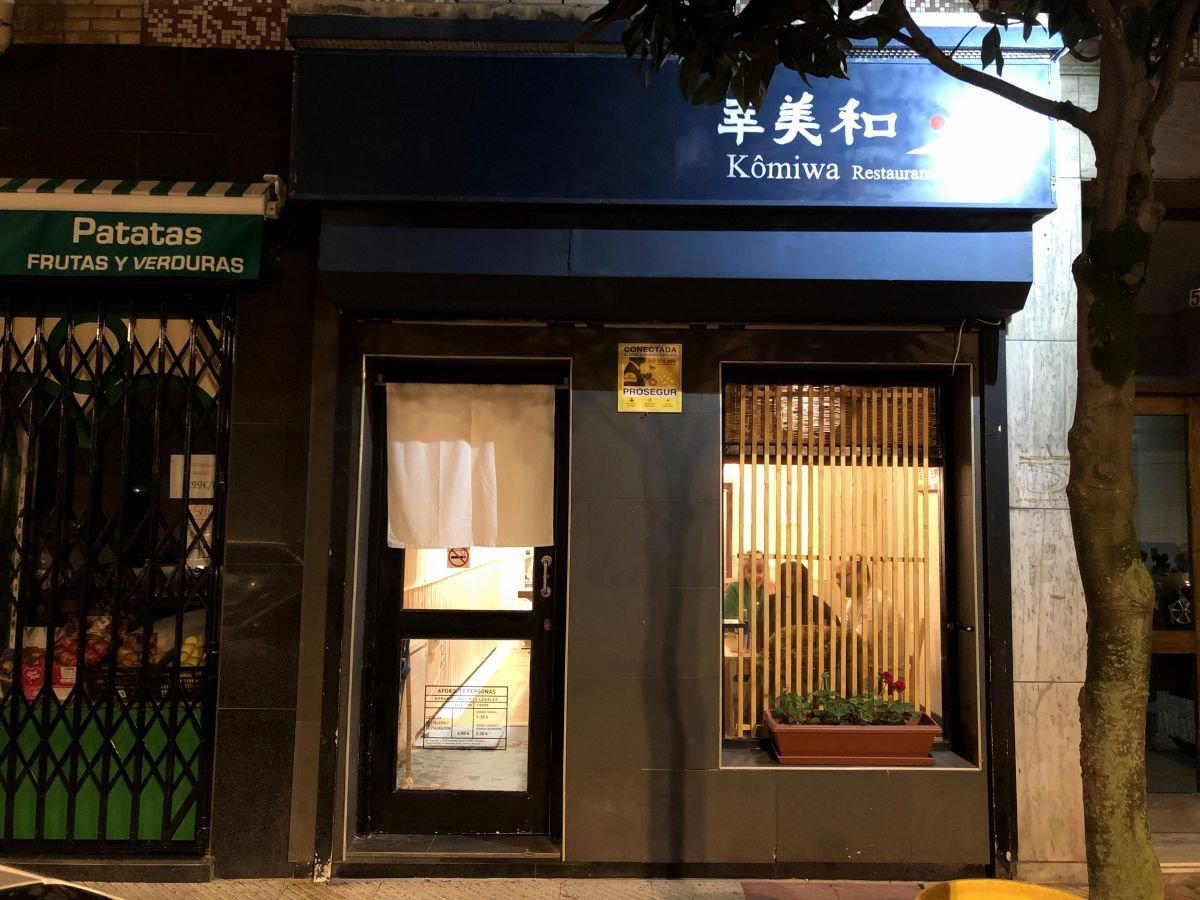
Japanese Dining in an Unlikely Address
Oviedo is not the first city that comes to mind when the conversation turns to Japanese cuisine in Spain. That instinct belongs to Madrid, Barcelona, and the Basque coast, where high-volume omakase counters and ramen specialists have multiplied steadily over the past decade. But precisely because Oviedo's dining identity is so firmly anchored in Asturian tradition, the wood-fired fabada, the salt-cod preparations, the ritual of sidra poured from height, a Japanese restaurant here carries a different weight. It operates as a statement about where the city's appetite is moving, not just where it has been.
Kômiwa Restaurante japonés sits on Calle Miguel Ángel Blanco 53, in the Oviedo district of 33013 Asturias. The address places it within a city that has quietly developed a more international dining register over the past several years, with visitors and locals alike seeking options beyond the Asturian canon. That expansion has happened without displacing the traditional offer, places like Restaurante Casa Chema and Restaurante Casa Lobato remain central to the city's dining character, but it has opened space for more specialised kitchens to take root.
The Cultural Weight of Japanese Cooking in Spain
Japanese cuisine arrived in Spain through a trajectory that mirrors broader European engagement with washoku: first as expensive novelty, then as sushi-bar approximation, and gradually as something more considered. The Spanish kitchen and the Japanese kitchen share more structural instincts than their geographic distance suggests. Both cultures prize raw material above transformation. Both maintain a deep respect for season. Both have produced tasting-menu formats where restraint and precision carry as much meaning as abundance. That alignment has helped Japanese restaurants in Spain develop beyond the conveyor-belt tier more quickly than in some other European markets.
At the high end of that Spanish-Japanese conversation, you find restaurants like Atomix in New York City drawing on Korean-Japanese overlap, and in Spain's own three-star circuit, venues like DiverXO in Madrid and El Celler de Can Roca in Girona, Japanese technique appears not as pastiche but as integrated vocabulary. The influence runs deep enough that it shapes how Spanish chefs at Arzak in San Sebastián or Mugaritz in Errenteria think about texture, temperature, and reduction. A dedicated Japanese kitchen in a city like Oviedo, then, is not a departure from Spain's fine dining conversation. It is a local expression of it.
Northern Spain as Raw Material
What Oviedo offers any Japanese kitchen is proximity to ingredient quality that rivals the leading fish-sourcing environments in Europe. The Cantabrian Sea, which runs along Asturias's northern coast, produces bonito, anchovies, and a range of shellfish that carry the kind of intensity Japanese cooking depends on. The question any serious Japanese restaurant in this region must answer is whether it connects to that local supply or imports standard product from outside the region. In cities with mature Japanese dining markets, Tokyo, London, New York, that sourcing decision defines which tier a restaurant occupies. In a smaller market like Oviedo, it is less codified, but the raw material advantage exists regardless.
This is part of what makes the Japanese category in northern Spain worth watching. The Basque coast, with venues like Martin Berasategui in Lasarte-Oria and Azurmendi in Larrabetzu, has long demonstrated that the Atlantic coast's marine produce can anchor cooking at the highest level. A Japanese kitchen in Asturias draws on the same supply chain, filtered through different technique and format. The parallel is not forced, it reflects a genuine geographic advantage that any kitchen on this coastline can access.
Kômiwa in Its Local Context
Within Oviedo's current dining tier, Kômiwa Restaurante japonés occupies a space that has few direct competitors. The city's most prominent Japanese option in recent years has been UMAMI, which has helped establish the category locally. Kômiwa's position on Calle Miguel Ángel Blanco gives it a residential rather than purely commercial address, the kind of location that tends to attract a repeat-visit clientele rather than passing trade. That pattern, where neighbourhood loyalty sustains a specialist kitchen in a mid-sized city, is well-established in other European markets and appears to be developing in Oviedo.
For the broader context of what serious Japanese dining looks like when it embeds itself in a non-capital city, the reference points are instructive. In the United States, Le Bernardin in New York City demonstrates what it means for a non-native cuisine to become authoritative within a local market through sustained technical discipline over decades. In Spain, the model is still forming, with Quique Dacosta in Dénia, Ricard Camarena in València, and Aponiente in El Puerto de Santa María each showing how a non-capital address can become a credible destination in its own right. That trajectory is available to Asturian dining too, as Casa Marcial in Arriondas and Atrio in Cáceres have demonstrated in adjacent regions. Kômiwa, in that sense, operates in a city with regional precedent for serious dining ambition.
Planning a Visit
Specific booking details, hours, and pricing for Kômiwa Restaurante japonés are not currently published in verified form, so confirming arrangements in person or via the restaurant's local contact is the practical approach. The address, Calle Miguel Ángel Blanco 53, Oviedo, is confirmed. For anyone building a fuller picture of the city's dining options, the full Oviedo City restaurants guide maps the range of what the city currently offers across cuisines and price points. Given Oviedo's compact centre, the restaurant is accessible from most central accommodation on foot or by short taxi. Cocina Hermanos Torres in Barcelona is an example of how a Spanish city's dining scene rewards methodical planning; the same approach applies in Oviedo, where the leading meals tend to go to those who book ahead rather than arrive speculatively.
Frequently asked questions
Where do I go for Kômiwa Restaurante japonés?
Kômiwa Restaurante japonés is located at Calle Miguel Ángel Blanco, 53, 33013 Oviedo, Asturias, Spain, Oviedo City.
Is Kômiwa Restaurante japonés the only Japanese restaurant in Oviedo worth considering?
Oviedo's Japanese dining options are limited compared to Madrid or Barcelona, which makes Kômiwa's presence at Calle Miguel Ángel Blanco, 53 in the 33013 district more significant by default. Within the city's current restaurant tier, it occupies a space with few direct Japanese competitors. Whether it is the only option worth considering depends on what you are looking for, but it sits at the more serious end of what Asturias currently offers in this cuisine category.
What's the signature dish at Kômiwa Restaurante japonés?
Kômiwa's current menu composition is not published in verified form, so no single dish can be confirmed as a permanent fixture. What is known is that the restaurant operates within a Japanese cooking framework in Oviedo, Asturias, a region with direct access to some of the finest seafood on the Atlantic coast, which tends to define the identity of any serious Japanese kitchen in this part of Spain. check the venue's official channels for current menu details.
Do they take walk-ins at Kômiwa Restaurante japonés?
Walk-in policy has not been confirmed in published sources. Given Kômiwa's position as one of very few Japanese restaurants operating at a serious level in Oviedo, demand relative to capacity is worth factoring in. Reaching out via the restaurant's address at Calle Miguel Ángel Blanco, 53, or checking local booking platforms before arriving is the safer approach.
What has Kômiwa Restaurante japonés built its reputation on?
Kômiwa has established itself as one of the few Japanese restaurants in Oviedo operating with enough seriousness to hold attention in a city not typically associated with this cuisine. Its position in Asturias places it alongside one of Europe's most productive seafood-sourcing regions, the Cantabrian Sea, which gives any committed Japanese kitchen here a compelling raw-material argument.
Is Kômiwa Restaurante japonés good for vegetarians?
Japanese cuisine in the traditional washoku framework does include vegetable-forward preparations, but the extent to which Kômiwa applies these is not documented. Contacting the restaurant at Calle Miguel Ángel Blanco, 53 in Oviedo directly before your visit is the only reliable way to clarify dietary accommodation.
Booking and Cost Snapshot
Comparable venues nearby, for context on price, style, and recognition.
| Venue | Cuisine | Price | Awards | Notes |
|---|---|---|---|---|
| Kômiwa Restaurante japonésThis venue (the venue you are viewing) | Traditional Japanese Ramen & Sushi | $20–30 | Not listed | Not listed |
| UMAMI | Japanese | Not listed | Macarfi 7.1 Food Rating | Oviedo City, Japanese |
| Restaurante Casa Lobato | Classic Asturian Spanish | $50–100 | Macarfi 8.1 Food Rating | Oviedo City, Classic Asturian Spanish |
| Gloria | Modern Asturian Tapas | Not listed | Michelin Plate · Macarfi 7.6 Food Rating | Oviedo, Modern Asturian Tapas |
| Restaurante Casa Chema | Traditional Asturian with Vegan Options | $30–50 | Macarfi 7.2 Food Rating | El Caleyo, Traditional Asturian with Vegan Options |
| Del Arco | Traditional Asturian & Spanish restaurant with tavern | $30–50 | Guía Repsol 1 Sol | centro, Traditional Asturian & Spanish restaurant with tavern |
Continue exploring
More in Oviedo
Restaurants in Oviedo
All restaurants in Oviedo →

Details
- Cozy
- Intimate
- Classic
- Casual Hangout
- Family
- Group Dining
- Standalone
- Beer Program
- Local Sourcing
- Tasting Menu
- A La Carte
- Beer
- Vegetarian Friendly
- Vegan Options
- Gluten Free Options
- Allergy Accommodating
Current opening hours
- Monday
- Closed
- Tuesday
- Closed
- Wednesday
- 2–4 PM, 8–11 PM
- Thursday
- 2–4 PM, 8–11 PM
- Friday
- 2–4:30 PM, 9–11:30 PM
- Saturday
- 2–4:30 PM, 9–11:30 PM
- Sunday
- Closed
Hours can change for holidays and private events. Hours as of .
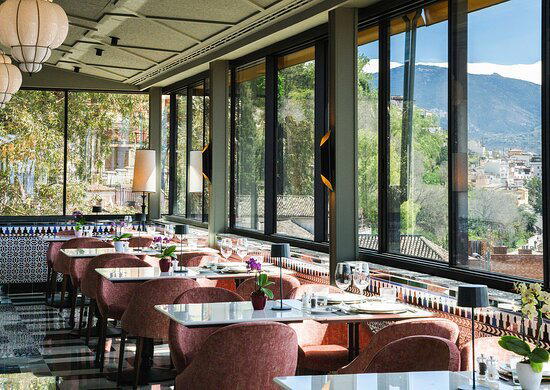
Warm and welcoming atmosphere with professional hospitality staff; simple, traditional Japanese decor that creates an immersive dining experience.