Komatsu sits inside the Rhodes Central development on Sydney's northern fringe, where Japanese technique meets the produce rhythms of the Australian market. The restaurant occupies a tier of suburban dining that rewards the detour, precise, ingredient-led cooking in a setting that trades harbour views for culinary focus. Rhodes is becoming a reference point for this kind of low-profile, high-craft operation.
Pearl is the En Primeur Club membership app — saves, bookings, and concierge access live there. Same editors, same standards.
- Address
- Rhodes Central T2.18 6, 14 Walker St, Rhodes NSW 2138, Australia
- Phone
- +61452235525
- Website
- opentable.com
- Directions
- Get directions
 Saves & bookings on Pearl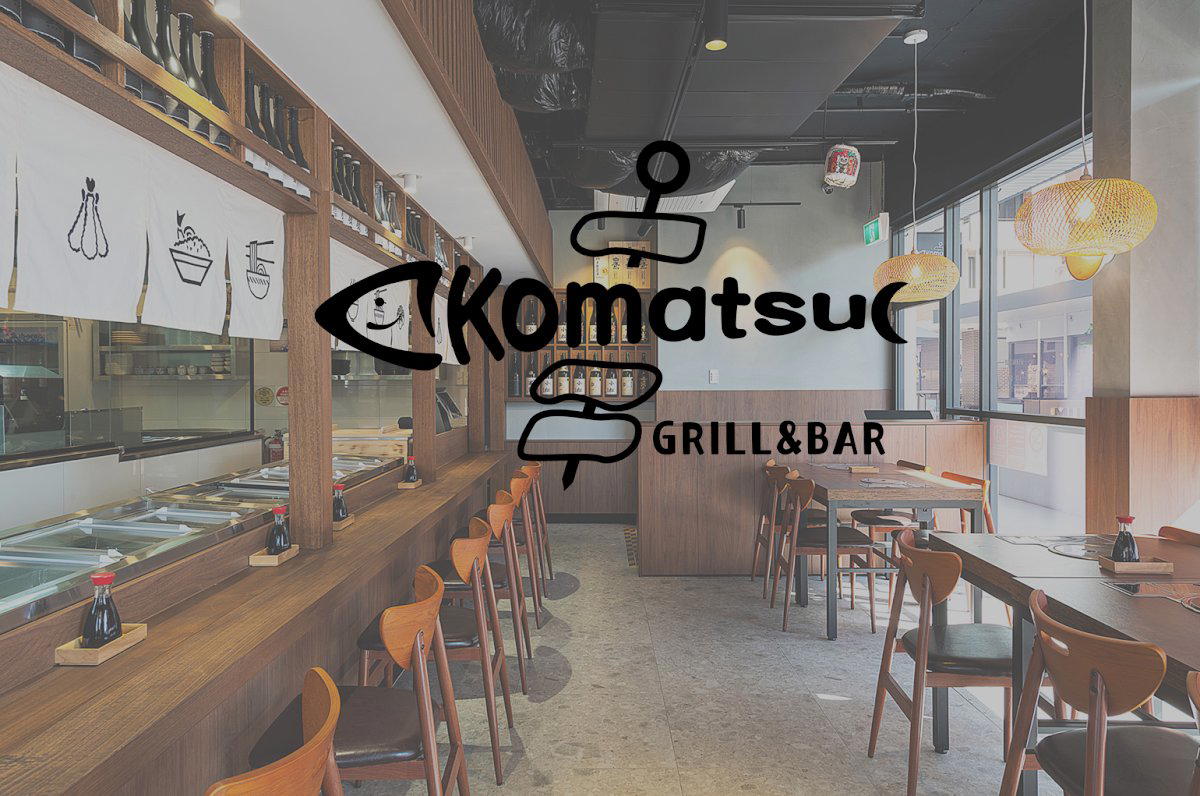
Where Japanese Discipline Meets the Australian Larder
Sydney's inner-west and northern suburbs have quietly accumulated a collection of restaurants that operate outside the harbour-view circuit. Rhodes, once associated almost entirely with its IKEA and apartment towers, has shifted in recent years into something more culinarily interesting. Komatsu, situated in the Rhodes Central complex at 6, 14 Walker St, is a Japanese sushi restaurant in Rhodes, Sydney, with a price point around $40 per person. The result is a dining register that sits some distance from the tourist-facing omakase counters of the CBD and closer to the serious neighbourhood restaurants that define the better parts of Tokyo's outer wards.
This intersection of Japanese method and Australian produce is not new as a concept, but it remains genuinely difficult to execute with consistency. The challenge is that Japanese culinary discipline, in knife work, in temperature control, in the sequencing of flavour, was developed around a specific set of ingredients: Pacific fish, domestic Wagyu, Hokkaido dairy, Kyushu vegetables. Applying that discipline to, say, a Murray cod, a Shark Bay prawn, or a Victorian dairy product requires both fluency in the original tradition and enough confidence to depart from it. The restaurants in Sydney that manage this well, from Saint Peter on its seafood-driven Australian line to the more classical European register of Rockpool, tend to be those where the cooking logic comes first and the provenance story follows, rather than the reverse.
The Rhodes Location: Suburban Format, Serious Intent
Rhodes Central is a mixed-use development, retail below, residential above, of the kind that has absorbed significant dining investment across Sydney's middle ring over the past decade. The format tends to attract two types of operator: chain concepts filling floor space, and genuinely ambitious independents who trade lower rent for a less competitive immediate environment. Komatsu reads as the latter. The address places it among a cluster of dining options in the complex, but the culinary orientation separates it from its neighbours in the way that matters: what arrives at the table.
Getting to Rhodes from the CBD is direct by train, with Rhodes station on the T1 Western line a short walk from the complex. Driving is equally viable, with the development offering car parking. Neither option is onerous, but the location does require a deliberate choice, this is not a restaurant you stumble into after a harbour walk. That self-selection shapes the room. The clientele skews local and repeat, which is, in culinary terms, often a reliable signal about quality-to-price calibration.
Japanese Technique in an Australian Ingredient Context
The broader pattern Komatsu represents is worth understanding before you arrive. Japan's culinary influence on Sydney has moved through several phases. The first wave was largely about category introduction, ramen shops, conveyor-belt sushi, izakayas. The second involved higher-end Japanese formats transplanted with varying degrees of fidelity. The current, more interesting phase involves chefs and kitchens that have internalised Japanese technical vocabulary and are now using it to interrogate specifically Australian produce. Comparable moves are happening at Attica in Melbourne and Brae in Birregurra, though those operate in a more explicitly native-Australian idiom. The Japanese-Australian hybrid is a distinct and currently productive register.
Australia's fish and shellfish are an obvious point of connection. The country's coastal waters produce species, blue-eye trevalla, kingfish, morwong, that respond well to Japanese handling: light curing, precise slicing, minimal heat. Australian Wagyu, meanwhile, has developed to a point where it competes with Japanese domestic grades in marbling and flavour. A kitchen applying Japanese temperature discipline and resting protocols to that product has genuine material to work with. This is the space Komatsu occupies, and it is a space that rewards attention.
Internationally, the closest analogues for this kind of cross-cultural technical cooking are not the grand French-Japanese fusion projects of the 1990s but rather the quieter, more rigorous work happening at places like Atomix in New York City, where Korean technique meets a global ingredient vocabulary, or the seafood-driven precision of Le Bernardin in New York City. The ambition is similar even when the scale is different: use the inherited technical grammar of one tradition to say something new about ingredients from another place.
Positioning Within Sydney's Dining Tier
Sydney's mid-tier dining market has compressed. Venues in the CBD and inner east, 10 William St, 1021 Mediterranean, and others, have pushed price floors upward while the suburban independents have held closer to value. Komatsu, in its Rhodes address, sits at a point where serious cooking does not necessarily require the premium that a Surry Hills or Potts Point postcode adds. This is not a compromise; it is a different market logic, and for the diner who knows the difference between a technically precise kitchen and a well-designed room in a fashionable neighbourhood, the outer-suburb calculation is often the better one.
Comparison with peers further out, Johnny Bird in Crows Nest, Bayly's Bistro in Kirribilli, suggests that Sydney's northern suburbs are developing a dining identity that does not depend on proximity to the CBD for its authority. That pattern is, if anything, accelerating. Beyond Sydney, the same logic applies in Newcastle at Hungry Wolfs Italian Restaurant, Wollongong at Kulcha Restaurant Wollongong, and Ballarat at Jaani Street Food, serious kitchens operating at a remove from capital city dining clusters.
Planning Your Visit
Rhodes Central is accessible by train (Rhodes station, T1 Western line) and by car from both the M2 and the Parramatta Road corridor. The restaurant sits on Level 2 of the T2 tower within the development. Given the suburban setting and likely local-repeat clientele, booking ahead is advisable, particularly for weekend dinner. Those exploring the broader Sydney scene from a different angle might also consider bills in Bondi Beach for a morning counterpoint, or the neighbourhood depth of Bar Carolina in South Yarra and Barry Cafe in Northcote if you are cross-referencing the Melbourne market.
Awards and Standing
Comparable venues nearby, for context on price, style, and recognition.
| Venue | Cuisine | Price | Notes |
|---|---|---|---|
| KomatsuThis venue — the venue you are viewing | Japanese Sushi | $$$ | Not listed |
| Busshari | Authentic Japanese Sushi and Sashimi | $$$ | Potts Point |
| Mirai Japanese Restaurant | Modern Japanese Fusion | $$$ | Darlinghurst |
| O'Uchi | Modern Organic Japanese Izakaya | $$$ | Sydney |
| Suminoya | Japanese Yakiniku BBQ | $$$ | Sydney |
| Tsuzumi | Modern Japanese Omakase | $$$$ | Barangaroo |
Continue exploring
More in Sydney
Restaurants in Sydney
Browse all →
Bars in Sydney
Browse all →
Hotels in Sydney
Browse all →
At a Glance
- Modern
- Trendy
- Casual Hangout
- Date Night
- Open Kitchen
Current opening hours
- Monday
- 11:30 AM–3 PM, 5–10 PM
- Tuesday
- 11:30 AM–3 PM, 5–10 PM
- Wednesday
- 11:30 AM–3 PM, 5–10 PM
- Thursday
- 11:30 AM–3 PM, 5–10 PM
- Friday
- 11:30 AM–3 PM, 5–10 PM
- Saturday
- 11:30 AM–3 PM, 5–10 PM
- Sunday
- 11:30 AM–3 PM, 5–9 PM
Hours can change for holidays and private events. Last verified .
Modern ambiance with emphasis on fresh ingredients and quick service.