Tsuzumi occupies a considered position in Barangaroo's premium dining corridor, where Japanese culinary discipline meets Sydney's appetite for restrained, produce-led cooking. Located in the Sussex Street precinct, it represents the quieter, more technically demanding end of the city's Japanese restaurant tier. Booking ahead is advised for this address, which draws a focused crowd from the surrounding financial district.
Pearl is the En Primeur Club membership app — saves, bookings, and concierge access live there. Same editors, same standards.
- Address
- Shop C2.07/3 Sussex St, Barangaroo NSW 2000, Australia
- Phone
- +61488787814
- Website
- tsuzumi.com.au
- Directions
- Get directions
 Saves & bookings on Pearl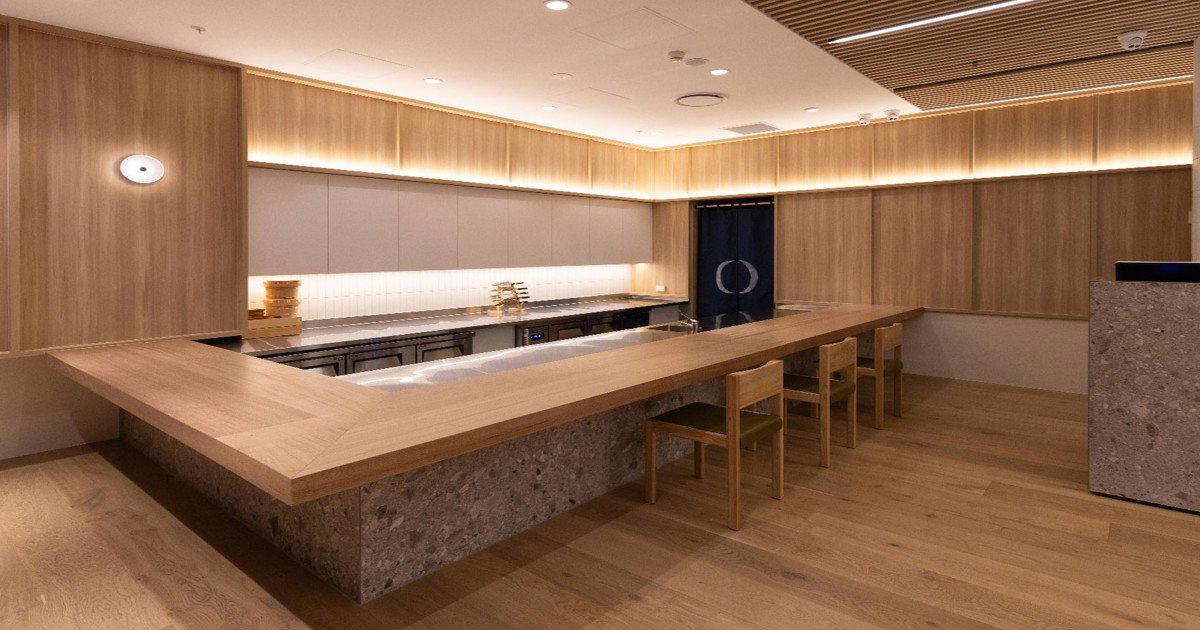
Barangaroo and the Calculus of Japanese Fine Dining in Sydney
Sydney's relationship with Japanese cuisine has matured considerably over the past two decades. What began as a sushi-bar format concentrated around the CBD has stratified into distinct tiers: casual ramen and izakaya houses in Haymarket and Surry Hills, mid-market omakase counters spread across Potts Point and Darlinghurst, and a smaller, more demanding cohort of precision-led Japanese restaurants anchored in the financial and waterfront precincts. Tsuzumi, located at Shop C2.07 in the 3 Sussex Street complex at Barangaroo, belongs to that last category. Its address alone signals intent: Barangaroo's dining precinct has attracted a concentration of restaurants that price against the corporate lunch and dinner market, where the expectation is technical fluency rather than novelty. Tsuzumi is a Modern Japanese Omakase restaurant in Barangaroo, Sydney, with a price point around US$200 per person.
The Sussex Street building positions Tsuzumi within walking distance of the financial district's major towers, Darling Harbour to the south, and the broader waterfront development that transformed this stretch of the western CBD after 2015. For comparison, Rockpool and Saint Peter operate in entirely different competitive registers, Australian produce-driven and seafood-forward respectively, but they share with Tsuzumi a similar positioning logic: high-density professional areas where diners have both the appetite and the budget for serious cooking.
The Scene: Where Sydney's Japanese Restaurants Are Competing Now
The relevant comparable set for a restaurant at Tsuzumi's address and apparent register is not the broad sweep of Japanese dining in Sydney. It is a narrower group of venues where the team dynamic between kitchen, floor, and beverages determines the experience's coherence. In the upper tier of Sydney's Japanese restaurants, the conversation is increasingly about whether the front-of-house and sommelier can translate the kitchen's vocabulary to a table that may include guests entirely unfamiliar with Japanese culinary conventions. This is where team architecture matters as much as what arrives on the plate.
Japanese fine dining outside Japan has a particular coordination challenge: the cuisine's logic, its pace, its silences, its temperature sequencing, depends on a floor team that understands the kitchen's grammar. In Tokyo, an omakase diner often arrives with that grammar already internalised. In Sydney, the floor team carries more interpretive weight. The restaurants that handle this leading treat the front-of-house not as servers but as curators of context, offering just enough without annotating every dish to the point of exhaustion. Beverage pairings in this format typically run across sake, Japanese whisky, and wine lists that lean toward low-intervention producers, a pattern visible across comparable addresses in Melbourne, where Attica and produce-led peers have normalised that kind of beverage curation.
The Barangaroo Context: What the Precinct Demands
Barangaroo's dining precinct is not forgiving of mid-effort restaurants. The area draws a lunchtime crowd of senior professionals and a dinner crowd that skews toward corporate entertaining, where the expectation of seamlessness is higher than in restaurant-destination neighbourhoods like Surry Hills or Newtown. Venues that thrive here tend to have a precisely calibrated service tempo and a beverage program that can sustain a table across two to three hours without feeling managed. That is a team discipline question as much as a kitchen one.
Addresses like 10 William St, 10 Pounds, and 1021 Mediterranean illustrate how Sydney's premium tier distributes across different culinary traditions, each with its own version of the team-coordination problem.
Japanese Restaurant Discipline and What It Requires of a Team
The benchmark for Japanese fine dining collaboration is set internationally at venues like Atomix in New York City, where the interaction between kitchen intent and floor delivery is treated as a designed system rather than a parallel operation. Le Bernardin, in a different tradition, demonstrates how a kitchen's technical authority becomes meaningless without a floor team capable of holding the same standard across a full service. These are the reference points against which serious Japanese restaurants in Sydney are increasingly judged, especially by the international business travellers who move between financial centres and carry those comparisons in their heads.
In Australia more broadly, the farm-to-table and produce-sourcing rigour that defines places like Brae in Birregurra has influenced how premium Japanese restaurants communicate their ingredient sourcing to diners. The expectation that a sommelier or floor lead can speak precisely about where a fish was landed, how a vegetable was grown, or why a particular sake was selected has become a mark of serious intent rather than a differentiator.
Tsuzumi sits at 3 Sussex Street in Barangaroo, within the C2.07 retail and dining complex on the precinct's southern edge.
For a broader frame on where Tsuzumi sits relative to Sydney's wider offer, the EP Club also covers venues from bills in Bondi Beach to Bayly's Bistro in Kirribilli, Johnny Bird in Crows Nest, and further afield to Hungry Wolfs in Newcastle, Kulcha in Wollongong, and Jaani Street Food in Ballarat, giving a sense of how the state's dining tier operates at different scales. Melbourne comparisons are equally useful: Bar Carolina in South Yarra and Barry Cafe in Northcote show how the southern capital handles the same casual-to-premium spectrum in a different urban grain.
Recognition, Side-by-Side
Comparable venues nearby, for context on price, style, and recognition.
| Venue | Cuisine | Price | Notes |
|---|---|---|---|
| TsuzumiThis venue — the venue you are viewing | Modern Japanese Omakase | $$$$ | Not listed |
| Kuon Omakase | Japanese Omakase | $$$$ | Surry Hills |
| Wagyuto | Modern Japanese | $$$$ | Clovelly |
| Yoshii's Omakase | Modern Japanese Omakase | $$$$ | Barangaroo |
| Kuon Sushi Sei | High-End Japanese Omakase and Sushi | $$$$ | Haymarket |
| Takumi Yakiniku | Japanese Yakiniku BBQ | $$$ | Eastwood |
Continue exploring
More in Sydney
Restaurants in Sydney
Browse all →
Bars in Sydney
Browse all →
Hotels in Sydney
Browse all →
At a Glance
- Intimate
- Modern
- Minimalist
- Elegant
- Sophisticated
- Special Occasion
- Date Night
- Chefs Counter
- Sake Program
Current opening hours
- Monday
- Closed
- Tuesday
- 12:30–2:30 PM, 6:30–8:30 PM
- Wednesday
- 12:30–2:30 PM, 6:30–8:30 PM
- Thursday
- 12:30–2:30 PM, 6:30–8:30 PM
- Friday
- 12:30–2:30 PM, 6:30–8:30 PM
- Saturday
- 5:30–10 PM
- Sunday
- Closed
Hours can change for holidays and private events. Last verified .
Modern minimalist fit-out with an intimate, elegant, and energetic atmosphere reflecting Japanese cultural elegance.