
Tabelog 100 #40
Our verdict
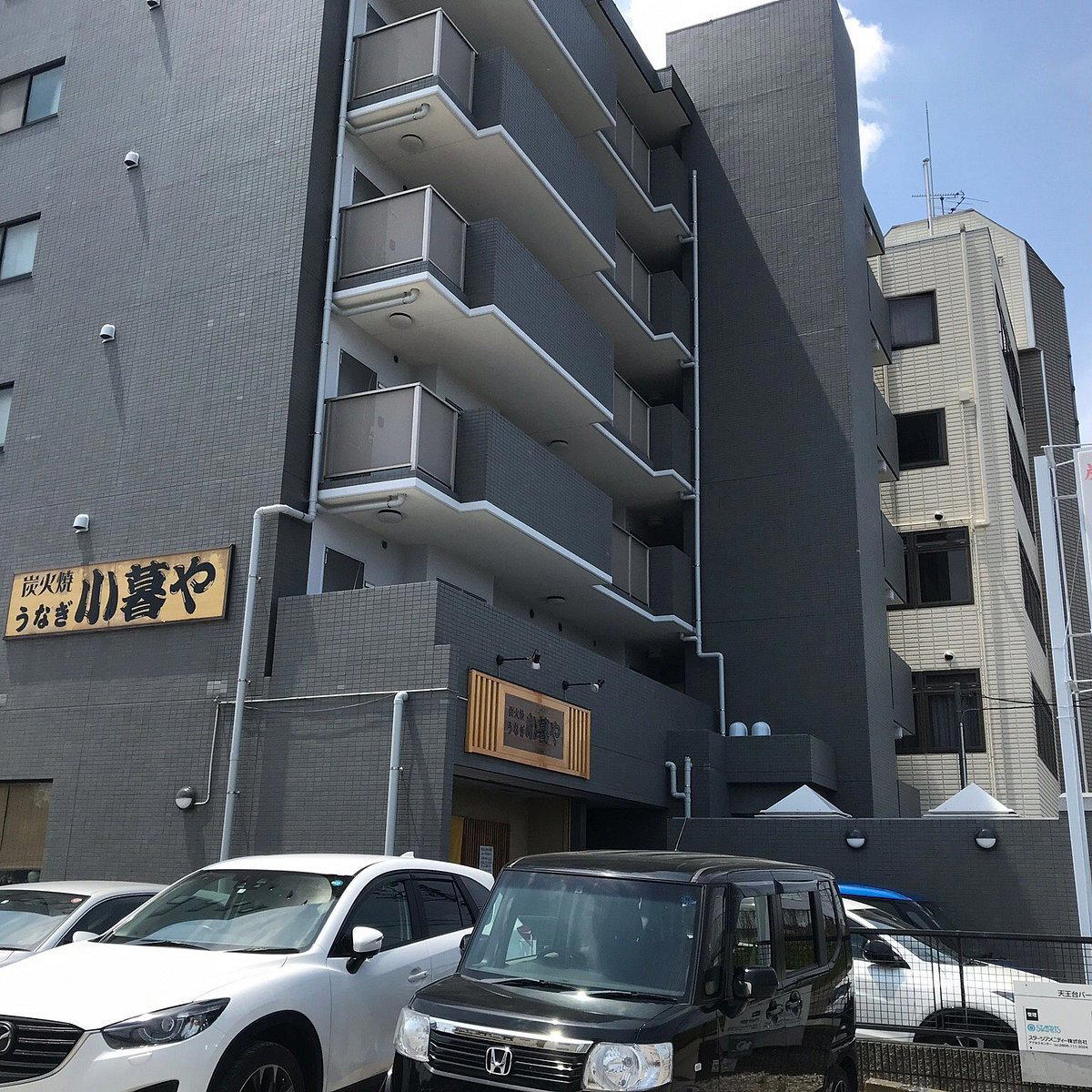
Kogureya occupies a ground-floor unit in a residential pocket of Tennodai, Abiko, a Chiba city that sits well outside the circuits traced by Tokyo's dining press. With cuisine details unconfirmed by major award bodies, it operates in the tier of neighbourhood restaurants that sustain a local following through consistency rather than recognition, placing it in a different conversation from the prefecture's Michelin-tracked addresses.

Pearl is the En Primeur Club membership app, where members save venues, book tables and use the concierge.
Abiko's Neighbourhood Restaurant Culture and Where Kogureya Fits
Chiba Prefecture's dining identity has long been shaped by proximity to Tokyo rather than its own culinary profile. Most serious diners in the region default to the capital's Michelin-tracked counters, addresses like Harutaka in Tokyo, where the sushi tradition carries its own freight of expectation and price. What gets less attention is the stratum below: the neighbourhood restaurants in satellite cities like Abiko that hold a regular clientele through repetition, consistency, and local sourcing rather than through critical recognition. Kogureya operates in this category, out of a ground-floor unit on a residential block in Tennodai, a part of Abiko that has no particular culinary reputation to lean on.
That absence of hype is, in the context of Japan's deeply stratified restaurant culture, a meaningful data point. Japan's neighbourhood dining circuit is genuinely functional. The country's kitchen culture, even at the local level, tends toward precision and ingredient respect in ways that rarely translate elsewhere. A suburban restaurant in Chiba is not operating under the same conditions as a strip-mall equivalent in another context. That framing matters for understanding what Kogureya is likely doing and why a visitor might consider it alongside a trip that already includes Abiko's broader offerings. See our full Abiko restaurants guide for the wider picture.
The Ingredient Question in Chiba's Suburban Dining
The editorial angle for any restaurant in this part of Japan is sourcing. Chiba Prefecture is one of the Kanto region's primary agricultural suppliers: vegetables, pork, seafood from Tokyo Bay and the Pacific coast all move through here before reaching the capital's high-end kitchens. A neighbourhood restaurant in Abiko has, in principle, genuine proximity to those supply chains, closer, in some cases, than the Tokyo counters that claim regional provenance on their menus.
This is the dynamic that makes suburban Japanese restaurants worth assessing independently of their award status. In Japan's urban-to-rural sourcing model, ingredient quality at the neighbourhood level is often higher than the restaurant's profile would suggest. The kitchen may have direct relationships with farmers and fish markets that a Tokyo restaurant has to work harder to establish. For the reader, this means that cuisine-first judgements based on awards alone will miss a significant portion of what is actually happening in places like Abiko.
But the structural logic applies regardless: a small, ground-floor restaurant in a residential Chiba neighbourhood, operating without the overhead of a central Tokyo address, has room in its economics to prioritise ingredient quality in ways that higher-rent, higher-profile venues cannot always sustain. That is not a guarantee, it is a condition worth testing.
Positioning Among Japan's Broader Restaurant Spectrum
To understand where Kogureya sits, it helps to map the range. At one end of Japan's current dining hierarchy are the innovation-led institutions, HAJIME in Osaka, operating at the intersection of French technique and ecological sourcing philosophy, and Gion Sasaki in Kyoto, where kaiseki functions as a formal seasonal calendar. Further along the spectrum, addresses like akordu in Nara and Goh in Fukuoka demonstrate how regional cities have developed serious dining identities that don't depend on Tokyo validation.
Kogureya is not in that tier, at least not in any measurable, award-backed sense. The comparison is useful not to diminish the restaurant but to clarify the type of visit it represents. This is neighbourhood dining in a commuter city, not destination dining in a recognised culinary hub. The reader who travels to Abiko specifically for Kogureya is making a different kind of choice from the reader planning around 一本杉 川嶋 in Nanao or 夕佳亭山乃 in Sapporo, where the regional dining identity is a documented draw.
Internationally, the contrast is even sharper. Restaurants like Le Bernardin in New York City or Atomix in New York City operate with a level of institutional investment and documented critical infrastructure that places them in an entirely different frame. Kogureya's value, if it has one, is precisely that it is not that kind of restaurant.
Planning a Visit: What to Know Before You Go
Abiko is accessible from central Tokyo via the JR Joban Line, with the journey running roughly 40 to 50 minutes from Ueno depending on the service. The Tennodai area where Kogureya is located, at 4-chome, 2-22, in a ground-floor unit of a residential building, is a short distance from Abiko Station, though visitors should verify the exact walking route against current maps. Price range, seat count, and operating hours are similarly unconfirmed, so building flexibility into any visit plan is advisable. Japan's neighbourhood restaurants at this level often keep irregular hours or close periodically without advance notice online.
For visitors building a wider Chiba itinerary, other reference points in Japan's regional dining circuit worth considering include 湖隣荘 in Takashima and 庄羽屋 in Nishikawa Machi, both of which operate in a similar neighbourhood-restaurant register outside the major city circuits. Birdland in Sakai, Bistro Ange in Toyohashi, and bodai in 那智勝浦町 round out a pattern of regional Japanese addresses where local sourcing and neighbourhood consistency matter more than critical attention. Also worth cross-referencing: Blue Ocean Steak in Nakagami District, Cafe Naoshima Konichiwa in Naoshima, and Denko Sekka in Hiroshima, each representing a different mode of regional dining outside Tokyo's gravitational pull.
Frequently asked questions
What's the best thing to order at Kogureya?
Chiba Prefecture is one of the Kanto region's main agricultural suppliers, and local restaurants in Abiko often work with produce from that supply chain, but whether Kogureya does so is unverified. Check directly with the restaurant for current menu direction.
Where is Kogureya located?
Kogureya is located at Japan, 〒270-1143 Chiba, Abiko, Tennodai, 4 Chome−2−22 マンション 1F, Abiko.
How hard is it to get a table at Kogureya?
Without documented awards or critical recognition, it does not carry the kind of demand that requires months of advance planning. For a neighbourhood restaurant in Abiko, reasonable lead time, or a direct enquiry, is usually sufficient.
What's the signature at Kogureya?
The restaurant's setting in a residential pocket of Abiko, Chiba, points toward everyday local cooking rather than a concept built around a single defining technique. Contacting the restaurant directly will give a clearer picture.
A Quick Peer Check
Comparable venues nearby, for context on price, style, and recognition.
| Venue | Cuisine | Price | Awards | Notes |
|---|---|---|---|---|
| KogureyaThis venue (the venue you are viewing) | Traditional Japanese Unagi | Not listed | Tabelog 100 #40 | Not listed |
| Unagi Ogawa Abiko ten | Traditional Unagi (Freshwater Eel) | $20–30 | Tabelog 100 #20 | Abiko |
| Matsugen (松玄 恵比寿) | Handmade Japanese Soba | $30–50 | Not listed | Ebisu |
| Rakuichi | Traditional Hokkaido Soba Kaiseki | $50–100 | Not listed | Niseko Annupuri |
| Teppan to o-sake Sōya (鉄板とお酒 宗や) | Teppanyaki Izakaya | $30–50 | Not listed | Shimogyo |
| Takasaki no Okan | Hot Sake Pairing Omakase | $150–200 | Not listed | Ikejiri Ohashi, Meguro |
Recognition history
Dated appearances from independent guides and award organizations, with the underlying list record or original source where available.
Tabelog 100 #40 · No. 40
Tabelog · Tabelog 100 - Unagi - 2024
Continue exploring
More in Abiko
Restaurants in Abiko
All restaurants in Abiko →




Details
- Classic
- Cozy
- Special Occasion
- A La Carte
Current opening hours
- Monday
- Closed
- Tuesday
- Closed
- Wednesday
- 11 AM–2 PM, 5–8 PM
- Thursday
- 11 AM–2 PM, 5–8 PM
- Friday
- 11 AM–2 PM, 5–8 PM
- Saturday
- 11 AM–2 PM, 5–8 PM
- Sunday
- 11 AM–2 PM, 5–8 PM
Hours can change for holidays and private events. Last verified .
Cozy provincial building in the countryside offering a relaxing traditional atmosphere.