
Tabelog 100 #46
Our verdict
In Kyoto's Gion district, Mouriya brings one of Japan's most regulated beef traditions into a setting shaped by the old city's pace and aesthetic restraint. The meal follows a teppanyaki progression built around certified Kobe beef, one of the few beef designations in the world with origin, breed, and grading requirements that eliminate most of what producers submit. For visitors tracking Japan's premium beef circuit, Mouriya's Gion address puts that tradition inside walking distance of the district's broader culinary density.

Pearl is the En Primeur Club membership app, where members save venues, book tables and use the concierge.
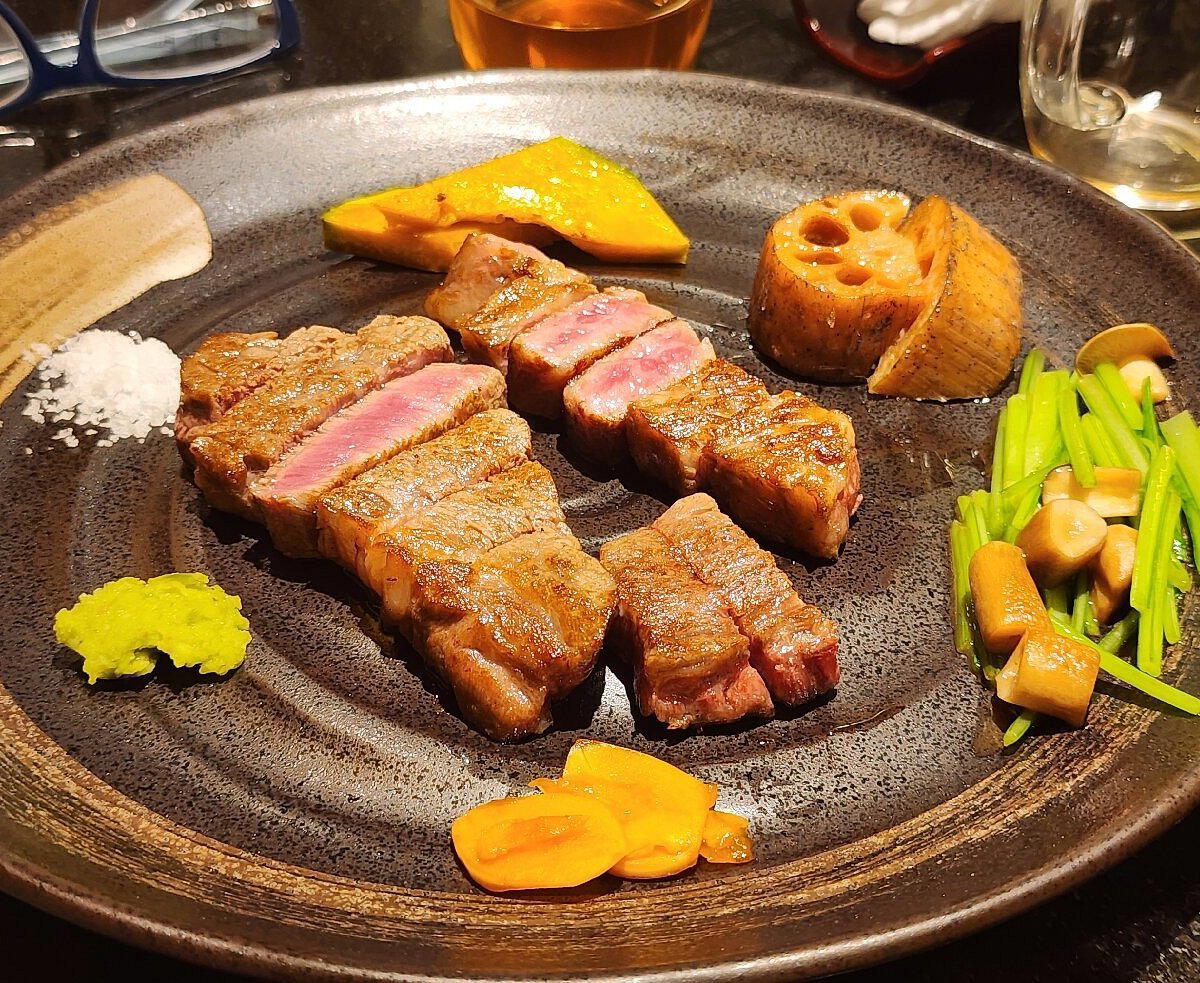
The menu
What to order
- Kobe Beef Sirloin
- Kobe Beef Fillet
- Chateaubriand
Where Gion's Pace Meets Japan's Most Governed Beef
Higashiyama Ward moves differently from the rest of Kyoto. The stone-paved lanes that run south from Chion-in toward Kenninji narrow the foot traffic, slow the rhythm, and filter out the city's more frantic visitor corridors. It is in this part of Gion, on Yamatocho, that Kobe Beef Steak Mouriya occupies the ground floor of a building that sits close to some of the ward's older machiya streetscape. Before a single plate arrives, the location signals something about the meal's register: this is not the hyperactive teppanyaki of a hotel dining room or a tourist-facing chain. The context is quieter, and the product at the centre of the menu is specific enough to carry the room without theatrical support.
Gion as a dining district has developed a dual identity over the past two decades. Its kaiseki tradition, represented by counters like Gion Sasaki and supported by long-established institutions such as Kikunoi Honten and Hyotei, positions the area at the formal end of Japanese dining. Alongside that, a smaller tier of specialist meat restaurants has taken root, addressing the appetite for Japan's premium beef designations among both domestic and international visitors. Mouriya's Gion branch sits inside that second cohort, though it draws on a history in Kobe beef service that predates the current wave of wagyu-focused openings by several decades.
The Designation at the Centre of the Meal
Understanding what makes a Kobe beef meal structurally different from a broader wagyu tasting requires some grounding in how the designation actually works. Kobe beef is not a style or a grade; it is a certified origin product governed by the Kobe Beef Marketing and Distribution Promotion Association. Eligible cattle must be Tajima-gyu, born and raised in Hyogo Prefecture, slaughtered at designated facilities, and achieve a marbling score of BMS 6 or higher on Japan's 12-point scale, alongside additional yield and weight thresholds. The result is that only a fraction of Tajima-gyu cattle raised each year qualifies. Fewer than 5,000 cattle were certified annually in recent years.
That scarcity shapes how the meal unfolds at Mouriya Gion. A teppanyaki format for Kobe beef is not chosen for spectacle; it is chosen because the flat iron allows the fat to render precisely and visibly, and the cook has direct control over temperature in a way that a grill does not always permit. High-marbling beef at BMS 6 and above behaves differently from commodity cuts: the intramuscular fat melts at a lower temperature than the muscle fibres contract, which means the window between perfectly rendered and overcooked is narrower than it appears. A skilled teppanyaki cook is reading that window continuously.
The progression of a Kobe beef teppanyaki meal at this tier typically moves from lighter preparations toward the main cuts, allowing the palate to register the fat's character before it accumulates. Accompaniments, often Japanese seasonal vegetables, garlic chips, and a dipping sauce structure, serve to punctuate rather than compete. The rhythm is slower than it looks from outside: each course has a pause function, partly practical and partly editorial, giving the diner time to recalibrate before the next sequence. Compared to the multi-course kaiseki model explored at places like Mizai or Isshisoden Nakamura, teppanyaki progression is compressed, usually four to six distinct service moments rather than ten or twelve. The compression does not reduce the meal's logic; it concentrates it.
Mouriya in the Context of Japan's Premium Beef Circuit
Japan's premium beef dining scene has fragmented considerably over the past decade. Yakiniku formats, in which diners cook their own meat over charcoal or gas, have expanded into the high-end tier. Shabu-shabu and sukiyaki houses have long occupied the middle ground. Teppanyaki, historically associated with international hotel groups and performance cooking for foreign visitors, has undergone a reappraisal as a format capable of serious technical work. Mouriya sits within the teppanyaki tradition but operates as a specialist rather than a generalist: the menu is organised around a single certified designation rather than a rotating roster of wagyu origins.
That focus has a regional parallel. In Osaka, restaurants like HAJIME work within French progressive frameworks to create meals where the progression itself carries meaning. In Fukuoka, Goh applies a similarly editorial approach to Japanese cuisine. What connects these operations across format differences is the principle that a meal should have internal logic, each course justified by what precedes and follows it. A Kobe beef teppanyaki at Mouriya asks to be read the same way: not as a single product delivered once, but as a sequence with a beginning, a peak, and a resolution.
The Gion location also places Mouriya within walking distance of a concentration of serious dining that few neighbourhoods outside Tokyo can match. Visitors building a Kyoto itinerary around food often anchor in this ward for exactly that reason. Akordu in Nara is an hour by train for those extending the region, and Harutaka in Tokyo represents the kind of sushi counter that serious Japan eaters add to the circuit. The broader map of Japanese dining at this level, from Nanao to Sapporo, reflects how decentralised Japan's serious restaurant culture has become, but Kyoto remains one of the densest single-city concentrations. For context on how Mouriya fits within that broader picture, our full Kyoto restaurants guide maps the city's dining tiers in more detail.
Planning the Visit
Mouriya operates a Gion branch at 7-1 Yamatocho, Higashiyama Ward, Kyoto 605-0802, on the ground floor. For visitors arriving from Kyoto Station, the most direct route runs through Shijo or Gion-Shijo station on the Keihan line, with the restaurant a short walk into the Higashiyama streetscape from there. Reservation practice for Kobe beef specialists in Kyoto generally favours advance booking, particularly for dinner sittings at weekends and during cherry blossom and autumn foliage periods, when the Higashiyama area sees its highest visitor density. Contacting the restaurant directly through available channels to confirm current hours, menu formats, and pricing before travel is advisable, as operational details for this tier of restaurant can shift seasonally. Those with dietary restrictions or specific requirements should communicate clearly at the point of booking, as the meal's structure around a single primary protein leaves limited flexibility for mid-service substitutions. Dress is expected to reflect the setting: Gion's dining rooms across the spectrum from kaiseki to specialist meat restaurants maintain an ambient formality that makes smart casual the practical floor.
Frequently asked questions
What's the address for Kobe Beef Steak Mouriya Gion?
Kobe Beef Steak Mouriya Gion is located at Japan, 〒605-0802 Kyoto, Higashiyama Ward, Yamatocho, 7−1 祇園モーリヤビル 1F, Kyoto.
How does Mouriya's Gion location compare to dining at the brand's original Kobe branches?
Mouriya's history in certified Kobe beef service began in Kobe, where the cattle are actually raised and slaughtered, and those branches operate closer to the primary supply chain. The Gion branch at 7-1 Yamatocho, Kyoto, serves the same designated beef within Higashiyama Ward's established heritage dining context, positioning the meal within Kyoto's cultural frame rather than Kobe's port-city beef district. For diners combining a Kyoto itinerary with a Kobe beef experience, the Gion location removes the need for a separate day trip to Kobe.
What's the signature dish at Kobe Beef Steak Mouriya Gion?
The menu centres on certified Kobe beef prepared teppanyaki-style, cooked on an iron griddle in front of diners. The designation is the constant: only Tajima-gyu cattle raised in Hyogo Prefecture and meeting strict grading criteria qualify as genuine Kobe beef. Mouriya has built its identity around sourcing within that certification, making the provenance of the beef the defining feature of every course.
Should I book Kobe Beef Steak Mouriya Gion in advance?
Yes, advance booking is strongly advisable. The Gion branch sits at 7-1 Yamatocho in Higashiyama Ward, one of Kyoto's most visited districts, and dining rooms at this price tier operate with limited covers. Demand peaks during cherry blossom season in April and the autumn foliage period in November, when the surrounding neighbourhood draws its largest visitor volumes.
What do critics highlight about Kobe Beef Steak Mouriya Gion?
Published attention to Mouriya has consistently focused on the specificity of the Kobe beef designation rather than on broader wagyu comparisons. The teppanyaki format, in which a chef controls heat and timing tableside, is noted as a deliberate counterpoint to the yakiniku format where diners cook their own meat. Mouriya's Kobe roots, the brand's history in certified Kobe beef service began in Kobe itself, provide a credentialled baseline that distinguishes it from Kyoto restaurants serving non-certified wagyu.
Can Kobe Beef Steak Mouriya Gion accommodate dietary restrictions?
A meal structured around certified Kobe beef teppanyaki has limited flexibility for guests who do not eat beef or red meat; the designation and format together define the menu's core architecture. Guests with specific dietary requirements should communicate them directly to the restaurant when booking.
Is Kobe Beef Steak Mouriya Gion good value for money?
Certified Kobe beef commands a price premium across every format in which it appears, a consequence of strict volume constraints: fewer than 5,000 cattle per year meet the full designation criteria. Teppanyaki preparation adds a further labour cost relative to yakiniku or shabu-shabu formats. Whether that combination represents value depends on the weight a diner places on designation authenticity versus comparable wagyu meals at lower price points elsewhere in Kyoto.
Recognition Snapshot
Comparable venues nearby, for context on price, style, and recognition.
| Venue | Cuisine | Price | Awards | Notes |
|---|---|---|---|---|
| Kobe Beef Steak Mouriya GionThis venue (the venue you are viewing) | Teppanyaki Kobe Beef | $150–200 | Tabelog 100 #46 | Not listed |
| 祇園 さゝ木 | Kyoto Kaiseki | $300–500 | Not listed | Gion |
| さえ㐂 | Traditional Edomae Sushi Omakase | Not listed | Not listed | Nakagyo Ward |
| 和ごころ 泉 | Traditional Kyoto Kaiseki | $300–500 | 1 Michelin Star | Shimogyo Ward, Kawaramachi/Shijo area |
| 米処いなもと | Japanese Rice-Focused Izakaya | $50–100 | Michelin Bib Gourmand | Shimogyo Ward (下京区) |
| 葵献心 やま田 | Kaiseki Kyoto Cuisine | $100–150 | Not listed | Shimogamo |
Recognition history
Dated appearances from independent guides and award organizations, with the underlying list record or original source where available.
Tabelog 100 #46 · No. 46
Tabelog · Tabelog 100 - Steak / Teppanyaki - WEST - 2025
Continue exploring
More in Kyoto
Restaurants in Kyoto
All restaurants in Kyoto →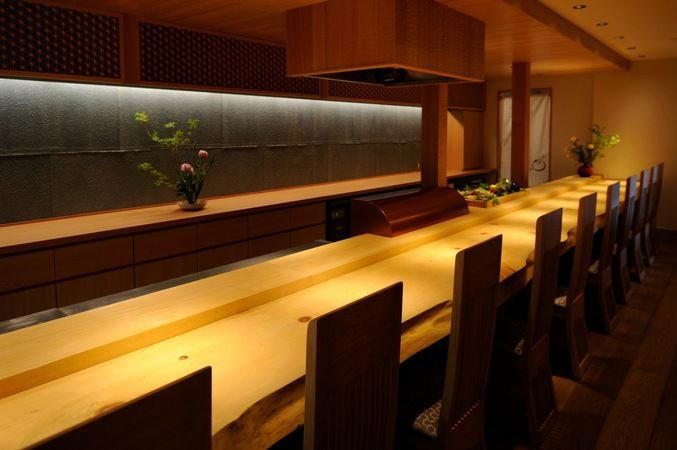
Bars in Kyoto
All bars in Kyoto →
Hotels in Kyoto
All hotels in Kyoto →
Wineries in Kyoto
Browse all →
Details
- Elegant
- Sophisticated
- Intimate
- Classic
- Date Night
- Special Occasion
- Business Dinner
- Chefs Counter
- Open Kitchen
- Sake Program
- Counter Dining
- Set Menu
- Sake Program
- Gluten Free Options
Current opening hours
- Monday
- 11:30 AM–9 PM
- Tuesday
- 11:30 AM–9 PM
- Wednesday
- 11:30 AM–9 PM
- Thursday
- 11:30 AM–9 PM
- Friday
- 11:30 AM–9 PM
- Saturday
- 11:30 AM–9 PM
- Sunday
- 11:30 AM–9 PM
Hours can change for holidays and private events. Hours as of .
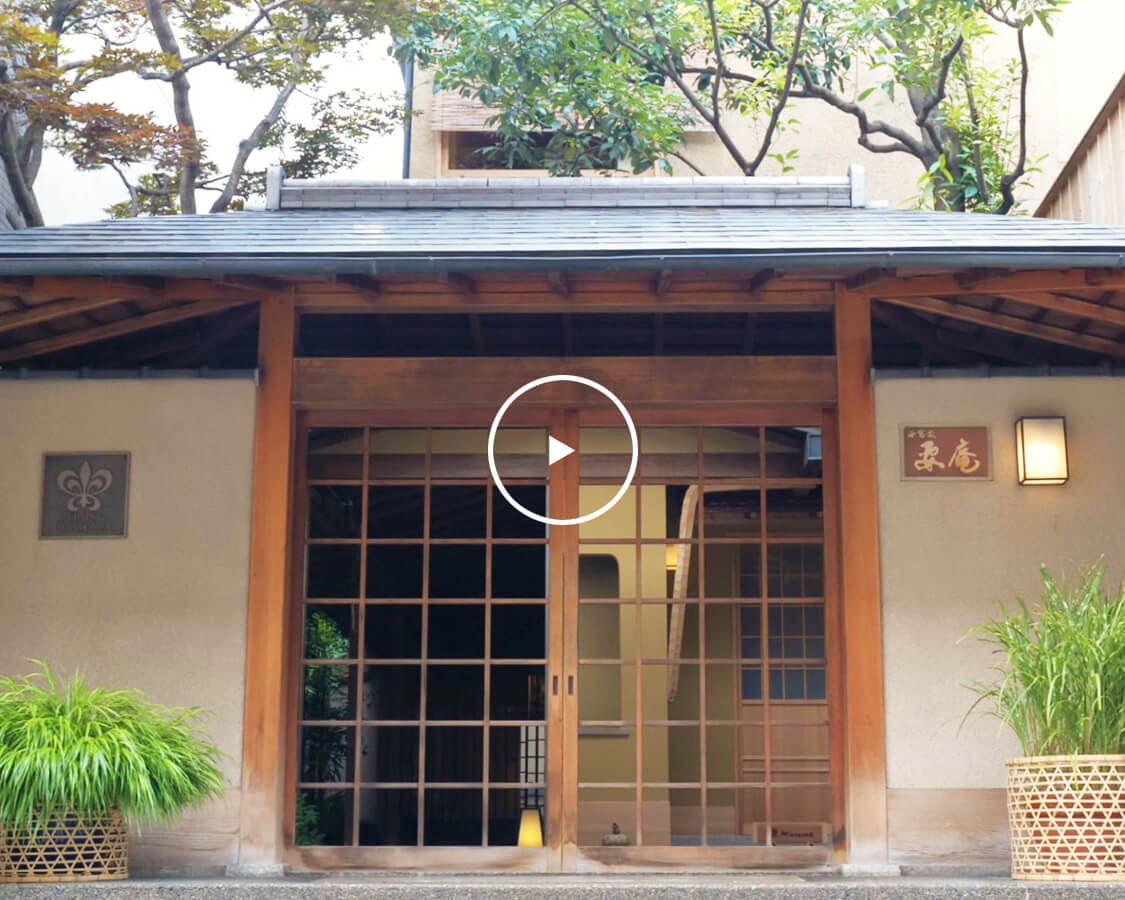
Traditional wooden building blending Japanese heritage with modern comforts, featuring counter seating where lights subtly dim to highlight the marbling of Kobe beef on Kyoto ceramics.