
Tabelog 100 #7
Our verdict
Kitchen Suzutatoge brings yoshoku into focus in Ōmura: Japanese-style Western cooking with hamburger steak at the center of the conversation. Its 2025 selection for Tabelog’s Yoshoku WEST “Tabelog 100” gives the room a clear trust signal, but the draw is the category itself, a local, everyday cuisine where sourcing, sauce work, and comfort carry more weight than ceremony.

Pearl is the En Primeur Club membership app — saves, bookings, and concierge access live there. Same editors, same standards.
- Address
- 418-7 Nakasatomachi, Ōmura, Nagasaki 856-0842, Japan
- Phone
- +81 957-52-3589
- Hours
- Mon ClosedTue–Sat 11 AM–2 PMSun Closed
- Website
- instagram.com
- Directions
- Get directions
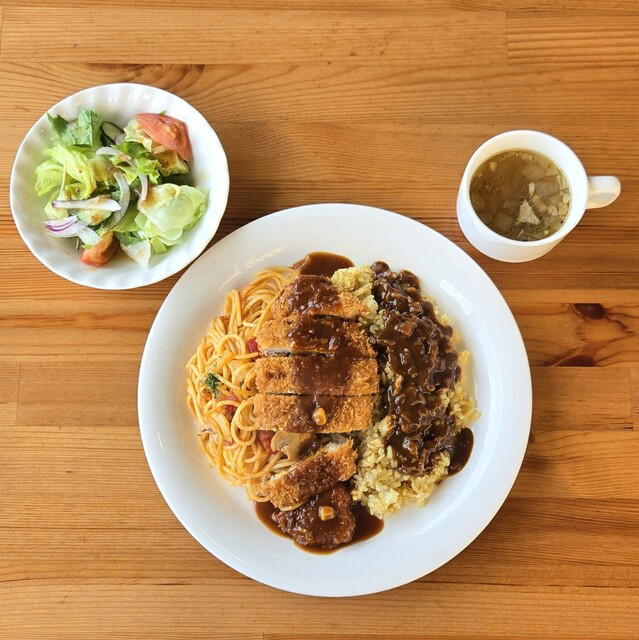
Approaching a yoshoku counter in a regional Japanese city changes the scale of expectation. The room is not built around spectacle; it is built around lunch, regulars, and the quiet discipline of Western-derived dishes that Japan has made its own. In Omura, where the dining map is more local than international, Kitchen Suzutatoge sits inside that tradition with hamburger steak as its clearest anchor.
Yoshoku is often misunderstood outside Japan as a nostalgic category, but the stronger examples are less about retro mood than ingredient handling. The form looks familiar: patties, sauces, rice, cabbage, gratin-adjacent textures, demi-glace logic. The standard rises or falls on grinding, seasoning, pan work, and the way a sauce is allowed to carry sweetness, acidity, and depth without turning heavy. That is why a regional yoshoku address can be more revealing than a formal tasting-menu room. It shows how Western technique has been domesticated into Japanese daily eating.
Hamburger steak as a test of regional yoshoku
The 2025 Tabelog Hyakumeiten selection matters because this is not a category that travels on luxury signals. Yoshoku recognition tends to reward consistency, local affection, and execution across familiar dishes rather than novelty. Kitchen Suzutatoge’s inclusion places it within a field where the benchmark is not imported fine dining, but the ability to make everyday plates feel calibrated.
Hamburger steak is a useful lens for that standard. In Japan, it is not simply a burger without a bun; it belongs to a postwar yoshoku grammar shaped by minced meat, rice, pan sauces, and set-meal comfort. The dish depends on balance: enough fat for tenderness, enough structure to hold, and a sauce that reads as cooked rather than merely poured. Without naming a house version or inventing garnish, the category itself explains the appeal. A yoshoku kitchen earns attention when it treats the familiar as exacting work.
That context also separates the restaurant from more obviously destination-driven dining. In Omura, il rospaccio occupies a different local lane. Kitchen Suzutatoge belongs to the lower-priced yoshoku tier, a bracket where the decision is less about a long evening and more about whether the kitchen can turn a modest format into a meal worth crossing town for.
Why sourcing matters more in simple food
Ingredient sourcing is easier to romanticize in kaiseki, sushi, or farm restaurants, but yoshoku gives it fewer hiding places. Minced meat, frying oil, rice, shredded vegetables, dairy elements, and sauce bases are ordinary only until they are handled poorly. In this cuisine, the sourcing conversation is practical: freshness, consistency, and whether the kitchen can keep familiar components from tasting industrial. The stronger yoshoku rooms do not need rare products; they need dependable ones.
Nagasaki Prefecture adds another layer to that conversation. The region has a long history of foreign contact, port exchange, and hybrid foodways, and yoshoku fits naturally into that broader Japanese habit of adaptation. Omura is not Nagasaki city, and that distinction matters. The dining scene here reads more residential and routine, which makes a recognized yoshoku address more telling. It suggests that the demand is not only from travelers chasing lists, but from diners who understand the genre through repetition.
The room format reinforces that point. A local yoshoku restaurant can feel flexible rather than like a single-track fine-dining stage. Solo dining and meals with friends both make sense within this style because yoshoku is not dependent on ceremony. The food is personal, but the culture is communal: a plate of Japanese-style Western cooking can function as a quick lunch, a family habit, or a small act of regional pride.
How to place it in an Omura itinerary
For travelers, the decision is not whether Kitchen Suzutatoge replaces Nagasaki’s better-known dining circuits. It does not. The stronger case is narrower and more interesting: it gives Omura a concrete yoshoku reference point, useful for anyone reading Japanese food beyond sushi, ramen, and izakaya categories. A meal here belongs in an itinerary that values local formats over checklist dining.
The practical profile is compact: the listed budget is Dinner: JPY 1,000 - JPY 1,999; Lunch: JPY 1,000 - JPY 1,999, and the restaurant is placed in Omura. Those details make it better suited to a planned local stop than a casual wander from a dense nightlife district.
Readers building a fuller local map should use Our full Omura restaurants guide for dining context, then cross-check the stay, drink, wine, and activity layers through Our full Omura hotels guide, Our full Omura bars guide, Our full Omura wineries guide, and Our full Omura experiences guide. For a wider Japan comparison set across formats and cities, compare it with other dining rooms in Omura and beyond, or with allowed local reference points such as Asa Honten, Iwanaga Baijuken, Kitchen Suzutatoge, Primrose, Shokan Do, and il rospaccio.
The editorial value is clear: Kitchen Suzutatoge is a useful stop for understanding how yoshoku works outside Japan’s largest restaurant markets. Its award recognition gives the address credibility, but the deeper lesson is about scale. In a city such as Omura, a modest yoshoku meal can say more about local taste than a louder restaurant built for visitors.
Frequently asked questions
Is Kitchen Suzutatoge suitable for children?
Kitchen Suzutatoge sits in a casual price band, with dinner and lunch both listed at JPY 1,000 - JPY 1,999. Families should treat it as a straightforward yoshoku option in Omura rather than a formal dining room.
What's the overall feel of Kitchen Suzutatoge?
It has the feel of a practical yoshoku stop in Omura, not a formal destination restaurant. The 2025 Tabelog Hyakumeiten recognition gives it clear standing, while the yoshoku and hamburger steak categories keep the mood grounded.
What's the price range at Kitchen Suzutatoge?
Pricing at Kitchen Suzutatoge is listed as JPY 1,000 - JPY 1,999 JPY 1,000 - JPY 1,999.
When is Kitchen Suzutatoge open?
Specific opening hours are not provided here; confirm directly with Kitchen Suzutatoge before visiting.
What's the address for Kitchen Suzutatoge?
Omura.
Fast Comparison
Comparable venues by cuisine and price in the same metro.
| Venue | Cuisine | Price | Awards | Notes |
|---|---|---|---|---|
| Kitchen SuzutatogeThis venue — the venue you are viewing | Yoshoku (Japanese-style Western) restaurant famous for Turkish rice | Not listed | Tabelog 100 #7 | Not listed |
| il rospaccio | Neapolitan-style Pizzeria & Italian | $20–30 | Tabelog 100 #46 | Sakaguchicho |
| Koja Sobaya | Authentic Miyako Soba | $1–10 | Not listed | Hirara |
| Kitchen Nankai (キッチン南海) | Japanese Yoshoku | $1–10 | Tabelog 100 #88 | Jimbocho |
| ひろめで安兵衛 | Kochi yatai gyoza & Japanese snack bar | $1–10 | Tabelog 100 #82 | 帯屋町 |
| Ramen Nikkou | Japanese Ramen | $10–20 | Tabelog 100 #46 | Hikone City |
Recognition history
Dated appearances from independent guides and award organizations, with the underlying list record or original source where available.
Tabelog 100 #7 · No. 7
Tabelog · Tabelog 100 - Yoshoku - WEST - 2025
Continue exploring
More in Omura
Restaurants in Omura
Browse all →

Details
- Casual Hangout
- Solo
- Family
- Standalone
- A La Carte
Current opening hours
- Monday
- Closed
- Tuesday
- 11 AM–2 PM
- Wednesday
- 11 AM–2 PM
- Thursday
- 11 AM–2 PM
- Friday
- 11 AM–2 PM
- Saturday
- 11 AM–2 PM
- Sunday
- Closed
Hours can change for holidays and private events. Last verified .