Tabelog 100 #91
Our verdict
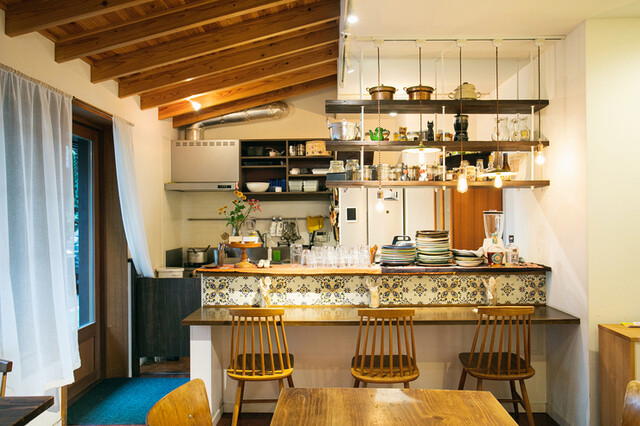
Tokyo’s curry culture is broad enough to include train-station comfort, spice-counter obsessives, and small rooms built around vegetable-led plates. kitchen and CURRY belongs to the compact Setagaya end of that spectrum: seven seats, curry as the focus, vegan and vegetarian options, and selection for Tabelog Curry TOKYO “Tabelog 100” in both 2023 and 2024.

Pearl is the En Primeur Club membership app, where members save venues, book tables and use the concierge.
The menu
What to order
- Seasonal vegetable curry
- Japanese curry with local produce
Tokyo is not only hotel lobbies or department-store dining floors. Its quieter, everyday rhythm suits meals that reward patience over ceremony. Here, curry behaves differently from sushi or kaiseki: democratic, quick to understand, yet deeply specialized. kitchen and CURRY sits in that accessible register, where the ritual is not performance but a kitchen’s control of heat, rice, and pacing in a casual setting.
Tokyo curry has split personalities: dark, roux-thick yōshoku counters; spice-forward shops drawing from South Asian technique without becoming replicas; café-style lunch plates; and newer casual rooms reflecting changing city habits. Tabelog lists kitchen and CURRY in the curry category, a simple label that says much about contemporary Tokyo casual dining without needing a grand chef statement.
A focused curry room in Tokyo's quieter dining circuit
Format matters. Casual dining changes curry’s tempo. This is neither a sprawling dining hall built only for turnover nor a tasting-menu restaurant stretching one idea across an evening. It occupies a Tokyo middle ground: a focused specialist with enough structure to feel intentional and enough informality to remain everyday.
That makes kitchen and CURRY useful for understanding how seriously Tokyo treats modest price categories. Listed spend is JPY 1,000 to JPY 1,999 at both lunch and dinner, and the restaurant was selected for Tabelog Curry TOKYO 2024 and carries a Tabelog score of 3.81. In a city where acclaim often follows omakase counters and French-Japanese tasting menus, curry recognition here signals another value: consistency, focus, and a reason to cross city lines.
Tokyo also frames the meal differently from dense central dining zones. Independent cafés, bakeries, ramen shops, and small restaurants fold into daily routine rather than destination theater. The comparison is not formal dining but the casual specialist economy supporting TOLO COFFEE AND BAKERY, Chukasoba KOTETSU, Oishii Curry, Flippers, and songbook. Each works differently, but the broader spirit is shared: Tokyo’s serious casual dining often happens in focused venues whose audience knows exactly why it came.
The curry ritual is direct and category-focused
Curry etiquette in Japan is refreshingly plain: no elaborate sequence, no required performance of expertise, no need to extend the meal beyond its natural pace. The ritual is choosing the plate, settling in, and reading how the kitchen balances spice, texture, rice, and garnish. At kitchen and CURRY, the published category is direct: curry, presented as part of Tokyo’s broad casual dining culture.
That directness is the editorial point. Tokyo can be difficult to summarize because everyday restaurants often carry as much identity as formal rooms. A curry specialist with a clear category promise lowers that friction without making the meal didactic. For mixed itineraries, it widens the day: one stop can be a curry lunch, a casual dinner, or a pause between more formal reservations.
The practical signal is simplicity, not decoration. The restaurant sits in a category many acclaimed Tokyo rooms do not: approachable, modestly priced, and built around a familiar format. That does not make the meal less serious; it makes the seriousness quieter. Tokyo dining is admired for precision, but its everyday strength is discipline under constraint: focused service, clear formats, and a category promise that does not need excess explanation. Curry is one cuisine where that discipline remains accessible.
Readers mapping a broader Tokyo food itinerary should treat this as a city specialist, not a substitute for formal rituals. For other dining in Tokyo, compare the city’s many casual rooms, counters, and specialist kitchens; each shows how Tokyo builds identity around format as much as food. In the same broad casual spirit, Oishii Curry offers another curry reference point, while TOLO COFFEE AND BAKERY, Chukasoba KOTETSU, Flippers, and songbook show how everyday Tokyo dining can be focused without being grand.
How to place it within a Tokyo itinerary
The strongest case for kitchen and CURRY is specificity, not extravagance. A curry restaurant with a Tabelog Curry TOKYO 2024 selection belongs in an itinerary when the day calls for a tightly focused meal outside the luxury circuit. It suits travelers who know Tokyo’s dining intelligence is not concentrated in high-price rooms; some of the city’s clearest pleasures come from narrow categories executed with conviction.
It also contrasts usefully within a wider Japan route. Curry in Tokyo and other casual formats across Japan do not compete for the same mood; they show Japanese dining splitting by city, price, and daily habit. For that wider lens, compare unnamed dining in other cities generically rather than treating kitchen and CURRY as part of a luxury circuit. The point is not spectacle but the way familiar formats become precise, local, and personal.
Use it as a Tokyo anchor, then build outward. Our full Tokyo restaurants guide gives the dining map; Our full Tokyo hotels guide positions the stay; Our full Tokyo bars guide, Our full Tokyo wineries guide, and Our full Tokyo experiences guide round out the city beyond the meal. Verdict: a curry specialist for travelers who care about Tokyo’s everyday precision as much as its ceremony.
Frequently asked questions
How do I find kitchen and CURRY?
Tokyo.
What does dinner at kitchen and CURRY typically cost?
Pricing at kitchen and CURRY is listed as JPY 1,000 - JPY 1,999 JPY 1,000 - JPY 1,999.
How far ahead should I plan for kitchen and CURRY?
Planning around current service details is sensible for a focused Tokyo curry stop. Both lunch and dinner are listed in the JPY 1,000–JPY 1,999 range.
What's the standout thing about kitchen and CURRY?
The clearest credential is its Tabelog Curry TOKYO 2024 selection, alongside a Tabelog score of 3.81. The format is best understood as a Tokyo curry specialist at an accessible price point.
Do they accommodate allergies at kitchen and CURRY?
The public record provided here does not list a formal allergy policy. For anything specific, the safest route is to check the restaurant directly at +81-3-6304-7784. Check the venue's official channels for the latest details.
A Lean Comparison
Comparable venues to place this listing in its category.
| Venue | Cuisine | Price | Awards | Notes |
|---|---|---|---|---|
| kitchen and CURRYThis venue (the venue you are viewing) | Seasonal Japanese Curry | $10–20 | Tabelog 100 #91 | Not listed |
| songbook | Wood-fired Italian-Asian Fusion Pizza | $50–100 | Michelin Plate | French |
| TOLO COFFEE AND BAKERY | Not listed | $10–20 | Tabelog 100 #78 | JPY 1,000 - JPY 1,999 JPY 1,000 - JPY 1,999 |
| Chukasoba KOTETSU | Classic Shoyu Chukasoba | $10–20 | Michelin Bib Gourmand | Ramen |
| Flippers | Japanese Soufflé Pancakes | $20–30 | Not listed | Japanese Izakaya |
| Oishii Curry | Japanese Curry House | $10–20 | Tabelog 100 #43 | JPY 1,000 - JPY 1,999 JPY 1,000 - JPY 1,999 |
Recognition history
Dated appearances from independent guides and award organizations, with the underlying list record or original source where available.
Tabelog 100 #91 · No. 91
Tabelog · Tabelog 100 - Curry - TOKYO - 2024