
Kitashinchi Yamagata Ya sits in Osaka’s compact, expense-account yakiniku tier: seven counter seats, a Tabelog 100 Yakiniku WEST 2025 selection, and a format that folds tripe, Japanese barbecue, and nabe into a tightly edited evening. The cellar direction matters here, with sake, shochu, and wine treated as part of the meal rather than an afterthought.
Pearl is the En Primeur Club membership app — saves, bookings, and concierge access live there. Same editors, same standards.
- Address
- Japan, 〒530-0003 Osaka, Kita Ward, Dojima, 1 Chome−5−5 エスパス北新地25 3F
- Phone
- +81 80-5319-8929
- Website
- instagram.com
- Directions
- Get directions
 Saves & bookings on Pearl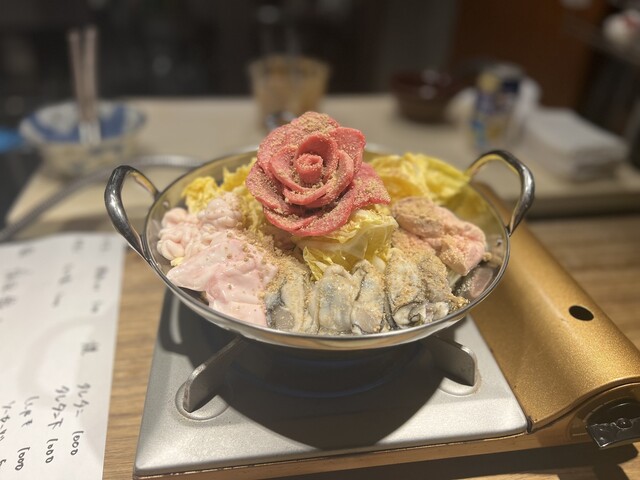
Kitashinchi is built for rooms that reveal themselves late: elevator landings, upper-floor doors, small counters where the evening narrows quickly. In that setting, yakiniku behaves less like casual grill culture and more like a controlled counter format. Smoke, heat, pacing, and the bottle choice all sit close to the guest. Kitashinchi Yamagata Ya belongs to that tighter Osaka category, where a seven-seat counter changes the rhythm of barbecue from group noise to close-range concentration.
Osaka’s reputation for eating often leans democratic, but Kitashinchi runs on a different register. The district’s after-work dining economy has long supported compact restaurants with serious ingredient budgets, short service windows, and drink lists calibrated for clients who move between steak, sushi, bars, and late-night rooms. Within that context, this is not the broad, beer-first yakiniku model found across the city. The listed categories, tripe, yakiniku, and nabe, point to a meal that can shift between grill and hot pot without leaving the beef house idiom.
Counter yakiniku, viewed through the glass rather than the grill alone
The useful way to read this room is through scale. Seven counter seats create a different kind of yakiniku transaction: fewer distractions, more dependence on pacing, and less tolerance for a loose beverage program. The Tabelog 100 Yakiniku WEST 2025 selection gives the restaurant a clear external marker within western Japan’s competitive yakiniku field, and its repeated appearances in the same Tabelog 100 yakiniku lineage across recent years signal consistency rather than a single-season surge.
The kitchen’s public identity is built around beef tongue shabu-shabu, Wagyu tongue, seasonal hot pot, and grilled beef, but the broader point is Osaka’s appetite for beef formats that do not fit a single label. Yakiniku here shares space with nabe and organ-meat cooking, a combination that suits diners who want more than a procession of grilled cuts. That matters in Kitashinchi, where comparable spending can also place a diner at yakitori counters such as Yakitori Ichimatsu, beef-driven rooms such as Noguchi Jiro, or polished French tables such as UPSTAIRZ. The choice is not simply cuisine; it is tempo, intimacy, and how much of the evening should be organized around fire.
For readers building a wider Osaka itinerary, the contrast is useful. Casual city staples and daytime stops, from 551 Horai (551蓬莱) to 52CHO-ME BAKERY and .cafe, show Osaka’s accessible side. Restaurants such as a canto (Italian) and 99 Pizza Napoletana Gourmet map the city’s European lanes. Kitashinchi’s compact beef counters occupy another lane: smaller, later-feeling, and more dependent on reservation discipline.
The drink list is the tell: sake, shochu, and wine with beef
Yakiniku at this level is often judged by sourcing and cut selection, but the drink structure is just as revealing. A list that names sake, shochu, and wine, with particular attention to wine, places the room closer to Osaka’s modern beef counters than to older grill houses built around lager and highballs. That does not make the meal formal in the French sense. It means the restaurant expects grilled fat, offal, broth, and tongue to move across several pairing languages: rice-based lift, distilled grain or sweet-potato depth, and wine’s acidity or tannin.
This is where Kitashinchi’s dining culture becomes more interesting than a simple luxury-yakiniku label. Beef tongue shabu-shabu asks for a different drink logic than charred meat; tripe and hot pot change the conversation again. In a seven-seat setting, that range matters because the guest cannot hide inside a large table’s collective ordering. Bottle selection becomes part of the meal’s architecture. The better comparison may be with specialist bars nearby, including Dojima Samboa, where the drink itself leads the evening, rather than with casual barbecue rooms where the glass only refreshes the palate.
Osaka also rewards cross-category planning. A beef-focused night in Kitashinchi can sit beside a broader city route through Our full Osaka restaurants guide, while drink-led readers can map the surrounding after-dinner options through Our full Osaka bars guide. For travellers staying over, Our full Osaka hotels guide helps separate Umeda convenience from quieter base camps. The city’s broader cultural and regional planning lives in Our full Osaka experiences guide and Our full Osaka wineries guide.
Where it fits in a Japan-wide eating map
Japan’s beef culture is not a single tradition. Sukiyaki, shabu-shabu, yakiniku, steak, offal cookery, and hot pot each create different expectations for heat, sauce, service, and drink. A traveller comparing categories might place this Osaka counter against grilled-beef sukiyaki at -Grilled beef Sukiyaki- KAMAKURA TANUKIAN 鎌倉 たぬき庵 in Kamakura, seafood-and-charcoal formats such as. 鮪と炭火焼き うお炭 秋葉原店 in Tokyo, or a sake-led American counter such as Jōdo Saké Bar in Los Angeles. The point is not equivalence; it is deciding what kind of Japanese meal should anchor the evening.
That same map can widen quickly. [ki:] in Kyoto speaks to Kyoto’s quieter restaurant register.know in Kumamoto to regional dining outside the usual first-trip route, [Curry Senmon Ten] Maruyama Kyoju. in Sapporo to Hokkaido’s specialist comfort-food culture, and (Shoku) Vietnam in Kawasaki to Japan’s urban international cooking. Even compact formats abroad, such as Onigiri Time in Pasadena, show how narrow menus can carry serious intent when the format is disciplined.
The editorial case for Kitashinchi Yamagata Ya is therefore specific. It suits diners who want Osaka beef in a controlled counter setting, with the drink program treated as part of the structure, not decoration. The Tabelog 100 Yakiniku WEST 2025 recognition supplies the trust signal; the seven-seat format supplies the pressure. In a city famous for abundance, this is the version where the margin for casualness gets smaller.
The Essentials
Comparable options at the same price tier.
| Venue | Cuisine | Price | Notes |
|---|---|---|---|
| Kitashinchi Yamagata YaThis venue — the venue you are viewing | Kita, Japanese Yakiniku | $$$ | Not listed |
| Wagyu Matsushita Kamidoori ten | Not listed | $$$ | Kita, Premium Wagyu Yakiniku, Sukiyaki & Shabu-Shabu |
| Sushi Minoki | Kita, Intimate Omakase Sushi Counter | $$$ | Not listed |
| Kitashinchi Shabushabu Sukiyaki Kiraku | Not listed | $$$ | Kita, Traditional Wagyu Shabu-shabu & Sukiyaki |
| Unagi no Uoi Honten | Not listed | $$$ | Asahi, Traditional Osaka charcoal-grilled unagi |
| Matasaburo | Not listed | $$$ | Sumiyoshi, Dry-aged Wagyu Steak & Yakiniku |
Recognition history
Dated appearances from independent guides and award organizations, with the underlying list record or original source where available.
Tabelog 100 #71 · No. 71
Tabelog · Tabelog 100 - Yakiniku - WEST - 2025
Continue exploring
More in Osaka
Restaurants in Osaka
Browse all →




Bars in Osaka
Browse all →




Hotels in Osaka
Browse all →




Wineries in Osaka
Browse all →
At a Glance
- Sophisticated
- Intimate
- Classic
- Business Dinner
- Date Night
- Special Occasion
- Group Dining
- Standalone
- Sake Program
Current opening hours
- Monday
- 6–8 PM
- Tuesday
- 6–8 PM
- Wednesday
- 6–8 PM
- Thursday
- 6–8 PM
- Friday
- 6–8 PM
- Saturday
- 6–8 PM
- Sunday
- Closed
Hours can change for holidays and private events. Last verified .
Quiet, intimate, and polished, with a hidden-gem feel suited to private or reservation-based dining.