
A private-room shabu-shabu and sukiyaki address in Kitashinchi, selected for Tabelog 100 Hot Pot 2024. The draw is the menu architecture: beef-led hot pot formats, Japanese cooking discipline, and drinks that range across sake, shochu, wine, and cocktails, all set within Osaka’s after-dark business dining quarter.
Pearl is the En Primeur Club membership app — saves, bookings, and concierge access live there. Same editors, same standards.
- Address
- 大阪府大阪市北区堂島1-2-7 パーマリィイン堂島 B1F
- Phone
- +81664858975
- Website
- kitashinchi-kiraku.com
 Saves & bookings on Pearl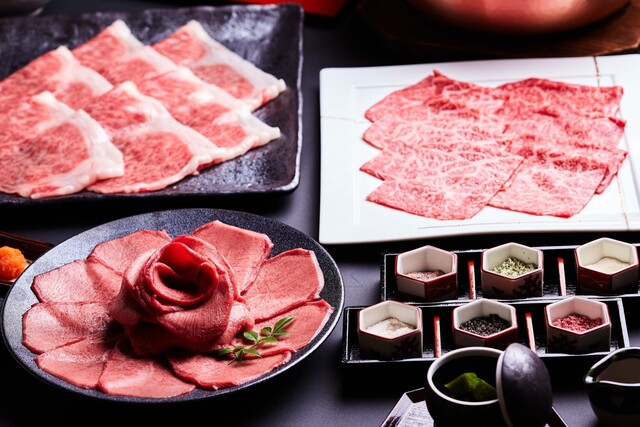
Kitashinchi works differently after dark. The district’s basement rooms, discreet elevators, and polished counter culture are built for meals where privacy matters as much as the cooking. In that setting, shabu-shabu and sukiyaki make particular sense: both are structured around pacing, heat control, shared attention, and the quality of the main ingredient rather than kitchen theatrics. Kitashinchi Shabushabu Sukiyaki Kiraku belongs to this Osaka category of high-comfort, high-spend Japanese dining, where the meal is less about surprise and more about how a familiar format is tightened into a controlled evening.
The restaurant’s Tabelog 100 Hot Pot 2024 selection places it inside a national conversation about sukiyaki and shabu-shabu at a level above routine group dining. That recognition matters because hot pot in Japan covers a wide range, from casual winter drinking food to private-room beef dinners calibrated for clients, anniversaries, and small parties. In Osaka, the premium version often sits near the city’s business corridors rather than in tourist dining zones. Kitashinchi’s geography reinforces the point: this is food built for evening use, not a lunch-counter detour.
Two hot pot formats, one Osaka business-dining grammar
Shabu-shabu and sukiyaki share ingredients but not mood. Shabu-shabu is about quick cooking, broth clarity, dipping sauces, and the rhythm of meat passing through heat. Sukiyaki is denser and sweeter, tied to soy, sugar, and the richer pull of beef cooked in a seasoned base. A menu that gives both formats equal billing tells the reader something useful about the room: it is not chasing novelty, it is organizing choice around two established Japanese beef traditions.
That structure also separates this kind of dinner from Osaka’s louder, faster food culture. The city is rightly associated with casual appetite, from pork buns at 551 Horai (551蓬莱) to bakeries such as 52CHO-ME BAKERY and cafe stops like .cafe. Kitashinchi’s hot pot tier operates at another tempo. The emphasis is seated, private, ingredient-led, and designed for a full evening rather than a quick city bite.
The drink program signals similar breadth. Sake and shochu are natural partners for Japanese hot pot, but the presence of wine and cocktails points to the way Kitashinchi restaurants serve mixed groups: some diners want classic pairings, others want a bottle-led dinner or a less formal drink sequence. Compared with an izakaya such as Kasane or an oden specialist such as Man-u, this format puts the pot at the center and lets the drinks orbit it. The decision is not about which cuisine has greater ambition; it is about which format suits the occasion.
Private rooms change the meaning of hot pot
Hot pot is social by design, but privacy changes its register. Five private rooms and a compact overall seat count push the experience toward contained conversation rather than dining-room energy. That matters in Kitashinchi, where restaurants often function as extensions of business culture: controlled sound, less interruption, and a format that gives the table a shared point of focus. The cooking method becomes a hospitality tool.
There is also a practical advantage to this setup. Shabu-shabu and sukiyaki require timing, space, and attention to the table. A private-room format reduces friction for small groups and makes the meal easier to pace than in a larger, more public room. The restaurant’s ability to handle private use and seated groups gives it a clear role in Osaka’s premium dining circuit: not the sushi-counter intensity of Sushi Uchida, not the lower-spend flexibility of Kaara, but a hot pot dinner arranged around comfort, separation, and beef-focused repetition.
For travelers building an Osaka itinerary, this is a useful counterweight to the city’s broader restaurant map. Italian rooms such as a canto (Italian) and pizza specialists like 99 Pizza Napoletana Gourmet show how international formats have embedded themselves in the city. Hot pot in Kitashinchi reads more locally: it reflects Osaka’s preference for convivial eating, but filtered through the business-district demand for privacy and polish. For wider planning, Our full Osaka restaurants guide gives the broader dining spread, while Our full Osaka bars guide, Our full Osaka hotels guide, Our full Osaka experiences guide, and Our full Osaka wineries guide help place dinner within a full city stay.
Where this fits in Japan's wider comfort-food hierarchy
Japanese comfort food is not a single category. It ranges from rice-ball specialists such as Onigiri Time in Pasadena to sake-led rooms like Jōdo Saké Bar in Los Angeles, from curry shops such as [Curry Senmon Ten] Maruyama Kyoju. in Sapporo to contemporary regional cooking at [ki:] in Kyoto. Sukiyaki and shabu-shabu occupy a different lane: they are familiar, ceremonial, and ingredient-sensitive without needing a tasting-menu script.
That is the editorial case for Kitashinchi Shabushabu Sukiyaki Kiraku. Its reputation is not built on a public chef narrative or a catalog of named signature dishes. The available signals are more structural: a recognized hot pot category award, private-room architecture, a beef-centered Japanese menu, and a drinks list broad enough for formal and semi-formal dinners. In a city where dining can swing from quick snacks to exacting counters, this is the controlled middle of premium Osaka hospitality.
That middle has value. A traveler comparing Japanese dining formats might choose -Grilled beef Sukiyaki- KAMAKURA TANUKIAN 鎌倉 たぬき庵 in Kamakura for a sukiyaki reference outside Kansai. 鮪と炭火焼き うお炭 秋葉原店 in Tokyo for tuna and charcoal-grill context.know in Kumamoto for a different regional register, or (Shoku) Vietnam in Kawasaki for Japan’s casual international side. Osaka’s Kitashinchi hot pot rooms answer another question: where to put a serious, quiet, group-friendly Japanese dinner that does not require the choreography of omakase.
The strongest reason to come is the menu’s clarity. Beef hot pot has few hiding places; the format exposes sourcing, slicing, heat, service timing, and the table’s own rhythm. When it works, the pleasure comes from restraint and repetition rather than spectacle. In Kitashinchi, that restraint reads as a dining code: private room, controlled pace, familiar dishes handled with enough precision to earn category recognition.
Fast Comparison
Comparable venues side-by-side for orientation.
| Venue | Cuisine | Price | Notes |
|---|---|---|---|
| Kitashinchi Shabushabu Sukiyaki KirakuThis venue — the venue you are viewing | Traditional Wagyu Shabu-shabu & Sukiyaki | $$$ | Not listed |
| Takuya | Modern tonkatsu & pork dishes | $$$ | Kita |
| Tori Yasu | Yakitori & Chicken Cuisine Counter | $$$ | Kita |
| Tonkatsu Koshirou | Omakase Tonkatsu Counter | $$$ | Chūō |
| Sushi Akazu | Traditional Edomae Omakase Sushi with Red Vinegar Rice | $$$ | Kita |
| Kitashinchi Yamagata Ya | Japanese Yakiniku | $$$ | Kita |
Recognition history
Dated appearances from independent guides and award organizations, with the underlying list record or original source where available.
Tabelog 100 #35 · No. 35
Tabelog · Tabelog 100 - Hot Pot - 2024
Continue exploring
More in Osaka
Restaurants in Osaka
Browse all →




Bars in Osaka
Browse all →


Hotels in Osaka
Browse all →




Wineries in Osaka
Browse all →
At a Glance
- Elegant
- Cozy
- Romantic
- Intimate
- Sophisticated
- Date Night
- Business Dinner
- Special Occasion
- Group Dining
- After Work
- Private Dining
- Standalone
- Design Destination
- Garden
- Sake Program
- Local Sourcing
- Garden
Calm, refined and intimate, with private tatami rooms, soft lighting and a small Japanese garden that creates a serene escape from the bustle of Kitashinchi; the mood is more hushed and elegant than lively, oriented to relaxed courses and conversation.