
Sushi Akazu places red-vinegar sushi rice at the centre of an Osaka sushi counter where format matters as much as fish. The eight-seat, reservation-only room in Kitashinchi was selected for Tabelog Sushi WEST 100 in 2021, 2022 and 2025, putting it in the city’s serious sushi conversation rather than its casual dining orbit.
Pearl is the En Primeur Club membership app — saves, bookings, and concierge access live there. Same editors, same standards.
- Address
- 大阪府大阪市北区堂島1-3-4 谷安ビル B1F
- Phone
- +81674102651
- Website
- sushiakazu.com
 Saves & bookings on Pearl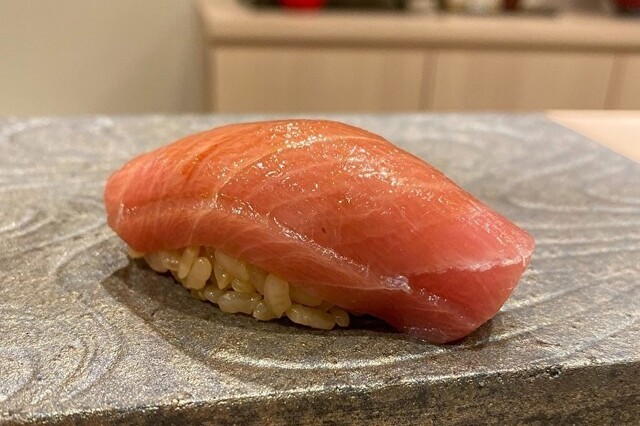
Kitashinchi’s restaurant basements have their own grammar: narrow approaches, compact rooms, and a shift from street noise to counter-level concentration. Here, Osaka sushi is less about display than sequence, temperature, rice and pacing. Sushi Akazu sits in the city’s small-counter tier, where the meal centres on red-vinegar shari and controlled progression rather than a long à la carte exchange.
That matters because Osaka’s dining identity is often reduced to appetite and informality. A sharper reading separates everyday food culture from specialist rooms that borrow Tokyo-style counter discipline without copying Tokyo’s social codes. Here, sushi is not tourist shorthand for luxury. It is a format with rules; the question is whether those rules suit the evening.
Red-vinegar shari sets the structure, not just the flavour
The name gives away the organising principle. Akazu, red vinegar, is a seriousness marker at contemporary sushi counters because it changes the rice’s role. It brings depth, warmth and darker savour, so the fish is judged against the rice rather than placed above it. A counter built around that choice rewards diners who notice rhythm: leaner pieces, richer cuts, shellfish, and cooked or seasoned elements do not simply arrive in order; they test how the rice holds the meal together.
Sushi Akazu is classified across sushi, Japanese cuisine and seafood, a useful Osaka signal, where a sushi counter often negotiates between purity and breadth. The fish focus, with drinks directed around sake, shochu and wine, suggests a more flexible meal architecture than a bare-bones nigiri sequence, though sushi remains the centre of gravity. That differs from neighbourhood places where sushi shares izakaya logic, and from the city’s louder celebration dining.
The Tabelog Sushi WEST 100 selections in 2021, 2022 and 2025 place the restaurant in a regional sushi conversation, not merely an Osaka one. Tabelog’s Hyakumeiten lists tend to reward category depth and repeat local attention; for sushi in western Japan, the counter is read against Kyoto, Kobe and Osaka peers rather than general fine dining. The 2025 score of 3.71 is not a Michelin-style star system, but in Tabelog culture this band can signal a substantial following among detail-oriented diners.
An eight-seat counter changes the social contract
Small counters compress everything. Eight seats mean fewer places to hide, less tolerance for delay, and stronger dependence on shared pacing. Osaka’s specialist sushi rooms can feel more exacting than the city’s reputation suggests. The city may be conversational and food-obsessed, but a synchronised counter meal requires diners to match the room’s tempo. Sushi Akazu’s positioning is unusually candid by Japanese fine-dining standards: children are welcomed, yet the setting is not framed for formal business meals or guests seeking silence.
That distinction matters. Many premium sushi counters are inhospitable to families by default, even without a formal rule. Here, the family-friendly note beside the counter format creates a narrower category: serious sushi without the stiffest social performance. It does not make the room casual; it signals a hospitality code different from the hush of some Ginza-style counters. For Osaka, that feels apt.
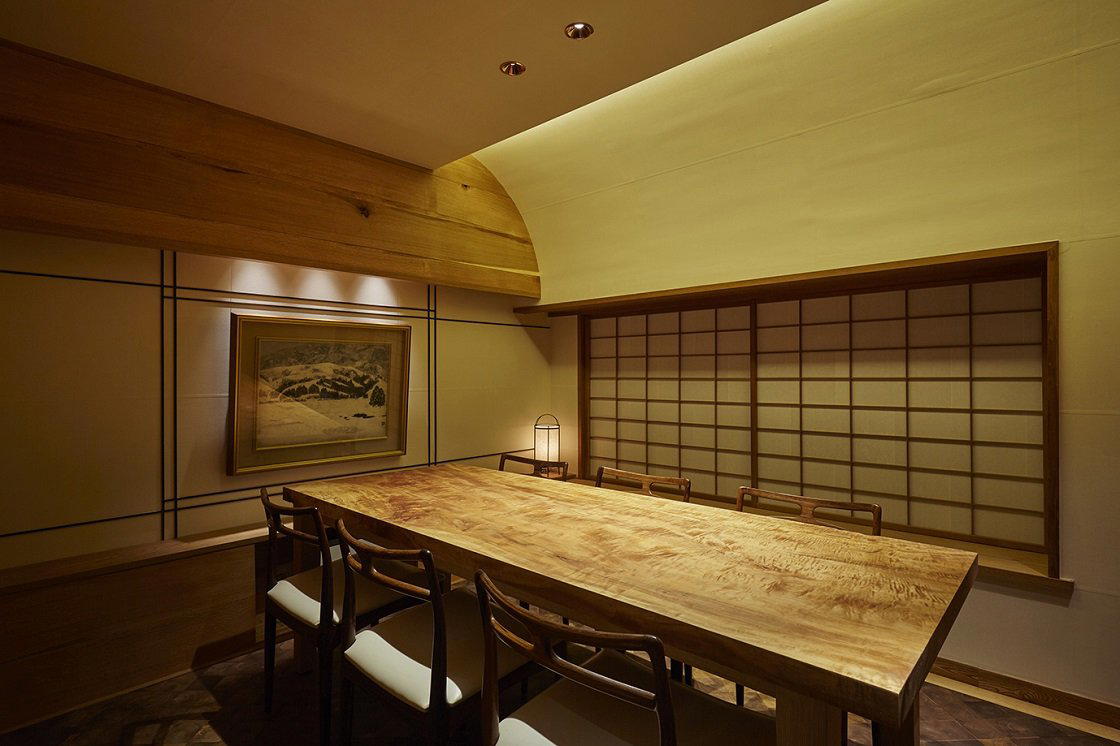
The absence of private rooms clarifies the experience: counter dining as shared theatre, not compartmentalised entertaining. Private use is listed for up to 20 people, suggesting the restaurant can operate beyond the eight-seat counter for group arrangements, but the editorial logic stays the same: the meal is structured by the house, not assembled table by table. Diners choosing between Sushi Uchida, in a similar Osaka sushi price band, and this counter are deciding less between cuisines than between versions of concentration, rice style and room culture.
Where it sits in Osaka's premium dining map
Kitashinchi has long been Osaka’s expense-account and late-evening dining district, but its stronger restaurants are not all formal in the same way. The area supports counters, bars and compact specialist rooms because it has an audience for repeat, category-specific dining. The restaurant fits this district better than a broad shopping-zone restaurant floor: it asks for intent before arrival.
Comparison helps. Yakitori Shidare occupies a similar spend bracket but speaks through charcoal, skewers and poultry sequence rather than rice and fish. Yakitori Torisen and Sobadokoro Toki sit in different category lanes, reminding visitors that Osaka’s serious eating is not only sushi-led. BAR JUNIPER, at a far lower spend band, belongs to the after-dinner map rather than the meal decision. These are not substitutes, but show how Kitashinchi and greater Osaka split evenings by format: counter sushi, yakitori, soba, cocktail bar, then the city’s casual snack economy.
The service details reinforce that reading. Non-smoking status, counter seating, card acceptance and drinks including sake, shochu and wine place the restaurant in contemporary premium Japanese dining rather than the old-school cash-and-cigarette counter world. BYO is listed, notable in Japan when present, though the stronger point is the drinks range: sake remains sushi’s natural language, while wine is now a serious parallel for counters courting diners who think across acidity, fat and umami.
For travellers building a wider Osaka itinerary, this is a high-commitment sushi slot, not a drop-in meal. The city handles both ends of the spectrum, from pork buns at 551 Horai (551蓬莱) to bread at 52CHO-ME BAKERY, coffee at .cafe, Italian cooking at a canto (Italian), and Neapolitan-leaning pizza at 99 Pizza Napoletana Gourmet. The point is not to rank them against a sushi counter, but to understand Osaka as a city where precision dining and everyday appetite are not opposites.
Use Our full Osaka restaurants guide for the broader dining map, then cross-check sleep, drinks and itinerary planning through Our full Osaka hotels guide, Our full Osaka bars guide, Our full Osaka wineries guide and Our full Osaka experiences guide. For a wider Japan-and-beyond reading list, compare how specialist formats travel through -Grilled beef Sukiyaki- KAMAKURA TANUKIAN 鎌倉 たぬき庵 in Kamakura, 鮪と炭火焼き うお炭 秋葉原店 in Tokyo.know in Kumamoto, (Shoku) Vietnam in Kawasaki, [Curry Senmon Ten] Maruyama Kyoju. in Sapporo, [ki:] in Kyoto, Jōdo Saké Bar in Los Angeles and Onigiri Time in Pasadena.
Booking and Cost Snapshot
Comparable venues by category and price.
| Venue | Cuisine | Price | Notes |
|---|---|---|---|
| Sushi AkazuThis venue — the venue you are viewing | Not listed | $$$ | Not listed |
| Ishii Jr. | Kita, Yakitori & Chicken Dishes Omakase | $$$ | Not listed |
| Yakiniku Mikazuki Tenjinbashi ten | Kita, Premium Kuroge Wagyu Yakiniku | $$$ | Not listed |
| Yama Hashiru | Kita, Yakitori Omakase | $$$ | Not listed |
| Nagahori | Not listed | $$$ | Chūō, Michelin-starred Japanese Izakaya Omakase |
| Etchuya | Nishinari, Casual Neighborhood Sushi | $$$ | Not listed |
Recognition history
Dated appearances from independent guides and award organizations, with the underlying list record or original source where available.
Tabelog 100 #45 · No. 45
Tabelog · Tabelog 100 - Sushi - WEST - 2025
Continue exploring
More in Osaka
Restaurants in Osaka
Browse all →

Bars in Osaka
Browse all →
Hotels in Osaka
Browse all →



Wineries in Osaka
Browse all →
At a Glance
- Cozy
- Intimate
- Date Night
- Special Occasion
- Solo
- After Work
- Chefs Counter
- Standalone
- Sake Program
- Local Sourcing
- Sustainable Seafood
Counter-only omakase in a compact basement space, with a simple, unpretentious interior that puts the focus on the chef’s sushi and creates a calm, relaxed atmosphere for serious sushi fans.