
Sapporo soup curry has a strong relationship with small rooms, counter seats, and neighbourhood regulars rather than polished dining rooms. Kitaro Sumikawa honten belongs to that tradition: a Minami Ward soup-curry address with Tabelog Curry EAST “Tabelog 100” selections in 2019, 2020, 2023, and 2024, a compact seating plan, and a price band that keeps it in the everyday-curry conversation.
Pearl is the En Primeur Club membership app — saves, bookings, and concierge access live there. Same editors, same standards.
- Address
- 4 Chome-2-1 Sumikawa 6 Jo, Minami Ward, Sapporo, Hokkaido 005-0006, Japan
- Phone
- +81 11-814-1203
- Website
- japoncompany.business
 Saves & bookings on Pearl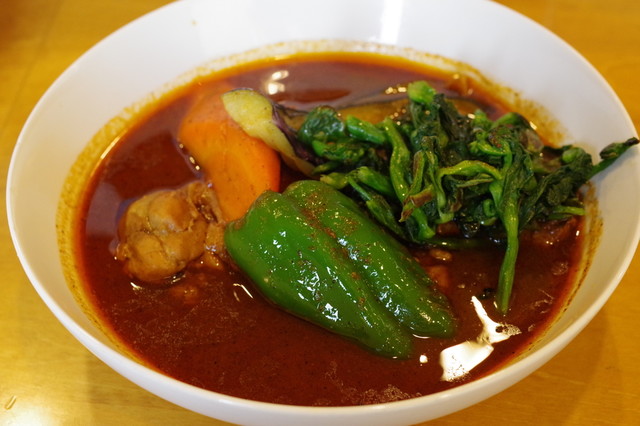
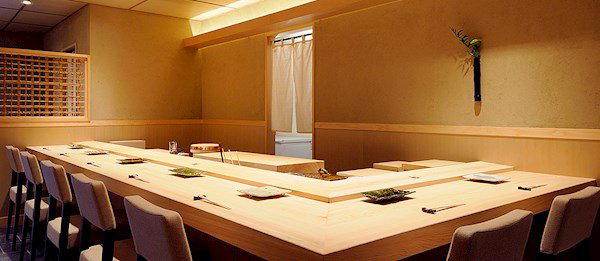
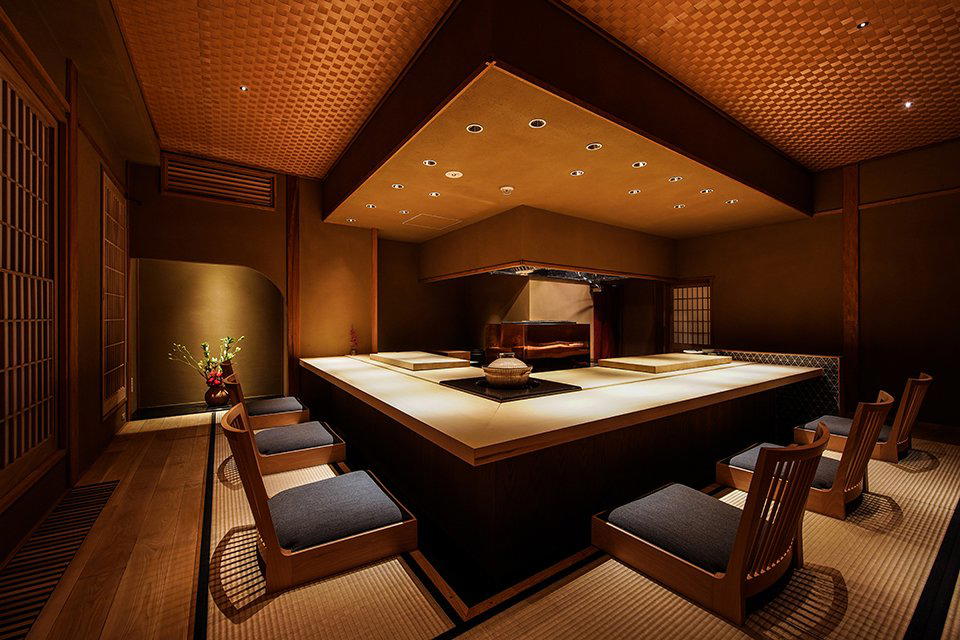
Approaching Sumikawa from central Sapporo, the city’s curry culture becomes less spectacle than repetition: a counter, a few tables, a short service window, and the idea that lunch can carry as much local meaning as dinner. Kitaro Sumikawa honten fits that grammar. Its compact room, with counter seating and a handful of tables, gives the meal the cadence of a neighbourhood curry house rather than a destination dining room built around ceremony.
That matters in Sapporo, where soup curry has never needed luxury signals to earn serious attention. The form is democratic: spice, broth, vegetables, and protein in a bowl that can read as comfort food, lunch staple, or regional calling card. In Minami Ward, away from the busiest visitor circuits around Sapporo Station and Susukino, it feels especially grounded. The point is not theatre, but a physical container that lets the bowl do the work.
A small-room reading of Sapporo soup curry
Sapporo’s soup-curry scene splits across central shops for tourists moving between trains and hotels, late-meal curry counters overlapping with ramen culture, and suburban rooms where the format still behaves like local infrastructure. This address sits in the last category. Its 21-seat layout, including counter seating and small tables, places it closer to everyday curry houses than to a polished dining concept.
The design signal matters because soup curry is unusually sensitive to room format. A counter compresses ordering, waiting, eating, and leaving into a low-friction sequence. Tables broaden the audience to families and small groups. Here, both modes coexist, making the restaurant solo-friendly without losing neighbourhood usefulness. That balance is part of Sapporo’s curry identity: serious cooking without hushed dining-room choreography.
Recognition gives the room a wider frame. Selection for Tabelog Curry EAST “Tabelog 100” in 2019, 2020, 2023, and 2024 places Kitaro Sumikawa honten inside a vetted regional curry conversation, not just a local one. The award matters less as trophy than sorting mechanism, identifying curry shops that have sustained attention in a category crowded with inexpensive, high-turnover addresses. A Tabelog score of 3.66 reinforces steady approval in a field where broth style, spice balance, and service rhythm shape reputation.
The price tier keeps the restaurant aligned with Sapporo’s pragmatic curry and noodle culture. SOUP CURRY KING Honten and curry leaves occupy a similar JPY 1,000 to JPY 1,999 bracket, while Sapporo Junren Sapporo ten and Garyu Menbu Hien sit below in ramen’s cheaper lane. Mendokoro Maruha BEYOND, also JPY 1,000 to JPY 1,999, shows how the city’s casual specialists compete on identity and consistency rather than formal service. For travellers mapping Sapporo by category rather than neighbourhood, soup curry belongs in the same decision set as ramen, not fine dining.
Why the Minami Ward setting changes the meal
Location changes how a curry shop is read. In central Sapporo, soup curry can become an itinerary item between shopping, bars, and hotel check-ins. In Minami Ward, the same format feels less extracted from daily life. Sumikawa’s residential rhythm creates different pressure: regularity matters, seating efficiency matters, and the room must work for lunch as convincingly as for an early evening meal.
That makes the physical facts editorially relevant. A small room with counter seats rewards decisiveness. It does not ask for tasting-menu attention, but whether a diner wants Sapporo’s curry tradition in a modest-scale setting. Established in 1985 and later moved from another Sumikawa address, the restaurant carries continuity that, in Japan’s casual-dining culture, often matters more than decorative novelty. Longevity is not a substitute for quality, but it is a serious credential in a category shaped by repeat customers and narrow margins.
The no-smoking policy, family-friendly note, and children-welcome status also place the shop firmly in the everyday dining register. That is not a downgrade. Sapporo’s food reputation is often built from precisely these places: seafood markets, ramen counters, curry rooms, bakeries, and specialist shops where the form is narrow and execution is expected to be reliable. For a wider scan of the city’s eating map, Our full Sapporo restaurants guide is the logical next layer, while visitors planning the rest of a trip can cross-check Our full Sapporo hotels guide, Our full Sapporo bars guide, Our full Sapporo wineries guide, and Our full Sapporo experiences guide.
How it fits into a broader Japan specialist-food itinerary
For travellers who build meals around Japanese specialist formats, Sapporo rewards comparison. Soup curry belongs beside ramen, tantanmen, Indo-style curry, and neighbourhood cafés in a city where narrow concepts can reveal more than multi-course dining. In Sapporo, that might mean pairing this Minami Ward curry address with 175°DENO Tantanmen Sapporo kitaguchi ten for spice from another vocabulary, or reading it against [Curry Senmon Ten] Maruyama Kyoju., Ajanta Indo Curry Ten, and Ajanta Sohonke to see how curry fragments into distinct local styles.
That specialist lens travels well beyond Hokkaido. A bread-focused stop such as Aigues Vives, a sukiyaki address like -Grilled beef Sukiyaki- KAMAKURA TANUKIAN 鎌倉 たぬき庵 in Kamakura, or a Tokyo grill format such as. 鮪と炭火焼き うお炭 秋葉原店 in Tokyo all point to the same Japanese habit: a narrow premise, repeated with discipline, can teach more than a broad menu. The same applies to.cafe in Osaka.know in Kumamoto, (Shoku) Vietnam in Kawasaki, and [ki:] in Kyoto.
Seen from outside Japan, the point is clearer. Sake-bar precision at Jōdo Saké Bar in Los Angeles or rice-ball focus at Onigiri Time in Pasadena shows how Japanese formats gain power when they keep their frame tight. Kitaro Sumikawa honten belongs to that school of attention, translated through Sapporo’s soup-curry vernacular: modest scale, clear category, long local memory, and recognition from doing a specific thing well enough to remain in the conversation.
Comparable Options
Comparable venues in the metro at similar price points.
| Venue | Cuisine | Price | Notes |
|---|---|---|---|
| Kitaro Sumikawa hontenThis venue — the venue you are viewing | Hokkaido soup curry | $$ | Not listed |
| soup curry tom tom kikir | Japanese Soup Curry | $$ | Kiyota |
| European Curry KEN | European-style Japanese curry | $$ | Higashi |
| soup curry yellow | Sapporo soup curry specialist | $$ | Chūō |
| Magic Spice Sapporo honten | Sapporo soup curry | $$ | Shiroishi |
| Kuroiwa Curry Hanten | Sapporo spice curry & Japanese curry house | $$ | Chūō |
Recognition history
Dated appearances from independent guides and award organizations, with the underlying list record or original source where available.
Tabelog 100 #11 · No. 11
Tabelog · Tabelog 100 - Curry - EAST - 2024



At a Glance
- Cozy
- Quiet
- Solo
- Casual Hangout
- After Work
- Standalone
Current opening hours
- Monday
- 11:30 AM–1:30 PM, 5:30–7:30 PM
- Tuesday
- 11:30 AM–1:30 PM, 5:30–7:30 PM
- Wednesday
- 11:30 AM–1:30 PM
- Thursday
- 11:30 AM–1:30 PM, 5:30–7:30 PM
- Friday
- 11:30 AM–1:30 PM, 5:30–7:30 PM
- Saturday
- 11:30 AM–1:30 PM
- Sunday
- Closed
Hours can change for holidays and private events. Last verified .
A compact, casual local spot with around twenty seats, counter and small tables, creating a simple, unpretentious atmosphere typical of Japanese neighborhood curry houses.