King of Falafel & Shawarma
King of Falafel & Shawarma operates from a counter on Broadway in Astoria, Queens, where Middle Eastern street food has found one of its most consistent addresses in New York City. The operation runs on a walk-up format and a tight menu built around falafel and shawarma, placing it in the informal, high-throughput tier that defines much of the outer-borough street food scene. For a city whose dining conversation often centres on Midtown tasting menus, Astoria's counter scene offers a pointed counter-argument.
Pearl is the En Primeur Club membership app — saves, bookings, and concierge access live there. Same editors, same standards.
- Address
- 30-15 Broadway, Astoria, NY 11106
- Phone
- +1 718 340 8068
- Website
- kofnyc.com
- Directions
- Get directions
 Saves & bookings on Pearl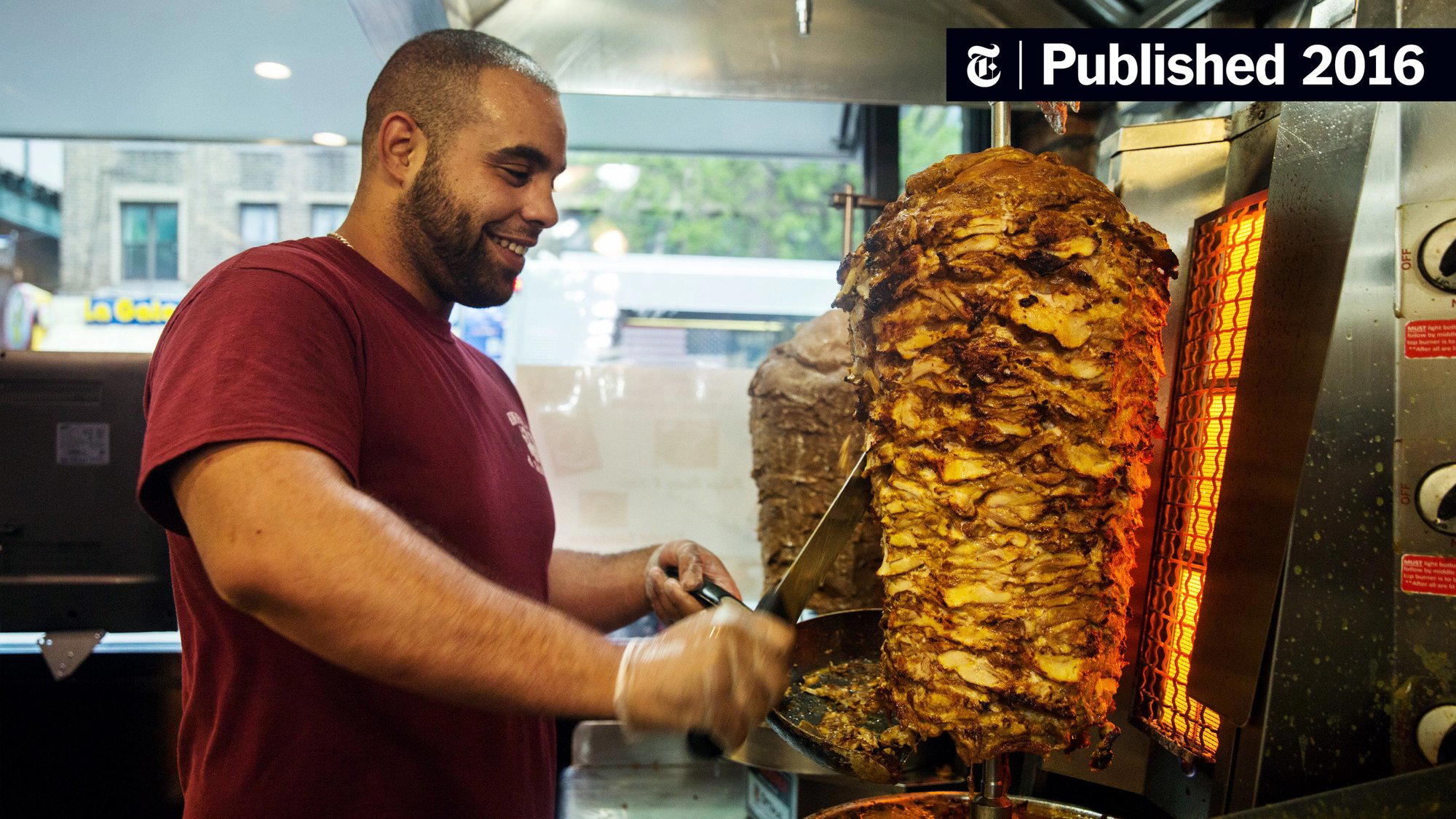
Where Astoria's Street Food Ethic Shows Up on the Plate
Broadway in Astoria does not announce itself the way Midtown Manhattan does. The refined subway tracks cast the street in shifting shadow, and the storefronts run in an unbroken commercial register: grocers, phone repair shops, bakeries, and, at 30-15, a counter operation that has drawn a following well beyond its neighbourhood. King of Falafel & Shawarma sits inside a street-food tradition that Astoria has maintained for decades, one where the measure of a place is the consistency of its chickpeas and the turn of its spit rather than the length of its tasting menu.
That tradition matters as context. New York's dining conversation tends to collapse around a handful of high-ticket addresses in Manhattan, where a counter at Masa or a reservation at Le Bernardin sets the terms of the discussion. The outer boroughs operate on different logic. In Astoria, the competitive set is not Atomix or Per Se, it is the next block, the next cart, the next family-run spot doing the same two or three things with the accumulated knowledge of a home kitchen scaled to a street counter. The question is not whether the room has a sommelier. The question is whether the falafel is fried to order and whether the shawarma has been turning long enough.
The Street-Food Counter and Its Implicit Sustainability Argument
The sustainability conversation in New York dining tends to concentrate on a tier of destination restaurants: places like Eleven Madison Park, which pivoted to a plant-based menu, or Blue Hill at Stone Barns in Tarrytown, which has made agricultural regeneration the explicit subject of its kitchen. Further afield, the argument is made with equal seriousness at places like Single Thread Farm in Healdsburg and Atelier Moessmer Norbert Niederkofler in Brunico, where sourcing philosophy is written into the menu's architecture.
Street-food counters make the same argument without the manifesto. A falafel operation running at volume on a tight menu generates less food waste than a multi-course kitchen cycling through elaborate mise en place. The ingredient list is short: dried chickpeas, herbs, alliums, spices, oil. Shelf-stable inputs, minimal cold-chain dependency, high utilisation per purchase. This is not a marketing position, it is the structural outcome of running a counter that cannot afford waste and has no incentive to complicate the supply chain. The restraint is economic before it is ethical, but the environmental outcome is the same.
That structural efficiency is worth noting in a city where the sustainability credentials of a restaurant often correlate with its price point. The operations at Smyth in Chicago, Addison in San Diego, and Providence in Los Angeles can invest in certified sourcing programmes because their price structures allow it. A street counter in Astoria achieves a parallel outcome through compression: fewer SKUs, faster turnover, no elaborate plating that generates trim waste. The carbon arithmetic of a chickpea-heavy menu also runs in a different register than a protein-forward kitchen.
Astoria's Middle Eastern Counter Scene in Wider New York Context
Queens is especially ethnically diverse county in the United States by most demographic measures, and Astoria's Broadway corridor has historically concentrated Greek, Middle Eastern, and South Asian food operations that do not register in the Michelin-tracked tier of the city's dining map. That omission is partly a function of format, guide systems built around reservation-driven rooms with set tasting menus have structural difficulty incorporating walk-up counters, and partly a function of geography, given that the outer boroughs receive a fraction of the editorial attention that Manhattan commands.
The Middle Eastern street-food counter is a format with deep roots and a narrow margin for technical failure. Falafel made from canned chickpeas rather than soaked dried ones reads immediately in texture; shawarma held too long on a declining heat source loses the contrast between crust and interior that defines the format. The operations that survive in this environment for any sustained period do so on repetition and calibration rather than novelty. That is a different kind of expertise than the kind on display at The French Laundry in Napa or Dal Pescatore in Runate, but it is expertise nonetheless.
For a fuller view of where this counter sits within New York's dining geography, the EP Club New York City restaurants guide maps the range from destination tasting rooms to neighbourhood institutions across all five boroughs.
How the Walk-Up Format Shapes the Experience
The walk-up counter model removes several layers of friction that shape the experience at reservation-driven rooms. There is no pacing managed by front-of-house, no wine service, no amuse-bouche sequence. The interaction is direct and fast. You order at the counter, the food is assembled or comes off the rotisserie, and you eat standing or at a nearby surface. The experience is defined by the product rather than by the room or the service choreography.
This format also changes how the food is evaluated. Without the architecture of a tasting menu to create contrast and build narrative, each element has to perform independently. The falafel is either correctly seasoned, properly fried, and structurally coherent, or it is not. The shawarma either has the right fat-to-lean ratio and sufficient crust, or it does not. There is nowhere for a weak component to hide behind a more impressive one. That is a more demanding standard in some respects than the one applied to a kitchen producing twenty courses, where the average of the sequence absorbs individual unevenness.
Planning Your Visit
King of Falafel & Shawarma is located at 30-15 Broadway in Astoria, accessible via the N and W subway lines at the Broadway (Astoria) stop. No reservation system applies; the format is walk-up. For current hours and any operational details, visiting in person or checking the venue directly is advisable, as no website or phone number is currently listed in public databases.
Quick Comparison: Astoria Counter vs. Manhattan Destination Dining
| Factor | King of Falafel & Shawarma | Manhattan Destination Tier (e.g., Le Bernardin, Per Se) |
|---|---|---|
| Booking | Walk-up, no reservation | Advance reservation, often weeks or months out |
| Format | Counter service, fast turnover | Multi-course, table service |
| Price tier | Street-food pricing | $$$$ |
| Location | Astoria, Queens (outer borough) | Midtown or Downtown Manhattan |
| Cuisine focus | Falafel, shawarma (Middle Eastern) | French, Japanese, Korean, Contemporary |
| Sustainability model | Structural (tight menu, low waste) | Programme-driven (certified sourcing, stated policy) |
Price and Recognition
Comparable venues nearby, for context on price, style, and recognition.
| Venue | Cuisine | Price | Notes |
|---|---|---|---|
| King of Falafel & ShawarmaThis venue — the venue you are viewing | Not listed | $ | Not listed |
| Nasrin's Kitchen | Not listed | $$ | Midtown-Times Square, Authentic Homestyle Persian |
| Alshaybani Restaurant | Bay Ridge, Authentic Yemeni | $$ | Not listed |
| Mamoun’s | Not listed | $ | Upper West Side (Central), Authentic Middle Eastern Falafel |
| Salam | Not listed | $$ | Chelsea-Hudson Yards, Authentic Syrian & Lebanese |
| Sahadi's | Not listed | $$ | Brooklyn Heights, Lebanese Mediterranean Deli |
Continue exploring
More in New York City
Restaurants in New York City
Browse all →
Bars in New York City
Browse all →

Hotels in New York City
Browse all →






At a Glance
- Well Known
- Casual
- Casual Hangout
- Late Night
- Solo
- Standalone
Current opening hours
- Monday
- 11 AM–10 PM
- Tuesday
- 11 AM–10 PM
- Wednesday
- 11 AM–10 PM
- Thursday
- 11 AM–10 PM
- Friday
- 11 AM–10 PM
- Saturday
- 11 AM–10 PM
- Sunday
- 11 AM–10 PM
Hours can change for holidays and private events. Last verified .
Casual storefront with a lime-green food truck facade as exterior decor, reflecting its origins as a street cart; energetic and unpretentious neighborhood eatery.