kima
Kima sits on Frederiksborgvej in Copenhagen's NV district, operating where imported culinary technique meets the specificity of Danish and Nordic produce. The address places it outside the city's established fine-dining corridor, positioning it within a younger wave of Copenhagen restaurants that treat locality as methodology rather than marketing.
Pearl is the En Primeur Club membership app — saves, bookings, and concierge access live there. Same editors, same standards.
- Address
- Frederiksborgvej 2, 2400 København, Denmark
- Phone
- +4520404014
- Website
- kimakima.dk
- Directions
- Get directions
 Saves & bookings on Pearl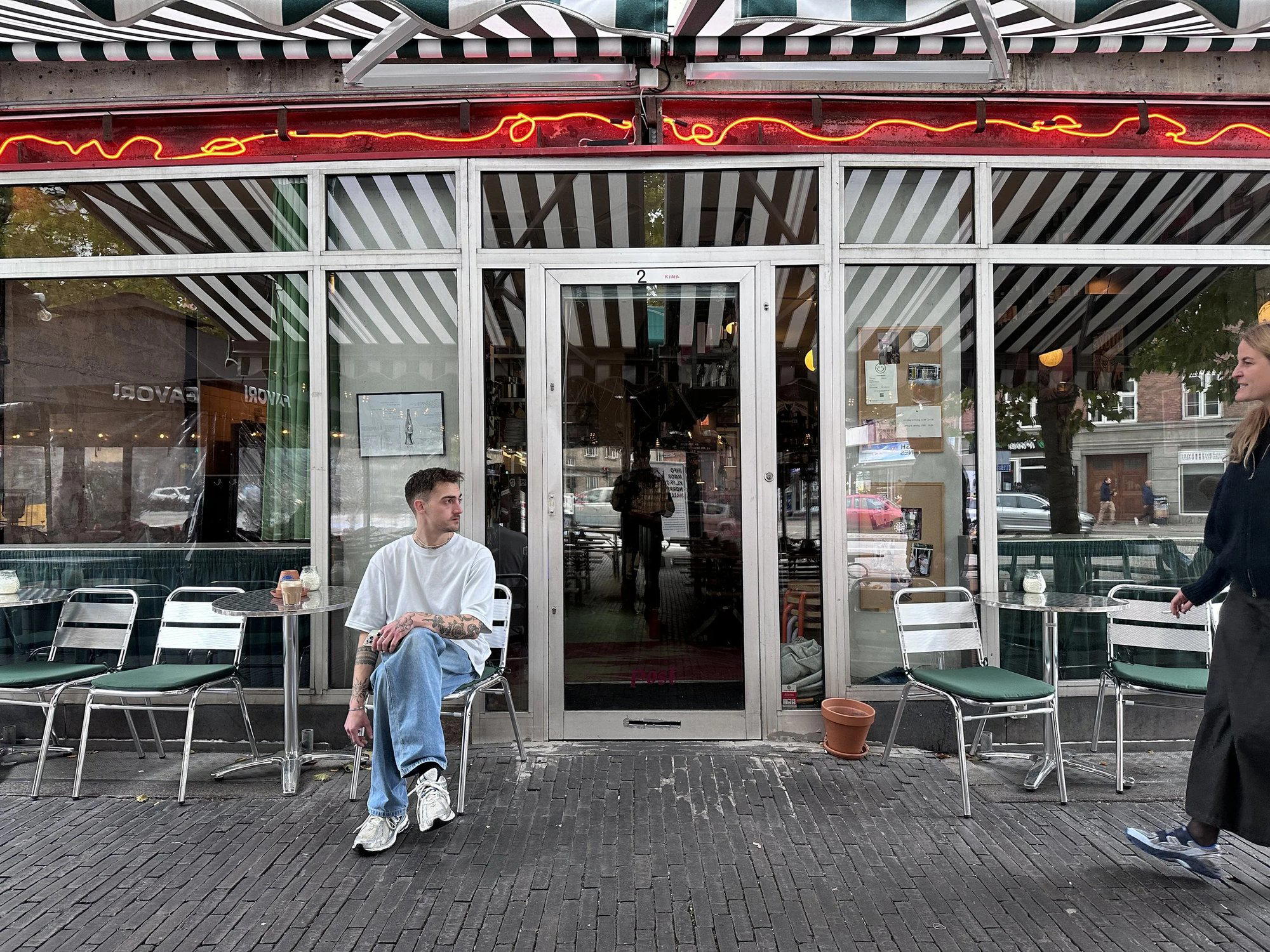
Outside the Centre, Inside the Conversation
Copenhagen's fine-dining geography has always been concentrated along a relatively tight arc, from the inner harbour restaurants to the Christianshavn addresses that shaped the city's international reputation. Frederiksborgvej 2, the address where kima operates in the NV district, sits deliberately outside that corridor. This is the part of Copenhagen where food ambition tends to announce itself quietly, where the neighbourhood itself does not do the marketing work, and where the room fills because the cooking earns it rather than because the postcode commands it.
That positioning matters as context. The NV district has absorbed a wave of serious independent restaurants over the past decade, drawing both chefs and guests who find the established fine-dining geography of central Copenhagen either too competitive for newcomers or too familiar for regulars. Kima belongs to that wider movement, even if its specific profile remains less documented than its peers closer to the waterfront.
A Tradition of Imported Technique, Local Material
The framework that defines Copenhagen's most interesting mid-tier and upper-tier restaurants is not, at root, about foraging or minimalism, though both appear frequently. It is about the tension between rigorous imported method and the particular qualities of Nordic raw material. That tension is what made Noma influential beyond its immediate cooking, and what continues to animate younger addresses in the city.
At the upper end, Geranium and Alchemist operate within the €€€€ bracket with a level of technical infrastructure and spatial investment that places them in a different competitive tier entirely. Koan offers its own version of the local-global intersection by grafting kaiseki discipline onto Nordic ingredients, a specific and demanding hybrid. Kadeau draws its identity from Bornholm's agricultural specificity, translating island produce through a technically confident kitchen.
Kima's position within this wider conversation, while less extensively documented in public records, fits a recognisable pattern: restaurants that treat the intersection of imported culinary technique and indigenous Nordic products not as a concept to be explained at the table but as a working methodology that shapes every decision from sourcing to plating. The name itself, drawn from the Greek word for wave or surge, gestures toward something in motion rather than fixed, which reads as an editorial stance on what the cooking is attempting.
What the Address Tells You
Restaurants in Copenhagen's outer districts tend to self-select their audience in ways that inner-city addresses do not. The guest who travels to Frederiksborgvej is not passing by; they have made a decision before leaving home. That dynamic shapes both the room and the expectation. It is the same logic that explains why Jordnær in Gentofte operates with two Michelin stars despite sitting north of the city centre, or why restaurants like Henne Kirkeby Kro in Henne and Frederikshøj in Aarhus have built serious reputations without the gravitational pull of a capital city address.
Denmark's serious restaurant culture is not confined to Copenhagen, as addresses like Alimentum in Aalborg, ARO in Odense, LYST in Vejle, Domæne in Herning, Dragsholm Slot Gourmet in Hørve, Frederiksminde in Præstø, and MOTA in Nykøbing Sjælland all demonstrate. But within Copenhagen itself, the out-of-centre address functions as a kind of filter, concentrating the room with guests who have done the research rather than guests who have simply walked past a lit window.
Technique as the Organising Principle
The most useful way to place kima in its editorial context is through the lens of technique and its relationship to local sourcing. Copenhagen's most critically discussed restaurants tend to sit somewhere on a spectrum between maximalist technical intervention, as at Alchemist, and a more restrained methodology that lets the quality of Nordic produce carry structural weight. The restaurants that have attracted sustained attention from international critics, including coverage in publications like the New York Times food section and from the World's 50 Best organisation, are those that have made a legible argument about where they sit on that spectrum.
The local-ingredients, global-technique model draws on a broader pattern visible in cities from Seoul to New York. Atomix in New York City, for instance, built its critical reputation by applying Korean technique and Korean ingredients in a fine-dining format that draws on French structural discipline. Both cases illustrate how a restaurant's clarity of argument about what it is doing technically and sourcing-wise tends to determine its longevity and its critical legibility.
Kima's positioning on Frederiksborgvej, the name's implied sense of movement, and its place in the NV district's broader food story all suggest a kitchen that is making a particular argument. The specifics of that argument, the precise sourcing relationships, the technical vocabulary of individual dishes, and the format and pacing of the menu, remain less fully documented than those of Copenhagen's most written-about addresses. That gap is worth acknowledging directly: this is a restaurant where visiting remains the primary research method.
Planning Your Visit
Kima's address on Frederiksborgvej is accessible by public transport from central Copenhagen, with the NV district well connected by bus and cycling infrastructure. As with most Copenhagen restaurants operating at this level of seriousness, advance booking is advisable. The city's dining culture at the upper-middle and fine-dining tiers runs on reservation systems that fill well ahead, particularly for weekend sittings. Consulting the restaurant's current booking channel directly is the most reliable approach, as hours and availability shift seasonally. For a broader view of Copenhagen's restaurant options across styles and price points, the EP Club Copenhagen restaurants guide maps the city's full dining range.
How kima Copenhagen compares with similar nearby venues.
| Venue | Cuisine | Price |
|---|---|---|
| Bageriet Benji | Bakery | Not listed |
| Silberbauers Bistro | Nordic, French | €€ |
Continue exploring
More in Copenhagen
Restaurants in Copenhagen
Browse all →
Bars in Copenhagen
Browse all →
Hotels in Copenhagen
Browse all →

At a Glance
- Modern
- Lively
- Trendy
- Casual Hangout
- Group Dining
- Open Kitchen
- Local Sourcing
Current opening hours
- Monday
- 5:30 PM–12 AM
- Tuesday
- 5:30 PM–12 AM
- Wednesday
- 5:30 PM–12 AM
- Thursday
- 5:30 PM–12 AM
- Friday
- 5:30 PM–12 AM
- Saturday
- 12 PM–12 AM
- Sunday
- 12 PM–12 AM
Hours can change for holidays and private events. Last verified .
Know Before You Go
- Getting there
- Frederiksborgvej 2, 2400 København, Denmark