Reffen
Reffen is Copenhagen's largest street food market, occupying a former industrial site on Refshaleøen where dozens of independent food stalls operate seasonally alongside craft beer bars and a canal-side atmosphere that draws both locals and visitors. Where Copenhagen's tasting-menu circuit represents one pole of the city's food culture, Reffen represents the other: democratic, improvisational, and rooted in the same Nordic ingredient philosophy without the formality.
Pearl is the En Primeur Club membership app — saves, bookings, and concierge access live there. Same editors, same standards.
- Address
- Refshalevej 167, 1432 København, Denmark
- Phone
- +4533930760
- Website
- reffen.dk
- Directions
- Get directions
 Saves & bookings on Pearl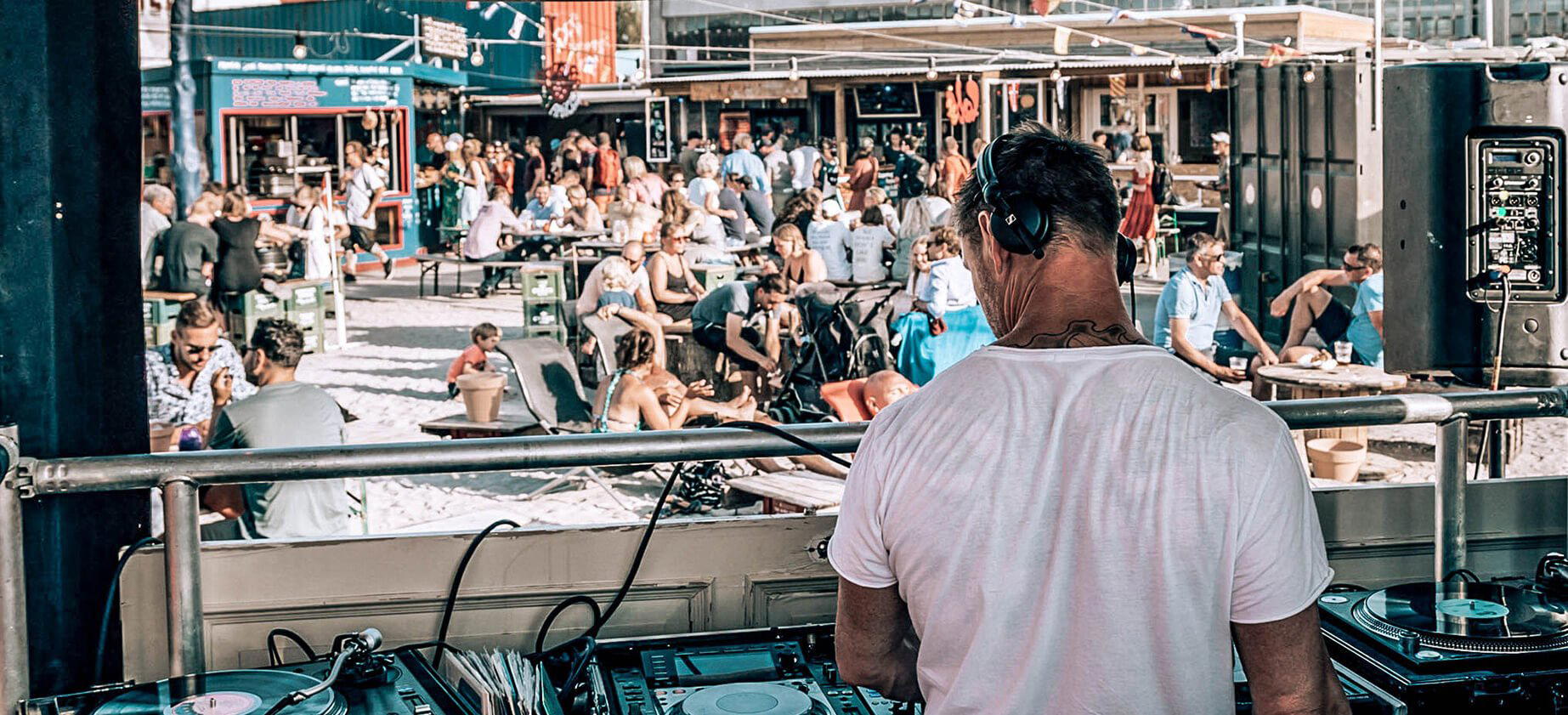
The Other Side of Copenhagen's Food Story
Copenhagen has spent the better part of two decades exporting a single image of itself: the tasting-menu city, the forager's laboratory, the place where chefs like those at Geranium and Noma turned New Nordic into a global reference point. That image is accurate, and it produced one of the most concentrated fine-dining ecosystems in Europe. But it accounts for a narrow slice of how Copenhagen actually eats.
Reffen, on the post-industrial waterfront of Refshaleøen, sits at the opposite end of that spectrum. This is a seasonal street food market occupying a former shipyard site where the architecture is corrugated metal and reclaimed timber, the seating is picnic tables arranged along a working canal, and the cooking arrives in paper trays rather than on warmed ceramic. The contrast with the city's high-end circuit, which includes ambitious omakase-adjacent formats like Koan and the envelope-pushing theatrics of Alchemist, could hardly be sharper. Reffen is not a reaction against that tradition so much as its practical counterpart: the same commitment to sourcing and seasonality, applied without the ceremony.
Refshaleøen and the Geography of Informality
The Refshaleøen peninsula sits east of the city center, reachable by harbour bus or bicycle across the Langebro bridge network. For most of the twentieth century the area was dominated by the Burmeister and Wain shipyard, one of the largest industrial employers in Danish history. The shipyard's closure in the 1990s left behind a range of warehouses and open water that has since attracted creative industries, independent food businesses, and the kind of low-rent experimentation that well-established city centers rarely permit.
Reffen opened on this site in 2017, inheriting the logic of Copenhagen Street Food, which had operated since 2014 on the nearby Paper Island before that site was cleared for residential development. The relocation gave organisers the chance to build something larger and more permanent-feeling: a curated market with a selection process for vendors, covered preparation areas, and a layout designed around the canal view. The result sits somewhere between a traditional food hall and an outdoor festival, with all the weather dependency that implies. Reffen operates seasonally, typically from spring through early autumn, which means the experience is inseparable from the long Scandinavian summer evenings that make waterfront eating here particularly compelling.
The Nordic Ingredient Philosophy, Without the Cover Charge
Street food markets in European cities tend to operate as entertainment-first propositions: the food is secondary to the atmosphere, and ingredient sourcing receives little scrutiny. Reffen works differently. The vendor selection process, which Copenhagen observers have noted prioritises producers who can demonstrate a genuine food concept, means the stalls skew toward people with professional kitchen backgrounds or specific craft expertise rather than generic festival operators.
The result is a market where you are as likely to find fermented vegetable preparations, heritage-breed pork, or foraged herb applications as you are the international staples that fill most street food events. This is not an accident. It reflects the broader normalisation of New Nordic principles across Danish food culture, from the Michelin-starred rooms where Kadeau has built a reputation around Bornholm's seasonal produce, down to the street-level operators who absorbed those same sourcing values during years working in professional kitchens.
The comparison with Denmark's wider dining geography is useful here. The country's fine-dining circuit extends well beyond Copenhagen: Jordnær in Gentofte, Frederikshøj in Aarhus, Henne Kirkeby Kro in Henne, Alimentum in Aalborg, ARO in Odense, Domæne in Herning, Dragsholm Slot Gourmet in Hørve, Frederiksminde in Præstø, LYST in Vejle, and MOTA in Nykøbing Sjælland all represent a regional spread of the same ingredient-first thinking. Reffen sits at the street-level base of that same cultural pyramid.
Reffen in the Broader Market Context
Large-format street food markets have proliferated across European capitals since the mid-2010s, most of them following a formula: a post-industrial site, an international mix of cuisines, and a beverage program dominated by craft beer. Reffen fits parts of that model while diverging from others. The international range is present, but the most consistent strand running through the market is Nordic and Scandinavian in orientation, which gives it a coherence that many comparable European markets lack.
The contrast with comparable international formats is instructive. Markets like Mercado de San Miguel in Madrid or Time Out Market in Lisbon operate as year-round tourist propositions with fixed infrastructure and tightly controlled brand experiences. Reffen's seasonal calendar and outdoor format mean that the experience varies considerably depending on when you arrive and what the summer has brought in terms of vendor rotation. That variability is part of the point. A market that changes from year to year, where vendor spots are not guaranteed and new concepts can emerge, operates closer to the logic of a food incubator than a commercial entertainment venue.
For visitors coming off a night at a high-end Copenhagen tasting room, the transition to Reffen the following afternoon represents something more than a change in price point. It is a shift in the underlying social contract of eating: no pacing, no curation, no choreography. You make your own route through the stalls, eat standing at the water's edge if the tables are full, and move between fermented drinks and wood-fired preparations in whatever order the queue allows.
Planning Your Visit
- Location: Refshalevej 167, 1432 Copenhagen (Refshaleøen peninsula)
- Season: Operates seasonally, typically spring through early autumn; check current opening dates before travelling
- Getting there: Harbour bus routes serve Refshaleøen from the city centre; cycling is practical across the bridge network
- Format: No reservations; walk-in, multi-vendor street food market
- Timing: Summer evenings extend to near-midnight daylight in Copenhagen, making early-evening visits particularly atmospheric along the canal
- Copenhagen dining context: For the full picture of the city's restaurant scene, see our Copenhagen restaurants guide
How Reffen Copenhagen compares with similar nearby venues.
| Venue | Cuisine | Price |
|---|---|---|
| Alchemist | Progressive, Creative | €€€€ |
| Koan | New Nordic, Kaiseki, Creative | €€€€ |
| Lille bakery | Bakery | Not listed |
Continue exploring
More in Copenhagen
Restaurants in Copenhagen
Browse all →
Bars in Copenhagen
Browse all →
Hotels in Copenhagen
Browse all →

At a Glance
- Lively
- Trendy
- Industrial
- Energetic
- Casual Hangout
- Group Dining
- Brunch
- Waterfront
- Open Kitchen
- Terrace
- Beer Program
- Waterfront
Current opening hours
- Monday
- 11 AM–10 PM
- Tuesday
- 11 AM–10 PM
- Wednesday
- 11 AM–10 PM
- Thursday
- 11 AM–10 PM
- Friday
- 11 AM–1 AM
- Saturday
- 11 AM–1 AM
- Sunday
- 11 AM–10 PM
Hours can change for holidays and private events. Last verified .
Industrial waterfront atmosphere with a pulsating, cultural vibe, beach chairs by the sea, sunset views, music, and a casual hangout feel.
Know Before You Go
- Getting there
- Refshalevej 167, 1432 København, Denmark