
Kikkou is an eight-seat counter sushi restaurant in Nagoya’s Nishiki district, selected for Tabelog Sushi EAST “Tabelog 100” in 2025 and 2022. The appeal is narrow and serious: counter-only omakase, sake-led drinking, and the etiquette of scent restraint that matters at high-end sushi counters in Japan.
Pearl is the En Primeur Club membership app — saves, bookings, and concierge access live there. Same editors, same standards.
- Address
- Japan, 〒460-0003 Aichi, Nagoya, Naka Ward, Nishiki, 3 Chome−17−27 ソシアルビルM1(中二階) A号室
- Phone
- +81 52-684-6890
- Website
- tabelog.com
 Saves & bookings on Pearl
In Nishiki, serious sushi often begins with compression: lift lobby, building floor, small room, counter. Nagoya’s business-and-nightlife district does not stage sushi with Ginza’s ceremonial hush or the sea-facing romance of coastal towns; its appeal is urban and compact. Kikkou fits: eight counter seats, no private rooms, no smoking, and omakase only, placing the guest directly before the craft rather than in a dining room built for distance.
That scale matters in Japanese sushi culture. Counter sushi is not just seating; it is the meal’s grammar. Rice temperature, pacing, fish order, and sake handling depend on proximity. A small counter is judged less by spectacle than discipline: pacing, how shari supports fish, how the room handles silence, and how consistently the chef works across a full seating. Kikkou’s selection for Tabelog Sushi EAST “Tabelog 100” in 2025, after also appearing in 2022, places it in a vetted national conversation, not only a local recommendation cycle.
Nishiki sushi at counter scale, not dining-room scale
Nagoya’s high-end dining identity is pulled between two instincts. One is the city’s pragmatic Chubu character: precise, businesslike, less theatrical than Tokyo. The other is its appetite for narrow specialist formats, especially in Sakae and Nishiki, where compact buildings hide counters, kappo rooms, and late-night drinking addresses above street level. Sushi here is not trying to reproduce Tsukiji mythology or Kyoto ceremony. It rewards diners who understand format: arrive on time, avoid strong scent, let the course build, and treat the counter as shared space.
Kikkou sits in that second lane. Its details point to formal sushi rather than a casual nigiri stop: reservations are available, the meal is omakase, the counter has eight seats, and drinks center on nihonshu, shochu, and wine, with sake emphasized. The request to avoid perfume or strongly scented hair products is not decorative etiquette. At sushi counters, scent interferes with rice vinegar, fish fat, seaweed, and warm broth aromas; the rule signals concentration.
The Nishiki address also explains the tone. Here, diners can move within minutes from inexpensive noodles to serious counters. Nearby comparison venues show the spread: Udon Nishiki and Kawaguchi Ya occupy the low-cost quick-meal end, while Sukhontha Nishiki ten and Gyoza Senmon Ten Karaya Nishiki ten sit in a casual evening bracket. Gastronomy Sole Yanagiya points to another side of Nagoya’s higher-spend dining. Kikkou belongs to the narrower sushi-counter tier, where the question is less variety than whether a diner wants small-format omakase in the city center.
The cultural weight of omakase in a Nagoya room
Omakase is often flattened in English as “chef’s choice,” but at a Japanese sushi counter it is a stronger social contract. The diner gives up ordering control; the restaurant accepts responsibility for sequence, rhythm, and balance. In eight seats, that contract is visible. There is less margin for late arrivals, loud conversation, heavy fragrance, or drink indecision. The format works when everyone understands the counter as a shared instrument.
Kikkou’s small capacity is therefore editorially significant. Eight seats create scarcity and protect the meal’s tempo. Nagoya has larger restaurants for groups, entertaining, and casual drinking rounds. This counter better suits two diners, solo regulars, or a small party willing to follow the restaurant’s pace. Private use is available, which changes the equation for groups wanting room control, but the grammar remains counter-led, not banquet-led.
The drinks positioning reflects a wider shift in Japanese sushi outside Tokyo. Premium sushi no longer defaults to beer and a token sake list. Serious counters increasingly treat nihonshu as part of the meal’s architecture, especially when fish handling and rice seasoning are the main variables. Kikkou’s sake, shochu, and wine give diners several routes, while the sake emphasis aligns with sushi’s traditional pairing logic: acidity, umami, temperature, and texture over heavy aroma.
The restaurant also carries continuity within Nishiki dining. Public restaurant text describes it as a revival connected to Kichou, a known sushi name in the district. Such lineage matters in Japan, where room, name, and regular clientele can carry memory even when the operating form changes. It should not be over-romanticized; for a diner in 2026, the current counter, current award recognition, and competition with other Nagoya specialist restaurants matter most.
Who this counter suits in Nagoya
Right diner is not simply someone seeking expensive sushi. It is someone who wants compact omakase in central Nagoya, with the etiquette and pacing of a serious counter. The eight-seat setup is a poor fit for sprawling conversation or a flexible family meal. It better suits diners who prefer controlled format, value sake with sushi, and understand the counter itself as part of the discipline.
For visitors building a broader Nagoya itinerary, Kikkou is the focused sushi night, not the all-purpose local restaurant. The city’s dining range is clearer by category: quick regional meals, casual izakaya-style evenings, specialist counters, and higher-spend tasting formats. Start with Our full Nagoya restaurants guide, then widen the trip through Our full Nagoya hotels guide, Our full Nagoya bars guide, Our full Nagoya wineries guide, and Our full Nagoya experiences guide. Other restaurant pages worth comparing for format, city positioning, or Japan travel planning include 1022, 451, Aaron, Alan., All Day Dining Montmartre, -Grilled beef Sukiyaki- KAMAKURA TANUKIAN 鎌倉 たぬき庵 in Kamakura. 鮪と炭火焼き うお炭 秋葉原店 in Tokyo.cafe in Osaka.know in Kumamoto, (Shoku) Vietnam in Kawasaki, [Curry Senmon Ten] Maruyama Kyoju. in Sapporo, Jōdo Saké Bar in Los Angeles, and Onigiri Time in Pasadena.
Budget Reality Check
Nearby venues at a similar price tier for orientation.
| Venue | Cuisine | Price | Notes |
|---|---|---|---|
| Kikkou | Naka, Refined Sushi Omakase | $$$$ | Not listed |
| か茂免 | Not listed | $$$$ | Higashi, Traditional Japanese Kaiseki & Fugu |
| Sushi Izumu | Naka, Intimate Sushi Omakase Counter | $$$$ | Not listed |
| Nako Tei | Nakamura, Luxury Japanese Teppanyaki | $$$$ | Not listed |
| Sekine | Shōwa, Traditional Japanese Kaiseki | $$$$ | Not listed |
| ふじさわ | Chikusa, Modern Japanese Sushi | $$$$ | Not listed |
Recognition history
Dated appearances from independent guides and award organizations, with the underlying list record or original source where available.
Tabelog 100 #77 · No. 77
Tabelog · Tabelog 100 - Sushi - EAST - 2025
Continue exploring
More in Nagoya
Restaurants in Nagoya
Browse all →
At a Glance
- Elegant
- Cozy
- Intimate
- Sophisticated
- Modern
- Date Night
- Special Occasion
- Business Dinner
- Solo
- Chefs Counter
- Standalone
- Design Destination
- Sake Program
- Extensive Wine List
- Local Sourcing
- Sustainable Seafood
Current opening hours
- Monday
- 6–11 PM
- Tuesday
- 12–2 PM, 6–11 PM
- Wednesday
- 6–11 PM
- Thursday
- 12–2 PM, 6–11 PM
- Friday
- 6–11 PM
- Saturday
- 12–2 PM, 6–11 PM
- Sunday
- Closed
Hours can change for holidays and private events. Last verified .
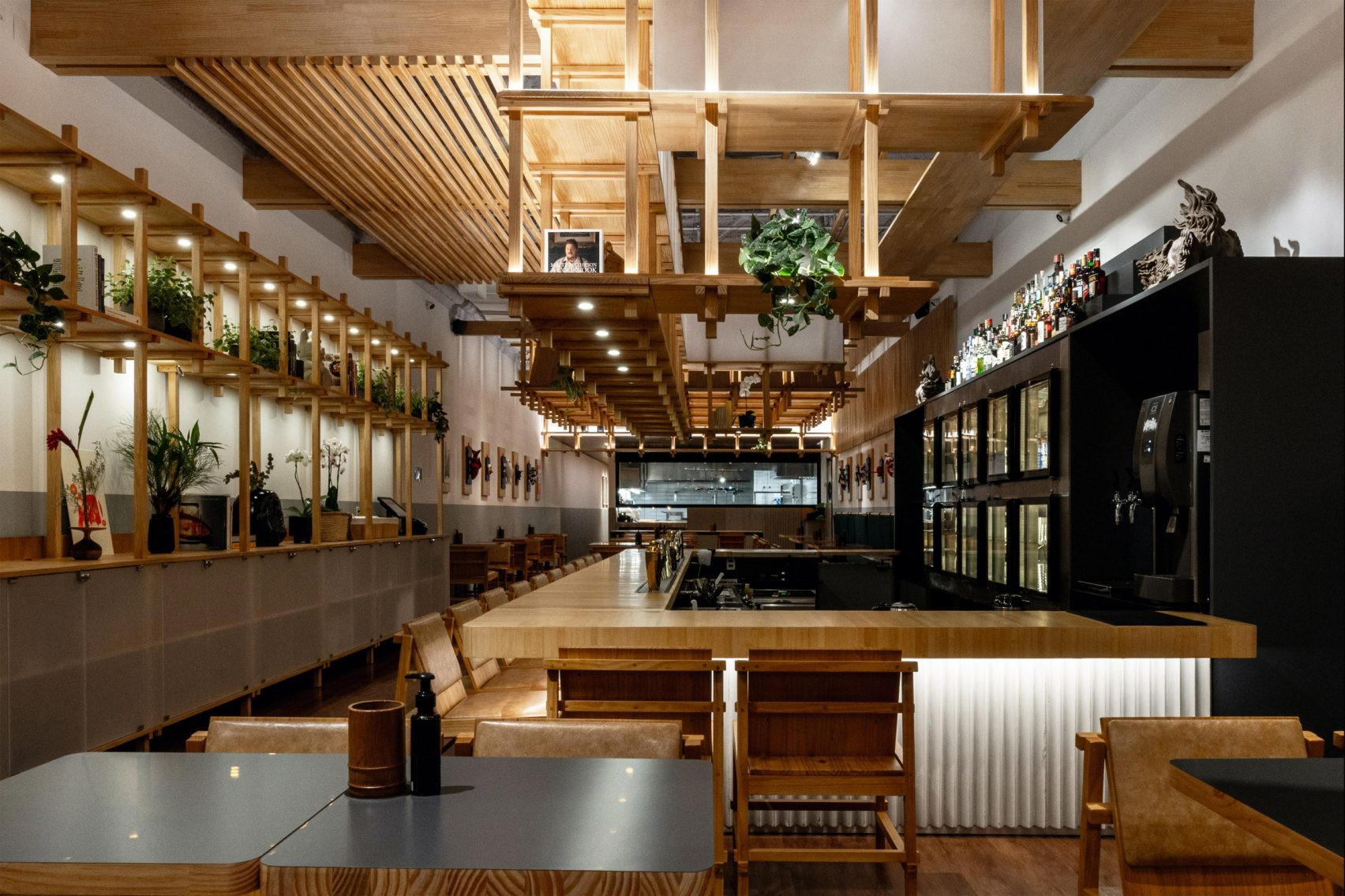
A stylish, minimalist hinoki-wood counter in a small ‘hideout’ space, offering a relaxing and refined atmosphere where guests closely watch the chef’s detailed sushi craftsmanship.