Khan Skewer Restaurant
Our verdict
Khan Skewer Restaurant on Isenberg Street sits in a Honolulu neighborhood better known for its local regulars than its tourist foot traffic, making it a useful reference point for understanding how skewer-format dining fits into the city's broader casual dining picture. The address alone signals a certain kind of unpretentious, neighborhood-rooted operation that contrasts with the resort-corridor dining that dominates Honolulu's restaurant conversation.

Pearl is the En Primeur Club membership app — saves, bookings, and concierge access live there. Same editors, same standards.
- Address
- 925 Isenberg St, Honolulu, HI 96826
- Phone
- (808) 955-8868
- Hours
- Mon–Wed 5–11 PMThu–Sun 5 PM–1 AM
- Website
- khanskewer.com
- Directions
- Get directions
- Booking
- Book on OpenTable
The menu
What to order
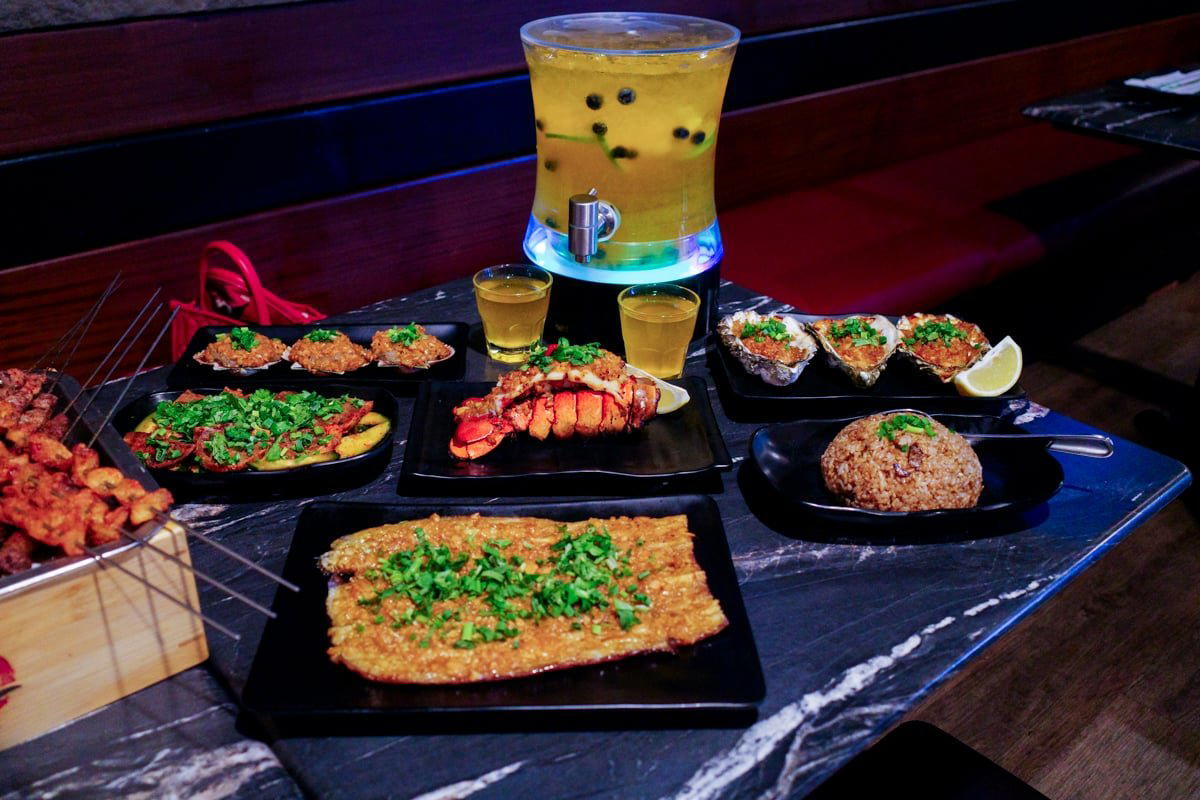
- Lamb Skewer
- Beef Brisket Skewer
- Pork Belly Skewer
Isenberg Street and the Case for Neighborhood Dining in Honolulu
Honolulu's dining conversation tends to collapse around two poles: the resort-corridor restaurants of Waikiki and the destination fine-dining addresses that draw visitors with specific intent. The stretch of city between those poles, where locals actually eat on a Tuesday night, gets less editorial coverage than it deserves. Isenberg Street, where Khan Skewer Restaurant operates at number 925, sits squarely in that quieter middle register. The surrounding blocks are residential and commercial in roughly equal measure, the kind of area where a restaurant survives on repeat neighborhood business rather than passing tourist volume. That context matters when you're thinking about what kind of dining experience to expect and how to plan around it.
Skewer-format dining, whether that means Central Asian kebab traditions, Japanese yakitori, or Middle Eastern shawarma, has a longer global history than its casual presentation in most cities suggests. The technique is among the oldest in organized cooking: protein or vegetable threaded onto a rod and cooked over direct heat, with the char and fat drip doing the seasoning work. In Honolulu, where the dining scene reflects the city's layered immigrant history, formats from across the Pacific and beyond have found natural footing. Khan Skewer Restaurant's name signals a Central Asian or broadly Silk Road-adjacent register, a category that remains a smaller niche in Hawaii's restaurant ecosystem compared to Japanese, Korean, or Filipino formats.
Planning Around the Address
The editorial angle that matters most for Khan Skewer Restaurant, given limited publicly available data, is the booking and logistics question. The Isenberg Street address places the restaurant in the McCully-Moiliili neighborhood, a dense residential district popular with University of Hawaii students and long-term Honolulu residents. It is not a neighborhood that sees significant drop-in traffic from visitors staying in Waikiki, which means the practical barrier to visiting is transport rather than table availability. Honolulu's public bus network, TheBus, serves the area, but visitors without a rental car will find the journey from Waikiki adds meaningful planning time. Rideshare is the more practical option for most visitors.
Walk-in dining at neighborhood-format restaurants in this tier is common in Honolulu, but verifying current hours in advance is worth the effort, particularly given that smaller operators in this city sometimes adjust schedules seasonally or without prominent online announcement. Visiting on a weekday rather than a weekend typically reduces wait times at casual neighborhood restaurants of this type, though that pattern should be confirmed against any current reviews you find.
Where Khan Skewer Sits in Honolulu's Dining Picture
Honolulu has a well-documented tier of destination-level restaurants that draw visitors with specific culinary intent. Fête (New American) and 3660 On the Rise represent the more polished, reservation-forward end of that spectrum. Waterfront and view-driven dining addresses like 53 By The Sea occupy a different bracket entirely, where setting is as much the product as the food. Cultural-experience formats like Ahaaina Luau serve a different visitor need altogether. Khan Skewer Restaurant doesn't compete in any of those categories. It operates closer to the everyday neighborhood end of the spectrum, where value and familiarity drive return visits rather than occasion-dining logic.
For a broader orientation to how Honolulu's restaurant scene is organized across these tiers, our full Honolulu restaurants guide maps the city's dining character by neighborhood and format. The McCully-Moiliili area, where Khan Skewer sits, is worth knowing as a district for local-facing dining rather than destination-driven visits. Other Honolulu operators with local-audience positioning include 855-ALOHA, which approaches a different format with similar neighborhood-first logic.
For context on how skewer and grill-format restaurants fit into the national picture, the comparison set is not drawn from Honolulu's fine-dining addresses but from the broader category of casual protein-forward cooking that has found serious treatment at restaurants like Lazy Bear in San Francisco and, at the furthest end of the ambition spectrum, Alinea in Chicago or The French Laundry in Napa. Those comparisons are not made to suggest equivalence, but to illustrate how wide the range of ambition can be within cooking traditions that start with fire and protein. Blue Hill at Stone Barns in Tarrytown, Providence in Los Angeles, and Addison in San Diego represent the Pacific-facing end of serious American cooking, while Le Bernardin in New York City and Atomix in New York City show how technical ambition transforms even the most familiar ingredients. Khan Skewer operates in a register several tiers below all of those, but the underlying craft tradition of working live fire is shared across the spectrum.
Internationally, skewer traditions that have received serious critical attention include the yakitori omakase format gaining traction in Japan and among Japanese-influenced operators in North America, as well as the kebab-house tradition of Istanbul and Central Asia that informs a growing number of American restaurants. 8 1/2 Otto e Mezzo Bombana in Hong Kong and Emeril's in New Orleans represent how regional culinary identity can be sustained at serious levels of execution; the question for any neighborhood operator is whether that same commitment to craft survives at a lower price point and smaller scale. The Inn at Little Washington and Single Thread Farm in Healdsburg show how ingredient sourcing becomes the story at the highest tier; at the neighborhood level, consistency and value take over that role.
What to Know Before You Go
The Isenberg Street location is not walking distance from Waikiki, so arriving to find the restaurant closed would be a material inconvenience. Honolulu's neighborhood restaurant scene rewards visitors who do that small amount of advance verification, particularly in the post-2020 period when hours and formats have shifted more frequently than pre-pandemic patterns would suggest.
Frequently asked questions
Is Khan Skewer Restaurant a family-friendly restaurant?
The address on Isenberg Street places Khan Skewer in a residential Honolulu neighborhood rather than a tourist corridor, which typically signals a casual, walk-in format that accommodates groups of mixed ages. The skewer format itself tends to suit communal, relaxed dining.
Is Khan Skewer Restaurant better for a quiet night or a lively one?
Isenberg Street sits in a local Honolulu neighborhood well removed from the noise of Waikiki, which generally favors a lower-key atmosphere. Skewer-style restaurants in this kind of residential setting typically run as compact, conversational spaces rather than high-volume venues. Expect the former over the latter, though hours and current format should be confirmed directly.
Is Khan Skewer Restaurant a good option for dining near the University of Hawaii at Manoa?
The Isenberg Street address in zip code 96826 places Khan Skewer within the immediate vicinity of the University of Hawaii at Manoa campus, making it a practical dining option for that part of Honolulu. It sits well outside the Waikiki resort zone, which means shorter travel for anyone based in the Manoa or Moiliili neighborhoods. Confirm current hours before visiting, as no schedule is publicly documented.
What should I eat at Khan Skewer Restaurant?
The restaurant's name points directly to skewers as the organizing principle of the menu, which is the clearest signal available. Ask staff what is running that day.
Where is Khan Skewer Restaurant in Honolulu?
Khan Skewer Restaurant is located at 925 Isenberg St, Honolulu, HI 96826, Honolulu.
How hard is it to get a table at Khan Skewer Restaurant?
No reservations platform or advance-booking policy is documented for Khan Skewer at 925 Isenberg Street. Neighborhood skewer spots in Honolulu of this scale generally operate on a walk-in basis, meaning peak evening hours on weekends carry the most risk of a wait.
What's the defining dish or idea at Khan Skewer Restaurant?
The skewer is the structural anchor here — the name makes that explicit and it is the clearest editorial identity this Honolulu address projects.
Comparable Venues
Comparable venues nearby, for context on price, style, and recognition.
| Venue | Cuisine | Price | Notes |
|---|---|---|---|
| Khan Skewer RestaurantThis venue — the venue you are viewing | Mongolian-style BBQ Skewers | $20–30 | Not listed |
| The Mandarin | Northern Chinese | $10–20 | Capitol District |
| Paia Fish Market Waikiki | Fresh Hawaiian Seafood | $20–30 | Kapahulu |
| Kaimuki Shokudo | Japanese Soba & Izakaya | $20–30 | Kaimuki |
| An Di Dzo | Modern Vietnamese | $20–30 | Ala Moana |
| Moobongri Soup & Yakiniku | Korean BBQ & Yakiniku | $30–50 | McCully |