In Gunma prefecture, katsu sando has evolved from convenience-store staple to craft format, and Katsu Sando Kobo Panton sits at the serious end of that shift. The name signals a workshop approach: kobo means atelier or studio, which sets an expectation about sourcing and execution that separates this address from casual sandwich counters across Japan.
Pearl is the En Primeur Club membership app — saves, bookings, and concierge access live there. Same editors, same standards.
- Address
- Gunma, Japan
- Directions
- Get directions
 Saves & bookings on Pearl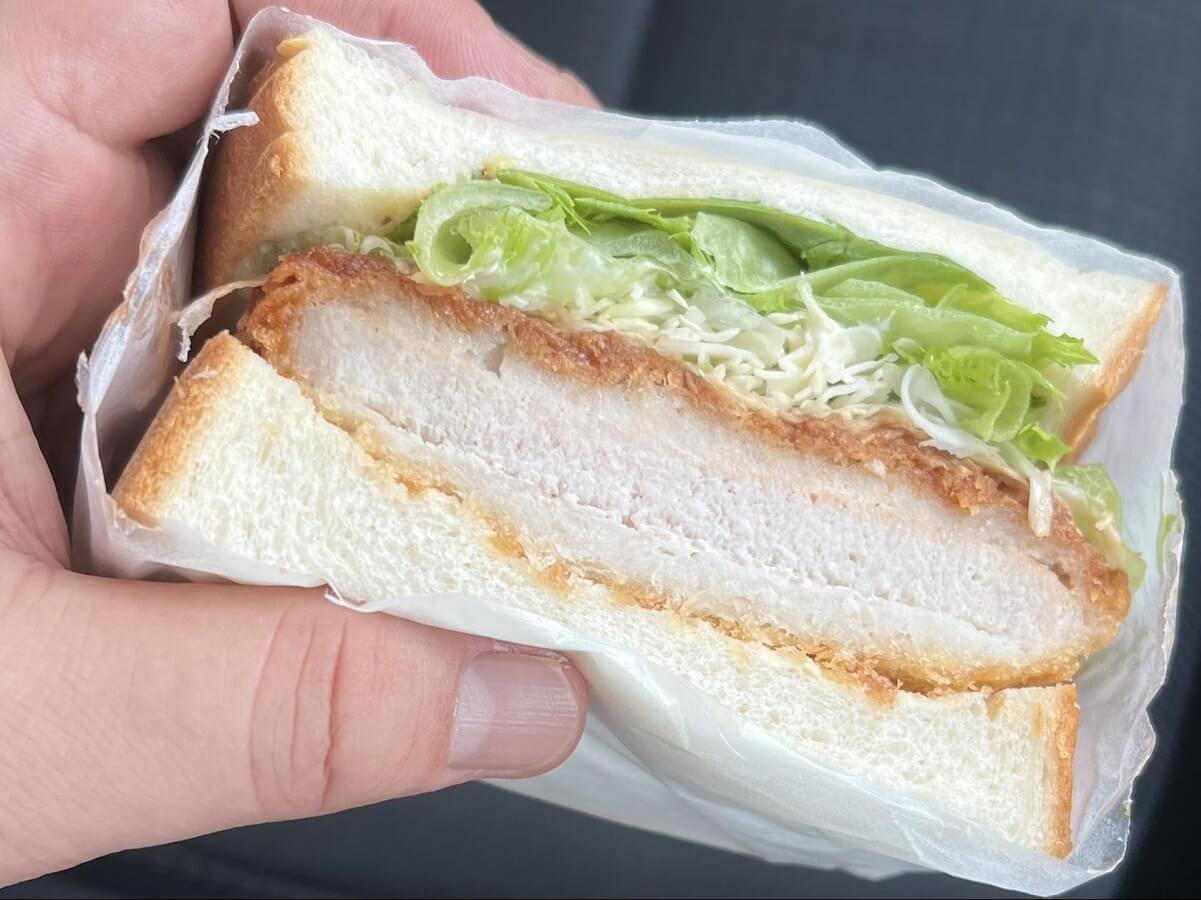
A Sandwich Format With Something to Prove
Japan's convenience store katsu sando is among the more efficient snacks in the world: crumbed pork, Worcestershire-adjacent sauce, soft shokupan, done. But over the past decade, a parallel tier has emerged where the same format is treated as a platform for ingredient argument rather than a quick meal. Gunma, a landlocked prefecture northwest of Tokyo known for its agricultural production, wheat cultivation, and access to quality pork, turns out to be a logical place for that argument to take hold. Katsu Sando Kobo Panton operates within that more deliberate register, where the word kobo (atelier or workshop) is not decorative branding but a statement about process.
For context on how seriously Japan takes its regional sandwich culture, consider that premium katsu sando spots in Tokyo's Ebisu and Minami-Aoyama neighborhoods regularly attract queues and press coverage that would not embarrass a Michelin-tracked restaurant. The difference between those venues and a place like Katsu Sando Kobo Panton in Gunma is instructive: regional versions often have closer proximity to the farms and producers that make the ingredient sourcing argument credible in the first place. Compare that with the elaborate tasting-menu context of HAJIME in Osaka or Harutaka in Tokyo, and you are looking at a completely different price tier and format, but the underlying commitment to sourcing provenance is a thread that runs across Japanese serious food culture regardless of genre.
Gunma as a Sourcing Environment
The ingredient sourcing angle matters here because Gunma has specific agricultural credentials that bear on what ends up in a katsu sando. The prefecture produces a significant volume of konnyaku (over 90 percent of Japan's national supply originates in Gunma), but its relevance to a pork cutlet operation lies elsewhere: in its wheat fields, its cold-climate pork producers, and its general positioning as a food-producing region rather than a food-consuming metropolis. Wheat grown in Gunma's flatlands feeds into shokupan production, and the bread quality in a katsu sando is not a minor variable. The relationship between crumb density, moisture, and the way fried pork fat is absorbed by the sandwich's interior is the kind of thing that separates a workshop-mentality operation from a commissary one.
Gunma's pork supply chain also draws on breeds and raising conditions that differ from industrially standardized product. The kobo model in Japanese food culture generally implies direct or near-direct producer relationships. This is the same logic that governs ingredient-focused operations at a different scale and price point, from the local gyoza maker committed to a single cabbage grower to the kaiseki kitchen at Gion Sasaki in Kyoto tracing every seasonal component to a named source.
The Format Itself
Katsu sando as a craft format has specific technical checkpoints. The cutlet's internal temperature at service, the ratio of panko crust thickness to meat, the fat content of the pork loin or fillet used, the acidity balance of whatever sauce cuts through the richness, and the structural integrity of the bread under compression are all variables that distinguish a workshop approach from simple production. In Japan's more considered sandwich counters, these are treated with the same rigor applied to sushi rice temperature at a counter like Harutaka in Tokyo. The analogy is not as far-fetched as it sounds: in both cases, the fundamental technique is simple, and the differentiation lives entirely in sourcing decisions and execution discipline.
The panton element of the name appears to reference the venue's specific identity within this format. What the combination of kobo and a distinctive proper noun signals is a craft-first positioning that places the venue outside the commodity sandwich category. For comparison, operations at similar positions in Japan's regional food scene, such as akordu in Nara or Goh in Fukuoka, occupy their respective niches through a combination of format discipline and ingredient specificity that their city or prefecture enables.
Gunma's Place in Japan's Regional Food Picture
Gunma does not carry the food-destination profile of Kyoto, Tokyo, or Fukuoka, but that is partly a function of how food media distributes its attention rather than a reflection of what the prefecture produces. Landlocked prefectures with strong agricultural bases tend to be underrepresented in international food coverage precisely because their contribution to Japan's food culture is upstream: they grow and raise, while coastal cities process and serve. This dynamic creates openings for venues that connect the production side directly to the dining experience, which is exactly the premise behind a sourcing-oriented katsu sando operation.
At the regional food level, Japan's serious sandwich and fried-food operations sit in a distinct tier from the kaiseki and omakase addresses that dominate international attention. But they draw on the same philosophical infrastructure: respect for raw ingredient quality, attention to technical execution, and a rejection of shortcuts in sourcing. The venues that have built sustained followings in this space, from Tokyo's high-profile katsu destinations to regional workshop operations in prefectures like Gunma, share a common thread of treating the format as a vehicle for ingredient argument rather than a delivery mechanism for calories. Other regionally significant operations worth benchmarking against include æ¹é庵 in Takashima and åºç¾½å± in Nishikawa Machi, which occupy different format niches but demonstrate how seriously Japan's non-metropolitan food scene takes its craft positioning.
Planning a Visit
Gunma is accessible from Tokyo by Shinkansen to Takasaki in under an hour, and Takasaki serves as the prefecture's main transit hub for onward local connections. For visitors building an itinerary around Japan's serious regional food operations rather than the obvious metropolitan circuit, Gunma combines reasonable day-trip logistics from Tokyo with a food environment that is genuinely production-adjacent. Specific hours and booking requirements are not published, so direct verification before travel is advisable. Given the workshop-format positioning, limited daily production is a reasonable expectation, and arriving without confirming availability would be a planning error. The broader regional context makes it worth pairing with other Gunma addresses; consult our full Gunma restaurants guide for the complete picture.
In Context: Similar Options
Comparable venues nearby, for context on price, style, and recognition.
| Venue | Cuisine | Price | Notes |
|---|---|---|---|
| Katsu Sando Kobo PantonThis venue — the venue you are viewing | Japanese Katsu Sando | $$ | Not listed |
| Eiraku | Traditional Chuka Soba Ramen | $$ | Hokjo, Tsukuba City |
| Denko Sekka (電光石火) | Hiroshima-style Okonomiyaki | $$ | Hiroshima Station area |
| Yorozu Onkashi Atsurae Dokoro Kashiya | Traditional Japanese Wagashi & Cafe | $$ | Nara |
| Nagano Meijitei | Nagano Sauce Katsudon | $$ | Nagano Station |
| Dan Dan | Traditional Japanese Izakaya | $$ | Hachinohe City |
Continue exploring
More in Gunma
Restaurants in Gunma
Browse all →
Hotels in Gunma
Browse all →
Wineries in Gunma
Browse all →
At a Glance
- Cozy
- Casual Hangout
Small eat-in space with 4 seats in a cozy, local bakery-like setting.