
Tabelog Bronze #169
Our verdict
Kashu places Aomori produce inside a compact French-creative format, with a six-seat counter that makes the meal feel closer to a focused tasting room than a city restaurant. Tabelog Bronze recognition in 2025 and 2026, plus selection for Tabelog French EAST 100 in 2025, puts it in a small regional bracket where sourcing, restraint, and format matter more than spectacle.

Pearl is the En Primeur Club membership app, where members save venues, book tables and use the concierge.
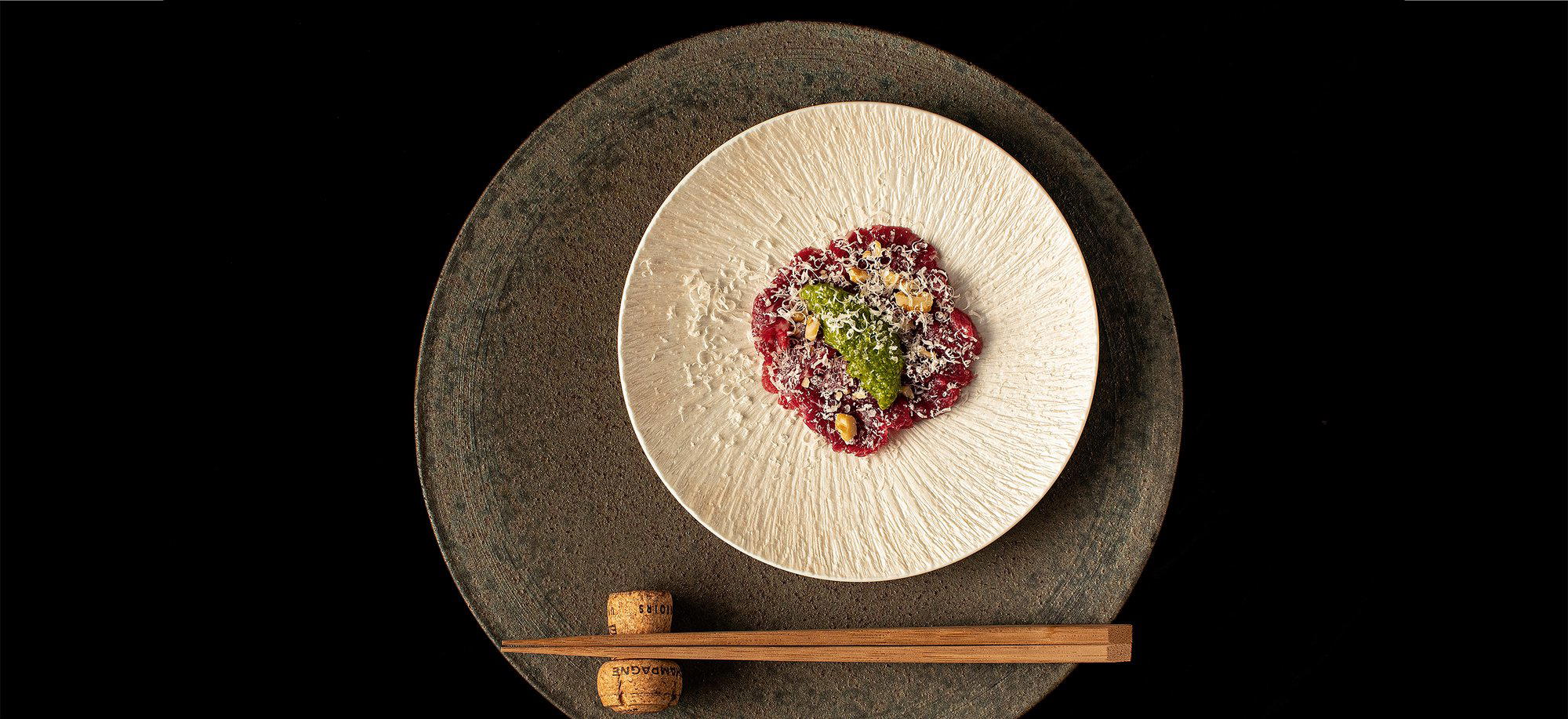
Shinmachi is not the part of Aomori where luxury dining announces itself loudly. The district works at street level: station traffic, shopfronts, evening quiet, and the pragmatic rhythm of a northern port city. Kashu fits that register. Its counter-only room reduces the usual restaurant distance between kitchen and diner, so the experience reads less as formal French service and more as a tightly edited conversation between Aomori ingredients and French technique.
That distinction matters in a city better known to many travellers for apples, seafood, Nebuta culture, and access to the wider Tohoku coast than for destination tasting menus. Aomori’s serious dining has to answer a different question from Tokyo or Osaka: how much can a small room say about place without turning into regional theatre? Here, the French-creative category is useful because it gives the kitchen structure, but not a script. The food is framed around local ingredients rather than imported luxury signals, which places the restaurant in the same broader discussion as contemporary regional dining across Japan: fewer gestures, clearer sourcing, and a stronger sense of where dinner is taking place.
Aomori ingredients, French structure, and a counter built for close reading
The six-seat counter is not just a capacity detail; it changes the critical lens. In large dining rooms, luxury can be carried by service choreography, cellar depth, or architectural drama. In a room this small, the food has less cover. Pacing, seasoning, temperature, and the transition between dishes become easier to read. That format suits a cuisine described as French and creative, particularly when the stated emphasis is on stripped-back deliciousness and ingredients from Aomori.
Aomori gives a kitchen a strong pantry before technique enters the frame. The prefecture has cold-water seafood, agricultural depth, and a seasonal identity sharpened by long winters and short growing windows. French technique can either flatten that into generic tasting-menu language or give it shape: sauces, reductions, stocks, and composed plates can provide architecture without drowning the ingredient. Kashu’s relevance comes from sitting on that line. The format suggests precision; the regional sourcing gives the meal its reason for being in Aomori rather than in a larger dining capital.
The Tabelog signals are useful here because they place a small Aomori counter inside a national conversation. Bronze in The Tabelog Award 2025 and 2026, plus selection for Tabelog French EAST 100 in 2025, is not a decorative badge for travellers to collect. It indicates sustained recognition in a category where many contenders sit in larger cities with deeper luxury infrastructure. For a regional French-creative restaurant, that kind of recognition suggests consistency across diner reports, not just novelty.
Price tier also affects the comparison. In Aomori, many serious meals sit well below the upper tasting-menu band. Sushi Izakaya Taru and Strauss occupy lower dinner brackets, while Tsugaru Kappou Mirai and Hata Zen sit closer to the region’s more ambitious dining tier. Kashu prices above much of that local field, so the question is not whether it is casual Aomori dining. It is whether a focused, ingredient-led French counter belongs in the same travel plan as the city’s kappou, sushi, and regional cooking rooms. For travellers building a serious Aomori itinerary, the answer is yes, provided the appeal is a quiet counter rather than a broad à la carte evening.
Why this room belongs in an Aomori dining itinerary
Aomori dining rewards travellers who resist a single-category approach. The city’s food identity is not only sushi, not only apples, and not only izakaya culture. It sits at the meeting point of port-city supply, agricultural confidence, and Tohoku restraint. That is why a French-creative counter can make sense here: it translates local produce through another grammar without requiring the meal to abandon its geography.
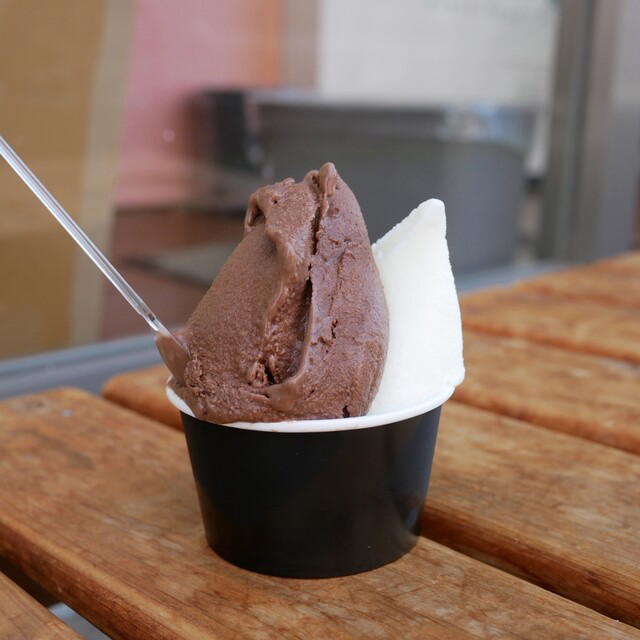
For a wider read on the city, Our full Aomori restaurants guide is the natural starting point. Nearby comparisons should include ingredient-driven restaurants such as Akai Ringo, Italian-leaning rooms like Casa del cibo, casual local addresses including Dan Dan, and dessert stops such as gelato natura due. The point is not to rank them against one another; it is to understand Aomori as a city where dining moves between everyday local appetite and small, reservation-led rooms with national recognition.
Planning the rest of the trip around dinner should stay practical. Aomori is compact by Japanese regional-city standards, but winter weather can slow even short movements, and serious dining here often has fewer seats than travellers expect. The broader city pages are useful for that reason: Our full Aomori hotels guide, Our full Aomori bars guide, Our full Aomori wineries guide, and Our full Aomori experiences guide help frame the evening inside a wider northern Japan itinerary rather than treating dinner as an isolated booking.
How to read the format before committing
This is a narrow-format restaurant, and that is the appeal. The counter seating, non-smoking policy, wine and sake focus, and BYO drinks option point toward a controlled adult dining environment rather than a flexible group night. Private use is possible, which matters in a six-seat room, but the experience is fundamentally intimate. Travellers who want choice, bustle, and a long menu should look elsewhere; travellers who want a concentrated Aomori produce argument in French-creative form are in the correct lane.
The wider Japan context is also helpful. Regional dining now competes for attention not by mimicking the capital but by sharpening what the capital cannot reproduce: proximity to producers, local seasonality, and a dining room small enough to keep the idea intact. That is the thread connecting Aomori to serious rooms elsewhere in the country, from -Grilled beef Sukiyaki- KAMAKURA TANUKIAN 鎌倉 たぬき庵 in Kamakura and. 鮪と炭火焼き うお炭 秋葉原店 in Tokyo to.cafe in Osaka.know in Kumamoto, (Shoku) Vietnam in Kawasaki, and [Curry Senmon Ten] Maruyama Kyoju. in Sapporo. For readers tracking Japanese food culture abroad, Jōdo Saké Bar in Los Angeles and Onigiri Time in Pasadena show how specific formats travel, but Kashu’s strength is the opposite: it depends on being in Aomori.
Frequently asked questions
Would Kashu be comfortable with kids?
Kashu is a six-seat counter in Aomori, with a reservation-only dinner service from 18:30 to 21:30. The format suits adults or older children who can handle a compact counter setting, rather than a loose family dinner.
What kind of setting is Kashu?
Kashu is set up as a small counter room in Shinmachi, Aomori, with just six seats and a non-smoking policy. Tabelog selected it for French EAST "Tabelog 100" 2025 and the Tabelog Award 2026 Bronze, which places it in a tight, focused dining tier.
What are Kashu's hours?
Hours at Kashu: Mon, Tue, Wed, Thu, Fri, Sat, Sun 18:30 - 21:30.
What's the address for Kashu?
Kashu is located in Aomori.
In Context: Similar Options
Comparable venues by cuisine and price in the same metro.
| Venue | Cuisine | Price | Awards | Notes |
|---|---|---|---|---|
| KashuThis venue (the venue you are viewing) | Modern French Omakase with Aomori Ingredients | $200–300 | Tabelog Bronze #169 | Not listed |
| Nano Hana | Japanese Regional Fine Dining | $100–150 | Tabelog 100 #11 | Honcho |
| Petit Restaurant Bouquet de France | French with Local Aomori Ingredients | $100–150 | Tabelog Bronze #38 | Nijigaoka |
| Yo | Japanese Cuisine | Not listed | Tabelog Bronze #521 | Aomori |
| Tsugaru Kappou Mirai | Tsugaru kappo / kaiseki using local Aomori ingredients | $100–150 | Tabelog 100 #58 | Aomori City |
| アルチェントロ | Locally-Sourced Italian with Tohoku Ingredients | $50–100 | Tabelog 100 #62 | Aomori |
Recognition history
Dated appearances from independent guides and award organizations, with the underlying list record or original source where available.
Tabelog Bronze #169
Tabelog
Full recognition history (3 entries)
Tabelog 100 #67 · No. 67
Tabelog · Tabelog 100 - French - EAST - 2025
Tabelog Bronze
Tabelog
Continue exploring
More in Aomori
Restaurants in Aomori
All restaurants in Aomori →
Bars in Aomori
Browse all →
Details
- Elegant
- Intimate
- Sophisticated
- Modern
- Special Occasion
- Date Night
- Chefs Counter
- Open Kitchen
- Sake Program
- Extensive Wine List
- Local Sourcing
- Omakase
- Counter Dining
Current opening hours
- Monday
- 6:30–9 PM
- Tuesday
- 6:30–9 PM
- Wednesday
- 6:30–9 PM
- Thursday
- 6:30–9 PM
- Friday
- 6:30–9 PM
- Saturday
- 6:30–9 PM
- Sunday
- 6:30–9 PM
Hours can change for holidays and private events. Last verified .
Stylish, intimate counter seating in a welcoming open kitchen atmosphere with attentive service.