Tabelog 100 #26
Our verdict
Kashiya places a six-seat counter in Nishinari inside Osaka’s serious ramen conversation, with repeated selection for Tabelog Ramen Hyakumeiten and a format built around ramen and weekend tsukemen. The draw is not ceremony; it is the compact, ingredient-dependent logic of a small shop where stock, noodles, and timing matter more than room design.

Pearl is the En Primeur Club membership app, where members save venues, book tables and use the concierge.
The menu
What to order
- Kashiya tonkotsu ramen
- Creamy tonkotsu ramen
- Light tonkotsu ramen
Approaching a focused ramen shop in Osaka is a different proposition from arriving at a formal dining room elsewhere in the city. The cues are quieter: a direct format, quick pacing, and a meal scaled to single bowls rather than long courses. In Osaka, that modest register often masks serious specialization. Ramen here is not a consolation category beneath sushi or kaiseki; it is a fast-moving craft scene where broth style, noodle handling, and ingredient balance separate destination shops from ordinary lunch stops.
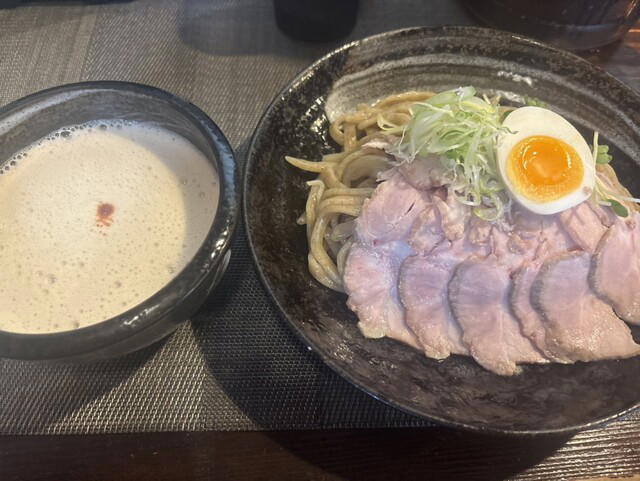
Kashiya belongs to that tighter Osaka ramen tier. Its recognition on Tabelog Ramen OSAKA Hyakumeiten 2025 gives it a public credential in a category where local repeat traffic usually matters more than international ceremony. The shop works in ramen and tsukemen. That distinction matters: tsukemen is less forgiving than soup ramen because noodles are judged more directly, dipping broth must hold concentration without becoming blunt, and pacing changes once the bowl and dip are separated.
Osaka ramen through the logic of stock, noodles, and restraint
Osaka’s food identity is often reduced to takoyaki, okonomiyaki, and street-side abundance, but the city’s noodle culture is more disciplined than that caricature allows. Udon, ramen, curry noodles, and dipping styles all compete for the same everyday appetite, and the strongest shops tend to build loyalty through repeatable technical decisions rather than theatrical service. In that context, a focused ramen shop operates almost like a workshop: stock, noodle timing, and service rhythm are inseparable from quality control.
The ingredient question at a ramen shop is less about named farms and more about extraction. Bones, dried seafood, aromatics, flour, fat, tare, and water are not luxury signals on their own; their value appears in balance. A focused operation can make the relationship between pot, noodle basket, and guest feel unusually direct. The practical reality of limited daily production is not merely a logistical warning. It says the product is batch-bound, and batch-bound ramen rewards diners who treat timing as part of the meal rather than an inconvenience.
That model places Kashiya closer to Osaka’s specialist noodle addresses than to broad casual dining. Kamaage Udon Raku, Zouya, Shinfuji Honten, Tsukiro, and M Kasse sit in a comparable everyday-price conversation, but the comparison is not about identical cuisine. It is about the way Osaka supports focused shops where a narrow format can carry a full dining decision. A visitor choosing between ramen, udon, or curry in this bracket is choosing texture, broth architecture, and rhythm as much as neighborhood.
Why the focused format changes the meal
Focused ramen is often misunderstood by travelers as merely informal. It is informal, but it is also exacting. The format has little tolerance for drifting meals, large-party indecision, or menu browsing as performance. It often favors diners who are ready to order and eat in rhythm because ramen is eaten in the present tense: noodles soften, temperature drops, soup changes as fat disperses. The right reading of a focused ramen meal is not austerity; it is compression.
That compression also explains why awards in ramen carry a different weight from awards in fine dining. A Hyakumeiten selection does not turn a bowl into a tasting menu, and it should not be read as a promise of luxury. It signals that a shop has earned attention inside a crowded, highly opinionated category. For Osaka ramen, Tabelog Ramen OSAKA Hyakumeiten 2025 recognition indicates standing in a scene where novelty alone has a short shelf life.
The tsukemen option adds another layer to the decision. Dipping noodles create a more noodle-forward meal than standard ramen, and Osaka diners tend to read that category with a technician’s eye: chew, thickness, dipping strength, and the way the final mouthfuls hold up. Travelers who only want a quick bowl can come for ramen; those specifically chasing the shop’s tsukemen format should accept that focused noodle operations are built around concentration rather than breadth.
Where it fits in a sharper Osaka itinerary
Kashiya is not the all-purpose answer for every Osaka meal. It is the focused noodle stop for travelers who value small-format craft over broad menus, reservations, or dining-room comfort. That makes it a useful counterweight to the city’s more expansive eating patterns. A day might move from bakery culture or coffee to a focused ramen lunch, then toward a different register at other Osaka dining rooms or the city’s famous takeaway appetite. The point is not to rank them against one another, but to see how Osaka’s dining grammar moves between speed, specialization, and comfort.
For broader planning, use Our full Osaka restaurants guide alongside Our full Osaka hotels guide, Our full Osaka bars guide, Our full Osaka wineries guide, and Our full Osaka experiences guide. Readers building a Japan-wide food map can also compare how single-format dining changes by region, from other dining rooms in Japan to unnamed casual counters abroad, without losing sight of the way Osaka’s own noodle culture rewards focus.
The editorial case for Kashiya is precise: an Osaka ramen and tsukemen shop with Tabelog Ramen OSAKA Hyakumeiten 2025 recognition, a narrow noodle focus, and a production rhythm that rewards diners who understand that stock and noodles are finite goods. Come for concentration rather than comfort, and read the experience through the craft of extraction: what goes into the pot, what survives the boil, and what reaches the bowl before the batch is gone.
Frequently asked questions
Does Kashiya work for a family meal?
It can, if the family is comfortable with a focused ramen and tsukemen shop. The Osaka setting is narrow in format, so it is better suited to diners who are happy with noodles than to groups seeking a long, varied meal.
Is Kashiya formal or casual?
Casual. Kashiya is a focused ramen and tsukemen shop in Osaka, and the appeal is concentration around bowls rather than formal dining-room ceremony.
How much does it cost to eat at Kashiya?
Pricing at Kashiya is listed as - JPY 999 - JPY 999.
Is Kashiya open every day?
Current opening days and hours should be checked before visiting, especially because focused noodle shops can operate with limited production.
Where is Kashiya in Osaka?
Osaka.
Cost Snapshot
Comparable venues by category and price.
| Venue | Cuisine | Price | Awards | Notes |
|---|---|---|---|---|
| KashiyaThis venue (the venue you are viewing) | Japanese Tonkotsu Ramen | $10–20 | Tabelog 100 #26 | Not listed |
| ラーメン チョンマゲ 大阪天六店 | Japanese Ramen | $10–20 | Not listed | Tenjinbashi, Traditional Japanese Soy Sauce Ramen |
| Curry Ya Madras | Japanese Curry | $1–10 | Tabelog 100 #66 | Naniwa, Japanese Curry |
| yobareya | Japanese Curry | $1–10 | Tabelog 100 #41 | Nishi, Japanese Curry |
| Jyonetsu Don Hokuto | Udon and curry udon shop | $1–10 | Tabelog 100 #96 | Nishi, Udon and curry udon shop |
| Honke Kojima | Traditional Japanese Wagashi (Keshimochi) Shop | $1–10 | Tabelog 100 #31 | Sakai-ku, Traditional Japanese Wagashi (Keshimochi) Shop |
Recognition history
Dated appearances from independent guides and award organizations, with the underlying list record or original source where available.
Tabelog 100 #26 · No. 26
Tabelog · Tabelog 100 - Ramen - OSAKA - 2025