Tabelog 100 #31
Our verdict
Honke Kojima belongs to Sakai’s quieter sweets tradition, away from Osaka’s louder restaurant circuits. Its Tabelog 100 selection for Japanese traditional sweets and sweets cafes in WEST 2023 places it in a serious regional category, while the takeaway-only format keeps the experience closer to a neighborhood confectioner than a destination dining room.

Pearl is the En Primeur Club membership app, where members save venues, book tables and use the concierge.
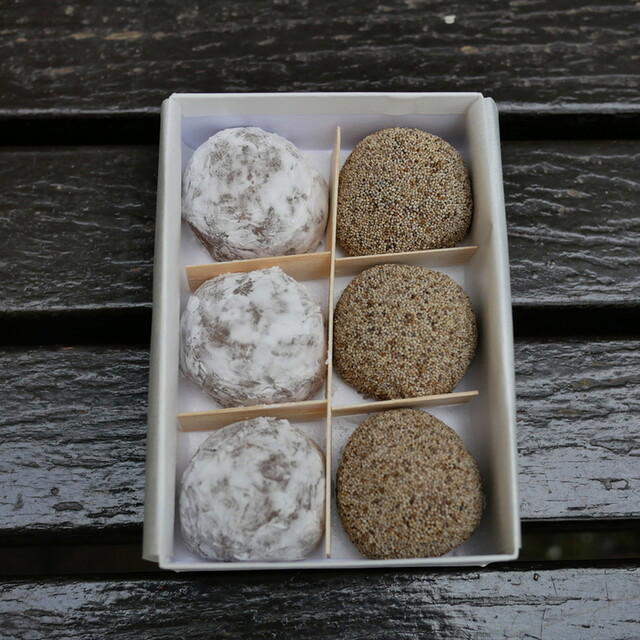
Approaching Osaka through its quieter food traditions, the city’s neon and rail-station appetite give way to shopfronts, everyday exchanges, and the compact scale of places built around repeat custom. Japanese traditional sweets fit here: tied to season, ceremony, gifting, and tea, but in Kansai also practical and urban, bought, carried, shared, and judged with a sharper eye than their modest price suggests.
Honke Kojima sits in that register. The appeal is not counter performance, chef-led tasting sequence, or dining room staging the afternoon as theater. The exchange is compressed: a sweets shop measured by regularity, craft, and whether its work holds attention without restaurant cues. Its 2023 Tabelog Hyakumeiten recognition gives it credible regional signal in a category where reputation is often local before travelers see it.
Osaka's sweets culture belongs to the carry-out counter, not the tasting-menu stage
Osaka is often read through takoyaki, okonomiyaki, kushikatsu, and a generous appetite for casual eating. Traditional sweets complicate that picture. They are not simply dessert after a meal, but an independent craft tied to visits, seasonal observance, and the etiquette of bringing something considered. That is why a small traditional sweets address can be more instructive than another high-volume dining stop.
The broader Kansai sweets scene has split visibly. One path is café-led, built for seated parfaits, plated desserts, and social media-friendly presentation. The other is older and less performative: confectioners centered on take-home purchases, restrained packaging, and products judged after transport. Honke Kojima belongs to that quieter reading of the category, making it a counterpoint to Osaka’s restaurant momentum, where even casual formats become queues, spectacle, and destination eating.
The technique angle is not imported machinery or Western pastry vocabulary. It is discipline: Japanese confectionery has long absorbed, refined, and localized methods through rice, beans, sugar, and seasonal plant ingredients rather than butter-heavy patisserie logic. For travelers who compare sweets shops by pastry-case abundance, Japanese traditional sweets ask for another reading. Texture, portion, wrapping, and occasion matter as much as visual drama.
Comparison with Osaka’s casual-food tier is revealing. A traveler might spend similar money at Ginshari en or Kan Bukuro, but the decision is not equivalent: those addresses sit closer to everyday eating and snack culture; this category is closer to edible formality. At another end of the city’s appetite, Sushi Oga represents reservation-led sushi, where scarcity and counter format shape the experience. Osaka sweets work through different credibility: modest spend, regional recognition, and a durable craft category that needs no luxury-dining signals to be serious.
Regional recognition matters more when the format is modest
A Tabelog Hyakumeiten selection is not a Michelin star or global restaurant ranking, and should not be read as one. Its value is narrower and useful: it identifies addresses performing strongly inside a specific Japanese category, against peers travelers may miss because they do not look like destination restaurants. In Japanese traditional sweets, that matters; the category rarely announces itself through long menus, expensive interiors, or sommelier-led service.
The format also changes planning. This is a purchase to fold into an Osaka morning or afternoon, not necessarily the anchor of a whole day. Treat the stop as part of a broader city itinerary rather than a restaurant reservation with a long arc. The useful facts are straightforward: Honke Kojima is recognized in the Japanese traditional sweets category, carries a Tabelog score of 3.63, and is listed in the JPY 1,000 - JPY 1,999 price band.
Children and groups should read the venue through that practical lens. This is not an extended tasting menu, hushed counter protocol, or multi-course meal to manage. It is a specialist sweets stop, so the better expectation is focused, efficient, and purchase-driven rather than lingering café-style hospitality.
For a wider Osaka itinerary, the same trip can move from old confectionery culture to casual staples, bakery stops, coffee-room pacing, and more formal dining. These are not interchangeable recommendations; they show Osaka moving between street appetite, imported technique, neighborhood craft, and composed cooking without one dominant narrative.
How to place this stop inside an Osaka trip
Osaka rewards travelers who resist treating the city as a single downtown grid. Its food culture includes loud, immediate pleasures and quieter specialty counters that depend on habit, gifting, and local trust. In that context, Japanese traditional sweets are not a side note but part of the precision that makes the city more than a list of savory icons.
The sharper editorial read: Honke Kojima is not for restaurant theater. It is for understanding how a low-priced, regionally recognized sweets counter can carry cultural weight in a city better known internationally for savory abundance. That usefully corrects the Osaka cliché. The city is not only loud grills, batter, and late-night appetite; it also has quiet categories where restraint, gifting, and craft remain standard.
Travelers building a fuller Osaka file can use Our full Osaka restaurants guide for dining context, Our full Osaka hotels guide for where to stay, Our full Osaka bars guide for drinking rooms, Our full Osaka wineries guide for wine-related addresses, and Our full Osaka experiences guide for cultural planning. For a broader Japan and Japanese-food lens beyond Osaka, compare Honke Kojima with other dining in Osaka generically rather than treating every notable address as the same kind of destination.
Frequently asked questions
Is Honke Kojima suitable for children?
Honke Kojima is best treated as a focused Japanese traditional sweets stop in Osaka rather than a long sit-down meal.
What's the vibe at Honke Kojima?
The vibe is practical and understated, rooted in Japanese traditional sweets rather than restaurant theater. Its 2023 Tabelog Hyakumeiten recognition adds context for why a modest sweets address can matter.
What should I budget for a meal at Honke Kojima?
Pricing at Honke Kojima is listed as JPY 1,000 - JPY 1,999 View spending breakdown.
What are the opening hours for Honke Kojima?
What It’s Closest To
Comparable venues in the metro at similar price points.
| Venue | Cuisine | Price | Awards | Notes |
|---|---|---|---|---|
| Honke KojimaThis venue (the venue you are viewing) | Traditional Japanese Wagashi (Keshimochi) Shop | $1–10 | Tabelog 100 #31 | Not listed |
| Umaiya Takoyaki | Traditional Osaka Takoyaki | $1–10 | Not listed | Tenma |
| Shima Ya Honten | Traditional Japanese sweet potato café | $1–10 | Tabelog 100 #99 | Abeno |
| Columbia8 Sakaisuji honmachi ten | Japanese Curry | $10–20 | Tabelog 100 #65 | Chūō |
| Aimai | Spicy Japanese curry house | $1–10 | Tabelog 100 #63 | Kita |
| Teramae | Okonomiyaki / Teppanyaki | Not listed | Tabelog 100 #38 | Kowakae |
Recognition history
Dated appearances from independent guides and award organizations, with the underlying list record or original source where available.
Tabelog 100 #31 · No. 31
Tabelog · Tabelog 100 - Japanese traditional sweets / Japanese sweets cafe - WEST - 2023