
Tabelog 100 #82
Our verdict
Kameya Yoshinaga Honten is a Kyoto wagashi stop in Shimogyo, selected for Tabelog’s Japanese traditional sweets and sweets cafe WEST 100 in 2023. The format is compact and low-friction: take-out leads, a four-seat tea room exists for a brief pause, and spending sits in the everyday wagashi range rather than the city’s formal kaiseki tier.

Pearl is the En Primeur Club membership app, where members save venues, book tables and use the concierge.
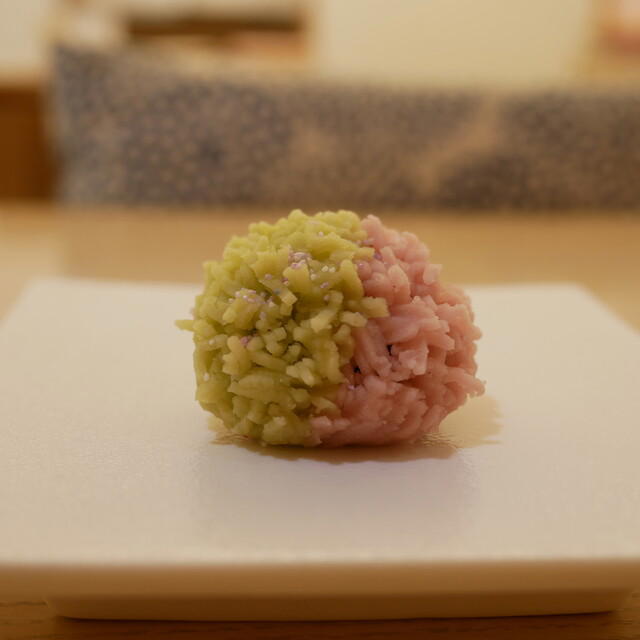
The menu
What to order
- Ubatama (烏羽玉)
- Slice Yokan (スライスようかん)
- Seasonal wagashi and yokan
- Warabi kanten / summer jelly sweets
Kyoto’s central avenues change character from polished shopping corridors to smaller shopfronts, old confectioners, everyday errands, and the practical rhythm of a working city. In that setting, Kyoto wagashi reads less as dessert than as civic grammar. Sweets mark tea practice, seasonal observance, temple visits, gifting, and the small courtesies that structure a city where presentation carries social weight.
Kameya Yoshinaga Honten belongs to that grammar. Its 2023 recognition from Tabelog Hyakumeiten places it within a specialist category for Japanese traditional sweets, judged differently from restaurants built around dinner length, wine programs, or chef-led tasting menus. Wagashi shops compete on refinement of form, seasonality, packaging, texture, and the ability to make a modest purchase feel culturally specific without turning it into ceremony for ceremony’s sake.
Kyoto wagashi as daily culture, not restaurant theatre
Kyoto’s sweet shops occupy a category that travellers often misread. They are not cafes in the international sense, and they are not restaurants with dessert counters attached. The stronger comparison is with Kyoto’s tea rooms, gift counters, and confectionery traditions, where a single sweet can carry a seasonal reference more precisely than a long menu description. That is why a small purchase can matter here: wagashi compresses calendar, craft, and etiquette into a format designed for exchange.
The Honten sits in Kyoto, a city that makes sense for this kind of stop. This is not the image of Kyoto built only around temple gates and riverside dining. It is commercial Kyoto: family businesses, commuter movement, and old specialist shops that survive because locals have repeat uses for them. For a broader eating day in the city, the contrast is useful. A casual route might place confectionery alongside other Kyoto dining rooms, each pointing to a different side of the city’s dining habits.
The category also explains the scale. This is not a lounge built for lingering; it is part of a shop culture led by careful purchase, gifting, and take-away rhythm. That matters for planning and expectation. The reward is not a long seated meal, but the chance to read Kyoto through a confectionery counter: what is boxed, what is seasonal, what is meant for immediate eating, and what is meant to be carried across the city as a gift.
Why the recognition matters in a city crowded with sweets
Kyoto has dense wagashi competition, and that density makes third-party recognition more useful than generic praise. Tabelog’s 2023 Hyakumeiten recognition is a category signal, not a luxury signal. It says the shop belongs in a regional conversation about Japanese traditional sweets, rather than in the city’s more expensive dining brackets. That distinction is important: the point here is precision within a low-ticket format.
Price also frames the experience. With spending listed below JPY 999 and in the JPY 1,000 to JPY 1,999 range, this is one of Kyoto’s more accessible ways to engage with a formal food tradition. Compare that with Kyoto peers and other dining references such as Morita Ya Shijo inokuma honten, Fujimura, or Croix-Rousse, and the difference is less about ranking than format. Wagashi’s value is not measured by length of service, but by craftsmanship per bite and by the cultural usefulness of what leaves the shop in a box.
There is another Kyoto comparison worth making: different forms of Japanese sweets solve different social occasions. Some Kyoto sweet stops lean toward immediate eating; Kameya Yoshinaga Honten belongs to the broader wagashi counter tradition, where portability, gifting, and seasonal notation carry more weight. The difference is not hierarchy; it is use case.
How to fit it into a Kyoto day
The practical move is to treat the shop as a cultural stop rather than as the anchor meal. Its appeal is strongest when folded into a day of walking, shopping, transfers, or moving between meals elsewhere in Kyoto. Rather than planning around a long service, treat it as a precise confectionery pause: a place to notice packaging, seasonality, and the way a small purchase can carry more cultural information than its price suggests.
The format remains compact in spirit, even when the visit is simple. Take-out is the safer expectation for travellers building a day around multiple stops, while any seated or in-shop element should be treated as a limited add-on rather than the default plan. Kameya Yoshinaga Honten is best approached with the flexibility you would bring to a specialist counter: arrive with curiosity, choose according to the season, and leave room in the itinerary for the city around it.
For EP Club readers, the value is contextual. This is not the Kyoto of long tasting menus or hotel dining rooms; it is the Kyoto of edible seasonality at street level. Use our full Kyoto restaurants guide for meals around it, then widen the trip through our full Kyoto hotels guide, our full Kyoto bars guide, our full Kyoto wineries guide, and our full Kyoto experiences guide. For a wider Japan and diaspora food map, compare casual formats generically across other cities, while keeping Kameya Yoshinaga Honten in mind as a Kyoto-specific example of how a modest sweet can carry craft, etiquette, and place.
Frequently asked questions
What's the pricing like at Kameya Yoshinaga Honten?
Pricing at Kameya Yoshinaga Honten is listed as - JPY 999 JPY 1,000 - JPY 1,999 View spending breakdown.
What's Kameya Yoshinaga Honten's location?
Kyoto.
Is Kameya Yoshinaga Honten open every day?
Specific opening-day details are not provided in the available ground truth. Check the venue's official channels for the latest details.
What's the signature at Kameya Yoshinaga Honten?
The clearest reference point is Japanese traditional sweets, the category associated with its 2023 Tabelog Hyakumeiten recognition.
Can Kameya Yoshinaga Honten handle vegetarian requests?
Kameya Yoshinaga Honten focuses on Japanese traditional sweets in Kyoto. Any specific request should be checked against the item at hand, since those details are not published. Check the venue's official channels for the latest details.
Is Kameya Yoshinaga Honten child-friendly?
Specific child-friendly facilities are not provided in the available ground truth. It may be workable as a brief sweets stop, but check the venue's official channels for the latest details.
Cost and Credentials
Comparable venues for context, by category and price tier.
| Venue | Cuisine | Price | Awards | Notes |
|---|---|---|---|---|
| Kameya Yoshinaga HontenThis venue (the venue you are viewing) | Traditional Kyoto Wagashi & Japanese Sweets | $10–20 | Tabelog 100 #82 | Not listed |
| 京都 鶏白湯そば 純 | Kyoto Creamy Chicken Broth Soba | $10–20 | Not listed | Nakagyo-ku, Kyoto Creamy Chicken Broth Soba |
| Fruit Parlour Yaoiso | Japanese fruit parlor & dessert café | $10–20 | Tabelog 100 #64 | Shimogyō, Japanese fruit parlor & dessert café |
| Amaguri no Shinise Hayashi Mansho Do Honten | Traditional Japanese chestnut sweets & cafe | $1–10 | Tabelog 100 #71 | Nakagyō, Traditional Japanese chestnut sweets & cafe |
| Jinba Do | Traditional Japanese Yaki-Mochi & Wagashi | $1–10 | Tabelog 100 #57 | Kita, Traditional Japanese Yaki-Mochi & Wagashi |
| Tama Ki Tei | Japanese bakery & pastry shop | $10–20 | Tabelog 100 #99 | Uji, Japanese bakery & pastry shop |
Recognition history
Dated appearances from independent guides and award organizations, with the underlying list record or original source where available.
Tabelog 100 #82 · No. 82
Tabelog · Tabelog 100 - Japanese traditional sweets / Japanese sweets cafe - WEST - 2023
Continue exploring
More in Kyoto
Restaurants in Kyoto
All restaurants in Kyoto →



Bars in Kyoto
All bars in Kyoto →


Hotels in Kyoto
All hotels in Kyoto →


Wineries in Kyoto
Browse all →
Details
- Classic
- Well Known
- Quiet
- Cozy
- Solo
- Family
- Casual Hangout
- After Work
- Special Occasion
- Historic Building
- Design Destination
- Standalone
- Local Sourcing
- A La Carte
- Counter Dining
- Tea
Current opening hours
- Monday
- 9:30 AM–6 PM
- Tuesday
- 9:30 AM–6 PM
- Wednesday
- 9:30 AM–6 PM
- Thursday
- 9:30 AM–6 PM
- Friday
- 9:30 AM–6 PM
- Saturday
- 9:30 AM–6 PM
- Sunday
- 9:30 AM–6 PM
Hours can change for holidays and private events. Last verified .
A small, serene wagashi shop and tearoom with a refined, traditional Kyoto aesthetic; displays of seasonal sweets and elegant packaging create a classic yet slightly modern design feel, and the limited seating keeps the atmosphere calm and unhurried.