
Kameido Gyoza Ryougoku shiten belongs to Tokyo’s democratic dumpling tier rather than its reservation-led special-occasion circuit. The appeal is format discipline: gyoza, ramen and Chinese staples in a compact Ryogoku room with counter and tatami seating, recognized in Tabelog’s Dumplings 100 for 2019, 2021 and 2024.
Pearl is the En Primeur Club membership app — saves, bookings, and concierge access live there. Same editors, same standards.
- Address
- 4 Chome-34-10 Ryogoku, Sumida City, Tokyo 130-0026, Japan
- Phone
- +81 3-3631-3740
- Website
- kameido-gyouza.co.jp
 Saves & bookings on Pearl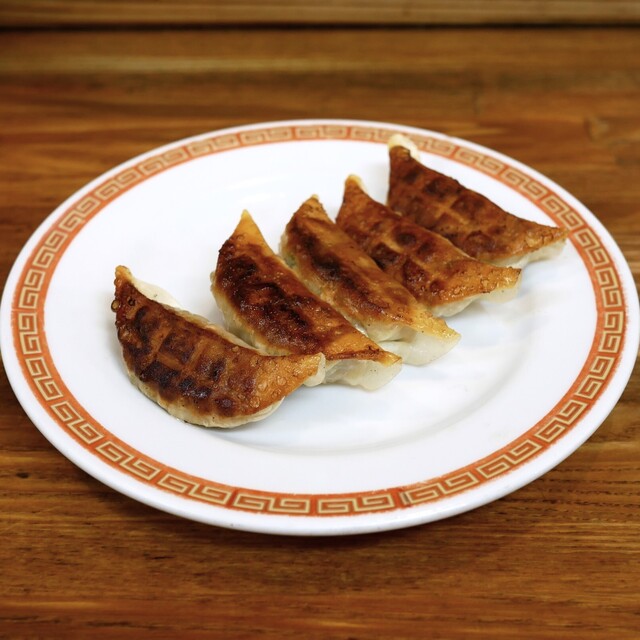
Ryogoku changes the mood of a meal before the first order is placed. The district carries sumo’s public ritual, station-side traffic, small family restaurants and the practical hunger of people who want dinner without ceremony. In that setting, gyoza works differently from Tokyo’s tasting-menu restaurants. It is social food: fast to share, easy to multiply, and credible as a casual celebration when the occasion calls for appetite rather than a white tablecloth.
Kameido Gyoza Ryougoku shiten sits inside that older Tokyo equation. Its recognition in Tabelog’s Dumplings 100 in 2019, 2021 and 2024 gives it a clear signal in a category where reputation is often built through repeat local use rather than international awards. The room is small by city standards, with 29 seats including 11 at the counter, which keeps the experience closer to a neighborhood gyoza shop than a destination dining room.
Gyoza as occasion food, not ceremony
Tokyo milestone dining often defaults to sushi counters, wagyu rooms or kaiseki, but not every birthday, reunion or post-match gathering needs that level of choreography. Dumpling shops fill a different role: they let groups order in rounds, keep the pace informal and make the bill less performative. In Ryogoku, that matters. The neighborhood’s eating culture is built around stamina, routine and shared tables as much as polish.
The useful comparison is not against luxury restaurants, but against other Tokyo rooms where craft sits inside a narrow format. 3 Chome no Curry Ya San channels attention into curry; 124. KAGURAZAKA (Yakitori) narrows the experience around skewers; 12/10 Shinjuku ten belongs to another compact Tokyo dining register. The point is specialization without grandstanding. Kameido Gyoza Ryougoku shiten fits that pattern through dumplings, ramen and Chinese cooking, with gyoza as the anchor rather than a supporting plate.
For occasion dining, that makes it better suited to small groups who want energy over privacy. Private rooms and private use are not part of the format, so the meal should be treated as shared public dining. Families are explicitly within the venue’s stated occasion range, and children are welcome, which broadens its usefulness for low-pressure celebrations. The non-smoking policy also matters in this category, especially for mixed-age groups.
Ryogoku's compact-room dining logic
Tokyo’s east-side dining culture rewards places that do one thing repeatedly and without excessive explanation. A small counter changes the rhythm: solo diners can eat quickly, pairs can order lightly, and groups need to understand that the room is not designed for lingering in the manner of a hotel lounge. Tatami seating adds a more domestic register, but the overall structure remains efficient.
The Tabelog score of 3.52 is a useful reading here, not as a universal verdict, but as a category signal within Japanese review culture. Dumpling shops rarely compete through luxury markers. Selection for Tabelog’s Dumplings 100 carries more relevance than a generic rating because it places the restaurant inside a national gyoza conversation rather than a broad restaurant hierarchy. That distinction is important for travelers who might otherwise judge Tokyo meals only through Michelin, hotel concierge lists or international media coverage.
Compared with nearby or comparable Tokyo options in the supplied set, the spending level also frames the decision. Shiki no Aji Fujiyoshi occupies a far higher dining band at JPY 10,000 to JPY 14,999, while Restaurant Quinbell sits above the casual tier. Hasegawa and Teuchi Ren are closer in everyday price logic, and Edosoba Hosokawa represents another specialist lane through soba. Kameido Gyoza Ryougoku shiten belongs to the group where the occasion is defined by choosing a focused local format, not by escalating the cost of the evening.
Travelers building a broader Tokyo food map can pair this kind of meal with other category-led stops rather than stacking only high-demand restaurants. . 鮪と炭火焼き うお炭 秋葉原店 points toward fish and charcoal in Akihabara, while 2D Cafe shows another side of Tokyo’s themed casual dining. For a wider editorial frame, use Our full Tokyo restaurants guide, then branch into Our full Tokyo bars guide, Our full Tokyo hotels guide, Our full Tokyo wineries guide and Our full Tokyo experiences guide for the rest of the trip architecture.
How to use it in a Tokyo itinerary
The smart use of this restaurant is tactical. It works for a casual celebration after daytime sightseeing in the east, for a family meal where flexibility matters, or for friends who want a recognized gyoza address without converting the evening into a formal booking project. Reservations are unavailable, so timing and patience shape the experience more than advance planning. Take-out is part of the service model, which also gives it a role when a seated meal is not the only acceptable outcome.
Payment flexibility helps international visitors: credit cards, electronic money and QR code payments including PayPay, d Barai and au PAY are accepted. Parking is not provided, though nearby coin parking exists; in practice, Ryogoku’s station access makes rail the cleaner choice. The official transport notes place the restaurant within walking distance of JR Ryogoku Station’s East exit and the Toei Oedo Line’s A4 exit, which keeps it practical for travelers crossing between central Tokyo and the Sumida side.
As a special-occasion choice, it needs the right expectations. This is not the room for hushed speeches, wine pacing or a long-form tasting structure. It is a democratic Tokyo meal with enough recognition to justify a detour and enough informality to keep the occasion relaxed. That is the value: a celebration measured in shared plates, quick refills and the pleasure of choosing a focused local format over another polished dining room.
For readers comparing Japan and overseas casual-specialist dining, the same logic appears in different forms beyond Tokyo: -Grilled beef Sukiyaki- KAMAKURA TANUKIAN 鎌倉 たぬき庵 in Kamakura.cafe in Osaka.know in Kumamoto, (Shoku) Vietnam in Kawasaki, [Curry Senmon Ten] Maruyama Kyoju. in Sapporo, [ki:] in Kyoto, Jōdo Saké Bar in Los Angeles and Onigiri Time in Pasadena all show how a narrow format can carry an occasion without requiring luxury signals.
The Short List
Comparable venues at the same tier.
| Venue | Cuisine | Price | Notes |
|---|---|---|---|
| Kameido Gyoza Ryougoku shitenThis venue — the venue you are viewing | Sumida, Chinese Dumpling House | $ | Not listed |
| Tokyo Gyoza Ro Sangenjaya ten | Setagaya, Casual Gyoza & Izakaya Dishes | $ | Not listed |
| MUDAN JIANG | Chūō, Chinese Izakaya | $$ | Not listed |
| Tokyo Doujiang Seikatsu | Not listed | $ | Shinagawa, Traditional Taiwanese Breakfast & Fresh Soy Milk |
| Hao Hao | Not listed | $ | Shinagawa, Vegan Hong Kong & Taiwanese Chinese |
| Ren Shan | Not listed | $$ | Minato, Creative Chinese countryside cuisine |
Recognition history
Dated appearances from independent guides and award organizations, with the underlying list record or original source where available.
Tabelog 100 #100 · No. 100
Tabelog · Tabelog 100 - Dumplings - 2024





At a Glance
- Classic
- Cozy
- Well Known
- Casual Hangout
- Family
- Solo
- Group Dining
- Late Night
- Standalone
- Beer Program
- Sake Program
- Local Sourcing
Current opening hours
- Monday
- 11:30 AM–8 PM
- Tuesday
- Closed
- Wednesday
- 11:30 AM–9 PM
- Thursday
- 11:30 AM–9 PM
- Friday
- 11:30 AM–9 PM
- Saturday
- 11 AM–9 PM
- Sunday
- 11 AM–9 PM
Hours can change for holidays and private events. Last verified .
Casual, no-frills dumpling-house atmosphere with counter seating and a tatami room; suited to quick, lively meals rather than lingering fine dining.