Juice Vitality
Our verdict
Juice Vitality operates in New York City's crowded wellness-drink market, where a handful of serious operators have carved out reputations for ingredient sourcing and cold-press technique. The venue sits within a city that has long treated its juice and smoothie counters as extensions of a broader nutritional philosophy, placing it alongside a generation of New York establishments that treat the glass as seriously as the plate.

Pearl is the En Primeur Club membership app, where members save venues, book tables and use the concierge.
The menu
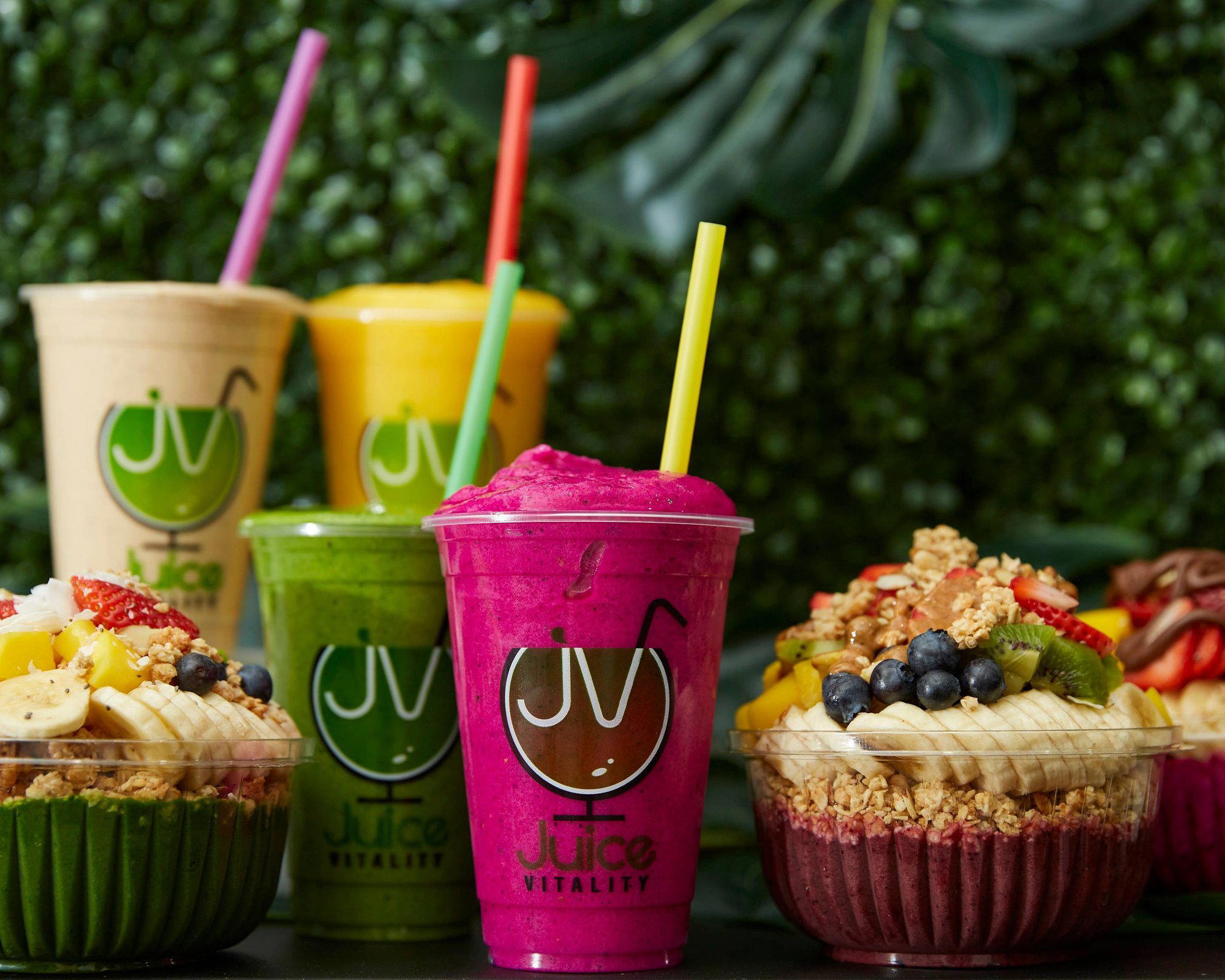
What to order
- Cacao Champ Smoothie
- Pb Acai Bowl
- The Original Acai Bowl
- Berry Smoothie
- The Pitaya Bowl
- Pb Punch Smoothie
New York's Juice Culture and Where Vitality Counters Fit
New York City's relationship with cold-pressed juice and functional beverage programs has matured considerably over the past two decades. What began as a niche offered by a handful of health-food shops in the West Village and Tribeca has expanded into a segmented market with operators ranging from high-volume chains to single-site specialists whose sourcing decisions mirror those of serious restaurant kitchens. Juice Vitality positions itself within that latter segment, in a city where the bar for ingredient quality is set by venues that treat agricultural provenance with the same attention a sommelier brings to a cellar.
The analogy to wine curation is not incidental. In New York's more considered beverage programs, whether at a pressed-juice counter or at the wine lists maintained by destinations like Le Bernardin or Per Se, the editorial logic is similar: selection reflects a philosophy, provenance is documented, and the person assembling the offering is making arguments about quality through what they choose to include and exclude. That framing matters when assessing any serious beverage operation in this city.
The Beverage Philosophy Behind Serious Juice Programs
Cold-press technique, which preserves heat-sensitive enzymes and micronutrients by using hydraulic pressure rather than blade-based centrifugal extraction, became the dominant method among quality-focused operators through the early 2010s. By the time New York's wellness-beverage segment had consolidated, the technique was table stakes. What separated the better operators was sourcing: organic certification, regional farm relationships, and seasonal rotation driven by what was actually available rather than what a fixed menu required year-round.
This is the structural logic that the city's serious juice venues share with its most considered restaurant kitchens. Blue Hill at Stone Barns in nearby Tarrytown built its entire identity around farm-to-table sourcing specificity. The same underlying argument, that ingredient origin determines outcome, runs through the better end of New York's juice and functional beverage market. Venues that can name their farms and rotate their offerings by what is seasonally available occupy a different tier from those working from a static, year-round menu built around commodity produce.
New York City as a Context for Wellness Beverages
Few cities apply as much critical pressure to the wellness-drink category as New York. The concentration of nutritionists, athletes, culinary professionals, and a readership that treats ingredient labels with real scrutiny means that operators cannot rely on aesthetic branding alone. The market has self-selected toward transparency. Venues that have built durable reputations in this city tend to do so through consistent sourcing communication and a willingness to let the product speak without excessive marketing scaffolding.
That context places Juice Vitality inside a competitive field where credibility is earned through specificity. Across the city's better dining and beverage addresses, from the progressive Korean kitchens at Atomix and Jungsik New York to the Japanese precision of Masa, the operators who sustain reputations share a common trait: they make defensible choices about quality and communicate those choices clearly. The beverage-only segment operates by the same rules.
Comparing Approaches Across American Culinary Cities
New York is not the only American city developing a serious wellness-beverage culture, but it is the one where the critical infrastructure, press coverage, consumer literacy, and density of comparably ambitious operators, concentrates most visibly. Venues like Alinea in Chicago and Lazy Bear in San Francisco have demonstrated that non-traditional dining formats can build sustained prestige when their editorial logic is coherent. The same principle applies to beverage-forward concepts in New York: format and category matter less than the internal consistency of the offering.
Elsewhere, serious American dining addresses like The French Laundry in Napa, Single Thread Farm in Healdsburg, and Providence in Los Angeles have built beverage programs, including non-alcoholic pairings, that treat every glass as an extension of the kitchen's sourcing philosophy. That cross-category influence has filtered into New York's juice segment, raising the baseline expectation for what a serious beverage operation should communicate about its ingredients.
Internationally, the same logic applies at venues like Alain Ducasse at Louis XV in Monte Carlo and 8½ Otto e Mezzo Bombana in Hong Kong, where beverage curation is treated as an independent area of expertise rather than an afterthought. New York operators in the wellness-drink space inherit that expectation whether they choose to meet it or not.
Planning Your Visit
New York's wellness-beverage venues tend to peak during morning and midday hours, with the strongest trade from early weekday commuters and the post-workout crowd that concentrates between 7am and noon. Weekend patterns shift later, with a more leisurely pace through mid-morning. For venues operating in high-foot-traffic Manhattan corridors, walk-in access is generally the norm, though specific booking or ordering policies vary. Checking the venue's current web presence before visiting is the most reliable way to confirm hours, format, and any pre-order options that may reduce wait times during peak periods.
For a broader picture of where Juice Vitality sits within the city's wider food and beverage scene, our full New York City restaurants guide maps the full range of the city's serious dining and drinking addresses, from multi-course tasting menus to neighbourhood-level specialists worth knowing.
Additional reference points for understanding the standards New York's serious operators are measured against include Addison in San Diego, Bacchanalia in Atlanta, Emeril's in New Orleans, and The Inn at Little Washington in Washington, each of which has built durable regional credibility through consistent sourcing and product integrity.
Quick reference: Juice Vitality, New York City.
Frequently asked questions
What's the signature dish at Juice Vitality?
Juice Vitality operates as a beverage-forward counter rather than a food-led kitchen, so the signature focus is on cold-pressed juice formulations rather than plated dishes. New York's cold-press category rewards specific functional blends, typically built around produce combinations targeting defined nutritional outcomes.
Can I walk in to Juice Vitality?
New York City wellness-beverage counters of this type generally operate on a walk-in basis, with peak demand concentrated during morning commuter hours and post-workout windows on weekdays. Juice Vitality is based in New York City, where that traffic pattern is consistent across the category. Arriving outside peak morning hours typically offers the quickest service.
Can Juice Vitality accommodate dietary restrictions?
Cold-press juice programs in New York City are structurally well-suited to a range of dietary needs, as plant-based, raw, and allergen-conscious formulations are standard within the category.
Is Juice Vitality worth the price?
Cold-pressed juice in New York City typically sits at a price premium compared to other American cities, reflecting the cost of hydraulic pressing equipment, high-quality produce sourcing, and the city's operating costs. Whether that represents value depends on the depth of the functional formulation and produce quality on offer.
When should I go to Juice Vitality?
New York's wellness-beverage venues see their heaviest traffic during early weekday mornings and the late-morning post-workout window, roughly 7am to 11am. Midday and early afternoon hours tend to offer a steadier pace. Juice Vitality is located in New York City, where that demand curve applies consistently across the borough's juice and wellness counter category.
Where It Fits
| Venue | Cuisine | Price | Awards | Notes |
|---|---|---|---|---|
| Juice VitalityThis venue (the venue you are viewing) | Juice Bar, Smoothies & Açaí Bowls | $10–20 | Not listed | Not listed |
| Le Bernardin | French Seafood Fine Dining | $300–500 | 3 Michelin Stars · World's 50 Best #13 | French, Seafood |
| Atomix | Modern Korean Tasting Menu | $300–500 | 2 Michelin Stars · World's 50 Best #7 | Modern Korean, Korean |
| Masa | Traditional Japanese Omakase | $500+ | 2 Michelin Stars · World's 50 Best #27 | Sushi, Japanese |
| Per Se | French Fine Dining Tasting Menu | $300–500 | 3 Michelin Stars · World's 50 Best #40 | French, Contemporary |
| Jungsik New York | Modern Korean Fine Dining | $200–300 | 3 Michelin Stars · World's 50 Best #18 | Progressive Korean, Korean |