Our verdict
Jamtalhütte sits at altitude in the Silvretta range above Galtür, one of the Tyrolean Alps' more remote valley systems. The hut occupies a position that connects the tradition of Alpine refuge hospitality with the high-mountain terrain that defines this corner of western Austria. For those arriving on foot or ski, it represents both a waypoint and a destination in its own right.

Pearl is the En Primeur Club membership app, where members save venues, book tables and use the concierge.
The menu
What to order
- KarottenKnödl
- Spinach Radishes with Mushroom Goulash
- Paznaun Mountain Cheese Dumplings
- Beer Braised Beef
Above the Valley Floor: The Alpine Hut Tradition in the Silvretta
The culture of the Berghütte, the mountain hut, is one of the most durable institutions in Alpine Europe. It predates the modern ski industry by centuries, rooted originally in the practical needs of herders, hunters, and early mountaineers crossing high passes. In the Silvretta range above Galtür, that tradition carries particular weight. The valley sits at roughly 1,600 metres before the terrain rises sharply toward the Jamtal, a glacial side valley that pushes deeper into the range and toward the Swiss border. Jamtalhütte occupies a position within that geography that makes it something more than an incidental stop: it is a destination anchored to a specific landscape and a specific style of mountain hospitality that the lowland restaurant world cannot replicate.
Galtür itself is a small Tyrolean village that sits at the head of the Paznaun Valley, above the better-known resort of Ischgl. While Ischgl draws a louder international crowd, Galtür has historically attracted walkers, ski tourers, and those interested in quieter, more terrain-focused mountain travel. The presence of a hut like Jamtalhütte in this context is consistent with that character: it serves people who have earned their altitude rather than simply ridden a gondola to it.
What Alpine Hut Hospitality Actually Means
The Berghütte format operates under a logic quite different from valley restaurants. The kitchen works with provisions that must be transported to altitude, menus that account for the energy demands of people who have been moving in cold air for hours, and a service style that is functional rather than ceremonial. Across the Austrian Alps, huts range from basic shelters offering little more than soup and a bunk to well-provisioned stations with full kitchens, wine lists, and accommodation that approaches the standard of a simple inn. The spectrum also includes the increasingly prominent category of huts that have begun to apply a more considered culinary approach to their mountain-appropriate format, a trend visible in the broader Austrian fine-dining scene.
Austria has developed a serious culinary identity over the past two decades, with recognised kitchens at Steirereck im Stadtpark in Vienna, Döllerer in Golling an der Salzach, and Landhaus Bacher in Mautern an der Donau anchoring the country's Michelin presence. The western Tyrolean and Vorarlberg regions contribute their own tier, including Gourmetrestaurant Tannenhof in Sankt Anton am Arlberg and Griggeler Stuba in Lech. The hut category sits apart from that tier by format, but the cultural roots are shared: Austrian hospitality at altitude has always carried a genuine expectation of warmth and substance, not merely shelter.
The Jamtal: Terrain That Shapes the Experience
The Jamtal is accessed from Galtür via a trail that gains considerable elevation through glacially carved terrain. In winter, it becomes a ski touring corridor used by those crossing toward the Swiss Engadine. In summer, it is a walking and climbing approach for routes into the Silvretta group. The hut sits within this corridor as a logical and practical staging point. The Austrian Alpine Club (Österreichischer Alpenverein, ÖAV) operates an extensive network of such huts across the Alps, and huts within that network follow a set of norms around access, pricing, and accommodation that distinguish them from commercial mountain restaurants. Understanding that framework is useful context for anyone planning a visit: priority for beds is typically given to ÖAV members, a membership that is inexpensive and widely held among regular Alpine travellers.
The season at high-altitude huts in the Silvretta typically runs from late June or early July through to September for the summer walking and mountaineering season, with a separate winter window aligned to ski touring conditions, often February through April depending on snowpack. Visiting outside those windows is generally not possible. Planning around these windows, and booking well in advance for overnight accommodation, is the practical baseline for anyone intending to stay rather than pass through.
Galtür and the Paznaun as a Base
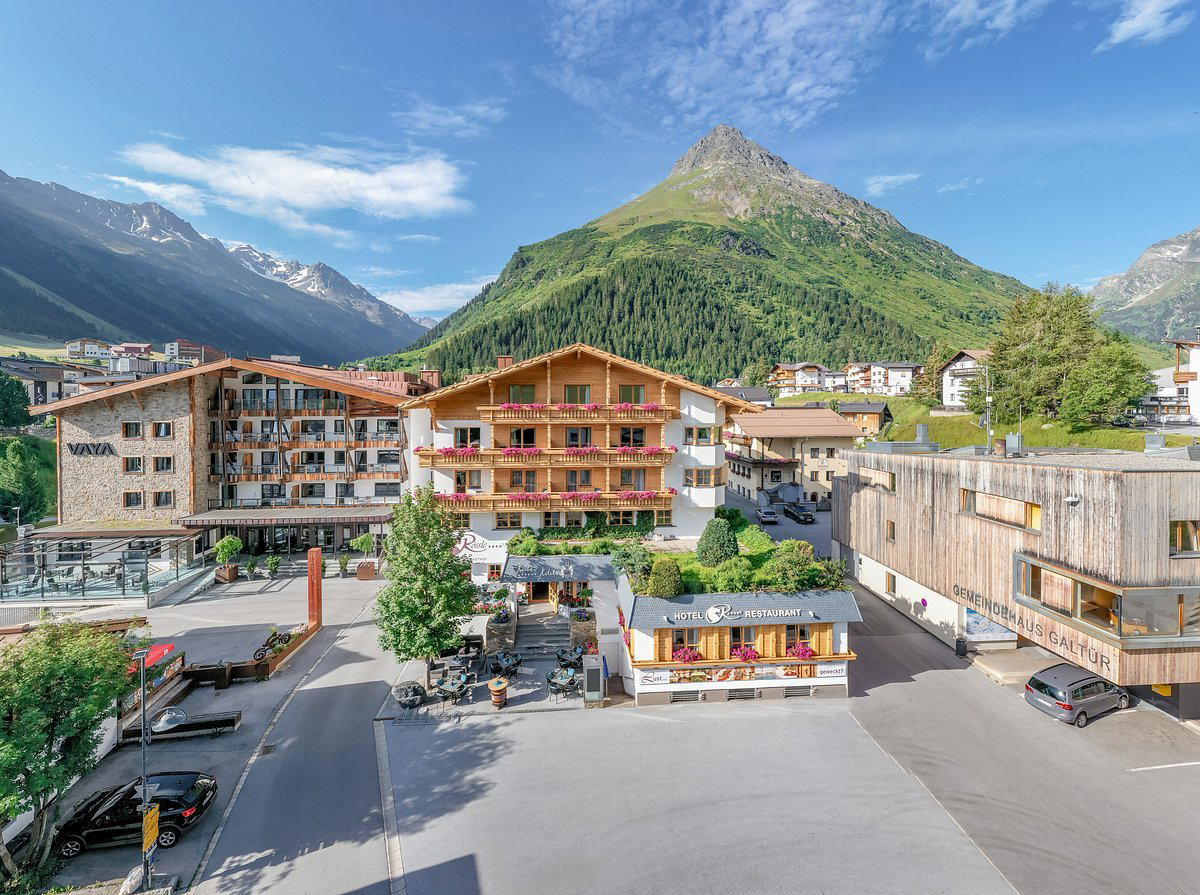
For those using Galtür as a base, the village offers a range of accommodation and a compact dining scene. Hotel Rössle Galtür is among the valley's dining options, and the broader Paznaun area extends further west toward Ischgl, where Stüva in Ischgl represents the more formal end of the local restaurant spectrum. The contrast between a hut meal earned after a day of movement in the mountains and a structured dinner in a valley restaurant is part of what makes this corner of western Austria worth understanding as a complete experience rather than a set of separate stops. See our full Galtur restaurants guide for a broader map of the valley's options.
The wider Austrian alpine dining and lodging scene, from Ikarus in Salzburg to Kräuterreich by Vitus Winkler in Sankt Veit im Pongau, Obauer in Werfen, Ois in Neufelden, Restaurant 141 by Joachim Jaud in Mieming, Schwarzer Adler in Hall in Tirol, Taubenkobel in Schützen am Gebirge, and Artis in Graz, reflects a country that takes its table seriously at every altitude. The hut format is not a lesser version of that seriousness; it is a different expression of the same underlying Austrian instinct toward genuine hospitality in demanding conditions. For international reference, the discipline applied to format and context in venues like Le Bernardin in New York City or Atomix in New York City serves as a reminder that the most coherent dining experiences are those where every element, including setting, is internally consistent. The alpine hut operates by the same principle, with very different variables.
Planning Your Visit
Jamtalhütte is located at address Galtür 256, 6563 Galtür, Austria. Access is on foot from the valley, with summer and winter seasons the operative windows. ÖAV membership reduces overnight costs and increases the likelihood of securing a bed during peak summer and ski touring periods. Booking directly with the hut management well ahead of travel is advisable for overnight stays. Day visitors arriving for a meal or rest stop have more flexibility, though capacity is finite and the hut's position in a busy touring corridor means mid-season weekends attract consistent traffic.
Frequently asked questions
What's Jamtalhütte's location?
Jamtalhütte is located at Galtür.256, 6563 Galtür, Austria, Galtur.
Can Jamtalhütte be used as an overnight base for multi-day ski touring in the Silvretta?
Yes, the Jamtalhütte sits on one of the established ski-touring corridors in the Austrian Alps, with routes running from the valley above Galtür toward the Swiss border and the broader Silvretta massif. It functions as a standard overnight waypoint on multi-day traverses, and hut-to-hut itineraries in this region are well-documented by the Austrian Alpine Club. Booking a bed in advance is advisable, especially during the February-to-April touring season when demand across Silvretta huts runs high.
What do regulars order at Jamtalhütte?
Austrian alpine huts at this altitude anchor their menus around energy-dense dishes suited to ski tourers and walkers: Gulasch, Kaiserschmarrn, Tiroler Gröstl, and soup-based starters are the category staples. The kitchen at Galtür 256 operates with provisions that must be carried or delivered to elevation, so menus tend toward hearty, shelf-stable ingredients rather than daily-changing produce. Hot meals and warm drinks after a long approach carry more weight here than menu breadth.
What's the best way to book Jamtalhütte?
Overnight stays require advance booking, particularly during the summer high season from July through September and the winter ski-touring window. Austrian Alpine Club (ÖAV) huts in the Silvretta network typically accept reservations by phone or through the club's booking system, and members receive priority on bed allocation. Day visitors arriving for a meal or rest stop generally do not need a reservation, but hut capacity is finite during peak periods.
What's the signature at Jamtalhütte?
The hut's position in the Jamtal, a glacially carved valley above Galtür in the Silvretta range, defines its identity more than any single dish or service detail. It functions as a staging point and overnight refuge on ski-touring routes that extend toward the Swiss border, placing it on established multi-day itineraries across the range. That corridor role, combining access, shelter, and meal service at high altitude, is what draws repeat visitors.
Is Jamtalhütte good for vegetarians?
Austrian alpine hut menus include vegetarian options, though the range is narrower than valley restaurants given the constraints of high-altitude provisioning. Dishes like Kaiserschmarrn, Eierspeis (scrambled eggs), and cheese-based plates are common across huts in the Silvretta network. Visitors with strict dietary requirements should confirm current menu scope when booking their overnight stay at Galtür 256.
Budget and Context
| Venue | Cuisine | Price | Awards | Notes |
|---|---|---|---|---|
| JamtalhütteThis venue (the venue you are viewing) | Traditional Alpine & Tyrolean | Not listed | Not listed | Not listed |
| Steirereck im Stadtpark | Modern Austrian Fine Dining | $200–300 | 3 Michelin Stars · World's 50 Best #30 | Creative |
| Döllerer | Modern Alpine Cuisine | $100–150 | 2 Michelin Stars · La Liste Top Restaurants | Contemporary Austrian, Innovative |
| Ikarus | Guest Chef Fine Dining | $200–300 | 2 Michelin Stars · La Liste Top Restaurants | Modern European, Creative |
| Konstantin Filippou | Modern Fish-Led Fine Dining | $200–300 | 2 Michelin Stars · La Liste Top Restaurants | Modern European, Modern Cuisine |
| Landhaus Bacher | Classic Austrian Fine Dining | $100–150 | 2 Michelin Stars · La Liste Top Restaurants | Austrian, Classic Cuisine |
Continue exploring
More in Galtur
Restaurants in Galtur
All restaurants in Galtur →
Bars in Galtur
Browse all →
Hotels in Galtur
Browse all →
Wineries in Galtur
Browse all →

Details
- Rustic
- Scenic
- Cozy
- Classic
- Group Dining
- Special Occasion
- Celebration
- Panoramic View
- Private Dining
- Beer Program
- Local Sourcing
- Farm To Table
- Mountain
- Set Menu
- Family Style
- Beer
- Regional Wine
- Vegetarian Friendly
- Allergy Accommodating
Well-insulated mountain hut with quiet, peaceful atmosphere; traditional Alpine lodge setting with hearty, rustic dining experience.