
Jack37Burger places Tokyo’s craft-burger movement in a compact Nihonbashi-Kodenmacho room, with Tabelog Hamburger 100 selections from 2017 through 2026 giving it stronger evidence than the usual hype around casual dining. The appeal is less about luxury than discipline: small scale, non-smoking service, takeout, vegetarian options, and a format that fits Chuo’s weekday eating rhythm.
Pearl is the En Primeur Club membership app — saves, bookings, and concierge access live there. Same editors, same standards.
- Address
- 16-16 Nihonbashikodenmacho, Chuo City, Tokyo 103-0001, Japan
- Phone
- +81 3-6884-1541
- Website
- instagram.com
 Saves & bookings on Pearl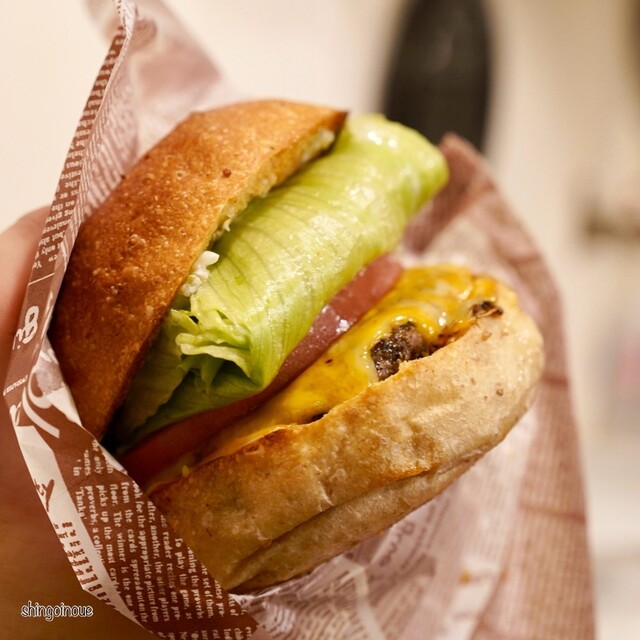
Approaching the quieter blocks around Kodenmacho, Tokyo’s burger culture feels far removed from the neon shorthand often attached to the city’s casual dining. The room is small, the format is direct, and the category is serious: Japan has turned the hamburger into a craft object without stripping it of its quick-service roots. Jack37Burger sits inside that specific Tokyo lane, where a burger counter can be evaluated with the same scrutiny usually reserved for ramen shops, curry specialists, and tonkatsu counters.
The useful lens here is sustainability in the practical Japanese sense: compact rooms, limited waste, tight menus, and ingredients treated as inventory rather than theatre. Tokyo’s casual specialists often work at a scale that forces discipline. A 15-seat setup leaves little room for excess, and the presence of vegetarian options signals a broader shift in burger culture away from beef-only identity toward more flexible ordering. That matters in a city where solo diners, office lunches, families, and after-work groups can occupy the same narrow dining category without needing a formal restaurant frame.
A craft-burger counter inside Tokyo's small-format dining culture
Tokyo’s hamburger scene is not simply an import story. The city absorbs foreign formats, reduces the margin for sloppiness, then judges them against local standards of timing, texture, and value. In that context, Jack37Burger’s repeated selection for Tabelog Hamburger 100 in 2017, 2018, 2019, 2021, 2022, 2024, and 2026 is the key credential. It places the restaurant among a recognized national group for the category rather than among casual addresses that rely on neighbourhood affection alone.
The Chuo setting sharpens that reading. Nihonbashi and Kodenmacho sit between old commercial Tokyo and newer office patterns, so lunch has to be efficient without becoming anonymous. Dinner, when available, shifts the same format toward a cafe-bar register, with cocktails listed and takeout also part of the service model. That combination is increasingly common in Tokyo’s small restaurants: fewer seats, multiple dayparts, and a menu structure that can serve nearby workers without losing appeal for diners crossing town for a specific genre.
Compared with nearby or adjacent Tokyo dining at a higher spend, the point is not ceremony. TROMPETTE and Nihonbashi Iseju operate in different price brackets and traditions, while Sanfuku Tei and BEAVER BREAD sit closer to the everyday-specialist end of the spectrum. Jack37Burger belongs to the latter conversation: a low-ticket, category-specific address whose recognition comes from consistency rather than from a tasting-menu economy. That is a meaningful distinction for visitors who want Tokyo’s depth without defaulting to sushi counters or kaiseki rooms.
Vegetarian options and small-room discipline matter more than burger nostalgia
The sustainability angle here is not a grand manifesto. It is embedded in format. Small Japanese restaurants tend to make waste visible because storage, staffing, and turnover are constrained. A burger shop with limited seating, takeout, and vegetable-focused options has to balance perishability with volume across lunch and evening service. That is where Tokyo often outperforms bigger casual-dining cities: the system rewards menus that are concise, service that is quick, and purchasing that stays close to actual demand.
For diners, the result is a useful alternative to the heavier American-style burger bar. The category remains familiar, but the Tokyo version is usually judged by proportion and execution rather than size alone. The presence of vegetarian options should not be read as a side note; it reflects a more inclusive casual-dining model in a city where plant-forward ordering has historically required more planning than in London, Los Angeles, or Melbourne. Families are also explicitly accommodated, including young children and strollers, which broadens the audience beyond the craft-burger obsessive.
There is no chef biography needed to make the case. In this tier, credibility comes from repeat selection, operational restraint, and whether the room can hold its identity across years. Since opening in 2015, the restaurant has remained tied to the hamburger, cafe, and bar categories rather than expanding into a diffuse menu. That restraint is the editorial point: Tokyo’s strongest casual specialists often win by narrowing the promise, not by adding novelty.
How to place it in a Tokyo eating itinerary
This is a Chuo stop for diners building a day around the east side rather than a destination that demands formal choreography. Kodenmacho connects easily with Nihonbashi, Akihabara, Bakurocho, and Asakusabashi, which makes the restaurant useful between shopping, galleries, and train transfers. The better expectation is a compact specialist meal, not a long evening with layered service. The non-smoking policy and card, transport IC, and QR payment acceptance also align it with Tokyo’s increasingly frictionless casual dining culture.
Readers mapping a broader Tokyo run can pair this style of address with more traditional or category-specific rooms across the city. For nearby restaurant planning, see . 鮪と炭火焼き うお炭 秋葉原店, 12/10 Shinjuku ten, 124. KAGURAZAKA (Yakitori), 2D Cafe, and 3 Chome no Curry Ya San. For the wider city edit, use Our full Tokyo restaurants guide, then cross-check stays and after-dinner plans through Our full Tokyo hotels guide, Our full Tokyo bars guide, Our full Tokyo wineries guide, and Our full Tokyo experiences guide.
For a Japan-wide casual-specialist thread, compare the decision-making here with -Grilled beef Sukiyaki- KAMAKURA TANUKIAN 鎌倉 たぬき庵 in Kamakura.cafe in Osaka.know in Kumamoto, (Shoku) Vietnam in Kawasaki, [Curry Senmon Ten] Maruyama Kyoju. in Sapporo, and [ki:] in Kyoto. Across the Pacific, Jōdo Saké Bar in Los Angeles and Onigiri Time in Pasadena show how Japanese casual forms translate abroad, but Tokyo’s advantage remains density: a small burger room can sit beside ramen, curry, yakitori, and bakery specialists and still be judged on its own terms.
Price and Recognition
Comparable venues by price and recognition.
| Venue | Cuisine | Price | Notes |
|---|---|---|---|
| Jack37BurgerThis venue — the venue you are viewing | Not listed | $$ | Not listed |
| BROZERS' Take Out Ningyouchou ten | Chūō, Gourmet Burgers | $$ | Not listed |
| CRISP SALAD WORKS | Minato, New York-Style Chopped Salads | $$ | Not listed |
| Viva la Burger | Not listed | $$ | Toshima, Gourmet American-style burgers and bar |
| ババ・ガンプ・シュリンプ 豊洲店 | Kōtō, American Southern Seafood | $$ | Not listed |
| Lawry's The Prime Rib, Akasaka Akasaka ten | Minato, American Steakhouse | $$$ | Not listed |
Recognition history
Dated appearances from independent guides and award organizations, with the underlying list record or original source where available.
Tabelog 100 #47 · No. 47
Tabelog · Tabelog 100 - Hamburger - 2026







At a Glance
- Cozy
- Casual
- Solo
- Casual Hangout
- After Work
- Late Night
- Standalone
- Beer Program
Current opening hours
- Monday
- 11:30 AM–4 PM
- Tuesday
- Closed
- Wednesday
- 11:30 AM–4 PM, 6–9:30 PM
- Thursday
- 11:30 AM–4 PM, 6–9:30 PM
- Friday
- 11:30 AM–4 PM, 6–9:30 PM
- Saturday
- 11:30 AM–4:30 PM, 6–9:30 PM
- Sunday
- 11:30 AM–4:30 PM, 6–9:30 PM
Hours can change for holidays and private events. Last verified .
Casual, compact burger stand with a relaxed, neighborhood feel; simple interiors and close-set counter and table seating create a cozy, conversational atmosphere suited to quick meals or solo dining rather than long, lingering dinners.