
BROZERS' Take Out Ningyouchou ten puts Tokyo’s burger culture into a compact takeaway format in Nihonbashiningyocho. Its 2026 selection for Tabelog 100 - Hamburger and Tabelog score of 3.55 place it among the city’s more closely watched casual burger addresses, with take-out and delivery rather than a dining-room ritual.
Pearl is the En Primeur Club membership app — saves, bookings, and concierge access live there. Same editors, same standards.
- Address
- 2 Chome-23-8 Nihonbashiningyocho, Chuo City, Tokyo 103-0013, Japan
- Phone
- +81 3-3639-5207
- Website
- brozers.co.jp
 Saves & bookings on Pearl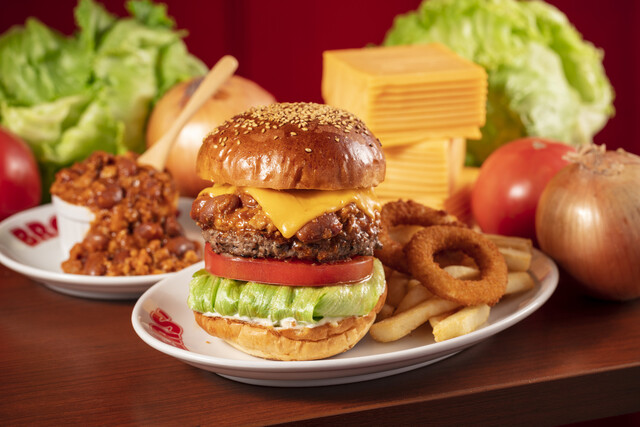
Ningyocho’s streets compress old Tokyo habits into a practical rhythm: office workers moving between stations, residents collecting dinner, small shops doing one thing with little ceremony. In that setting, the takeaway burger counter has a different charge from the sit-down American diner model. It is less about lingering over chrome-and-neon nostalgia and more about how a Western comfort food has been absorbed into Tokyo’s quick-service precision.
BROZERS' Take Out Ningyouchou ten belongs to that specific slice of the city’s dining culture. The category is hamburger, but the format matters as much as the food: take-out and delivery, no private rooms, no table-led theatre, and a service model built around collection rather than an extended meal. In a city where casual dining can be just as tightly judged as kaiseki or sushi, that stripped-back setup is part of the point.
Tokyo burger culture, edited down to takeaway discipline
Tokyo’s burger scene has long moved beyond imitation. The serious end of the category tends to treat the hamburger as a constructed object, with attention paid to bread, patty, vegetables, sauces, temperature, and portability. The takeaway specialist has an extra test: the burger has to survive the short gap between counter and first bite. That pressure makes the format useful for reading the city’s casual food standards. A dining room can distract; a takeaway box cannot.
The 2026 Tabelog 100 - Hamburger selection gives this address a clear trust signal in a crowded field. Tabelog’s Hyakumeiten lists are especially influential in Japan because they sort depth by category rather than treating casual food as an afterthought. A hamburger listing beside a score of 3.55 does not make the place formal or rarefied; it indicates that the category has enough scrutiny for a takeaway shop to be judged against dedicated burger peers, not convenience food.
That distinction matters for visitors who tend to over-index on Tokyo’s ceremonial meals. The city’s food intelligence also lives in lower-priced, high-repetition formats: curry counters, onigiri shops, standing soba, department-store food halls, and specialist takeout windows. For a broader read on that range, Our full Tokyo restaurants guide is more useful than chasing only tasting menus. Nearby dining decisions can swing from casual to formal quickly, from grill-led places such as . 鮪と炭火焼き うお炭 秋葉原店 to yakitori at 124. KAGURAZAKA (Yakitori) or the sharper nightlife-adjacent choices around 12/10 Shinjuku ten.
The environmental case for compact casual dining is practical, not decorative
Sustainability in Tokyo restaurants is often less visible than in cities where farm names and carbon claims dominate menus. Here, the more convincing story is usually operational: small footprints, efficient purchasing, limited seating infrastructure, and formats that match demand closely. A takeaway-only burger shop does not automatically solve the waste problem, since packaging is part of the transaction. But it does remove the energy and material load of a larger dining room, tableware cycle, and long service arc.
That tradeoff is the honest way to read this format. The environmental question is not whether a burger counter can be dressed up as ethical luxury. It is whether a compact, repeatable, tightly scoped operation can reduce excess while delivering a meal people actually want. Tokyo is good at that kind of discipline. The city’s casual specialists often succeed by narrowing the brief until the operation has few places to hide: one category, steady hours, fast turnover, and a product that either travels well or fails immediately.
For travellers, this is also a useful correction to the idea that responsible dining must be slow, expensive, or overtly educational. A modestly priced hamburger from a specialist takeaway can fit a lower-waste day better than a multi-stop itinerary built around taxis, surplus ordering, and underused reservations. The better choice is contextual: eat close to where the day already takes you, avoid over-ordering, and treat packaging as part of the cost rather than an invisible by-product.
Where it fits in a Tokyo itinerary
Nihonbashiningyocho sits in a part of Chuo where old merchant-city texture meets weekday office flow. That makes a takeaway format more compelling than it would be in a district built purely around destination dining. The meal can be folded into a day that includes the eastern side of central Tokyo rather than treated as a stand-alone pilgrimage. This is also where the burger counter’s value becomes clear: it offers a precise, category-specific stop without demanding the time budget of tempura, yakiniku, or multi-course Japanese cooking.
Comparison helps. In Tokyo, a ¥¥¥¥ tempura room such as Sonoji asks for a different appetite, pace, and budget. Yakiniku Toka sits in a higher dinner bracket, while PIZZA DA BABBO shows how imported comfort formats can move between casual lunch pricing and more substantial evening spend. BROZERS' Take Out Ningyouchou ten occupies the lighter end of that spectrum, which makes it useful between heavier bookings or on a day when the city’s transport grid matters more than ceremony.
The wider Japan casual map is worth reading alongside it. Curry specialists such as 3 Chome no Curry Ya San and [Curry Senmon Ten] Maruyama Kyoju. in Sapporo, graphic café formats like 2D Cafe, and regional addresses including [ki:] in Kyoto.cafe in Osaka.know in Kumamoto, (Shoku) Vietnam in Kawasaki, and -Grilled beef Sukiyaki- KAMAKURA TANUKIAN 鎌倉 たぬき庵 in Kamakura all show the same national pattern: narrow formats can carry serious local attention.
Visitors building a fuller trip should treat this as one tile in a larger Tokyo plan rather than a headline dinner. Pair casual daytime food with the city’s deeper hospitality and drinking circuits through Our full Tokyo hotels guide, Our full Tokyo bars guide, Our full Tokyo wineries guide, and Our full Tokyo experiences guide. For cross-Pacific comparisons in compact Japanese-led formats, Jōdo Saké Bar in Los Angeles and Onigiri Time in Pasadena make a useful contrast: diaspora dining often has to explain itself, while Tokyo’s casual specialists can simply operate at speed.
A Quick Peer Check
Comparable venues at the same tier for side-by-side context.
| Venue | Cuisine | Price | Notes |
|---|---|---|---|
| BROZERS' Take Out Ningyouchou tenThis venue — the venue you are viewing | Gourmet Burgers | $$ | Not listed |
| Jack37Burger | Gourmet American-style burger stand | $$ | Chūō |
| THE GRABBER hamburger pub | UK-style gourmet burger pub | $$ | Chiyoda |
| The French Toast Factory Yodobashi Akiba ten | French Toast Cafe | $$ | Chiyoda |
| folk burgers & beers | American Burger Bar | $$ | Chiyoda |
| Burger POLICE | Wagyu Burger Bistro | $$ | Meguro |
Recognition history
Dated appearances from independent guides and award organizations, with the underlying list record or original source where available.
Tabelog 100 #91 · No. 91
Tabelog · Tabelog 100 - Hamburger - 2026




At a Glance
- Classic
- Cozy
- Well Known
- Casual Hangout
- Group Dining
- Solo
- Family
- Standalone
- Design Destination
- Beer Program
- Street Scene
Current opening hours
- Monday
- 11 AM–9 PM
- Tuesday
- 11 AM–9 PM
- Wednesday
- 11 AM–9 PM
- Thursday
- 11 AM–9 PM
- Friday
- 11 AM–9 PM
- Saturday
- 11 AM–9 PM
- Sunday
- 11 AM–9 PM
Hours can change for holidays and private events. Last verified .
A cozy retro-themed burger joint with a casual, bustling atmosphere centered on made-to-order gourmet hamburgers.