
Izakaya Toyo sits in Osaka’s tachinomi tradition: stand-up drinking, seafood-led plates, and a social rhythm closer to street culture than formal dining. Its 2025 Tabelog 100 Tachinomi selection, self-service drinks, cash-only setup, and no-reservations format place it firmly in the city’s low-friction, high-turnover izakaya current.
Pearl is the En Primeur Club membership app — saves, bookings, and concierge access live there. Same editors, same standards.
- Address
- 3 Chome-2-26 Higashinodamachi, Miyakojima Ward, Osaka, 534-0024, Japan
- Phone
- +81 6-6882-5768
- Website
- instagram.com
 Saves & bookings on Pearl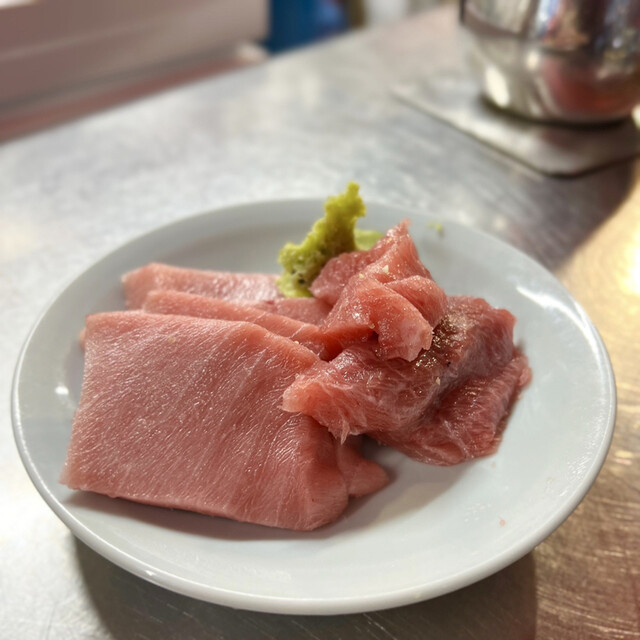
Kyobashi is the Osaka that works before it poses: rail lines, after-work drinkers, narrow-fronted counters, and the quick choreography of people eating while standing. The tachinomi format belongs to that rhythm. It is not a miniature version of a restaurant; it is a different contract between cook, drinker, and city, built around speed, proximity, and an appetite for seafood that does not need linen or ceremony to make its point.
Izakaya Toyo belongs to this lineage, and its inclusion in the 2025 Tabelog 100 Tachinomi list gives the address a useful signal in a category where reputation often travels faster than formal criticism. Tabelog lists it under stand-up bar, seafood, and izakaya, with drinks spanning sake, shochu, and wine. That combination matters in Osaka, where the drinking table has long been a working instrument rather than a decorative stage: the food must hold up against alcohol, the format must move, and the room cannot rely on comfort to disguise weak cooking.
Stand-up seafood as Osaka social architecture
Tachinomi culture rewards clarity. Diners are not settling in for a long tasting menu, and the room’s standing-only structure compresses the experience into decisions made at counter height. Seafood carries the centre of gravity here, a choice that aligns with Osaka’s broader habit of treating casual food with serious attention. The city’s reputation for kuidaore, eating until one drops, is often reduced to takoyaki and okonomiyaki, but its drinking culture is just as revealing: modest formats, strong turnover, and dishes designed to make another pour feel logical.
The useful comparison is not with high-polish sushi counters such as Sushidokoro Hirokawa, or with higher-spend meat rooms such as Yakiniku Horumon Odoru. Those venues ask for a different kind of evening. The closer frame is the city’s standing-bar economy, where recognition comes from repeatability, pace, and the ability to make seafood feel immediate rather than precious. STUN.S, at a higher listed spend, sits in another casual-dining bracket; Izakaya Toyo operates in the more compressed zone where a short session can carry the weight of a meal.
That distinction is why the Tabelog Tachinomi citation is more meaningful than a generic popularity marker. It identifies a specific Japanese format, not simply an admired restaurant. In practical terms, it places the venue among specialists in standing drinking culture, where the room, payment habits, alcohol service, and food cadence are part of the evaluation. The self-service drinks detail reinforces the point: this is not hospitality as choreography around the guest, but a semi-participatory Osaka drinking mode in which the customer understands the system and moves with it.
Why Kyobashi changes the read
Neighbourhood context sharpens the experience. Kyobashi is not the polished face of central Osaka dining; it is a transport-linked district with an older after-work edge, the kind of area where tachinomi feels native rather than themed. A standing seafood izakaya here reads differently from the same format in a hotel district or a newly developed dining complex. The energy comes from circulation: office workers, regular drinkers, rail commuters, and visitors who have learned that Osaka’s less formal rooms often carry the city’s sharper food intelligence.
That is also why the venue should not be read as a substitute for an omakase or a long izakaya dinner. Its value lies in the compactness of the exchange. The format suits a small group of adults more than a lingering multigenerational meal, and the smoking-permitted environment will be a deciding factor for some travellers. Private rooms and private use are not part of the setup, which keeps the experience close to the public, shoulder-to-shoulder logic of tachinomi.
For travellers building an Osaka eating map, this address fills a different slot from bakery stops, café culture, and international kitchens. A day might move from 52CHO-ME BAKERY or .cafe into the city’s snack grammar at 551 Horai (551蓬莱), then toward more specialised dining at 99 Pizza Napoletana Gourmet or a canto (Italian). Izakaya Toyo sits on the drinking-culture side of that itinerary, closer to an urban habit than a conventional dinner reservation.
The decision: go for format, not polish
The editorial case is strongest for travellers who want Osaka at counter level. The standing-only room, seafood focus, no-reservations policy, and self-service drinks create a narrow but coherent proposition. This is not the venue for a quiet, heavily managed evening; it is for reading how Osaka eats when speed, alcohol, and proximity are part of the pleasure. The Tabelog 100 Tachinomi 2025 selection supplies the trust signal, but the format explains the appeal.
Planning should be realistic. The venue operates on a limited weekly schedule, does not take reservations, lists no official website, and does not accept credit cards, electronic money, or QR-code payments. That combination makes it a poor fit for tight itineraries built around guaranteed seating, but a strong fit for travellers comfortable with queuing, cash, and a standing-room environment. The nearest station is Kyobashi, which makes it easy to fold into a broader Osaka day rather than treating it as a destination requiring a full evening.
Use it as a lens on Osaka’s democratic food culture rather than as a trophy meal. The city’s dining range is broad, from casual counters to sushi and grilled meat rooms, and the point here is not luxury by accumulation. It is confidence through constraint: seafood, drinks, standing space, and a crowd that understands the rules without needing them softened.
For wider planning, see Our full Osaka restaurants guide, Our full Osaka hotels guide, Our full Osaka bars guide, Our full Osaka wineries guide, and Our full Osaka experiences guide. Japan-focused readers can also compare formats beyond Osaka through -Grilled beef Sukiyaki- KAMAKURA TANUKIAN 鎌倉 たぬき庵 in Kamakura. 鮪と炭火焼き うお炭 秋葉原店 in Tokyo.know in Kumamoto, (Shoku) Vietnam in Kawasaki, [Curry Senmon Ten] Maruyama Kyoju. in Sapporo, and [ki:] in Kyoto. For Japanese drinking and comfort-food references outside Japan, Jōdo Saké Bar in Los Angeles and Onigiri Time in Pasadena extend the comparison.
Pricing, Compared
Comparable venues for cuisine and category context.
| Venue | Cuisine | Price | Notes |
|---|---|---|---|
| Izakaya ToyoThis venue — the venue you are viewing | Miyakojima, Traditional Japanese Izakaya | $ | Not listed |
| Sunshine | Not listed | $ | Kita, Retro Japanese kissaten & coffee shop |
| yobareya | Nishi, Japanese Curry | $ | Not listed |
| Onomichi Ramen Yamacho | Moriguchi, Onomichi-style ramen | $ | Not listed |
| NAKAGAWA Wazu | Not listed | $ | Higashiyodogawa, Niboshi-focused Ramen Counter |
| Udon Yukino | Not listed | $ | Higashisumiyoshi, Osaka Udon & Curry Udon Shop |
Recognition history
Dated appearances from independent guides and award organizations, with the underlying list record or original source where available.
Tabelog 100 #66 · No. 66
Tabelog · Tabelog 100 - Tachinomi - 2025
Continue exploring
More in Osaka
Restaurants in Osaka
Browse all →




Bars in Osaka
Browse all →




Hotels in Osaka
Browse all →




Wineries in Osaka
Browse all →
At a Glance
- Lively
- Rustic
- Well Known
- Casual Hangout
- After Work
- Solo
- Late Night
- Group Dining
- Standalone
- Open Kitchen
- Beer Program
- Sake Program
- Street Scene
Current opening hours
- Monday
- Closed
- Tuesday
- 1–5 PM
- Wednesday
- 1–5 PM
- Thursday
- Closed
- Friday
- 1–5 PM
- Saturday
- 12–5 PM
- Sunday
- Closed
Hours can change for holidays and private events. Last verified .
A casual, bustling, street-side standing bar with a rustic, energetic atmosphere centered on live-fire cooking and drink service.