

A Michelin Plate-recognised fusion counter in Salamanca, I+T operates under the self-described banner of 'freestyle with a Japanese soul.' Chef Taigoro Suzuki draws on training in Madrid, Bangkok, and Tokyo to build a seasonal tasting menu where Japanese technique meets Mediterranean ingredient.
Pearl is the En Primeur Club membership app — saves, bookings, and concierge access live there. Same editors, same standards.
- Address
- C. Pollo Martín, 18, 37005 Salamanca, Spain
- Phone
- +34 614 38 37 93
- Website
- imast-restaurante.com
- Directions
- Get directions
 Saves & bookings on Pearl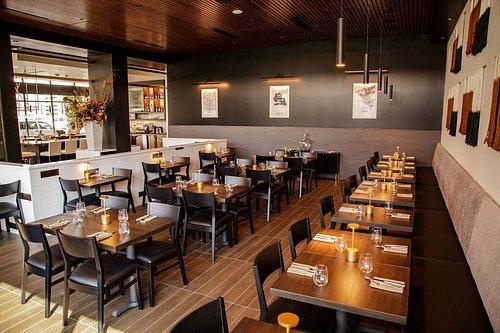
Where Japanese Technique Meets the Mediterranean Table
Salamanca is not Madrid's obvious address for Japanese-inflected cooking. The neighbourhood runs on tradition: century-old tapas bars, leather-spined wine lists, the kind of roast lamb that arrives without ceremony and requires no explanation. Against that backdrop, a restaurant committed to 'freestyle with a Japanese soul' is a deliberate counterargument, and a credible one.
The address sits in Salamanca, in a residential pocket that offers none of the foot-traffic buzz associated with Madrid's more performative dining corridors. That absence of spectacle is, in part, the point. The cooking at I+T has built its reputation without the visual scaffolding of a destination-district location or a high-profile hotel backing. What draws repeat visitors, if the review record is any guide, is the food itself.
The Logic of Freestyle Fusion
Spanish cooking has long been the country that made fusion a serious critical conversation. The generation that produced Arzak in San Sebastián and El Celler de Can Roca in Girona established that European technique and non-European influence could coexist without one consuming the other. Further south, Aponiente in El Puerto de Santa María pushed marine ingredients through a lens that defied easy classification. The tradition, in other words, is well established at the three- and two-star level.
I+T operates at a different price register, with a €€ price tier, but draws from the same intellectual current. Chef Taigoro Suzuki trained in Madrid and worked in kitchens in Bangkok and Tokyo, a combination that places his reference points across Japanese precision, Southeast Asian spicing, and Spanish seasonal produce. The result is a menu described as fusion but structured around Japanese technique, which is a more specific claim than fusion usually implies: clean flavours, controlled contrasts, an emphasis on ingredient integrity over sauce-led complexity. Mediterranean produce provides the raw material; Japanese method provides the grammar.
Within Madrid specifically, this positions I+T inside a growing cohort of Japanese-influenced addresses that have moved beyond the traditional sushi-and-ramen axis. Asiakō and Kuoco occupy adjacent territory, while Bacira has been making the Japanese-Mediterranean case longer than most. I+T distinguishes itself through the tasting menu format, which imposes a sequenced, seasonal structure on what might otherwise be a looser sharing-plates proposition. For comparison at the fully creative end of Madrid's spectrum, DiverXO remains the reference point for Asian-progressive cooking at price points four times higher, with three Michelin stars to match. I+T is not competing in that bracket; it is making the same cultural argument at a considerably more accessible entry point.
Awards, Recognition, and What They Actually Signal
A Michelin Plate is not a star, and the distinction matters. The Plate is awarded by Michelin to restaurants that fall outside their starred tier but represent cooking the inspectors consider worth attention, technically competent, ingredient-conscious, worth a deliberate visit. In a city where the guide's attention concentrates heavily on Coque, Deessa, Paco Roncero, and Smoked Room at the starred level, a Plate recognition at the €€ price point is a meaningful signal: this is not casual dining that happens to have ambitions; it is serious cooking that happens to be accessible.
High-volume, high-score combinations at fusion addresses often indicate consistent execution across a broad diner range, not just positive reception among early enthusiasts or industry insiders. For a tasting menu format, which requires the kitchen to hold a fixed sequence together across every service, that consistency is harder to achieve than it looks.
Further context comes from looking at how the fusion category is being received elsewhere in Spain. Ajonegro in Logroño has been making the case for Japanese-Spanish convergence in the Rioja wine country, while internationally, Arkestra in Istanbul is building a similar argument around Mediterranean-Asian convergence. The critical reception across these addresses suggests the format has passed the novelty phase and entered a period of genuine critical evaluation, where the question is no longer whether the fusion is legitimate, but whether the execution earns its place in a serious dining context. I+T's Michelin recognition suggests it does, at least by the standard that currently matters most in European dining criticism.
The Seasonal Tasting Menu
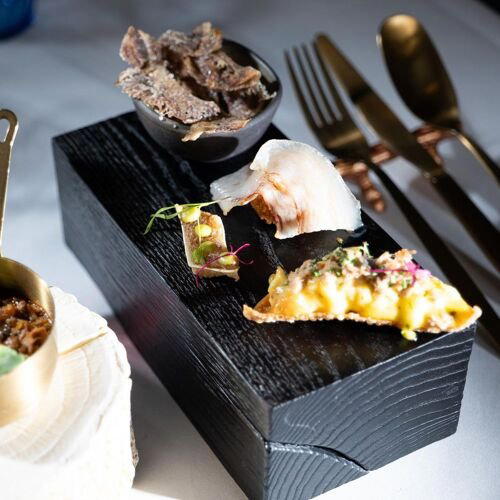
The menu at I+T changes in line with seasonal availability, which in Madrid means access to Iberian produce across a calendar that shifts meaningfully between summer abundance and autumn depth. A Japanese-technique framework applied to Spanish seasonal produce follows a logic that Azurmendi in Larrabetzu and Martin Berasategui in Lasarte-Oria have demonstrated at higher price tiers: the discipline of a single culinary tradition can be a lens rather than a limitation. For I+T, Japanese technique serves that function, giving the menu a coherent internal logic even as the ingredients rotate. The presentation, noted consistently in visitor accounts, reflects the Japanese influence most visibly: considered plating, deliberate portion scale, a format that reads as a composed sequence rather than a series of isolated dishes.
Cocina Hermanos Torres in Barcelona has shown how Spanish creative cooking can maintain Michelin recognition while evolving its seasonal approach year on year. At I+T's price tier, the seasonal model carries a different commercial logic: it keeps the menu fresh without requiring the ingredient budgets of two- and three-star kitchens, while signalling to regulars that repeat visits will deliver different experiences. For a mid-range tasting menu in a residential neighbourhood, that repeat-visit dynamic is likely part of what drives a review count of that scale.
For those specifically tracking the Japanese-Mediterranean current in Madrid, ABYA and Doppelgänger Bar offer adjacent perspectives on how the city's creative dining is absorbing Asian influences across different formats and price points.
Know Before You Go
- Address: C. Pollo Martín, 18, Salamanca, Madrid
- Cuisine: Fusion, Japanese technique, Mediterranean ingredients
- Price range: €€ (mid-range)
- Format: Seasonal tasting menu
- Recognition: Michelin Plate 2025; 4.8 from 11,120 Google reviews
- Getting there: Salamanca district, a short walk from the historic centre; well served by Madrid's metro network
- Booking: Contact details not published; check current availability through standard Madrid reservation platforms
What Do People Recommend at I+T?
Chef Taigoro Suzuki's background in Tokyo and Bangkok informs the technical discipline that reviewers note repeatedly: bold flavour combinations handled with enough restraint that the harmony lands rather than overwhelms. The Michelin Plate recognition for 2025 affirms that the kitchen's approach, Japanese-influenced, Mediterranean-sourced, presented with care, has been evaluated by the guide's inspectors and found to meet the threshold for deliberate recommendation. For first-time visitors, the tasting menu format removes the pressure of individual dish selection and hands the sequencing to a kitchen with clear credentials in making that sequence work.
In Context: Similar Options
Comparable venues nearby, for context on price, style, and recognition.
| Venue | Cuisine | Price | Awards | Notes |
|---|---|---|---|---|
| I+TThis venue — the venue you are viewing | Spanish Tapas | $$ | Michelin Plate | Not listed |
| La Raquetista | Modern Spanish Tapas | $$ | Not listed | Ibiza |
| La MaMá | Traditional Spanish Tapas | $$ | Bib Gourmand | Cuatro Caminos |
| Taberna de Libreros | Modern Spanish Tapas | $$ | Michelin Plate | Salamanca |
| El Pecado | Modern Spanish Market Cuisine | $$ | Michelin Plate | Centro Histórico |
| Casa Dani | Traditional Spanish Tapas | $ | Not listed | Recoletos |
Recognition history
Dated appearances from independent guides and award organizations, with the underlying list record or original source where available.
Macarfi 7.7 Food Rating
Macarfi
Michelin Plate
Michelin
Michelin Plate
Michelin
Continue exploring
More in Madrid
Restaurants in Madrid
Browse all →
Bars in Madrid
Browse all →
Hotels in Madrid
Browse all →


Wineries in Madrid
Browse all →
At a Glance
- Modern
- Lively
- Trendy
- Casual Hangout
- Group Dining
- Open Kitchen
- Street Scene
Current opening hours
- Monday
- Closed
- Tuesday
- Closed
- Wednesday
- 2–2:45 PM, 9–9:45 PM
- Thursday
- 2–2:45 PM, 9–9:45 PM
- Friday
- 2–2:45 PM, 9–9:45 PM
- Saturday
- 2–2:45 PM, 9–9:45 PM
- Sunday
- 2–2:45 PM
Hours can change for holidays and private events. Last verified .
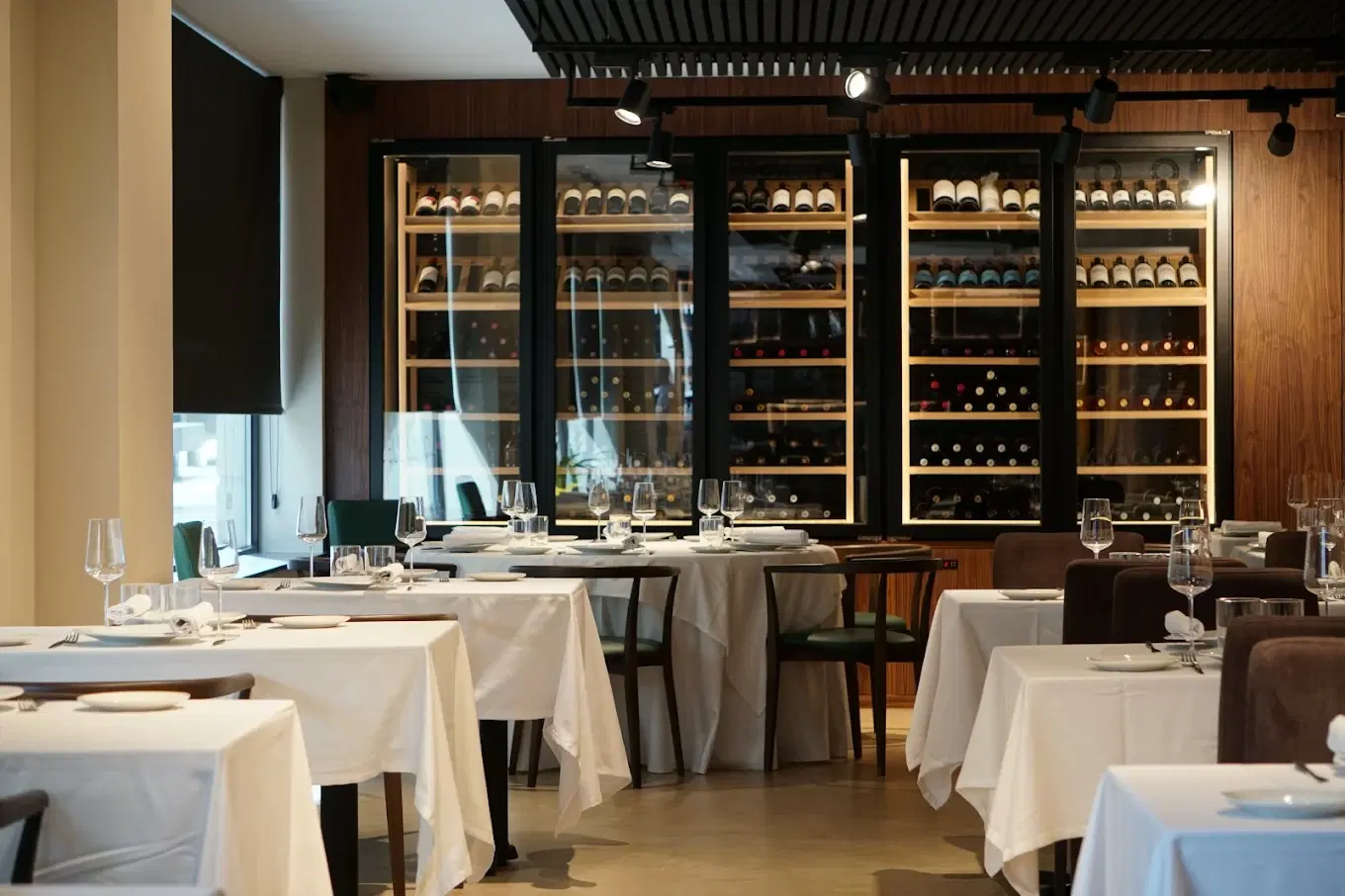
Bright industrial-style space with floor-to-ceiling windows, open kitchen, and bustling yet efficient atmosphere.