

Michelin Plate · Macarfi 7.1 Food Rating
Our verdict
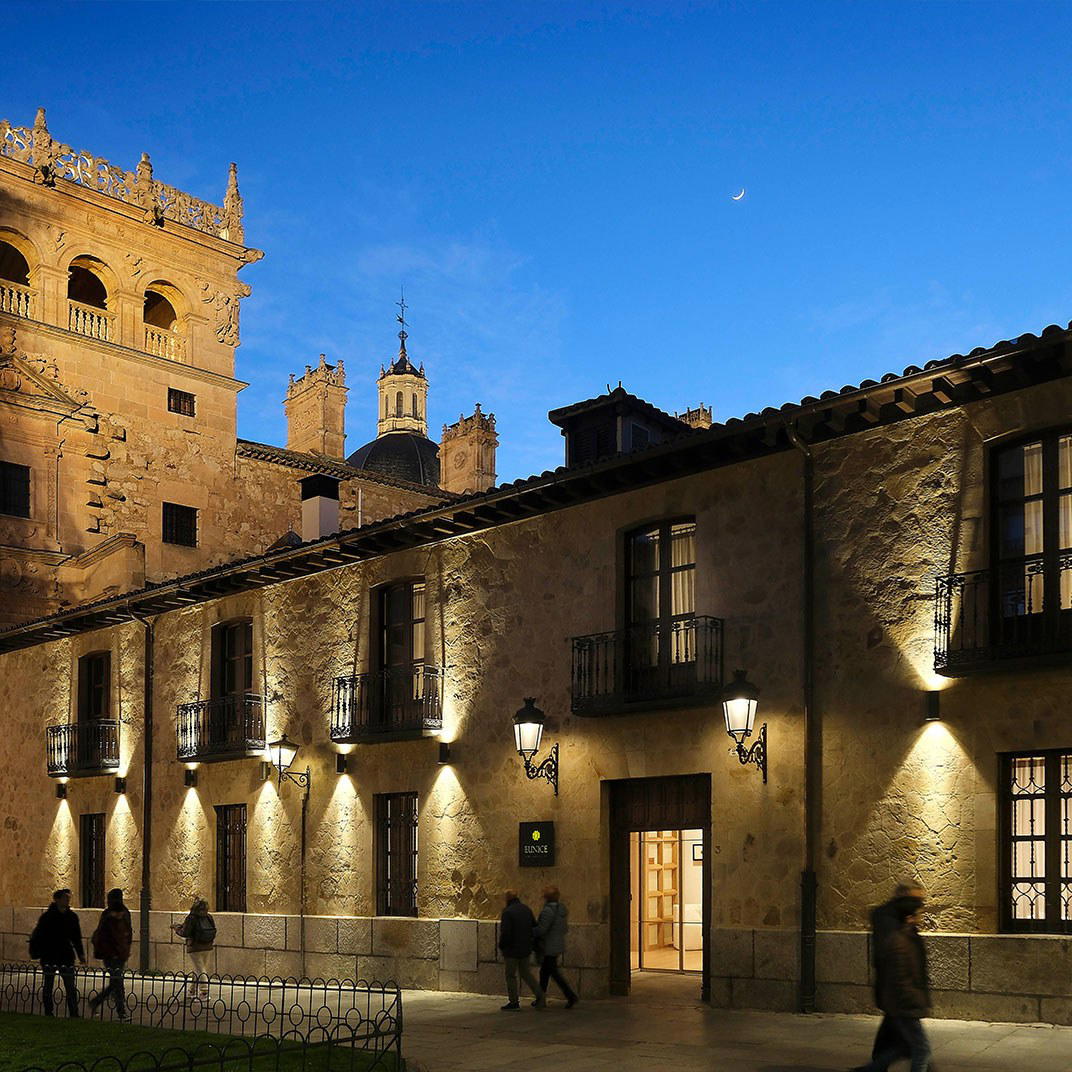
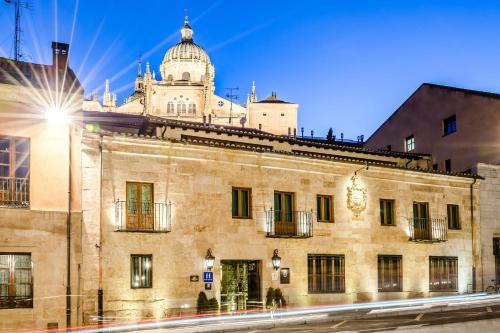
Inside a century-old building on Salamanca's Plaza del Poeta Iglesias, El Pecado runs a market-driven menu with a global reach at entry-level prices. The space itself tells part of the story: a former antique dealer's premises across several floors, still decorated with the residue of that past. A Michelin Plate in 2025 confirms it sits within the recognised tier of Spanish dining without the corresponding price tag.

Pearl is the En Primeur Club membership app, where members save venues, book tables and use the concierge.
A Former Antique Shop and the Case for Market Cooking
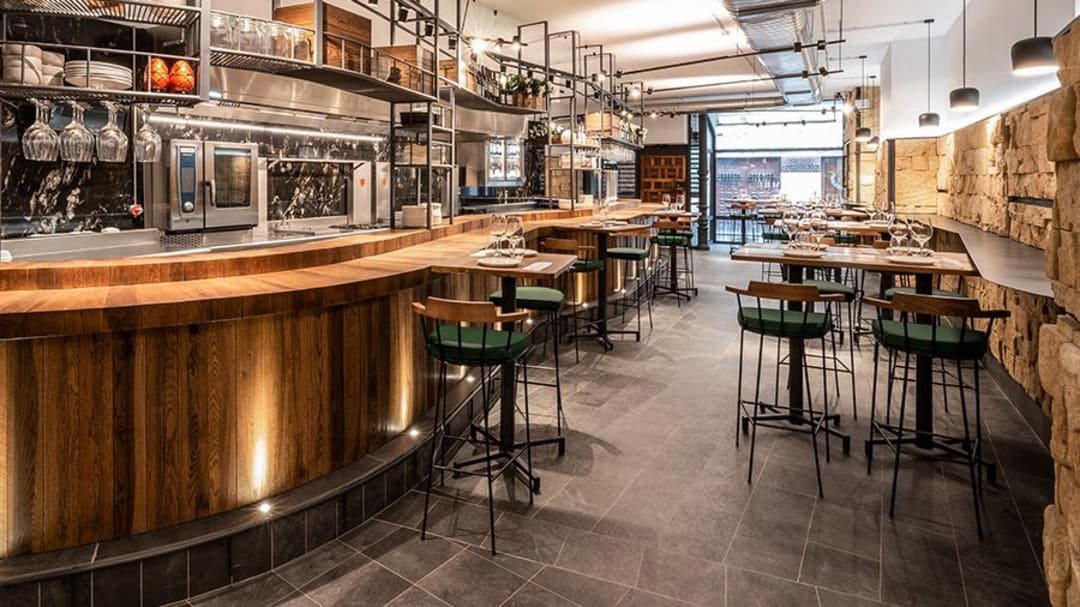
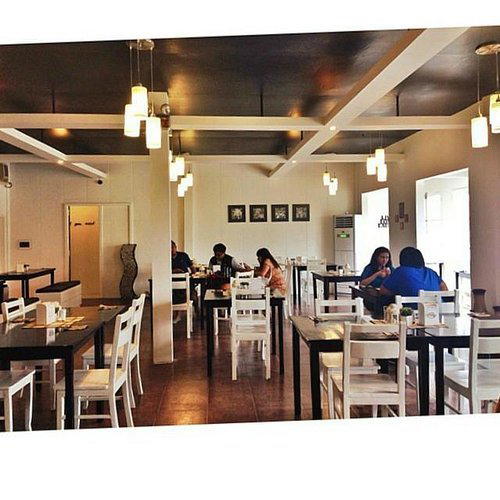
There is a particular type of restaurant that Salamanca does well: the kind occupying a building that has clearly been something else first. El Pecado sits on Plaza del Poeta Iglesias inside a century-old structure that, in a previous life, housed an antique dealer. That history is not decorative shorthand, the unusual objects and eclectic detail distributed across its several floors are what remain of the original inventory, giving the dining room a material texture that new-build restaurant fit-outs cannot replicate. In a city where stone facades and centuries of institutional history are the backdrop, this layered interior reads as genuine rather than assembled.
The split-level format across multiple floors is worth noting as a spatial decision. Rather than a single dining room, the arrangement produces distinct zones with different acoustic and visual characters. Several original private dining rooms are available for groups, which positions El Pecado as a practical choice for longer meals that benefit from separation from the main floor. For our full Madrid restaurants guide, the Salamanca context matters: this is a university city with a dining culture shaped by student budgets at one end and a serious tradition of hospitality at the other, and El Pecado sits closer to where those registers overlap.
Market-Influenced Cooking in the Context of Spanish Sourcing
Spain's Michelin-recognised dining tier is dominated, at the upper end, by kitchens with highly specific identities. DiverXO (Progressive - Asian, Creative) and Coque (Spanish, Creative) operate at the €€€€ level with multi-star recognition that comes with corresponding commitments of time and budget. El Pecado operates at the opposite price register, a single-euro band, with a 2025 Michelin Plate, which the guide awards to restaurants delivering cooking of quality that falls within its framework of recognition without reaching star level. That is a specific position: broad enough to serve a range of occasions, recognised enough to carry editorial weight.
The menu structure reflects a market-driven ethos that connects to a well-established tradition in Iberian cooking: building a daily proposition around what is available rather than around a fixed showcase. This approach, when done rigorously, is also one of the more demanding ways to run a restaurant. It requires sourcing relationships, kitchen flexibility, and a willingness to let supply shape the menu rather than the reverse. The sustainability implications are real: shorter supply chains, seasonal alignment, and reduced reliance on imported or out-of-season produce follow naturally from a genuine market commitment. In Spain, where proximity to exceptional agricultural and coastal produce is not a marketing claim but a geographic fact, this framework carries more weight than it might elsewhere.
For reference across the wider Spanish dining scene, kitchens like Aponiente in El Puerto de Santa María and Azurmendi in Larrabetzu have made ethical sourcing and environmental consciousness structurally central to their cooking at the highest price tier. El Pecado operates on a different scale and with a different mandate, but the underlying orientation, cooking shaped by what the market offers, connects to the same direction of thinking, at a price point that requires no significant financial commitment to test.
Two Menus, One Dish Worth Singling Out
The kitchen presents its offer through two formats: a De Mercado menu and a Degustación Salamanca menu. The dual-menu structure is a common approach at this level of the market, allowing the kitchen to serve both shorter, more casual meals and longer tasting formats within the same operation. It broadens the addressable occasion set without requiring two separate service identities.
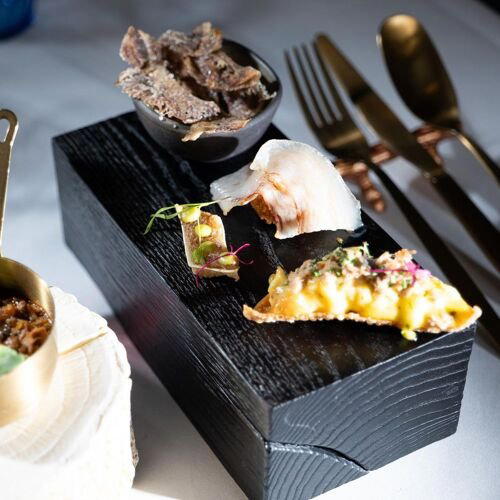
Among the dishes noted in the Michelin record, the wild sea bass with mussel beurre blanc, spinach, and samphire is the most specific data point available. That combination is instructive: sea bass sourced from wild catch rather than aquaculture, paired with a sauce built on mussels, and finished with samphire, a coastal plant that has a foraging association in Iberian and Atlantic cooking. The dish logic follows the market-and-coast sourcing ethos that the menu format implies.
For those cross-referencing against other international restaurants in the city, Marcano and Nunuka represent alternative addresses in Madrid's international dining tier. At the more local and historic register, Taberna de Libreros offers another point of reference within the city's traditional tavern format.
The International Dimension
El Pecado's classification as International cuisine within the market-driven framework raises a question that is worth addressing directly. Market cooking in Spain defaults, more often than not, to regional Spanish technique and product. An international orientation suggests that the kitchen draws on a wider frame of reference, using market produce but not restricting itself to the techniques of any single culinary tradition. This is a more common position in urban dining than it was a decade ago; cities like Berlin and London have normalised the idea of a geographically diverse kitchen working with locally sourced produce. For international comparison points, Loumi in Berlin operates within a similar conceptual territory at a comparable price register.
In the context of Spanish fine dining's broader geography, venues like Arzak in San Sebastián, El Celler de Can Roca in Girona, Martin Berasategui in Lasarte-Oria, and Cocina Hermanos Torres in Barcelona represent the country's highest-recognition tier. El Pecado occupies no direct comparison with those addresses in terms of ambition or price, but it sits within the same national guide framework and draws Michelin's editorial attention at its own level of the market. For those also planning time beyond Salamanca, Haubentaucher in Rottach-Egern provides another European point of reference in the international dining category.
Know Before You Go
Address: Pl. del Poeta Iglesias, 12, 37001 Salamanca, Spain
Cuisine: International, market-influenced
Price range: € (entry-level)
Recognition: Michelin Plate, 2025
Format: Two menus (De Mercado and Degustación Salamanca); private dining rooms available
For planning beyond a single meal, see our full Madrid hotels guide, our full Madrid bars guide, our full Madrid wineries guide, and our full Madrid experiences guide.
Frequently asked questions
What's the must-try dish at El Pecado?
The dish with the most specific documentation in Michelin's 2025 editorial notes is the wild sea bass with mussel beurre blanc, spinach, and samphire. The combination reflects the market-sourcing logic at the heart of both menus: wild-caught fish, a sauce built on shellfish, and a coastal foraged plant.
Style and Standing
A quick peer reference to anchor this venue in its category.
| Venue | Cuisine | Price | Awards | Notes |
|---|---|---|---|---|
| El PecadoThis venue (the venue you are viewing) | Modern Spanish Market Cuisine | $30–50 | Michelin Plate · Macarfi 7.1 Food Rating | Not listed |
| DiverXO | Avant-Garde Spanish Tasting Menu | $300–500 | 3 Michelin Stars · World's 50 Best #4 | Progressive - Asian, Creative |
| Deessa | Modern Valencian Fine Dining | $150–200 | 2 Michelin Stars · La Liste Top Restaurants | Modern Spanish, Creative |
| Smoked Room | Modern Japanese Fire Omakase | $200–300 | 2 Michelin Stars · La Liste Top Restaurants | Progressive Asador, Contemporary |
| Coque | Modern Spanish Fine Dining | $300–500 | 2 Michelin Stars · La Liste Top Restaurants | Spanish, Creative |
| Paco Roncero | Avant-Garde Spanish Fine Dining | $150–200 | 2 Michelin Stars · La Liste Top Restaurants | Creative |
Recognition history
Dated appearances from independent guides and award organizations, with the underlying list record or original source where available.
Michelin Plate
Michelin
Macarfi 7.1 Food Rating
Macarfi
Full recognition history (3 entries)
Michelin Plate
Michelin
Continue exploring
More in Madrid
Restaurants in Madrid
All restaurants in Madrid →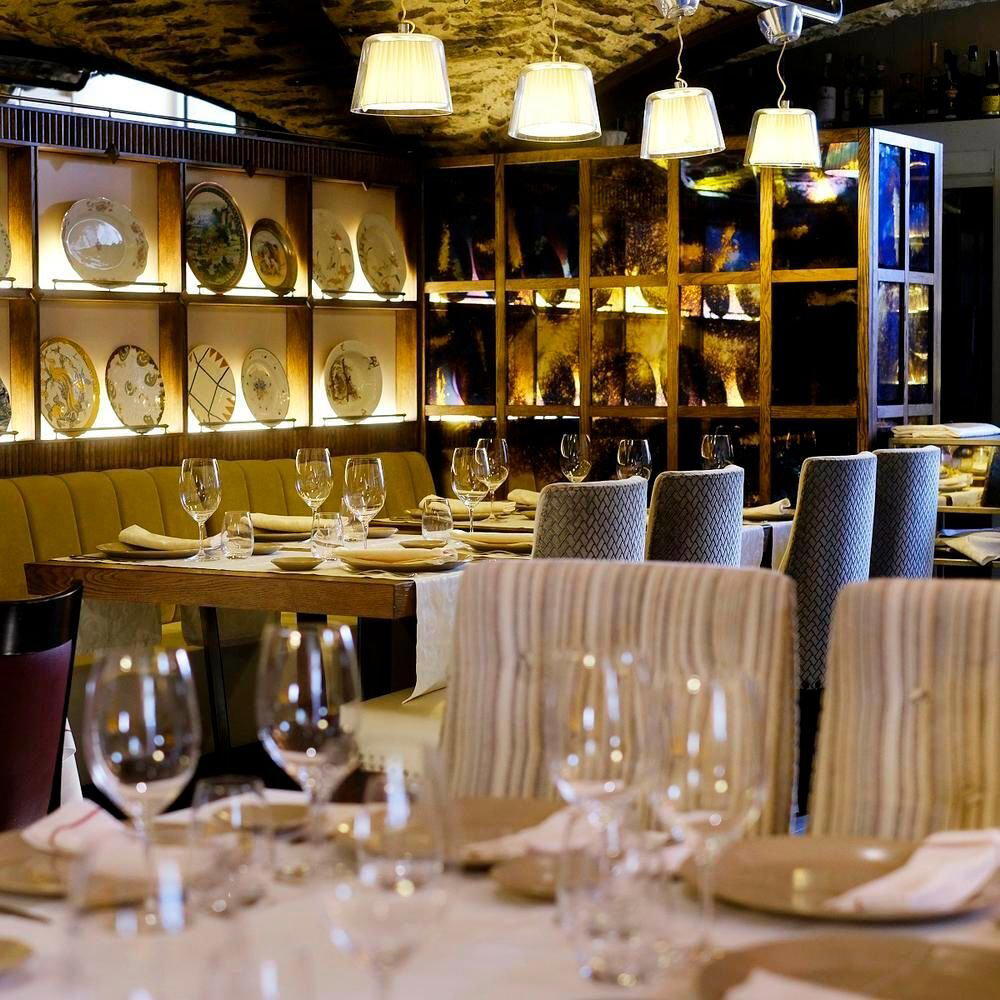


Details
- Romantic
- Cozy
- Intimate
- Elegant
- Date Night
- Special Occasion
- Group Dining
- Historic Building
- Private Dining
- Extensive Wine List
- Local Sourcing
- Tasting Menu
- Vegetarian Friendly
Current opening hours
- Monday
- Closed
- Tuesday
- 1:30–4 PM, 8:30 PM–12 AM
- Wednesday
- 1:30–4 PM, 8:30 PM–12 AM
- Thursday
- 1:30–3:30 PM, 8:30 PM–12 AM
- Friday
- 1:30–3:30 PM, 8:30 PM–12 AM
- Saturday
- 1:30–3:30 PM, 8:30 PM–12 AM
- Sunday
- 1:30–4 PM
Hours can change for holidays and private events. Hours as of .
Charming, intimate, and eclectic with romantic bistro-style decor in various dining rooms on the upper floor of a historic building.