
Ishii sits in Tokyo’s old-school wagashi circuit rather than the city’s tasting-menu economy: a take-out sweets counter in Shibamata with Tabelog 100 recognition for Japanese traditional sweets and sweets cafe in Tokyo. Its appeal is ritual and setting, the short pause around dorayaki and seasonal confections on a temple approach, not a long seated meal.
Pearl is the En Primeur Club membership app — saves, bookings, and concierge access live there. Same editors, same standards.
- Address
- 東京都葛飾区柴又7-6-20 柴又帝釈天参道
- Phone
- +81336571749
- Website
- shibamata-ishii.net
 Saves & bookings on Pearl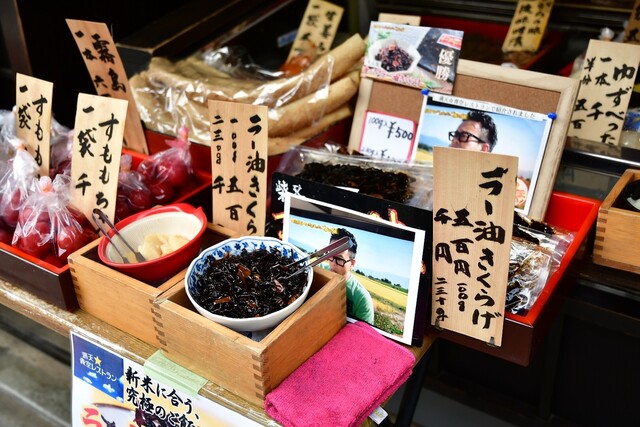
Shibamata changes the tempo before the first purchase. The approach to Taishakuten has the older rhythm of Tokyo’s shitamachi quarters: shopfronts built around small transactions, temple visitors moving in clusters, sweets bought to eat nearby or carry home. In that setting, wagashi is not dessert after a meal. It is a pause with rules of its own, measured by season, wrapping, queue etiquette, and the expectation that a modest purchase can carry the weight of local memory.
Ishii belongs to that tradition. The counter format matters because it removes the restaurant theatre that dominates much of Tokyo dining coverage. There is no long arc of courses, no sommelier choreography, no room to decode. The ritual is shorter and more public: decide, pay, step aside, and let the next customer move forward. That brevity is part of the appeal. Tokyo’s sweets culture often rewards precision at small scale, and Shibamata’s temple-street setting gives that precision a civic role rather than a luxury one.
Wagashi as a Shibamata ritual, not a restaurant performance
Tokyo has two parallel sweets cultures. One is department-store polish, where gift boxes and seasonal editions are arranged with near-museum discipline. The other lives in neighbourhood counters, where dorayaki, Japanese traditional sweets, and Western-style sweets sit close to daily foot traffic. Ishii operates in the second register, which is why the experience should be read less as a destination meal and more as a stop inside a local route.
That distinction is useful for travellers. A Ginza pastry salon may ask for time, seating, and a separate place in the day. A Shibamata sweets counter asks for attention to pacing. The temple approach gives the purchase context: a sweet before or after visiting the precinct, a small box for later, a brief exchange that fits the neighbourhood’s older commerce. The category also carries its own etiquette. Wagashi is often bought with purpose, not browsed endlessly; popular items move according to the day’s footfall; and packaging is part of the transaction rather than an afterthought.
The Tabelog 100 selection for Japanese traditional sweets and Japanese sweets cafe in Tokyo in 2023 gives Ishii a clear trust signal in a category where international travellers often lack reference points. Earlier Tabelog Sweets Tokyo 100 selections in 2018 and 2019 place the shop in a longer pattern of recognition, not a single-year anomaly. Its Tabelog score of 3.73 also signals a serious local following within a platform where small differences carry weight, particularly for genre specialists.
Price separates this stop from Tokyo’s higher-cost dining circuits. The listed spend sits under JPY 999, aligning it with nearby low-ticket sweets peers such as Takagiya Roho, Yoshinoya, and TORAYA BAKERY rather than with destination restaurants. That matters editorially because it changes the stakes. This is not a place to judge by ceremony or length; it is a compact expression of craft inside an everyday price band. By contrast, a venue such as Tori Sami occupies a much higher Tokyo dinner tier, which asks a different set of questions about service, duration, and commitment.
The case for dorayaki and temple-street pacing
Dorayaki has a particular place in Tokyo sweets culture because it bridges gift, snack, and nostalgia without needing explanation. The format is portable, recognisable, and bound to texture more than spectacle. At a counter like this, the reader’s decision is not what grand menu to choose, but how to fit a small sweet into the day without treating it as a minor errand. That is the quiet discipline of wagashi tourism: knowing when a five-minute stop says more about a district than an elaborate reservation across town.
Shibamata is especially suited to that kind of eating. It is removed from the denser restaurant clusters of central Tokyo, so the reward is not variety per square block. The reward is continuity: temple approach, family groups, walkers from the station, and shops that make sense because the street still has a ritual function. Ishii’s take-out-only structure belongs to that pattern. It keeps the focus on the sweet and the neighbourhood rather than on table design or service pacing.
For a broader Tokyo itinerary, this is a useful corrective to the city’s reservation-heavy narrative. The capital’s dining scene is often reduced to sushi counters, yakitori rooms, and tasting menus, yet small sweets counters explain another side of Japanese food culture: precision without formality, seasonality without a lecture, and hospitality contained in a wrapped purchase. Readers comparing categories can place it alongside more conventional restaurant choices in Our full Tokyo restaurants guide, while hotel planning sits separately in Our full Tokyo hotels guide, drinks in Our full Tokyo bars guide, wine in Our full Tokyo wineries guide, and cultural planning in Our full Tokyo experiences guide.
The same contrast shows up across the wider directory. Tokyo’s range runs from casual specialists such as 3 Chome no Curry Ya San, 2D Cafe, and 12/10 Shinjuku ten to grill and counter formats such as 124. KAGURAZAKA (Yakitori) and. 鮪と炭火焼き うお炭 秋葉原店. Regional comparisons sharpen the point: -Grilled beef Sukiyaki- KAMAKURA TANUKIAN 鎌倉 たぬき庵 in Kamakura.cafe in Osaka.know in Kumamoto, (Shoku) Vietnam in Kawasaki, [Curry Senmon Ten] Maruyama Kyoju. in Sapporo, and [ki:] in Kyoto each answer different dining needs. Even overseas Japanese formats such as Jōdo Saké Bar in Los Angeles and Onigiri Time in Pasadena show how portable Japanese food rituals become once removed from their neighbourhood origins.
How to read the experience
The right expectation is narrow and rewarding. Treat the stop as a Shibamata sweets ritual with recognised local standing, not as a substitute for a restaurant booking. The counter’s strength is its fit with the street: affordable, quick, and anchored in a category that Tokyo residents understand with far more nuance than visitors often bring to it. For travellers building a day around eastern Tokyo, that makes Ishii a smart cultural marker. It explains how wagashi works in public life, one small purchase at a time.
The Quick Read
Comparable venues at the same tier.
| Venue | Cuisine | Price | Notes |
|---|---|---|---|
| IshiiThis venue — the venue you are viewing | Not listed | $$ | Not listed |
| Kinozen | Kagurazaka, Traditional Japanese Sweets | $$ | Not listed |
| Kajitsuen Riberu | Meguro, Fruit Parlor | $$ | Not listed |
| 浅草むぎとろ本店 | Not listed | $$ | Taitō, Traditional Japanese Tororo Kaiseki |
| Namiki Yabu Soba | Taitō, Traditional Japanese Soba | $$ | Not listed |
| Tokyo Tonkatsu Gabuu | Taitō, Tonkatsu | $$ | Not listed |
Recognition history
Dated appearances from independent guides and award organizations, with the underlying list record or original source where available.
Tabelog 100 #41 · No. 41
Tabelog · Tabelog 100 - Japanese traditional sweets / Japanese sweets cafe - TOKYO - 2023







At a Glance
- Quiet
- Classic
- Cozy
- Solo
- Casual Hangout
- After Work
- Standalone