
A five-consecutive-year Tabelog Bronze winner in Matsuyama's Chifunemachi district, Namae no Nai Italia Ryori Ten sits at the sharper end of western Ehime's Italian dining scene. With a Tabelog score of 4.09 and selection for Tabelog Italian WEST Top 100 in 2021, 2023, and 2025, it represents the kind of sustained peer recognition that rarely accumulates in prefectural cities outside Japan's major dining corridors.
 Discover on Pearl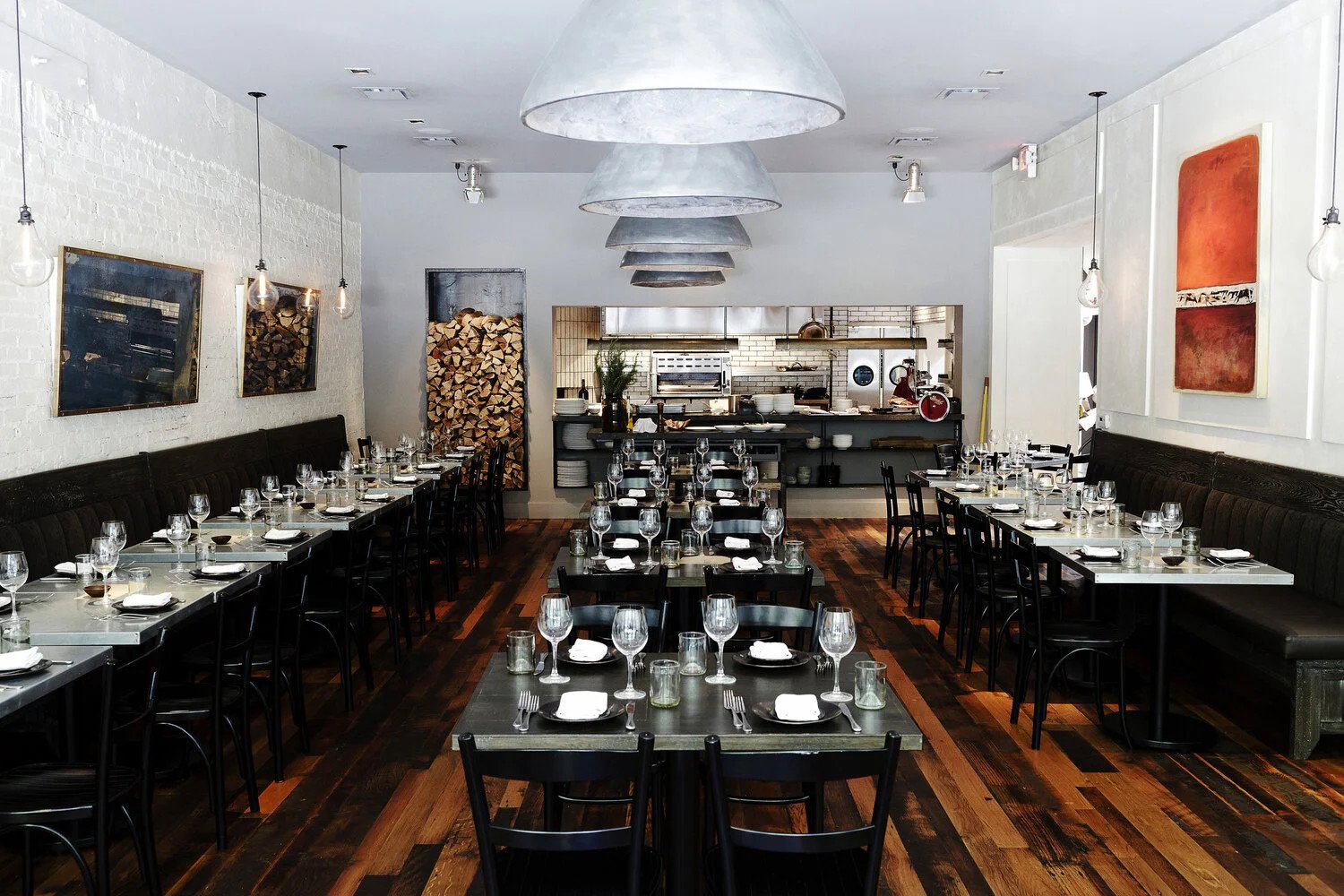
Italian Dining at the Edge of the Shikoku Circuit
Chifunemachi is not where most visitors to Matsuyama spend their evenings. The neighbourhood sits close to the city's administrative core, a few minutes' walk from City Hall Front Station on the Iyotetsu line, and it lacks the photogenic pull of Dogo's hot-spring lanes or the izakaya density of the central arcade. What it offers instead is something rarer in a prefectural capital of 500,000: a small cluster of restaurants operating at a level of ambition that would hold up against the mid-tier of Osaka or Kyoto, without the reservation scarcity those cities impose.
Namae no Nai Italia Ryori Ten — the name translates roughly as 'Italian restaurant with no name' — occupies the ground floor of the Hiraki Building on Chifunemachi 4-chome. The building itself is unremarkable, the kind of low-rise commercial block common to Japanese city centres, and that contrast between exterior anonymity and interior seriousness is part of what defines this category of Japanese European restaurant. In the major cities, venues like HAJIME in Osaka or Gion Sasaki in Kyoto have become reference points for how Japan absorbs and reinterprets European culinary traditions. In regional cities, that process plays out more quietly, at venues that draw no international press and rarely appear on shortlists compiled outside Japan.
The shortlist, unlocked.
Hard-to-book tables, cellar releases, and concierge-planned trips.
Get Exclusive Access →What Five Years of Bronze Means in Practice
The Tabelog Award system is Japan's most closely followed peer-review recognition structure, scored by a weighted average of verified diner reviews rather than critic inspection. A Bronze designation, awarded annually, places a restaurant in roughly the top 0.3 percent of all listed venues nationally. Namae no Nai Italia Ryori Ten has held that designation continuously from 2022 through 2026, a run that signals consistency rather than a single strong season. Its current Tabelog score of 4.09 sits in the range where the review base is large enough to be statistically meaningful , 481 Google reviews at a 4.2 average corroborate the picture independently.
The restaurant has also been selected for the Tabelog Italian WEST Top 100 in 2021, 2023, and 2025, a separate list that ranks Italian restaurants specifically across western Japan. Appearing on that list three times over five years puts it in a cohort that includes venues in Osaka, Kobe, Kyoto, and Fukuoka , cities with far greater concentrations of high-end Italian dining. For a restaurant in Matsuyama, that placement in the western Japan Italian peer group carries a different weight than a local restaurant award would. It is being measured against venues like akordu in Nara and Goh in Fukuoka, not against Ehime neighbours.
The Room and the Format
Dining room runs to 34 seats, arranged across a 10-seat counter, table seating, and a private room for up to six. That configuration places it in a mid-scale format for Japanese course-menu restaurants: large enough to avoid the intensity of an eight-seat omakase counter, small enough that the kitchen is cooking to a defined number each service rather than managing hotel-scale volume. Counter seating at Italian restaurants in Japan often functions as a watching post, where the cooking sequence is visible and the pacing of each course is communicated through proximity rather than tableside explanation.
Tabelog classifies the restaurant across Italian, French, and pasta categories, which suggests a menu that draws from both Italian structure and French technique , a combination that characterises a significant strand of Japanese European cooking, where the boundary between the two traditions is treated as permeable. This approach shows up in cities across the country, from Harutaka in Tokyo to smaller venues operating at regional scale. In Matsuyama, where Shikoku's ingredient base includes some of Japan's most respected citrus, fish, and mountain produce, a kitchen drawing on both Italian and French frameworks has substantial local material to work with.
Pricing and the Matsuyama Dining Context
Dinner runs JPY 15,000 to JPY 19,999 per person; lunch, unusually, prices higher at JPY 20,000 to JPY 29,999. That lunch premium is worth noting. In Tokyo and Osaka, lunch at high-end European restaurants often serves as the accessible entry point, priced below dinner to attract diners unwilling to commit to a full evening spend. The reversed structure here may reflect a more elaborate lunch format or the different economics of operating at this level in a regional city, where the evening cover count may be lower and the lunch experience carries more of the cost recovery. Either way, the overall spend positions this restaurant above Matsuyama's general dining range and at the lower end of what comparable western Japan Italian venues charge , Dogo Kaishu, operating in the JPY 15,000 to JPY 19,999 range for Japanese cuisine, offers a useful local price reference point.
For visitors comparing across Japan's mid-tier Italian scene more broadly, the pricing sits well below what venues like 1000 in Yokohama or 6 in Okinawa charge at comparable award levels, reflecting both regional cost structures and Matsuyama's position outside Japan's primary dining circuits. International visitors calibrated to European price points for restaurants with this award profile , or to New York benchmarks set by venues like Le Bernardin or Atomix , will find the spend modest relative to the recognition.
Matsuyama's Wider Table
Matsuyama does not have Michelin coverage, which means its restaurant quality is assessed almost entirely through Tabelog data and the judgement of diners travelling from within Japan. That creates a different kind of dining culture than cities on the Michelin map: the local audience for serious restaurants is drawn from Ehime residents and domestic travellers, not international food tourists. Venues that earn sustained Tabelog recognition in this environment are doing so without the promotional infrastructure that comes with guide coverage, which is one reason the five-year Bronze run here carries weight as a signal of genuine local standing.
The broader Matsuyama dining scene worth understanding before any visit is covered in our full Matsuyama restaurants guide, which maps the city's range from traditional Japanese formats to venues like this one operating in European registers. For those planning a longer stay, our Matsuyama hotels guide covers accommodation options, while the bars guide, wineries guide, and experiences guide cover the rest of the city's offer. Within Matsuyama's restaurant scene specifically, Ino and Kurumasushi represent different registers of the city's table worth considering alongside this one.
Planning a Visit
The restaurant opens for lunch from 11:30 to 14:00 and for dinner from 18:00 to 22:30 Monday through Saturday, with Sunday and public holiday dinner closing at 22:00 instead. Reservations are available and given the cover count , 34 seats across multiple formats , booking ahead is prudent, particularly for the private room (capacity six) or counter positions. The restaurant is a five-minute walk from City Hall Front Station and approximately 450 metres from Matsuyama City Hall. Street parking is not available on-site, but coin parking operates nearby. Major credit cards are accepted (VISA, JCB, AMEX, Diners); electronic money and QR code payments are not. The space is entirely non-smoking. Children are welcome provided they participate in the same course menu as adults.
The shortlist, unlocked.
Hard-to-book tables, cellar releases, and concierge-planned trips.
Get Exclusive Access →Frequently Asked Questions
At a Glance
A quick look at comparable venues, using the data we have on file.
| Venue | Notes | Price |
|---|---|---|
| No Name | This venue | |
| Dogo Kaishu | Japanese Cuisine, JPY 15,000 - JPY 19,999 | JPY 15,000 - JPY 19,999 |
| Ino | ||
| Kurumasushi |
Need a table?
Our members enjoy priority alerts and concierge-led booking support for the world's most difficult tables.
Get Exclusive AccessThe shortlist, unlocked.
Hard-to-book tables, cellar releases, and concierge-planned trips.
Get Exclusive Access →