
Tabelog 100 #87
Our verdict
A 23-seat Indian and Indian curry address in Kagurazaka, Indian Omoi no Ki belongs to Tokyo’s serious spice circuit rather than its casual curry lane. Tabelog has selected it for Asian and ethnic cuisine in Tokyo in 2022, 2023, and 2024, with earlier Curry selections from 2017 through 2020, giving it a long signal of local recognition.

Pearl is the En Primeur Club membership app, where members save venues, book tables and use the concierge.
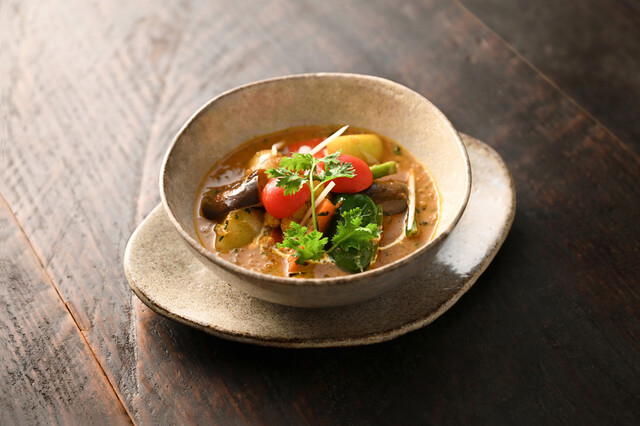
Tokyo shifts quickly: stone steps, narrow approaches, dining rooms above the street, and meals that feel more deliberate than the traffic arteries around them. Here, Indian dining moves differently from the city’s quick lunch curry shops. The ritual is compact and paced: arrive on time, settle in, and let Indian Omoi no Ki’s Indian and Indian curry vocabulary work.
Tokyo treats curry as both comfort food and serious craft, from counter meals and regional specialists to contemporary Indian restaurants paced like composed dinners. Indian Omoi no Ki belongs to that latter conversation. Its Tabelog score of 3.77 and 2024 Tabelog Hyakumeiten recognition place it in the city’s documented Indian and Indian curry field, not just the casual curry circuit.
Tokyo turns Indian curry into a slower dining ritual
The distinction is format. Indian curry in Tokyo often means speed: a tray, lunch rush, and office-worker rotation. Tokyo also supports another tempo, where table-service rooms treat dinner as an evening rather than a transaction. An Indian restaurant in this register feels less like an imported category than part of the city’s culture of deliberate dining rooms.
The award trail matters in Tokyo’s deep, fragmented curry field. Indian Omoi no Ki is listed with 2024 Tabelog Hyakumeiten recognition, alongside a 3.77 score and Indian / Indian curry categories. For comparison shoppers, that is more useful than a vague popularity claim: it signals documented recognition in a field where casual counters, specialist rooms, and fuller dinner formats can otherwise blur together.
Etiquette follows the room. This is not a place to read only as a quick refuel; the appeal is a focused meal with one or two companions, or a small party that wants the food rather than the room to carry the evening. The mood is sociable but not noisy, casual in cuisine category yet more structured than a fast curry stop.
Where it fits among Tokyo's serious casual tables
Tokyo’s premium dining map is often framed by sushi, kappo, tempura, and French-leaning gastronomy, but its middle and upper-middle culture is broader. The city can move from counter formats to composed dining and Indian curry within a short itinerary. Yoshokudo Budo Kagurazaka Kagurazaka offers one allowed point of comparison in another Tokyo dining tradition, while Teppanyaki Iwakura shows how focused Tokyo dining can take a very different direction.
That comparison helps because travelers often under-read Indian dining in Tokyo. Some rooms teach precision; others teach sequence and heat; curry rooms ask for attention to spice architecture, rice or bread choices, and how richness is managed across a meal. Indian Omoi no Ki’s recognition in Indian and Indian curry categories places it between specialist curry culture and a fuller dinner format. The point is not novelty, but that Tokyo’s dining seriousness extends beyond the genres international visitors usually book first.
For curry planning, other Tokyo dining rooms can provide useful reference points, while broader browsing belongs in Our full Tokyo restaurants guide. Cross-category options across the city show how quickly Tokyo moves between visually driven rooms, ingredient-focused cooking, counter formats, and neighborhood dining. Wider itineraries can pair restaurant research with Tokyo hotels, bars, wineries, and experiences research, keeping Indian Omoi no Ki as one focused stop within a broader city plan.
How to read the meal before choosing it
The practical choice is simple: come for a composed Indian meal in Tokyo, not a fast curry stop. Indian Omoi no Ki’s listed budget is JPY 8,000 - JPY 9,999 at dinner and JPY 4,000 - JPY 4,999 at lunch, which frames it above the most casual curry-counter tier. The in-room meal is the stronger case when the goal is pacing, conversation, and a clearer sense of how the kitchen handles Indian curry.
Lunch and dinner occupy different price bands, so the choice turns on ceremony: lunch is the cleaner introduction; dinner better fits a slower evening mood. The category may be familiar, but the decision should not be made as if all curry meals are interchangeable. The value is in the way spice, richness, and sequence are allowed to unfold rather than being compressed into a rushed weekday plate.
For Japanese food travel beyond one meal, compare not cuisine sameness but format discipline. Other Tokyo dining rooms may speak to counter craft, composed cooking, ingredient-led meals, or set-course habits, while Indian Omoi no Ki sits in a curry-focused lane. Abroad and elsewhere in Japan, similar planning logic applies: look for the room’s pacing, budget, and recognition before assuming a cuisine label tells the whole story.
Indian Omoi no Ki is worth seeking out for a Tokyo meal that treats Indian curry with adult pacing, focused-room control, and documented local recognition. It is not the broadest answer to Indian food in the city, nor needs to be. Its strength is narrower: a Tokyo place where curry belongs to the evening table, not only the lunch counter.
Reputation First
Comparable venues for orientation by cuisine and category.
| Venue | Cuisine | Price | Awards | Notes |
|---|---|---|---|---|
| Indian Omoi no KiThis venue (the venue you are viewing) | Modern Indian with Japanese ingredients | $30–50 | Tabelog 100 #87 | Not listed |
| DELHI Ueno ten | Classic Indian & Pakistani curry house | $10–20 | Tabelog 100 #94 | Bunkyō |
| BLOCK HOUSE Suiyou Curry | Creative Indian-style curry house (Wednesday-only) | $20–30 | Tabelog 100 #62 | Shibuya |
| Moti | Authentic North Indian | $30–50 | Not listed | Minato |
| shiva curry wara | Japanese‑influenced South Indian Curry House | $20–30 | Tabelog 100 #2 | Setagaya |
| Arakawa (Kyoto) | Traditional Kyoto yakiniku (Japanese BBQ) | Not listed | Not listed | Nakagyo Ward / Kawaramachi |
Recognition history
Dated appearances from independent guides and award organizations, with the underlying list record or original source where available.
Tabelog 100 #87 · No. 87
Tabelog · Tabelog 100 - Asian cuisine / Ethnic cuisine - TOKYO - 2024
Continue exploring
More in Tokyo
Restaurants in Tokyo
All restaurants in Tokyo →


Bars in Tokyo
All bars in Tokyo →



Details
- Cozy
- Intimate
- Classic
- Elegant
- Date Night
- Business Dinner
- Group Dining
- Solo
- Special Occasion
- After Work
- Historic Building
- Standalone
- Design Destination
- Local Sourcing
- Street Scene
- A La Carte
- Set Menu
- Counter Dining
- Vegetarian Friendly
Current opening hours
- Monday
- Closed
- Tuesday
- 6–10 PM
- Wednesday
- 12–2 PM, 6–10 PM
- Thursday
- 12–2 PM, 6–10 PM
- Friday
- 12–2 PM, 6–10 PM
- Saturday
- 12–2 PM, 6–10 PM
- Sunday
- 12–2 PM, 6–10 PM
Hours can change for holidays and private events. Hours as of .
Warm and understated, with old timber beams, simple decor, and single wildflowers on each table creating a calm, Japanese-influenced space that feels intimate rather than flashy.