
Tabelog 100 #72
Our verdict
Kyoto’s wagashi culture rewards small rooms, early timing, and craft that disappears into routine. Imanishi Ken belongs to that older register: a house-style sweets shop in Shimogyo with take-out service, Tabelog 100 recognition for Japanese traditional sweets in West Japan, and a reputation built around the city’s daily rather than ceremonial side.

Pearl is the En Primeur Club membership app, where members save venues, book tables and use the concierge.
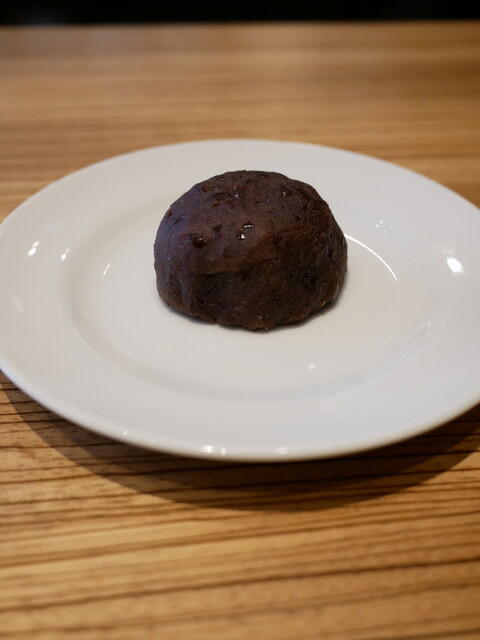
The menu
What to order
- Ohagi (tsubu-an)
- Ohagi (koshi-an)
- Ohagi (kinako)
- Anteiiku sweet red bean drink
Approaching a Kyoto sweets venue in this category changes the tempo of the city. The grand temples and hotel lobbies recede; the measure becomes selection, wrapping, and the quiet choreography of people buying something made to be enjoyed with care. In that register, Imanishi Ken is not trying to perform Kyoto for visitors. It belongs to the city’s Japanese traditional sweets tradition, where the experience is defined less by restaurant theatre than by focus, restraint, and the discipline of a specific craft.
Kyoto’s serious sweets culture sits apart from the city’s larger restaurant and cocktail circuits. It is less concerned with long seatings than with timing, perishability, and trust. A shop selected for Tabelog’s 2023 Hyakumeiten recognition in Japanese traditional sweets occupies a different kind of prestige from a tasting-menu restaurant: recognition accrues through repeat use, consistency, and the discipline of a narrow format. Imanishi Ken’s Tabelog score is listed at 3.73, placing the emphasis on a specific sweets category rather than on a broad restaurant spectacle.
A Kyoto stop built around sweets-shop rhythm
The design story here is format. Kyoto has plenty of restaurants where architecture announces budget before the first course; Japanese traditional sweets venues often work in reverse. The experience is practical, focused, and governed by the act of choosing sweets rather than settling into a long meal. That brevity is not a lesser experience. It is the format that lets traditional sweets remain tied to daily life rather than converted into a staged dessert course.
That distinction matters in Kyoto, where the city absorbs visitors moving between temples, shops, stations, and meals. Nearby dining can swing from casual counters to contemporary restaurants and hotel dining rooms. Imanishi Ken sits in a quieter lane of that same city appetite: less dinner-plan anchor, more compact sweets stop with cultural weight.
Kyoto sweets shops also expose a useful difference between ceremony and habit. Tea-ceremony sweets can read as rarefied objects when removed from context, but Japanese traditional sweets shops keep the category grounded. The purchase format makes the craft portable. That is why a focused sweets setting can carry as much editorial interest as a larger dining room; its form tells the reader how the food is meant to be used.
Japanese traditional sweets prestige without restaurant theatrics
Recognition from Tabelog’s Hyakumeiten program is a meaningful signal in this category because the field is crowded and specialist-driven. Japanese traditional sweets shops are not judged by the same public cues as fine dining rooms. There may be no long wine list, chef biography, or parade of courses to decode. Instead, attention shifts to category discipline, repeatability, and whether the shop has earned a place among specialists.
Imanishi Ken’s positioning is especially useful for travelers who already understand Kyoto through restaurants and want a different read on the city. A French table such as Asperge Blanche or a bar such as Bar Gaudi belongs to familiar international formats; a Japanese traditional sweets stop demands another kind of literacy. The decision is not about dinner versus dessert. It is about seeing how Kyoto preserves craft through focused food spaces that do not need to mimic restaurant service.
There is also a practical cultural lesson in the absence of excess. Traditional sweets in Kyoto often reward purposeful movement rather than late-night spontaneity. That rhythm sits closer to specialist food shopping than to reservations-led restaurants. The visitor who treats it as a deliberate stop will understand the place more clearly than the traveler who expects a leisurely cafe performance.
For related Kyoto sweets traditions, other local confectionery rooms show how location, ritual, and sweets can merge into experiences that feel distinct from conventional restaurant dining. Imanishi Ken is the counterpoint: direct, compact in editorial purpose, and governed by the logic of the focused sweets purchase.
How to place it in a Kyoto day
The smart use is not to overbuild the itinerary around it. Let it sharpen a day in Kyoto: a movement through the city, a pause between cultural stops, or a counterweight to a restaurant-heavy schedule. Its value lies in compression. In a city where travelers often chase grand experiences, a sweets shop can explain more about local continuity than another long lunch.
That also makes it a useful corrective to Kyoto fatigue. The city’s premium dining scene can feel heavily mediated by reservations, hotel concierges, and tasting-menu etiquette. Japanese traditional sweets bring the focus back to purchase, season, and craft at street level. The format is democratic without being casual in workmanship, and that tension is central to Kyoto’s food culture.
Readers building a broader Kyoto plan can use Our full Kyoto restaurants guide for dining context, Our full Kyoto hotels guide for where to base themselves, Our full Kyoto bars guide for evening drinking, Our full Kyoto wineries guide for regional wine references, and Our full Kyoto experiences guide for cultural scheduling. For contrast beyond Kyoto, the Japanese dining map stretches across unnamed dining rooms, counters, cafes, and specialist shops in other cities. Abroad, Japanese food formats travel widely, often losing the tight spatial discipline that gives Kyoto shops their force.
The editorial verdict is simple: treat Imanishi Ken as a study in Kyoto’s focused food culture, not as a conventional restaurant stop. Its strongest signal is not luxury, but precision of format: Japanese traditional sweets, a listed budget of Dinner: - JPY 999; Lunch: -, and recognition in a 2023 Tabelog Hyakumeiten sweets category. In a city that can overwhelm with ceremony, that restraint is the point.
Frequently asked questions
How do I find Imanishi Ken?
Kyoto.
Is Imanishi Ken more mid-range or high-end?
Pricing at Imanishi Ken is listed as - JPY 999 - JPY 999 View spending breakdown.
When can I go to Imanishi Ken?
Check current opening times directly before visiting Imanishi Ken.
What's Imanishi Ken best at?
Imanishi Ken is strongest as a Kyoto stop for Japanese traditional sweets, backed by Tabelog Hyakumeiten 2023 recognition. The low listed price range, shown as - JPY 999 - JPY 999, makes it a practical sweets choice in Kyoto.
Comparable Spots
Comparable venues at similar price and category levels.
| Venue | Cuisine | Price | Awards | Notes |
|---|---|---|---|---|
| Imanishi KenThis venue (the venue you are viewing) | Traditional Japanese wagashi & ohagi shop | $1–10 | Tabelog 100 #72 | Not listed |
| Asperge Blanche | French Bistro with Japanese Influences | $50–100 | Michelin Bib Gourmand | French |
| Bar Gaudi | Modern izakaya & Spanish-style standing bar | $20–30 | Tabelog 100 #36 | JPY 1,000 - JPY 1,999 |
| Manjuji Hakuran | Nagasaki-Inspired Kyoto Kaiseki | $100–150 | 1 Michelin Star | Not listed |
Recognition history
Dated appearances from independent guides and award organizations, with the underlying list record or original source where available.
Tabelog 100 #72 · No. 72
Tabelog · Tabelog 100 - Japanese traditional sweets / Japanese sweets cafe - WEST - 2023
Continue exploring
More in Kyoto
Restaurants in Kyoto
All restaurants in Kyoto →

Bars in Kyoto
All bars in Kyoto →
Hotels in Kyoto
All hotels in Kyoto →

Wineries in Kyoto
Browse all →
Details
- Classic
- Well Known
- Quiet
- Solo
- Family
- Casual Hangout
- After Work
- Standalone
- Historic Building
- A La Carte
- Tea
- Non Alcoholic
Current opening hours
- Monday
- Closed
- Tuesday
- Closed
- Wednesday
- 9:30 AM–3 PM
- Thursday
- 9:30 AM–3 PM
- Friday
- 9:30 AM–3 PM
- Saturday
- 9:30 AM–3 PM
- Sunday
- 9:30 AM–3 PM
Hours can change for holidays and private events. Last verified .