Il Divino
Il Divino occupies a stretch of Ninth Avenue where Hell's Kitchen's working-class roots meet a more ambitious dining present. The address places it inside one of Midtown's most culinarily active corridors, where Italian-inflected kitchens have long negotiated between imported tradition and New York's own ingredient culture. For the neighbourhood, that tension is the point.
Pearl is the En Primeur Club membership app — saves, bookings, and concierge access live there. Same editors, same standards.
- Address
- 739 9th Ave, New York, NY 10019
- Phone
- +19174091545
- Website
- ildivinonyc.com
- Directions
- Get directions
 Saves & bookings on Pearl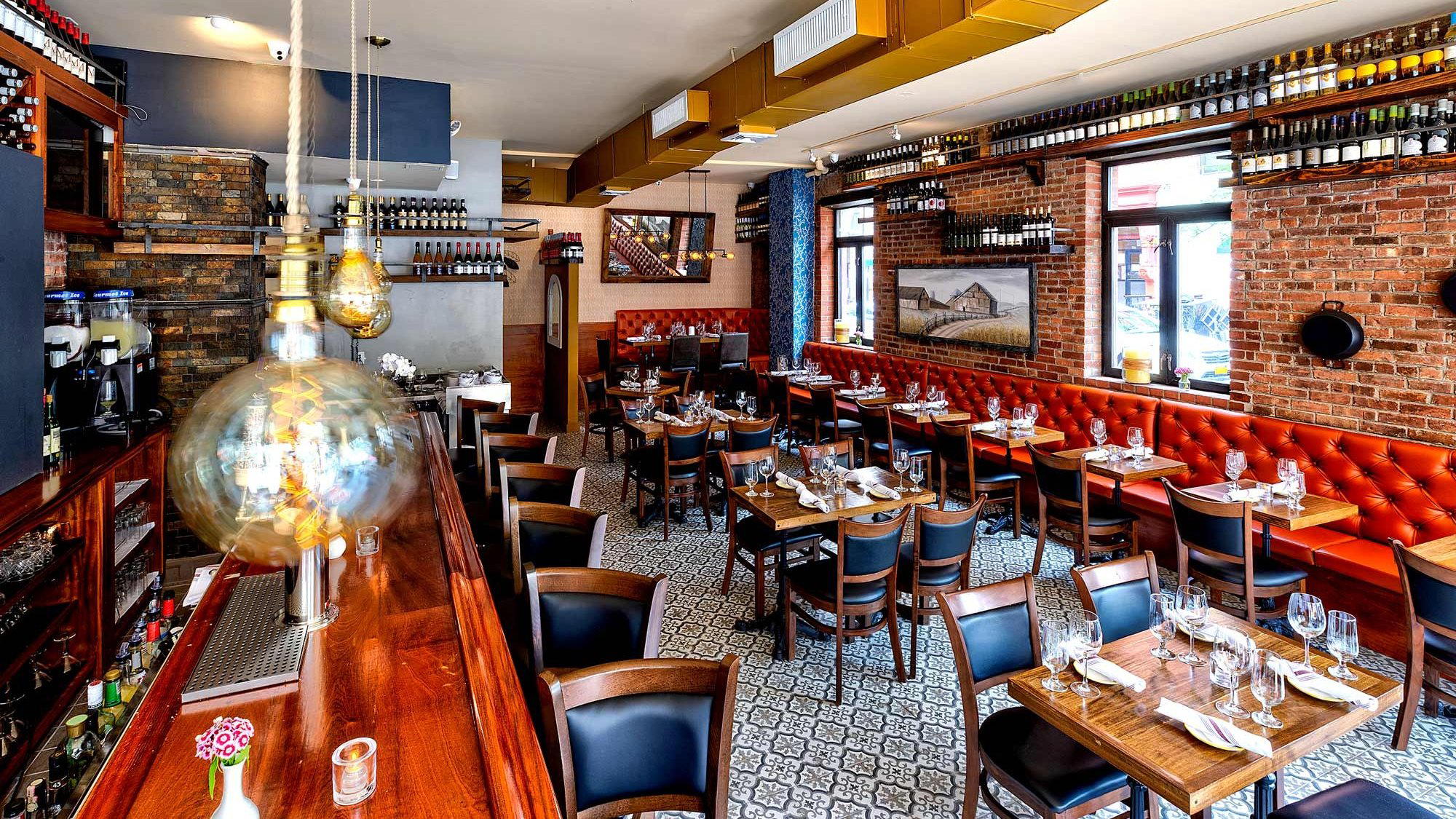
Hell's Kitchen and the Italian Table in New York
Ninth Avenue between 44th and 57th Streets has functioned as a food corridor for longer than most New Yorkers remember. The strip's Italian presence predates the borough's current dining moment by decades, rooted in the same immigrant provisioning networks that once supplied the neighbourhood's butcher shops and cheese importers. What has shifted is the register of ambition. Where those earlier establishments ran on volume and familiarity, a newer generation along this stretch has learned to hold imported technique alongside whatever the Hudson Valley and the Greenmarkets are producing in a given week. It sits in that current, a Hell's Kitchen address that asks the question most Italian restaurants in New York eventually face: how tightly do you hold to the source, and how much does the city reshape what arrives on the plate.
Where Ninth Avenue Fits in the Broader New York Italian Story
New York's Italian dining scene has never been a single thing. At the summit of the price tier, white-tablecloth rooms with classical French service structures have shaped what fine Italian means in this market for generations. Further down, red-sauce institutions have held their neighbourhood contracts for fifty years without apology. The more interesting space in the current moment is the middle register: restaurants that take Italian culinary logic seriously without recreating it as a museum exhibit. Technique arrives from somewhere, a Roman trattoria tradition, a Piedmontese approach to braising, a Neapolitan instinct for restraint in acid and heat, and then it meets what is actually growing or raising in the region. This intersection of imported method and local material is where Hell's Kitchen's more serious Italian addresses have staked their claim, and it is the frame most useful for approaching Il Divino.
Technique That Travels, Ingredients That Stay
The editorial interest in a restaurant like Il Divino is less about any single dish and more about how Italian technique looks when it has been transplanted and then resupplied by a different agricultural system. Italy's regional cooking traditions were built around specific soils, specific breeds, specific curing climates. New York does not replicate those conditions, but it has developed its own serious supply infrastructure: the Union Square Greenmarket runs four days a week and draws producers from across the Northeast; the Hudson Valley has produced a generation of small farms growing for restaurant use; the city's import networks move Calabrian chilis, Sicilian sea salt, and aged Parmigiano-Reggiano with efficiency that would have been difficult to achieve a generation ago.
The practical result, in Italian kitchens across Hell's Kitchen and beyond, is a hybrid sourcing model. The pantry staples are Italian. The produce and protein often are not. This is not compromise so much as the logical extension of what Italian cooking has always done: use what is local, apply what you know, do not overthink the gap between the two. The same dynamic operates at different price points across the country. Blue Hill at Stone Barns in Tarrytown makes the farm-to-table argument in its most formal mode. Single Thread Farm in Healdsburg and Lazy Bear in San Francisco each build their menus around a specific regional supply chain. The Italian kitchen in New York does something less programmatic but not less considered: it borrows the logic without announcing it at every course.
The Neighbourhood as Context
Hell's Kitchen in 2025 is a dining neighbourhood in active transition. The pre-theatre corridor serves a function, it absorbs early-evening volume from theatergoers who need reliable food at a reliable time, but the more interesting kitchens on and around Ninth Avenue have begun operating outside that logic. They are open later, they attract a mix of local residents, food-trade workers from nearby kitchens, and visitors who have read past the surface of the neighbourhood's reputation. The corridor also runs close enough to the Hudson Yards development to pull some of that new residential and commercial traffic, though the cooking sensibility here remains more grounded than the glass-tower dining that has appeared further west.
Internationally, the comparison class for this kind of neighbourhood Italian address includes places like 8 1/2 Otto e Mezzo Bombana in Hong Kong, which makes the case for Italian cooking at the highest formal tier outside Italy, and Alain Ducasse at Louis XV in Monte Carlo, which shows what Provençal-Italian overlap looks like under full classical discipline. Neither of those is the right peer for Il Divino, but they illustrate the range across which Italian cooking is being seriously practiced. Domestically, Bacchanalia in Atlanta and Addison in San Diego each demonstrate how American fine dining has absorbed European structural thinking while remaining committed to local supply. The ambition at the restaurant is more modest in scope but belongs to a recognizable tradition of serious neighbourhood dining that New York has always needed alongside its formal rooms.
The Korean-inflected fine dining that has emerged in New York over the past decade, represented at the highest level by Atomix and Jungsik New York, makes a useful contrast: both apply imported culinary logic to New York's ingredient supply with a degree of formal intent. Italian cooking in the neighbourhood register does the same thing with less ceremony and, usually, more flexibility about what a given Tuesday night looks like. That flexibility is part of the appeal.
Planning Your Visit
The restaurant is located at Address: 739 9th Ave, New York, NY 10019, in Hell's Kitchen. Dress: Hell's Kitchen Italian restaurants of this type generally run smart-casual; call ahead if the occasion warrants clarification. Getting there: The address is accessible via the A, C, and E trains at 42nd Street-Port Authority or the 1 train at 50th Street.
Cuisine and Credentials
Comparable venues nearby, for context on price, style, and recognition.
| Venue | Cuisine | Price | Notes |
|---|---|---|---|
| Il DivinoThis venue — the venue you are viewing | Classic Italian Trattoria | $$ | Not listed |
| San Babila | Modern Southern Italian Trattoria | $$ | Upper East Side-Lenox Hill-Roosevelt Island |
| Trattoria Pesce Pasta | Northern Italian Seafood Trattoria | $$ | West Village |
| San Marzano | Italian Pasta | $$ | East Village |
| Gnocco | Authentic Northern Italian | $$ | East Village |
| Arturo's | Classic Italian Coal-Oven Pizza | $$ | Greenwich Village |
Continue exploring
More in New York City
Restaurants in New York City
Browse all →
Bars in New York City
Browse all →
Hotels in New York City
Browse all →




At a Glance
- Rustic
- Cozy
- Elegant
- Date Night
- Group Dining
- Casual Hangout
- Live Music
- Open Kitchen
- Extensive Wine List
Current opening hours
- Monday
- 12–11 PM
- Tuesday
- 12–11 PM
- Wednesday
- 12–11 PM
- Thursday
- 12–11 PM
- Friday
- 12 PM–12 AM
- Saturday
- 12 PM–12 AM
- Sunday
- 12–11 PM
Hours can change for holidays and private events. Last verified .
Rustic mom-and-pop vibe with cozy, inviting atmosphere, warm lighting, and lively energy from local and theater crowds, enhanced by occasional live Italian singing.