Trattoria Pesce Pasta
On Bleecker Street in Greenwich Village, Trattoria Pesce Pasta occupies a slice of old-school New York Italian dining where the menu divides cleanly between seafood and pasta, two pillars that define the southern Italian trattoria tradition. The address puts it in one of Manhattan's most restaurant-dense corridors, a neighbourhood where Italian cooking has shaped the block-by-block character for generations. A practical, no-ceremony option for the Village's midrange dining tier.
Pearl is the En Primeur Club membership app — saves, bookings, and concierge access live there. Same editors, same standards.
- Address
- 262 Bleecker St, New York, NY 10014
- Phone
- +12126452993
- Website
- pescepasta.com
- Directions
- Get directions
 Saves & bookings on Pearl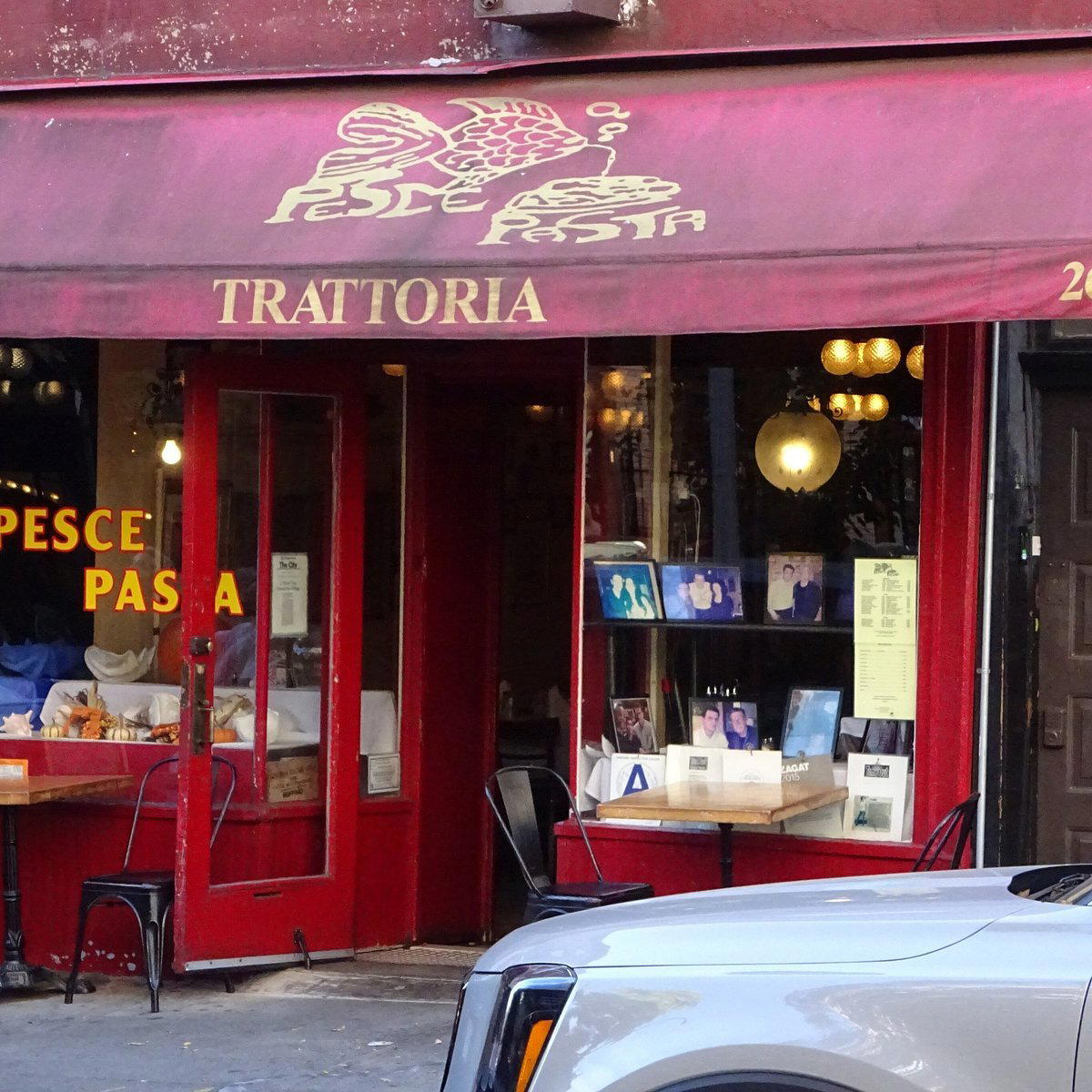
Bleecker Street's Italian Anchor in Context
If you spend time in Greenwich Village and want a single meal that captures what the neighbourhood's Italian dining tradition looked like before Michelin stars and omakase counters remapped Manhattan's restaurant conversation, Trattoria Pesce Pasta on Bleecker Street earns that visit. This is not a table at Le Bernardin, where the seafood is subjected to French technique and a $$$$ price tier. It is not the controlled precision of Atomix or the theatre of Masa. What 262 Bleecker offers is closer to the trattoria category in its original sense: a neighbourhood room anchored by two product families, fish and pasta, presented without ceremony and priced at a level that does not require a second thought before ordering.
Greenwich Village has sustained Italian cooking at street level longer than almost any other Manhattan neighbourhood. The blocks around Bleecker and the streets feeding into it built their identity on red-sauce restaurants, family-run delis, and bread shops that operated on Italian-American community logic rather than destination dining ambition. That era has contracted significantly. Rents have pushed out many of the original operators, and the block now mixes upscale wine bars with quick-service formats. Trattoria Pesce Pasta occupies a position in that mix as a carryover of the older model, a place where the menu structure signals the cooking philosophy before a single dish arrives.
How the Menu Architecture Frames the Kitchen
The name is the menu. In Italian trattoria culture, naming a restaurant after its two primary product categories is a declaration of scope and restraint. The kitchen is not trying to do everything. It draws a boundary around seafood and pasta and holds to it. That approach carries real editorial information for anyone trying to read a menu intelligently: a restaurant that names itself after two categories is telling you those two categories are where the kitchen concentrates its effort, and where your order should land.
The division between pesce (fish and seafood) and pasta is not arbitrary. Southern Italian coastal cooking has always treated these two columns as the core architecture of a meal, with antipasti opening the table and secondi built around whatever the fishing was that day. The trattoria format, as distinct from the ristorante or osteria, historically meant shorter menus, market-driven purchasing, and a relationship between kitchen and supplier that kept the offer honest and seasonal. When a New York trattoria maintains that structure, it signals alignment with that tradition rather than with the Americanised Italian-American model of 30-item menus covering every region at once.
For comparison, the Italian fine dining tier in New York, and globally, has moved toward longer and more technically complex presentations. 8½ Otto e Mezzo Bombana in Hong Kong and Alain Ducasse's Louis XV in Monte Carlo represent the formal European end of that spectrum. At the other end, American tasting-menu culture has produced its own version of complexity at venues like Alinea in Chicago and The French Laundry in Napa. Trattoria Pesce Pasta operates in a completely different register: shorter, plainer, anchored to product rather than technique, and priced for repeat visits rather than occasions.
Where It Sits in the Village Dining Picture
Greenwich Village in 2024 runs a wide range of dining registers. The neighbourhood feeds tourists from the High Line and West Village foot traffic, regulars from the surrounding residential blocks, and NYU-adjacent younger diners who treat Bleecker Street as a default dinner stretch. A trattoria format at this address therefore serves several audiences simultaneously, which is part of what makes the Italian neighbourhood restaurant format durable in a way that more niche concepts are not.
For New York visitors orienting themselves against the city's seafood dining tier, the contrast with Le Bernardin and the broader Midtown formal dining cohort is instructive. Le Bernardin's seafood operates inside a French classical framework with a $$$$ price tier and a jacket-expected environment. The Village trattoria model asks for none of that. It is a lower-commitment format that delivers seafood and pasta on Italian coastal terms, without a booking window measured in weeks or a dress code that requires planning.
Across the national Italian dining scene, venues like Emeril's in New Orleans have built their identity on American-inflected interpretations of European cooking traditions. New York's trattoria survivors tend to hold closer to the source material. The Village has historically been the borough's strongest neighbourhood for that kind of institutional Italian presence, and 262 Bleecker sits within that geography.
Practical Information for Your Visit
Trattoria Pesce Pasta is at 262 Bleecker Street in Greenwich Village, walkable from the West 4th Street subway station (A, C, E, B, D, F, M lines) and a short distance from the Christopher Street-Sheridan Square stop (1 train). The address places it on one of the Village's most walked restaurant corridors, which means foot traffic is high and the room can fill quickly on weekend evenings. Arriving early or on a weeknight typically offers more flexibility than a Saturday dinner rush.
How It Compares in the American Fine Casual Scene
The category that restaurant occupies, neighbourhood Italian with a seafood and pasta focus, has counterparts in most American cities with Italian-American communities, but New York remains the reference market. For readers comparing it against high-ambition American restaurant experiences, the relevant contrast is not with Michelin-starred destinations like Per Se or the progressive Korean tier represented by Jungsik and Atomix. Those venues operate on a different logic entirely: long booking windows, high per-head spends, and menus built around chef authorship. The trattoria model is peer to Bacchanalia in Atlanta or Providence in Los Angeles in the sense that it represents a serious but accessible dining register. The difference is that Bacchanalia and Providence carry named awards and critical recognition that place them in a higher-accountability tier. The restaurant's accountability is to its neighbourhood and to the Italian cooking traditions it has inherited from Bleecker Street's longer history.
That is, in its own terms, a legitimate and defensible position. Not every room needs to chase critical recognition. Particularly durable restaurants in any city derive their authority from the consistency of their offer and the loyalty of their repeat customer base rather than from awards cycles. For the Village, where institutional Italian restaurants have been disappearing for two decades, a format like this carries preservation value as well as practical value for diners who want fish and pasta without the apparatus of a reservation system.
- Red Snapper Livornese
- Seafood Risotto
- Linguine with Lobster
- Salmon Dijonaise
- Veal Parmesan
- Spaghetti and Meatballs
Price Lens
Comparable venues nearby, for context on price, style, and recognition.
| Venue | Cuisine | Price | Notes |
|---|---|---|---|
| Trattoria Pesce PastaThis venue — the venue you are viewing | Not listed | $$ | Not listed |
| San Marzano | East Village, Italian Pasta | $$ | Not listed |
| Roberta's | Williamsburg, Neapolitan Pizza | $$ | Not listed |
| Patrizias of Brooklyn | Williamsburg, Family-Style Italian | $$ | Not listed |
| Cafe Paradiso | Not listed | $$ | Upper West Side-Lincoln Square, Italian-American Cafe |
| San Babila | Not listed | $$ | Upper East Side-Lenox Hill-Roosevelt Island, Modern Southern Italian Trattoria |
Continue exploring
More in New York City
Restaurants in New York City
Browse all →
Bars in New York City
Browse all →
Hotels in New York City
Browse all →






At a Glance
- Romantic
- Intimate
- Cozy
- Classic
- Date Night
- Family
- Group Dining
- Celebration
- Casual Hangout
- Standalone
- Beer Program
Warm, welcoming, and intimate atmosphere with a neighborhood feel that evokes a genuine New York Italian dining experience; friendly service in a cozy setting.