Arturo's
Open since 1957 on West Houston Street, Arturo's has anchored SoHo's southern edge through every wave of New York dining fashion without repositioning itself once. Coal-oven pizza and a live jazz program define the room as much as the menu does. In a city where longevity and consistency are their own credentials, Arturo's occupies a tier that newer arrivals simply cannot replicate.
Pearl is the En Primeur Club membership app — saves, bookings, and concierge access live there. Same editors, same standards.
- Address
- 106 W Houston St, New York, NY 10012
- Phone
- +12126773820
- Website
- arturoscoaloven.com
- Directions
- Get directions
 Saves & bookings on Pearl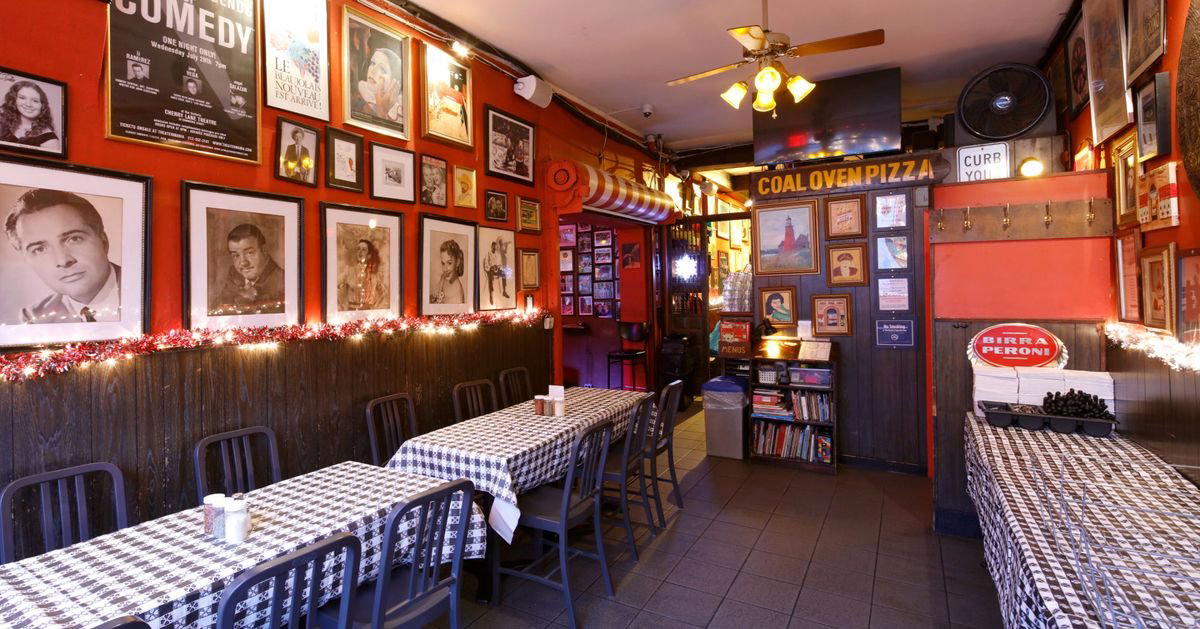
Sixty-Seven Years on West Houston
New York restaurants reinvent themselves on roughly five-year cycles. Concepts pivot, chefs decamp, investors refresh the room. Against that backdrop, the fact that Arturo's has held its address at 106 West Houston Street since 1957 is not a sentimental footnote, it is an editorial argument about what a certain kind of restaurant can do that no amount of press positioning achieves. The coal-oven pizza format Arturo's has operated for decades predates the city's current obsession with high-temperature deck ovens and imported Italian flour brands by half a century. That history gives the menu a different kind of authority than a tasting-menu credential or a chef's competition record.
SoHo's southern edge, where West Houston meets the streets leading into Greenwich Village, has changed more dramatically than almost any other stretch of lower Manhattan. The manufacturing lofts became galleries, the galleries became boutiques, the boutiques became flagships for international luxury brands. Through all of it, Arturo's stayed. That kind of geographic persistence shapes a room's identity more than interior design ever could. When a neighbourhood transforms around a venue three or four times over, the venue itself becomes the reference point.
What the Menu Architecture Says
The clearest way to read any restaurant is through what its menu chooses not to offer. At a moment when the highest-profile New York tables, Eleven Madison Park, Atomix, Per Se, operate through fixed tasting formats with no à la carte flexibility, the restaurant occupies the opposite pole entirely. The menu is structured around the logic of the Italian-American red-sauce canon: pizza from a coal oven, pasta, a selection of traditional mains, appetizers that don't require footnotes. There is no omakase progression, no optional supplement tier, no wine pairing automatically attached to a set price. You order what you want.
That structure is not a retreat from ambition. It is a different kind of ambition, one that bets on the durability of familiar forms executed consistently over time rather than on novelty or format experimentation. The coal oven is the fulcrum of this logic. Coal-fired ovens operate at higher temperatures than wood-fired alternatives and produce a char profile that is harder to replicate at home or in a standard deck oven. The form dates to the mid-twentieth century New York pizzeria tradition and carries with it a set of flavour expectations, slightly blistered crust, rapid cook time, a particular smokiness, that the menu architecture at the restaurant is built to deliver rather than subvert.
Across the United States, the restaurants that have attracted sustained critical attention in the past decade tend toward either extreme: the hyper-technical tasting counter (Lazy Bear in San Francisco, Smyth in Chicago, Single Thread Farm in Healdsburg) or the farm-sourcing destination (Blue Hill at Stone Barns in Tarrytown, The French Laundry in Napa). The restaurant sits outside both categories. It is not trying to be Le Bernardin or Masa. Its competitive set is the group of long-running neighbourhood institutions that New York produces in small numbers and that visitors consistently seek out precisely because they offer what the Michelin-starred tier does not: an evening without ceremony.
The Jazz Program as Structural Element
Live music in a restaurant context usually operates as ambient furniture, background texture to soften the room. At the restaurant, the jazz program functions differently. It is a scheduling anchor that shapes how the evening moves and who occupies the room at which hour. Restaurants that programme live music regularly develop a different social rhythm than those that don't. Tables stay longer, conversations run louder, the boundary between dinner and a night out becomes porous. That dynamic places the restaurant closer to the old Greenwich Village supper-club tradition than to the contemporary Manhattan dining format where tables are turned efficiently and the kitchen controls the pace.
This is worth noting for the reader deciding between the restaurant and a reservation at one of the city's more structured rooms. The experiences are not on the same axis. At Providence in Los Angeles or Addison in San Diego, the restaurant controls timing almost completely. At the restaurant, the rhythm is negotiated between the kitchen, the musicians, and the table. That is a feature, not a deficiency.
Location and the West Houston Context
West Houston Street runs as a dividing line between SoHo and the Village, and the restaurant address at number 106 places it in a zone that draws both neighbourhood regulars and visitors who have crossed the island from Midtown or Brooklyn. The surrounding blocks have a density of foot traffic that feeds walk-in dining in a way that more remote Manhattan addresses cannot rely on. For a restaurant whose menu format does not require advance planning on the same scale as a tasting-menu counter, that walk-in accessibility is operationally important. It means the restaurant can absorb spontaneous diners alongside regulars without the booking friction that defines the upper tier of New York dining. Contrast this with The Inn at Little Washington or Frasca Food & Wine in Boulder, where advance reservations are built into the format.
The Italian-American tradition the restaurant represents has counterparts elsewhere in the country, Emeril's in New Orleans anchors a different regional culinary lineage, Atelier Moessmer Norbert Niederkofler in Brunico and Dal Pescatore in Runate represent the European source tradition, but the specific New York Italian-American coal-oven format is a local product. It developed in the mid-twentieth century around the city's Italian immigrant communities and their particular negotiation between old-world technique and American appetite. The restaurant opened in the middle of that period and has been making the same argument ever since.
Planning Your Visit
The venue sits at 106 W Houston St, New York, NY 10012, on the southern boundary of SoHo within walking distance of multiple subway lines. Reservations: Recommended. Weekend evenings fill earlier in the night when the jazz program draws additional foot traffic. Budget: Expect about $30 per person. Dress: Casual. Hours: Mon to Sun, 5 to 11 PM.
Accolades, Compared
Comparable venues nearby, for context on price, style, and recognition.
| Venue | Cuisine | Price | Notes |
|---|---|---|---|
| Arturo'sThis venue — the venue you are viewing | Classic Italian Coal-Oven Pizza | $$ | Not listed |
| Paulie Gee’s | Neapolitan-Inspired Pizza | $$ | Gowanus |
| Cacio e Pepe | Authentic Roman Italian Pasta | $$ | East Village |
| Serafina Times Square | Northern Italian Trattoria | $$ | Midtown-Times Square |
| Patrizias of Brooklyn | Family-Style Italian | $$ | Williamsburg |
| Mozzarella & Vino | Authentic Italian Enoteca | $$ | Midtown-Times Square |
Continue exploring
More in New York City
Restaurants in New York City
Browse all →
Bars in New York City
Browse all →
Hotels in New York City
Browse all →





At a Glance
- Classic
- Cozy
- Date Night
- Casual Hangout
- Late Night
- Live Music
- Historic Building
- Craft Cocktails
Current opening hours
- Monday
- 5–11 PM
- Tuesday
- 5–11 PM
- Wednesday
- 5–11 PM
- Thursday
- 5–11 PM
- Friday
- 5–11 PM
- Saturday
- 5–11 PM
- Sunday
- 5–11 PM
Hours can change for holidays and private events. Last verified .
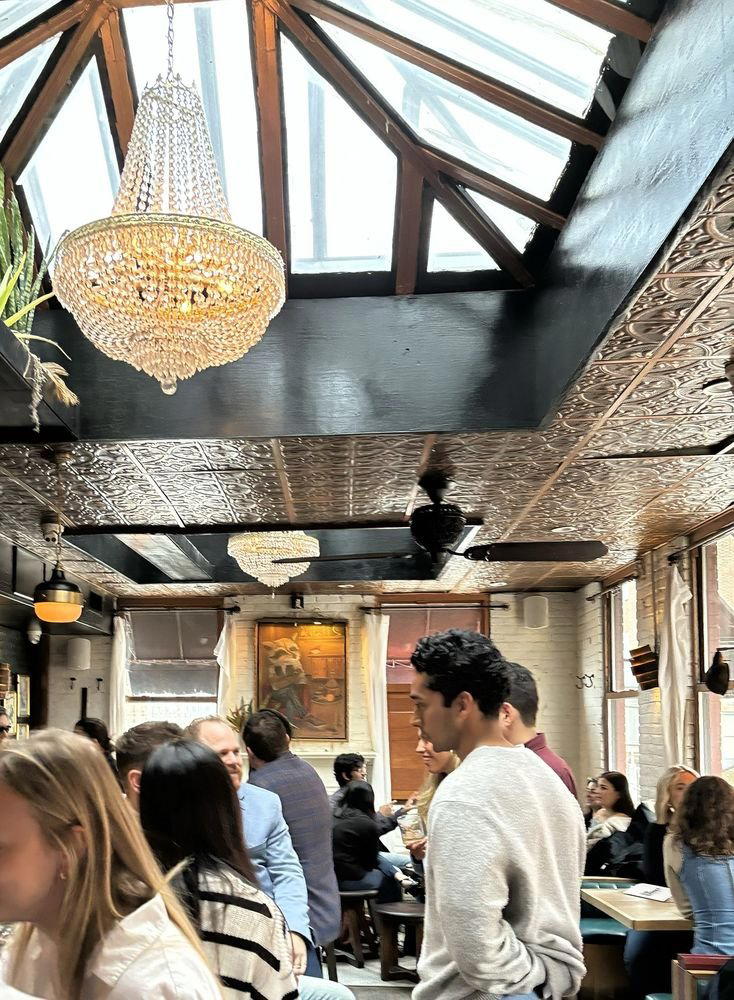
Casual, family atmosphere with simple decor, exposed brick, and lively jazz music.